
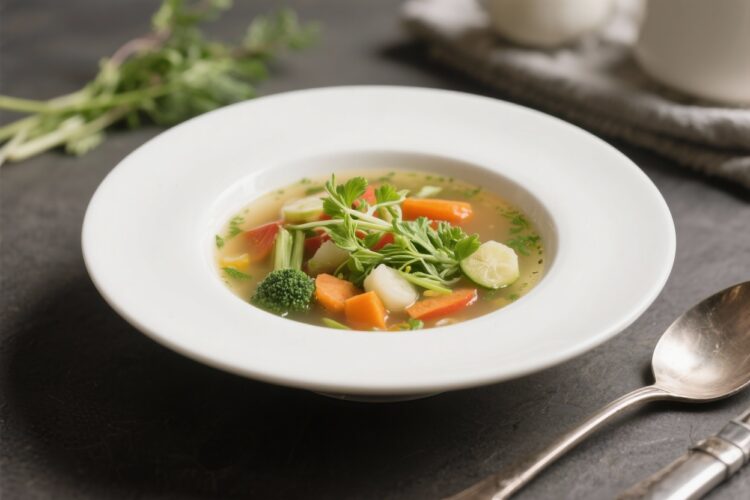
Spring Garden Vegetable Soup tastes like sunshine in a bowl. It’s bright, light, and packed with tender veggies that feel just-picked. This is the kind of soup you make when you want something nourishing but not heavy, and you want it fast.
Everything cooks gently so you get clean, fresh flavors. Serve it as a simple lunch, a starter for dinner, or a cozy weeknight meal with crusty bread.
Why This Recipe Works
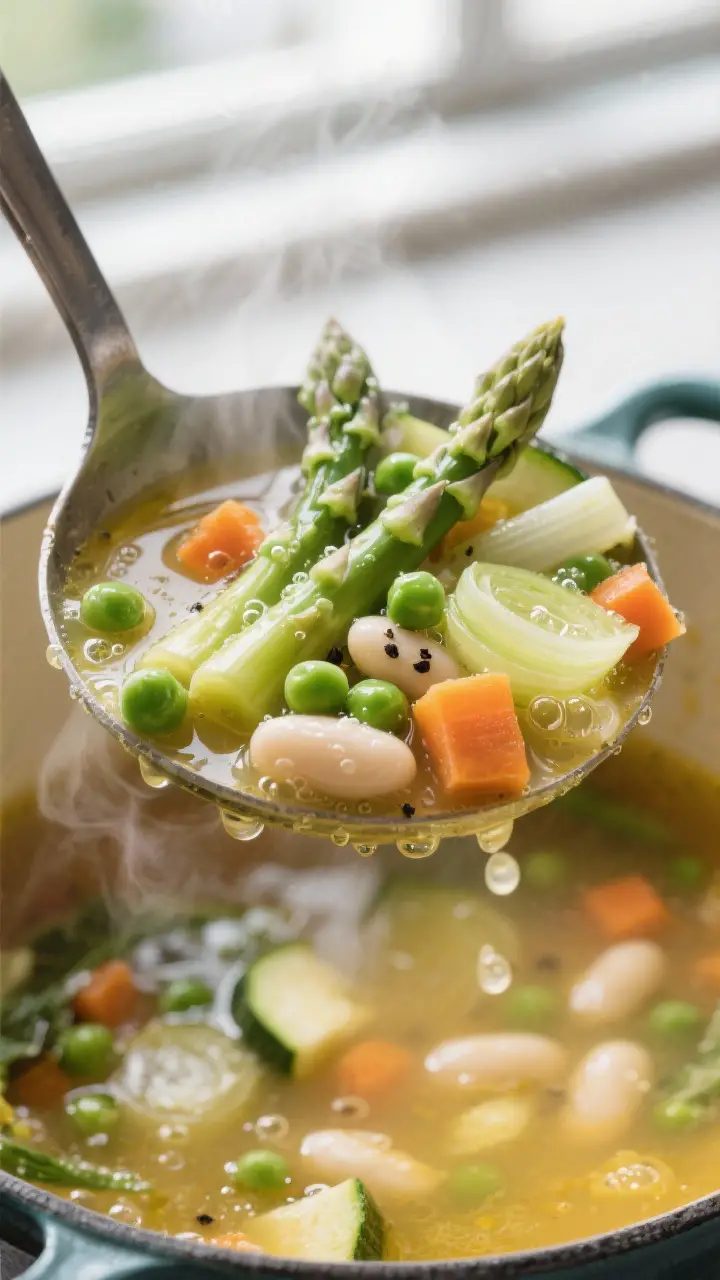
- Short cook time keeps veggies crisp-tender. Quick simmering preserves color, flavor, and texture.
- Layered aromatics add depth. A base of onion, garlic, and leeks builds a savory backbone without overpowering the delicate greens.
- Flexible and forgiving. You can swap in whatever is fresh—peas, asparagus, spinach, or even zucchini—and it still tastes great.
- Lemon and herbs brighten everything. A squeeze of lemon and fresh herbs at the end make the soup taste lively and balanced.
- Light but satisfying. White beans or small pasta add body without making it heavy.
Ingredients
- 2 tablespoons olive oil
- 1 medium yellow onion, diced
- 1 small leek (white and light green parts), thinly sliced and rinsed
- 2 garlic cloves, minced
- 2 medium carrots, diced
- 2 celery stalks, diced
- 1 small fennel bulb, cored and diced (optional but lovely)
- 1 medium zucchini, diced
- 1 cup asparagus, cut into 1-inch pieces
- 1 cup fresh or frozen peas
- 4 cups low-sodium vegetable broth
- 2 cups water
- 1 bay leaf
- 1 teaspoon kosher salt, plus more to taste
- 1/2 teaspoon freshly ground black pepper
- 1 cup canned white beans, drained and rinsed (or 1 cup small pasta like ditalini; choose one)
- 2 cups baby spinach or chopped kale (stems removed for kale)
- Zest of 1/2 lemon and 1–2 tablespoons lemon juice
- 2 tablespoons fresh parsley, chopped
- 1 tablespoon fresh dill or chives, chopped (optional)
- Grated Parmesan or a sprinkle of nutritional yeast, for serving (optional)
How to Make It
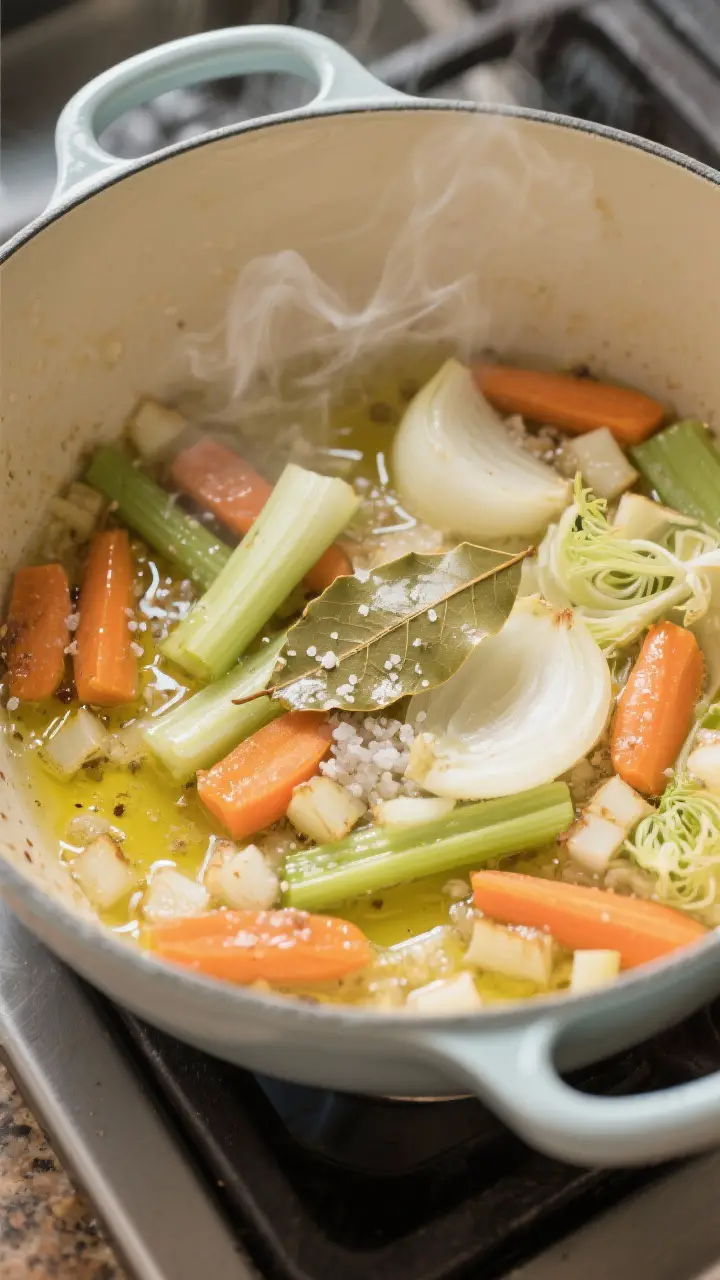
- Warm the pot. Heat olive oil in a large pot over medium heat until shimmering.
- Sauté the aromatics. Add onion, leek, and a pinch of salt. Cook 4–5 minutes until softened.
Stir in garlic and cook 30 seconds until fragrant.
- Add sturdy veggies. Stir in carrots, celery, and fennel. Cook 3–4 minutes, stirring now and then.
- Pour in broth. Add vegetable broth, water, bay leaf, salt, and pepper. Bring to a gentle boil, then reduce to a simmer.
- Simmer to meld flavors. Cook 8–10 minutes until the carrots are just tender.
- Add quick-cooking veggies. Stir in zucchini, asparagus, and peas.
Simmer 4–6 minutes until bright and crisp-tender.
- Boost with beans or pasta. Add white beans and warm through 2 minutes. If using pasta, simmer until al dente according to package time.
- Finish with greens and lemon. Stir in spinach or kale and cook 1–2 minutes until wilted. Add lemon zest and juice to taste.
- Herb and taste check. Remove bay leaf.
Stir in parsley and dill or chives. Taste and adjust salt, pepper, and lemon.
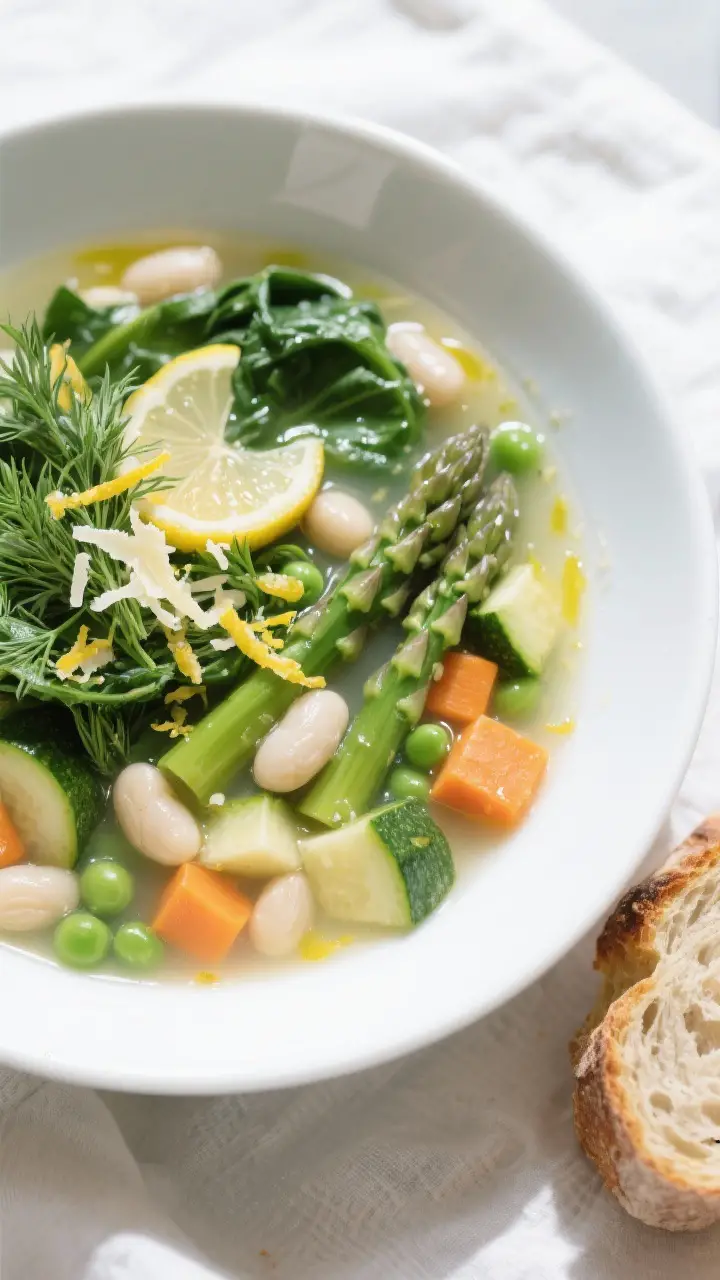
- Serve. Ladle into bowls and top with Parmesan or nutritional yeast if you like. Add a drizzle of olive oil for a silky finish.
How to Store
- Refrigerator: Cool completely, then store in airtight containers for up to 4 days.
If you’ve added pasta, it may soak up broth; add a splash of water when reheating.
- Freezer: Freeze without pasta for best texture. Portion into freezer-safe containers and freeze up to 3 months. Thaw overnight in the fridge.
- Reheat: Warm gently over medium heat until steaming.
Avoid hard boiling to keep veggies tender.
Why This is Good for You
- Loaded with fiber: Veggies and beans support digestion and keep you full.
- High in vitamins: Carrots, peas, and greens bring vitamin A, C, K, and folate.
- Light on calories, big on nutrients: A satisfying way to eat more plants without heavy cream or excess fat.
- Heart-friendly: Olive oil and potassium-rich vegetables support healthy blood pressure.
- Immune support: Garlic, herbs, and colorful produce deliver antioxidants.
Common Mistakes to Avoid
- Overcooking the vegetables. Stop when they’re just tender. They’ll keep softening in the hot broth.
- Adding everything at once. Stagger the veggies so delicate ones don’t turn mushy.
- Skipping the acid. Lemon or a splash of vinegar at the end brightens the whole pot.
- Using only water. A mix of broth and water keeps things light but flavorful. All water can taste flat.
- Forgetting to season in layers. Add a pinch of salt as you sauté and again at the end to bring out the flavors.
Variations You Can Try
- Herby pesto finish: Stir a spoonful of basil pesto into each bowl.
- Lemon-chicken twist: Add shredded rotisserie chicken and extra lemon zest.
- Smoky spring soup: Sprinkle in smoked paprika or add a little diced cooked bacon for depth.
- Grain boost: Swap beans for cooked farro or barley.
Add at the end to avoid overcooking.
- Creamy version: Blend 2 cups of the soup and return it to the pot, or swirl in a little cashew cream.
- Spicy kick: Add red pepper flakes when sautéing the aromatics.
- All-green bowl: Use leeks, zucchini, asparagus, peas, and spinach with lots of dill and chives.
FAQ
Can I make this soup ahead?
Yes. It reheats well. If you plan to add pasta, cook it separately and combine just before serving so it doesn’t soak up the broth.
What if I don’t have asparagus?
Use green beans, snap peas, or extra zucchini.
Keep the cut size even so everything cooks at the same pace.
How do I make it gluten-free?
Use gluten-free pasta or skip pasta and stick with beans or cooked rice. Always check labels on broth.
Can I use frozen vegetables?
Absolutely. Frozen peas and mixed vegetables work well.
Add them toward the end so they don’t overcook.
How can I make it more filling?
Add more beans, stir in small pasta, or finish with a poached egg on top. A sprinkle of Parmesan also adds richness.
What herbs work best?
Parsley, dill, chives, and basil are great. Add tender herbs at the end to keep their flavor bright.
Why is my soup bland?
You likely need more salt and acid.
Taste at the end and add a pinch of salt and a squeeze of lemon until the flavors pop.
Final Thoughts
Spring Garden Vegetable Soup is simple, bright, and endlessly adaptable. It celebrates fresh produce without a lot of fuss, and it’s easy to make on a busy weeknight. Keep the technique the same, swap in the veggies you have, and finish with lemon and herbs.
You’ll get a clean, vibrant soup every time—comforting, light, and full of flavor.