
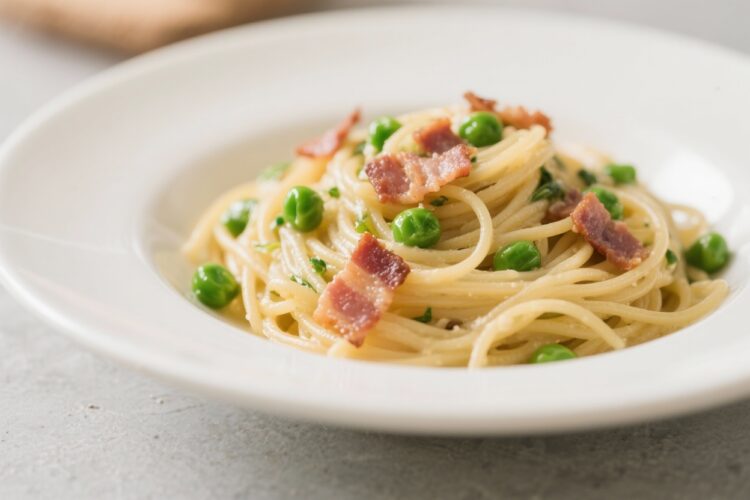
Spring peas and salty pancetta make a simple bowl of pasta feel special without a lot of work. This dish is light but satisfying, with a creamy gloss from a little butter and parmesan. The sweetness of peas balances the savory bite of pancetta, and fresh lemon lifts everything at the end.
It’s the kind of recipe you can make on a weeknight but still serve to friends. If you love clean flavors and quick cleanup, this one belongs in your rotation.
What Makes This Special
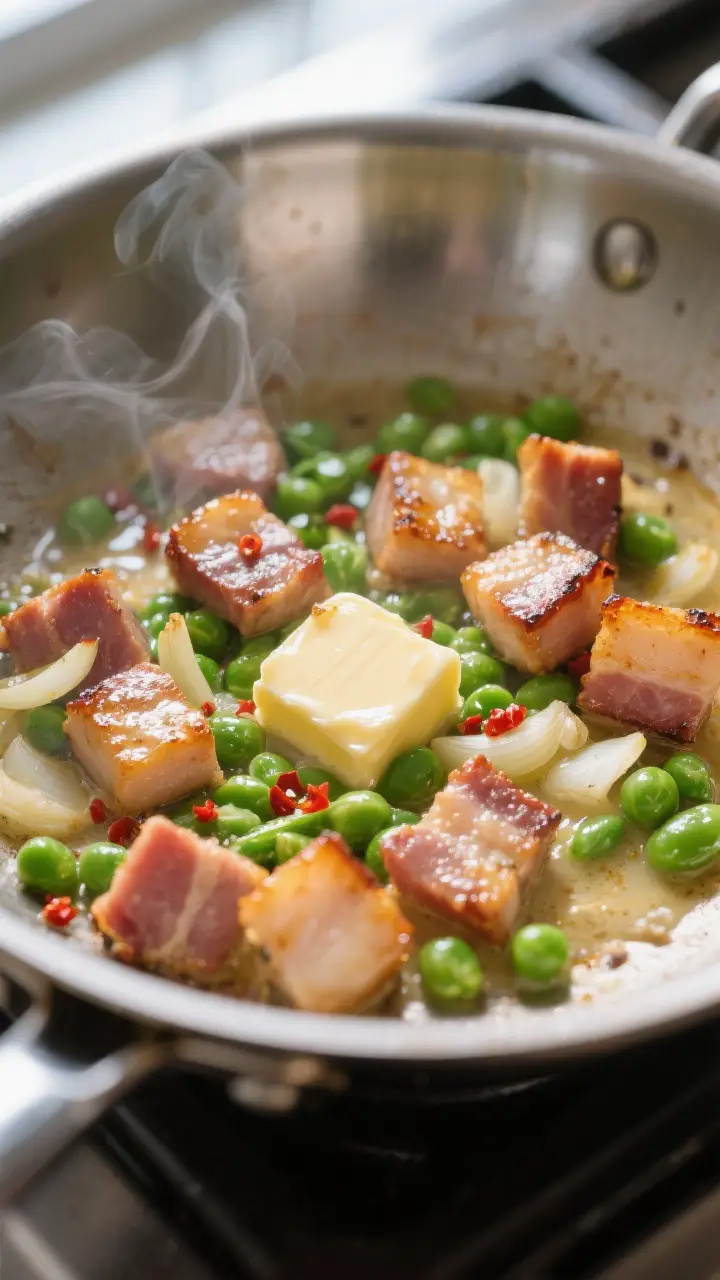
This recipe keeps flavors honest. You taste the peas, the pancetta, and good olive oil—nothing is muddled or heavy.
It comes together in the time it takes to boil pasta, yet it still feels restaurant-worthy. The method is flexible, too. You can use fresh or frozen peas, any long pasta, and adjust the creaminess with butter, reserved pasta water, or a splash of cream.
Ingredients
- 12 ounces spaghetti (or linguine)
- 4 ounces pancetta, diced (bacon works if needed)
- 1 cup spring peas (fresh if in season, or frozen)
- 2 tablespoons olive oil
- 2 tablespoons unsalted butter
- 2 cloves garlic, thinly sliced
- 1 small shallot, finely minced (optional)
- 1/2 cup grated Parmesan (plus more for serving)
- 1/2 lemon, zested and juiced
- 1/4 cup fresh parsley or mint, chopped
- Kosher salt and freshly ground black pepper
- Red pepper flakes (optional, for a hint of heat)
- 1 cup reserved pasta water (you won’t need all of it)
Step-by-Step Instructions
- Bring a large pot of salted water to a boil. Salt it generously so it tastes like the sea.
This is your main seasoning for the pasta itself.
- Cook the spaghetti until al dente. Check the package for timing, but start tasting a minute early. Before draining, reserve at least 1 cup of pasta water for saucing.
- While the pasta cooks, crisp the pancetta. Set a large skillet over medium heat. Add the pancetta to a dry pan and cook, stirring, until the fat renders and the edges turn golden, 5–7 minutes.
If the pan looks dry, add a teaspoon of olive oil.
- Sauté aromatics. Add olive oil to the pancetta if needed, then stir in the shallot and garlic. Cook 1–2 minutes until fragrant, keeping the heat moderate so the garlic doesn’t burn. A pinch of red pepper flakes is nice here.
- Add the peas. If using fresh peas, cook 2–3 minutes until bright green and tender.
If using frozen, add them straight from the freezer and cook 1–2 minutes. Season lightly with salt and pepper.
- Build the sauce. Add the butter to the skillet and let it melt into the pancetta and peas. Pour in a splash of reserved pasta water (about 1/4 cup) to start forming an emulsion.
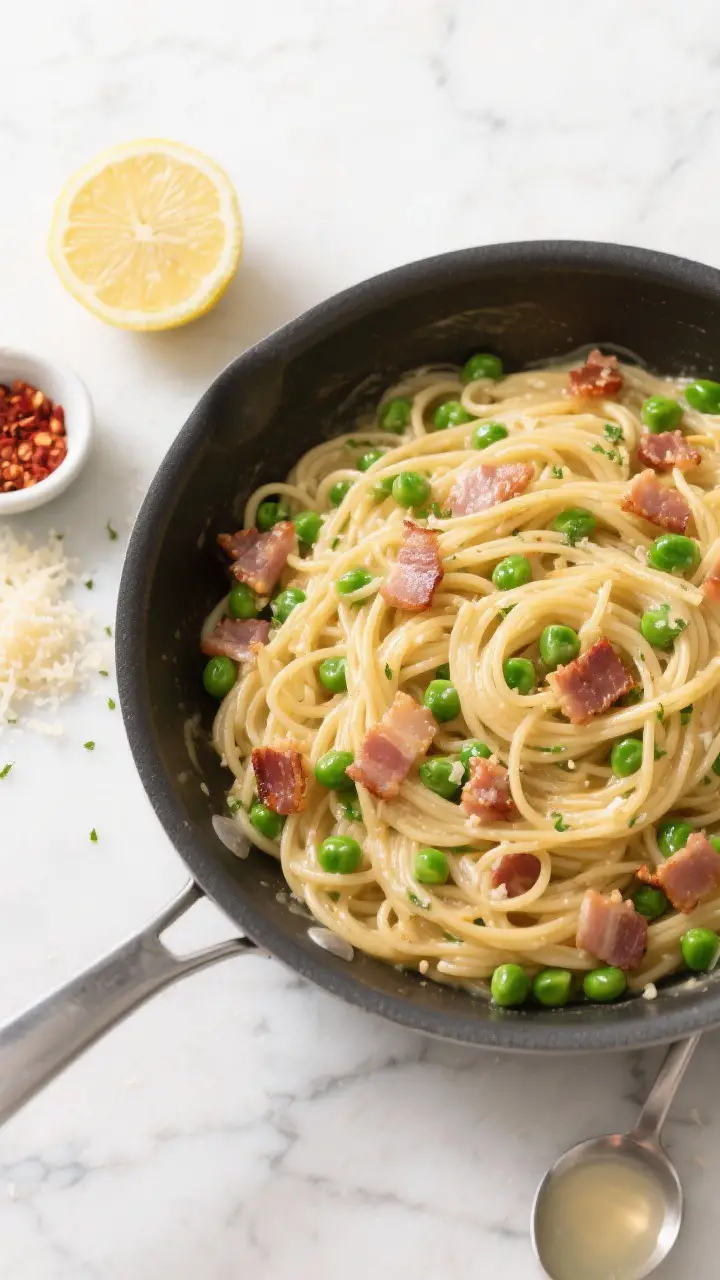
- Toss pasta with the sauce. Add the drained spaghetti to the skillet.
Sprinkle in the Parmesan and toss vigorously with tongs. Add more pasta water as needed to create a silky coating that clings to each strand.
- Finish with lemon and herbs. Turn off the heat. Add lemon zest, a squeeze of lemon juice, and the chopped parsley or mint.
Taste and adjust salt, pepper, and lemon to your liking.
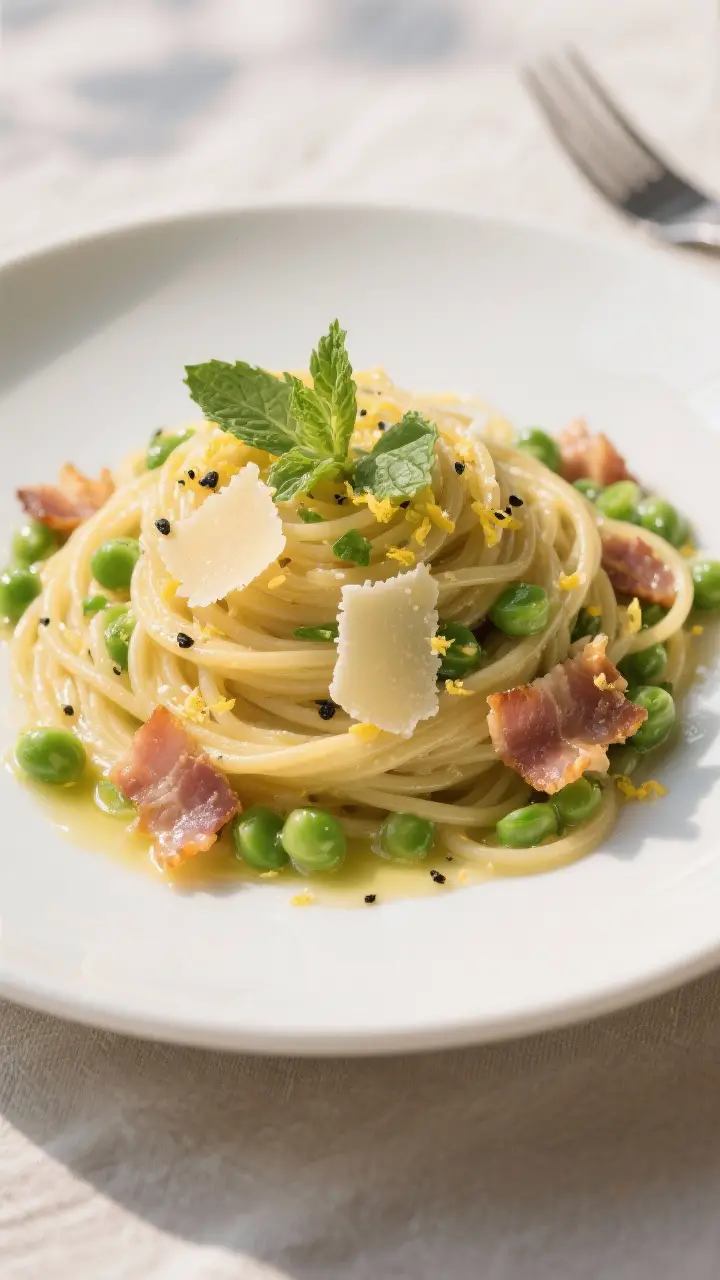
- Serve immediately. Top with extra Parmesan and a crack of pepper. A drizzle of olive oil on each bowl makes it shine.
Storage Instructions
Store leftovers in an airtight container in the fridge for up to 3 days. Reheat gently in a skillet with a splash of water or stock to loosen the sauce.
Add a small knob of butter or a spoonful of olive oil at the end to bring back the gloss. Avoid microwaving for too long, which can make the pasta rubbery and the peas dull.
Benefits of This Recipe
- Quick and low-fuss: Most of the work happens while the pasta boils. Ideal for busy nights.
- Balanced flavor: Sweet peas, salty pancetta, bright lemon, and nutty Parmesan create a complete, layered bite.
- Flexible ingredients: Fresh or frozen peas both work.
Bacon, prosciutto, or even ham can replace pancetta.
- Light yet satisfying: Butter and Parmesan give creaminess without heavy cream, keeping it fresh and springy.
- Easy to scale: Double it for a crowd or halve it for two without changing technique.
Pitfalls to Watch Out For
- Overcooking the pasta: You want al dente. The pasta continues to cook when tossed with the hot sauce.
- Skipping the pasta water: This starchy liquid is the key to a glossy, cohesive sauce. Don’t forget to reserve it.
- Burning the garlic: Keep the heat moderate.
Bitter garlic can overpower the dish.
- Underseasoning: The pasta water should be well salted, and you need to taste at the end. Lemon brightens but doesn’t replace salt.
- Dry sauce: If it looks tight, add more pasta water a splash at a time. Toss vigorously to emulsify.
Recipe Variations
- Creamy version: Stir in 1/4 cup heavy cream with the butter for a richer sauce.
Simmer briefly before adding pasta.
- Herb swap: Use basil or dill instead of parsley or mint. Each gives a different fresh note.
- Lemon-forward: Add extra zest and more lemon juice, and finish with a sprinkle of lemony gremolata.
- Vegetarian: Skip the pancetta. Brown a handful of mushrooms in olive oil for umami, or add toasted pine nuts for texture.
- Greens boost: Toss in a few handfuls of baby spinach or arugula with the peas and let them wilt.
- Cheese play: Try Pecorino Romano for a sharper bite, or a dollop of ricotta on top for creaminess.
- Gluten-free: Use your favorite gluten-free spaghetti and watch cook times closely to avoid mushiness.
- Spicy kick: Add Calabrian chili paste or more red pepper flakes to the pancetta step.
FAQ
Can I use frozen peas?
Yes.
Frozen peas are picked and frozen at peak ripeness, so they’re sweet and tender. Add them straight from the freezer and cook just until bright and warm.
What can I use instead of pancetta?
Bacon is the easiest swap. Cook until crisp and drain excess fat if it’s too greasy.
Prosciutto works too—crisp it lightly or tear and warm it at the end.
How do I keep the pasta from sticking?
Toss the drained pasta immediately with the sauce. The starchy water and fat from the pancetta and butter help coat the strands and prevent clumping.
Is heavy cream necessary?
No. Butter, Parmesan, and pasta water make a silky sauce without cream.
Use cream only if you want a richer, thicker finish.
Can I make it ahead?
This is best fresh. If you must prep, cook the pancetta and aromatics ahead and store them in the fridge. Reheat while the pasta boils, then finish the dish with pasta water, butter, and Parmesan.
What wine pairs well?
A crisp white like Pinot Grigio, Sauvignon Blanc, or Vermentino pairs nicely.
The acidity complements the lemon and cuts through the salty pancetta.
How do I scale the recipe for a crowd?
Use a very large skillet or two pans so the pasta can move freely when tossing. Reserve extra pasta water and add cheese gradually to keep the sauce smooth.
Can I add protein?
Shredded rotisserie chicken or seared shrimp work well. Add them after the peas and warm through before tossing with the pasta.
In Conclusion
Spaghetti with spring peas and pancetta is bright, cozy, and weeknight-easy.
You get the sweetness of peas, the salty crunch of pancetta, and a lemony, cheesy gloss that brings it all together. With a few pantry staples and a bag of peas, dinner is on the table in under 30 minutes. Keep it simple, taste as you go, and enjoy a bowl that feels like spring any time of year.
Printable Recipe Card
Want just the essential recipe details without scrolling through the article? Get our printable recipe card with just the ingredients and instructions.