
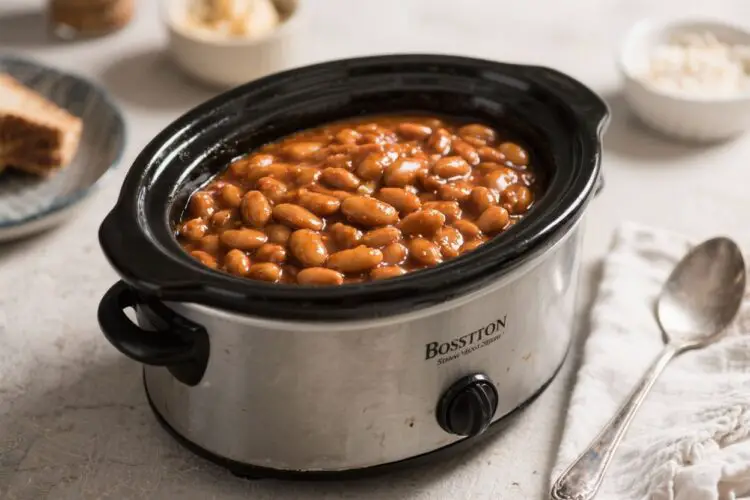
There’s something deeply satisfying about a pot of Boston baked beans gently simmering all day. The aroma alone makes your kitchen feel cozy, and the payoff is a big batch of sweet, smoky, tender beans. This slow cooker version keeps things simple, hands-off, and true to the New England classic.
You’ll get rich molasses flavor, just enough salt pork or bacon for depth, and a balanced sweetness that doesn’t overwhelm. If you’re craving a hearty side that feeds a crowd—or a simple main with cornbread—this recipe fits the bill.
What Makes This Special
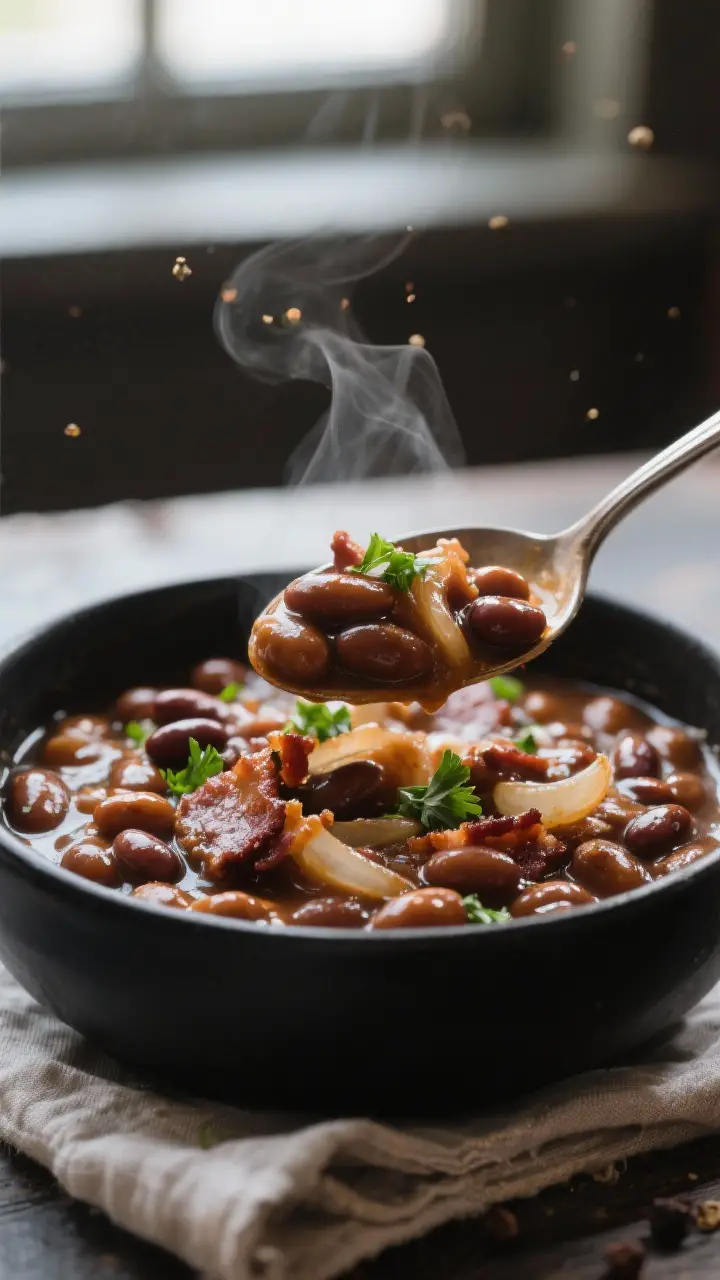
Classic Boston baked beans rely on molasses, mustard, and pork to create a deep, nostalgic flavor. This slow cooker version honors that tradition while cutting down on effort and oven time.
It gently cooks the beans until tender, creating a thick, glossy sauce that clings to every bite. The result is simple, homestyle comfort food that’s budget-friendly and perfect for meal prep.
- Low effort, high reward: Minimal prep, then the slow cooker does the work.
- Authentic flavor: Molasses, mustard, and pork give classic Boston character.
- Great for gatherings: Makes a generous batch, ideal for cookouts and holidays.
- Flexible: Easy to make smoky, spicy, or vegetarian with a few tweaks.
Shopping List
- 1 pound dried navy beans (or small white beans)
- 4–6 ounces salt pork or thick-cut bacon, diced (trim excess rind if using salt pork)
- 1 medium yellow onion, finely chopped
- 3 cloves garlic, minced
- 1/2 cup unsulphured molasses
- 1/4 cup brown sugar (light or dark)
- 1/4 cup ketchup (or tomato paste thinned with water)
- 2 tablespoons Dijon or yellow mustard
- 1 tablespoon apple cider vinegar
- 1 teaspoon kosher salt, plus more to taste
- 1/2 teaspoon black pepper
- 1/4 teaspoon ground cloves or allspice (optional, for warmth)
- 1–2 cups low-sodium chicken broth or water (enough to cover beans)
- 1 bay leaf
How to Make It
- Soak the beans overnight: Rinse the dried beans, discard any debris, and cover with several inches of water. Soak 8–12 hours.
Drain and rinse. This helps the beans cook evenly and reduces cooking time.
- Par-cook (optional, but helpful): Add soaked beans to a pot, cover with fresh water, and simmer 20–30 minutes until just beginning to soften. Drain.
This step helps ensure tenderness in the slow cooker.
- Render the pork: In a skillet over medium heat, cook the diced salt pork or bacon until some fat is rendered and edges are lightly golden, 4–6 minutes. Don’t fully crisp. Transfer pork and drippings to the slow cooker.
- Build the sauce: In a bowl, whisk molasses, brown sugar, ketchup, mustard, vinegar, salt, pepper, and cloves/allspice (if using).
The mixture should be thick and glossy.
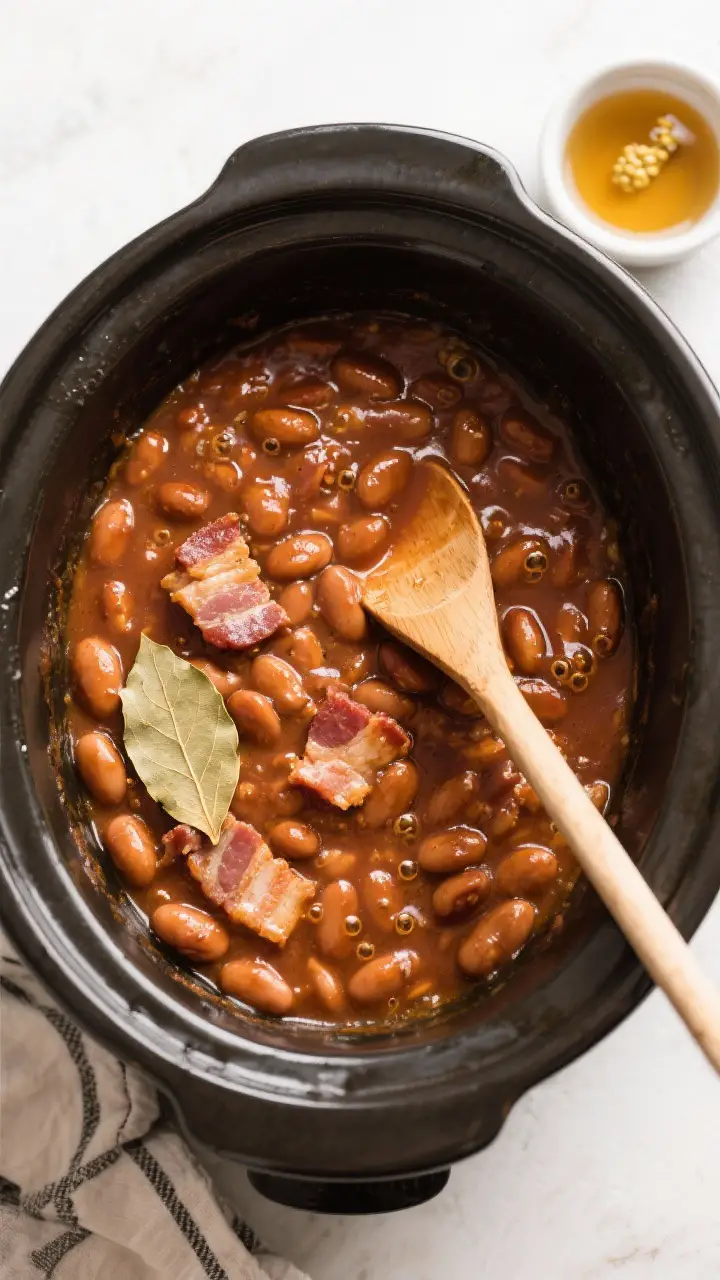
- Layer the ingredients: Add beans, chopped onion, garlic, bay leaf, and the sauce to the slow cooker. Stir to coat. Pour in enough broth or water to barely cover the beans—usually 1 to 2 cups depending on your cooker size.
- Cook low and slow: Cover and cook on Low for 8–10 hours, stirring once or twice if you can.
If the beans are still firm after 8 hours, continue cooking, adding a splash of hot water if needed.
- Adjust consistency: If the sauce looks thin near the end, remove the lid for the last 30–45 minutes to thicken. If it’s too thick, stir in warm water or broth a little at a time.
- Taste and finish: Remove the bay leaf. Taste for salt, sweet, and tang.
Add a pinch more salt or a splash of vinegar to brighten. The sauce should be savory-sweet with a gentle molasses backbone.
- Serve: Spoon into bowls and enjoy with brown bread, cornbread, hot dogs, grilled sausages, or a crisp slaw. Garnish with chopped parsley if you like.
Keeping It Fresh
- Storage: Cool completely, then refrigerate in airtight containers for up to 4–5 days.
The flavor improves on day two.
- Freezing: Freeze in meal-size portions for up to 3 months. Thaw overnight in the fridge, then reheat gently on the stove with a splash of water.
- Reheating: Warm over low heat, stirring often. Add a bit of water or broth to loosen the sauce and prevent scorching.

Benefits of This Recipe
- Budget-friendly: Dried beans plus pantry staples feed a crowd for little cost.
- Make-ahead friendly: Beans hold well and taste even better the next day.
- Protein and fiber: A hearty, satisfying dish that pairs well with simple sides.
- Minimal active time: A few quick steps, then hands-off cooking.
- Customizable: Adjust sweetness, smokiness, and heat to your taste.
What Not to Do
- Don’t skip soaking unless you’re using a pressure cooker later.
Soaking helps the beans cook evenly and shortens time.
- Don’t under-season early: Beans need salt and acid for balanced flavor. Start modestly, then adjust at the end.
- Don’t drown the beans: Add just enough liquid to cover. Too much leads to a watery sauce.
- Don’t rely on High heat only: High can split skins and overcook the sauce.
Low yields creamier beans and better flavor.
- Don’t add acidic ingredients too early in massive amounts: A little vinegar is fine, but heavy acidity can slow softening. Balance at the end as needed.
Variations You Can Try
- Smoky style: Add 1 teaspoon smoked paprika or a few drops of liquid smoke. Use smoked bacon or ham hock.
- Maple twist: Swap half the molasses for pure maple syrup for a lighter, fragrant sweetness.
- Spicy kick: Stir in 1–2 teaspoons chili paste or hot sauce.
A pinch of cayenne works too.
- Vegetarian version: Omit pork. Use olive oil and add 1 tablespoon soy sauce or miso for savory depth.
- Tomato-forward: Replace ketchup with tomato paste and an extra tablespoon of vinegar for brightness.
- Brown bread pairing: Serve with classic New England brown bread or a slice of rye to soak up the sauce.
FAQ
Can I use canned beans instead of dried?
Yes, but reduce the cook time. Drain and rinse 4–5 cans of navy beans and add to the slow cooker with the sauce and aromatics.
Cook on Low for 2–3 hours, stirring occasionally, and add liquid only as needed to reach a saucy consistency.
What if my beans won’t soften?
Old beans can stay stubbornly firm. If they’re still tough after long cooking, add more hot water, keep the heat on Low, and give them extra time. Avoid very hard water and too much acid early on.
Par-cooking the beans before slow cooking helps prevent this issue.
Can I cook on High to save time?
You can, but it’s not ideal. High for 4–5 hours may work, yet the beans can split and the sauce can reduce unevenly. For the creamiest texture and best flavor, Low for 8–10 hours is the safer bet.
What’s the best substitute for molasses?
Dark maple syrup or a mix of maple syrup and a touch of blackstrap molasses works well.
You can also use dark brown sugar plus a teaspoon of espresso or instant coffee for depth, though the flavor won’t be exactly the same.
Is salt pork necessary?
It’s traditional, but not essential. Thick-cut bacon adds smoky flavor, while a ham hock adds richness. For vegetarian beans, add olive oil and a umami booster like soy sauce, miso, or smoked paprika.
How do I prevent the sauce from getting too sweet?
Start with the listed amounts of molasses and brown sugar, then finish with acid and salt.
A splash of apple cider vinegar and a pinch of salt at the end can tame sweetness and sharpen the flavors.
Can I make this ahead?
Absolutely. The beans taste even better after resting overnight. Reheat gently with a splash of water to loosen the sauce.
What should I serve with Boston baked beans?
They pair beautifully with grilled sausages, hot dogs, pulled pork, cornbread, coleslaw, roasted vegetables, or brown bread.
For a simple meal, add a green salad and call it done.
Final Thoughts
This Slow Cooker Boston Baked Beans Recipe brings vintage New England comfort to your kitchen with almost no fuss. It’s rich, gently sweet, and deeply savory, with a silky sauce that improves as it rests. Keep the ingredients simple, let the slow cooker do the work, and adjust the seasoning at the end for a perfect balance.
Whether you’re hosting a cookout or prepping meals for the week, this is a timeless crowd-pleaser you’ll make on repeat.