
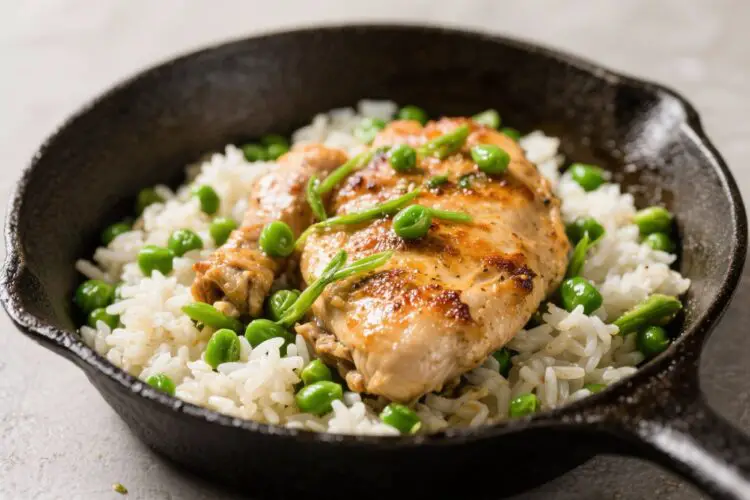
This is the kind of weeknight dinner that feels like a win from the first bite. Tender chicken, fluffy rice, and sweet spring peas come together in one skillet, soaking up a light, savory sauce. It’s simple to prep, easy to cook, and clean-up is minimal.
The flavors are bright but familiar, the texture is cozy, and the whole thing feels fresh without trying too hard. If you’re after a wholesome meal that feeds everyone happily, this is it.
What Makes This Special
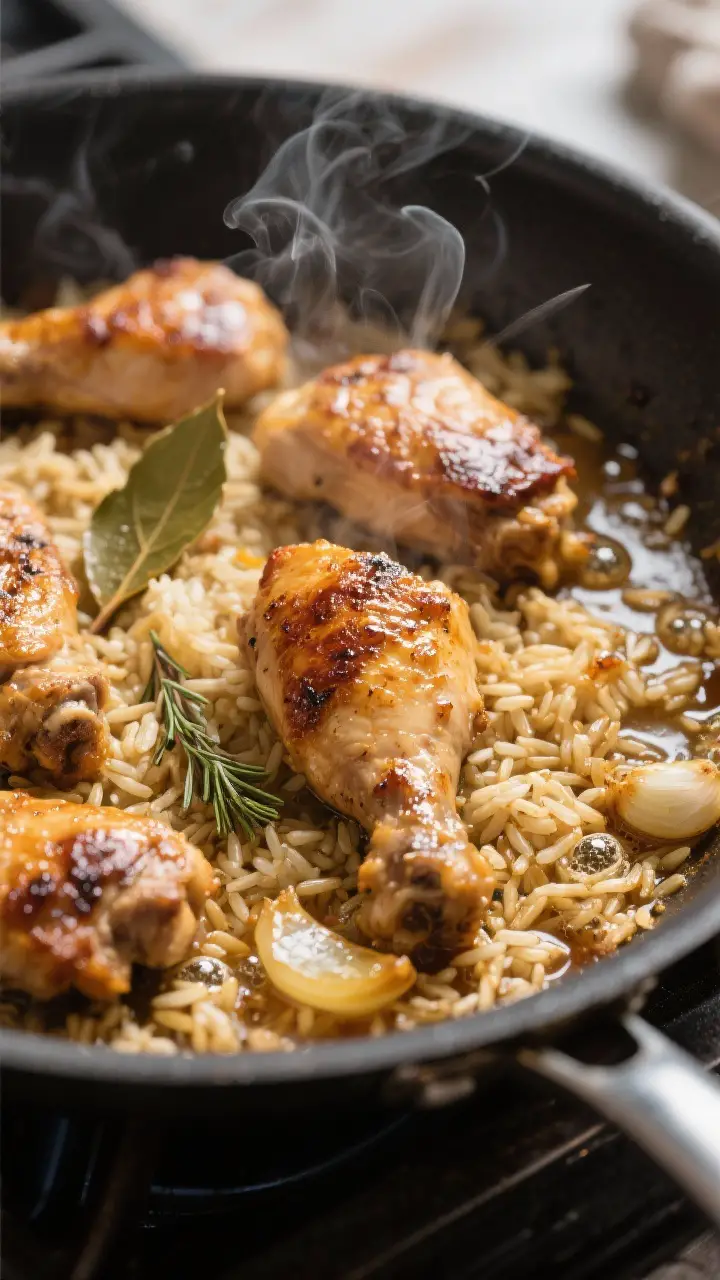
This dish blends comfort and freshness. The rice cooks right in the same skillet as the chicken, which means it absorbs all those delicious pan juices and stock.
The peas are added at the end, so they stay crisp-tender and vibrant. A squeeze of lemon and a handful of herbs wake everything up without heavy sauces. It’s a balanced, no-fuss meal that tastes like you put in more effort than you actually did.
Shopping List
- Chicken: 1.5–2 pounds boneless, skinless chicken thighs (or breasts), cut into large chunks
- Rice: 1.5 cups long-grain white rice (such as basmati or jasmine)
- Aromatics: 1 medium yellow onion, 3–4 garlic cloves
- Liquid: 3 cups low-sodium chicken stock
- Vegetables: 1.5 cups fresh or frozen spring peas
- Fresh elements: 1 lemon (zest and juice), handful of parsley or dill
- Fat: 2–3 tablespoons olive oil or butter
- Seasoning: Salt, black pepper, red pepper flakes (optional)
- Extras (optional but great): 1 teaspoon smoked paprika, 1 teaspoon dried thyme or oregano, 1 bay leaf
How to Make It
- Season the chicken. Pat the chicken dry and season it generously with salt, pepper, and smoked paprika if using.
This makes the chicken flavorful and helps it brown nicely.
- Brown the chicken. Heat olive oil in a large skillet with a lid over medium-high heat. Add the chicken in a single layer and cook until golden on both sides, about 6–8 minutes total. Transfer to a plate.
It doesn’t need to be cooked through yet.
- Soften the aromatics. Lower the heat to medium. Add a bit more oil if needed, then add the chopped onion. Cook until translucent and lightly golden, 3–4 minutes.
Stir in the minced garlic for 30 seconds, just until fragrant.
- Toast the rice. Add the rice to the skillet and stir to coat it in the oil and aromatics. Toast for 1–2 minutes. This step adds a nutty flavor and helps the rice cook evenly.
- Build flavor. Stir in dried thyme or oregano and the bay leaf if using.
Pour in the chicken stock and a pinch of red pepper flakes. Scrape up any browned bits from the bottom of the pan. Taste the liquid and adjust salt as needed—it should taste well-seasoned.
- Simmer with the chicken. Return the browned chicken and any juices to the skillet, nestling the pieces into the rice.
Bring to a gentle simmer, then cover and reduce the heat to low.
- Cook until tender. Let it cook covered for 18–22 minutes, or until the rice is tender and most of the liquid is absorbed. Avoid lifting the lid too often, which releases steam and slows cooking.
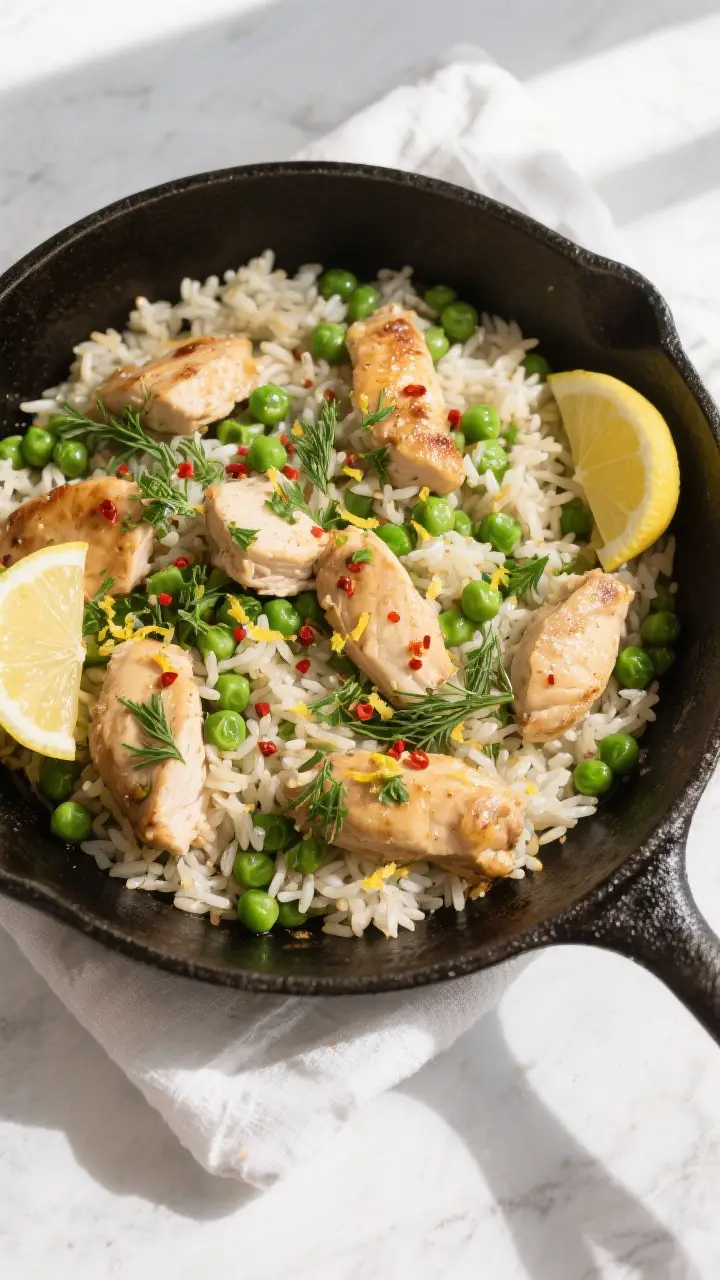
- Add peas and finish. Stir in the peas, recover, and cook for 3–4 minutes more. Off the heat, add lemon zest, a squeeze of lemon juice, and chopped parsley or dill.
Fluff the rice and adjust seasoning to taste.
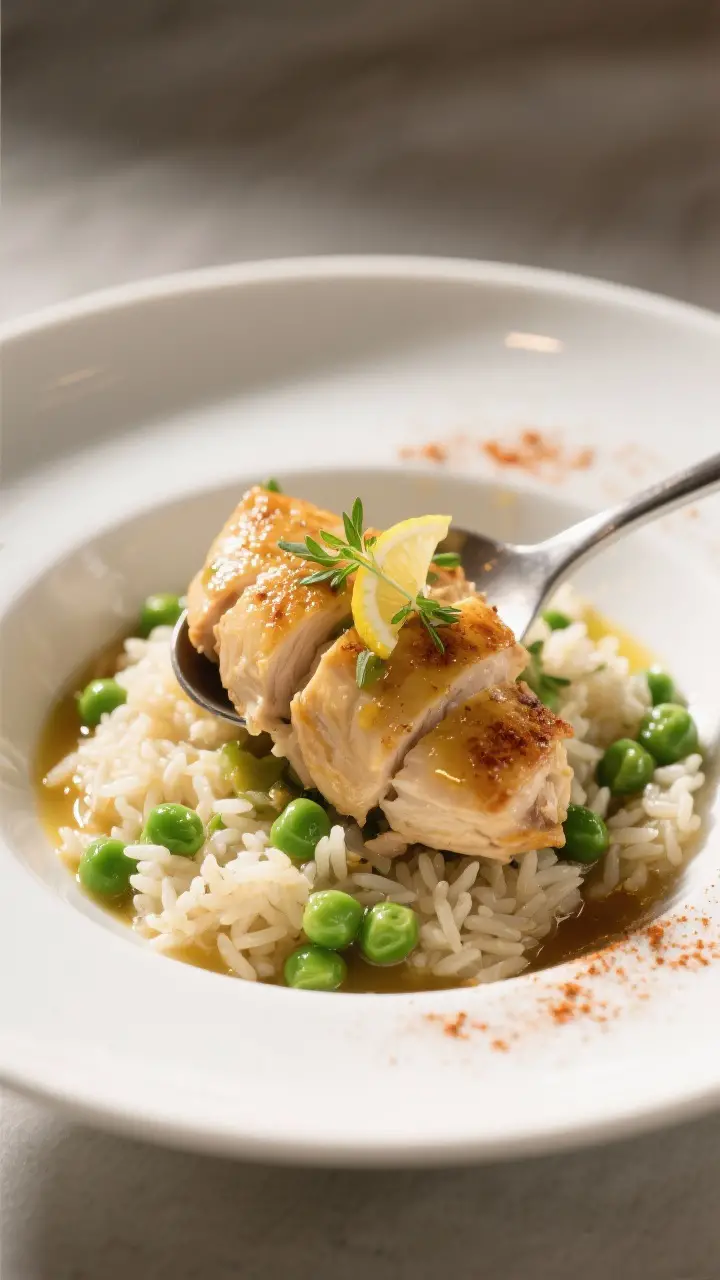
- Rest and serve. Let the skillet sit for 5 minutes so the rice settles and the flavors come together. Serve warm with extra herbs and lemon on the side.
Storage Instructions
- Cool quickly: Spread leftovers in a shallow container to cool within 1 hour.
- Refrigerate: Store in an airtight container for up to 4 days.
- Freeze: Freeze for up to 2 months. Thaw overnight in the fridge.
- Reheat: Warm gently on the stove or in the microwave with a splash of stock or water to loosen the rice.
Stir halfway through for even heating.
Benefits of This Recipe
- One-pan simplicity: Minimal dishes and easy cleanup.
- Balanced meal: Protein, carbs, and veggies all in one skillet.
- Customizable: Swap herbs, adjust spice, or add vegetables without breaking the method.
- Great for leftovers: Reheats well and tastes even better the next day.
- Seasonal flair: Spring peas bring sweetness and color, and lemon brightens everything.
Common Mistakes to Avoid
- Skipping the browning step: Searing the chicken builds flavor. Don’t rush it.
- Using the wrong rice: Long-grain white rice cooks evenly in this method. Brown or short-grain rice needs different liquid and time.
- Lifting the lid too often: Steam is your friend here.
Keep the lid on so the rice cooks properly.
- Adding peas too early: They’ll turn dull and mushy. Stir them in at the end.
- Under-seasoning the stock: The rice absorbs the cooking liquid, so make sure it tastes good from the start.
Variations You Can Try
- Lemon-Herb Chicken and Rice: Double the lemon zest and juice, and use dill plus parsley. Add a splash of white wine with the stock.
- Garlic-Parmesan Style: Stir in 1/3 cup grated Parmesan and a knob of butter at the end for a creamy finish.
- Mediterranean Twist: Add chopped sun-dried tomatoes and a handful of baby spinach with the peas.
Finish with crumbled feta.
- Spicy Harissa: Whisk a teaspoon or two of harissa paste into the stock and finish with cilantro and lemon.
- Mushroom Upgrade: Sauté sliced mushrooms with the onions for extra umami. A splash of soy sauce can deepen the flavor.
- Kid-Friendly: Skip red pepper flakes, use sweet paprika, and finish with extra peas and a little butter.
FAQ
Can I use chicken breasts instead of thighs?
Yes. Chicken breasts cook a bit faster and can dry out, so don’t over-sear them at the start.
Keep the chunks larger and check for doneness toward the end to avoid overcooking.
What if I only have frozen peas?
Frozen peas work great. Add them straight from the freezer in the final minutes of cooking. No need to thaw; just stir in and let the heat do the work.
Can I make this with brown rice?
You can, but you’ll need more liquid and time.
Use about 3.5–4 cups stock and plan for 35–45 minutes of simmering. Add peas in the last 5 minutes and keep an eye on the liquid level.
How do I prevent soggy rice?
Use long-grain white rice, toast it briefly, and keep the lid on while it cooks. Simmer gently—boiling too hard can make the rice uneven and gummy.
Let it rest for a few minutes before serving.
What skillet works best?
A 12-inch skillet with a tight-fitting lid is ideal. Cast iron or enameled cast iron holds heat well, but a heavy stainless skillet works too. Just make sure it’s wide enough to spread the rice evenly.
Can I add other vegetables?
Yes.
Try diced carrots or bell peppers with the onions, or fold in spinach with the peas at the end. Keep high-water veggies minimal to avoid soggy rice.
Is there a dairy-free version?
It’s already dairy-free if you use olive oil instead of butter and skip cheese. The lemon and herbs provide plenty of richness and brightness without dairy.
How do I know when it’s done?
The rice should be tender and most of the liquid absorbed.
The chicken will be cooked through and juicy. If the rice is still firm, add a splash of stock, cover, and cook a few more minutes.
In Conclusion
Skillet Chicken and Rice with Spring Peas is the kind of meal that fits any night of the week—hearty, fresh, and simple to pull off. It delivers balanced flavor with minimal effort and invites easy variations.
Keep this method in your back pocket, and you’ll have a reliable go-to that tastes bright, comforting, and crowd-pleasing every time.