
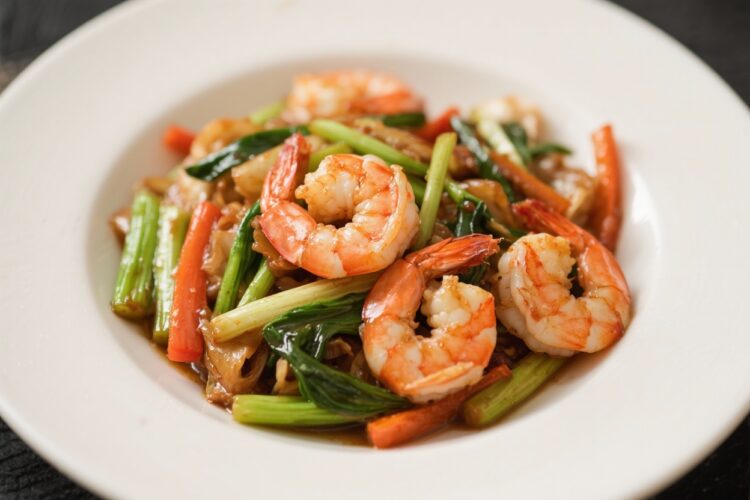
Stir fry is the kind of meal that makes weeknights easier and still feels special. This shrimp stir fry with spring vegetables brings bright colors, crisp textures, and a light, savory sauce that ties everything together. It cooks fast, tastes fresh, and doesn’t require anything fancy.
If you love tender shrimp and seasonal greens that stay snappy, this is your dinner. Serve it over rice or noodles, and you’ve got a complete meal in under 30 minutes.
What Makes This Recipe So Good
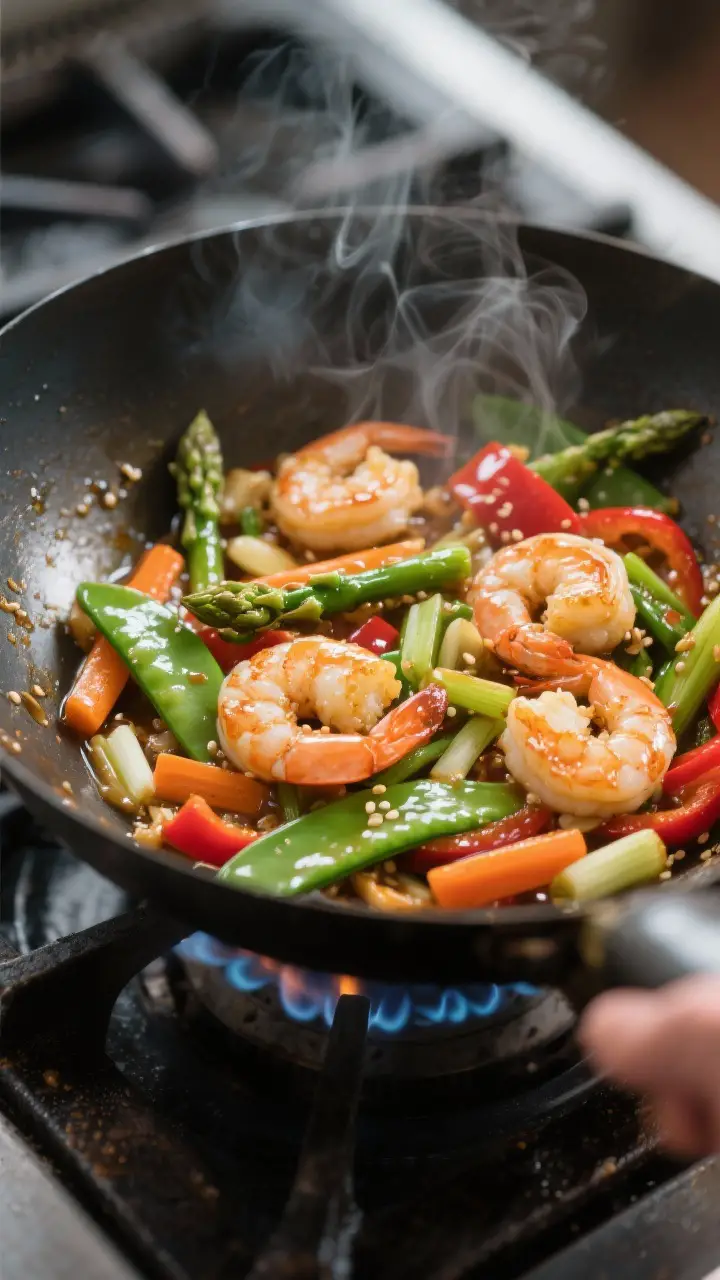
- Peak-season produce: Asparagus, snap peas, and baby carrots are crisp, sweet, and perfect for quick cooking.
- Quick-cooking protein: Shrimp cook in minutes, so dinner hits the table fast without sacrificing flavor.
- Light but satisfying: A gingery, garlicky sauce coats everything without feeling heavy or greasy.
- Flexible and forgiving: Swap in whatever spring vegetables you find at the market—broccolini, bok choy, or tender greens work well.
- Meal prep friendly: You can chop vegetables and mix the sauce in advance, making the final cook even faster.
Shopping List
- Shrimp: 1 to 1.25 pounds large shrimp (16–20 or 21–25 count), peeled and deveined
- Asparagus: 1 bunch, trimmed and cut into 1- to 2-inch pieces
- Sugar snap peas or snow peas: 2 cups, strings removed
- Baby carrots: 1 cup, thinly sliced on the bias (or use regular carrots)
- Spring onions or scallions: 4–5, sliced (separate white and green parts)
- Garlic: 3 cloves, minced
- Fresh ginger: 1 tablespoon, finely grated
- Red bell pepper: 1, thinly sliced (optional but adds color)
- Neutral oil: 2–3 tablespoons (avocado, canola, or peanut)
- Sesame oil: 1 teaspoon (to finish)
- Sesame seeds: 1 tablespoon (optional garnish)
- Fresh lime or lemon: 1, for a bright finish
Sauce Ingredients:
- 1/3 cup low-sodium soy sauce or tamari
- 2 tablespoons rice vinegar
- 1 tablespoon oyster sauce or hoisin (oyster for savory depth, hoisin for a touch sweeter)
- 1 tablespoon honey or brown sugar
- 1/2 cup low-sodium chicken broth or water
- 1 tablespoon cornstarch
- 1/2 teaspoon red pepper flakes or a dash of chili-garlic sauce (to taste)
To Serve:
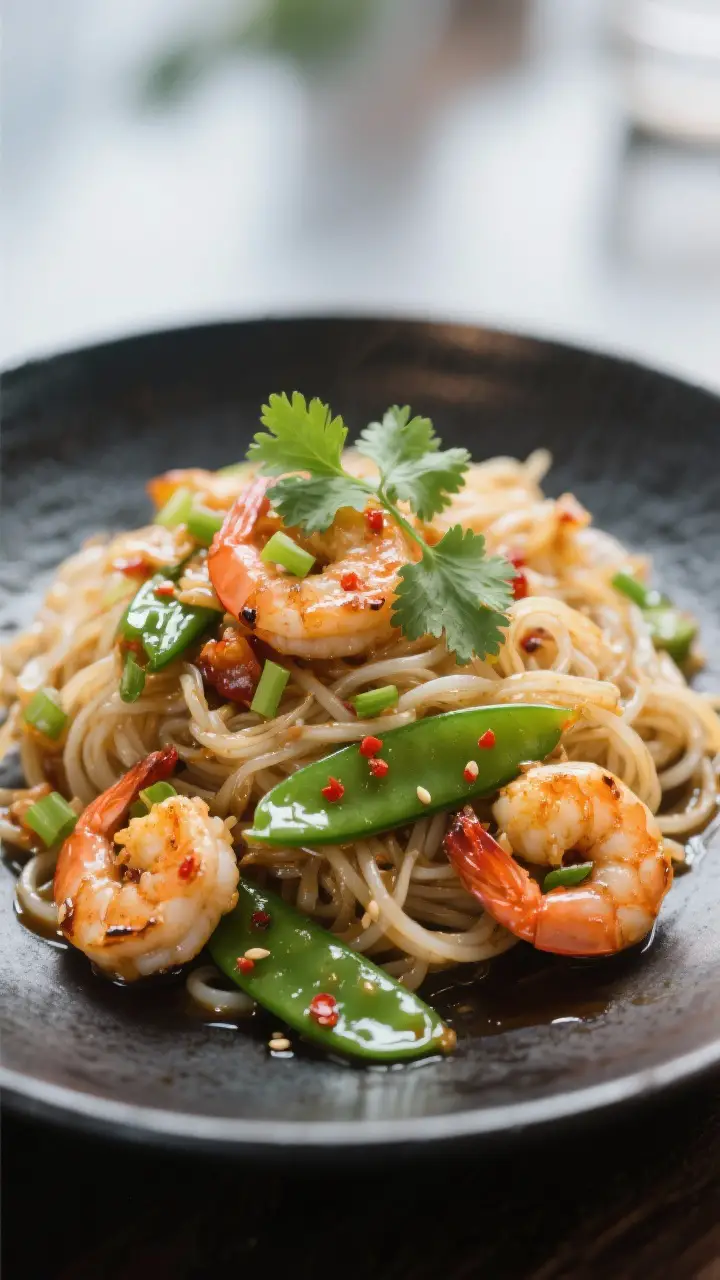
- Steamed jasmine rice, brown rice, or rice noodles
- Fresh cilantro, basil, or mint (optional)
Instructions
- Prep the shrimp: Pat shrimp dry with paper towels and season lightly with salt and pepper. Keep them chilled while you prepare the vegetables.
- Make the sauce: In a bowl, whisk together soy sauce, rice vinegar, oyster or hoisin sauce, honey, broth, cornstarch, and chili flakes.
Set aside near the stove.
- Heat the pan: Set a large skillet or wok over medium-high heat. Add 1 tablespoon oil and let it shimmer.
- Sear the shrimp: Add shrimp in a single layer. Cook 1–2 minutes per side until just opaque and lightly browned.
Transfer to a plate. Do not overcook.
- Stir-fry the hardy veg: Add another tablespoon of oil. Toss in carrots, asparagus, and the white parts of the scallions.
Stir-fry 2–3 minutes until slightly tender but still crisp.
- Add the quick-cook veg: Add snap peas and red bell pepper. Stir-fry 2 minutes. The vegetables should stay bright and crunchy.
- Aromatics time: Push vegetables to the sides.
Add a splash of oil if the pan is dry. Add garlic and ginger to the center and stir 20–30 seconds until fragrant.
- Sauce it up: Stir the sauce to re-disperse the cornstarch. Pour it into the pan.
Toss with the vegetables and let it bubble 30–60 seconds until slightly thickened.
- Finish with shrimp: Return shrimp and any juices to the pan. Toss to coat and warm through, about 1 minute. Remove from heat.
- Final touches: Stir in sesame oil and the green parts of the scallions.
Squeeze in a little lime or lemon juice. Taste and adjust seasoning—add more soy for salt, vinegar for zip, or honey for balance.
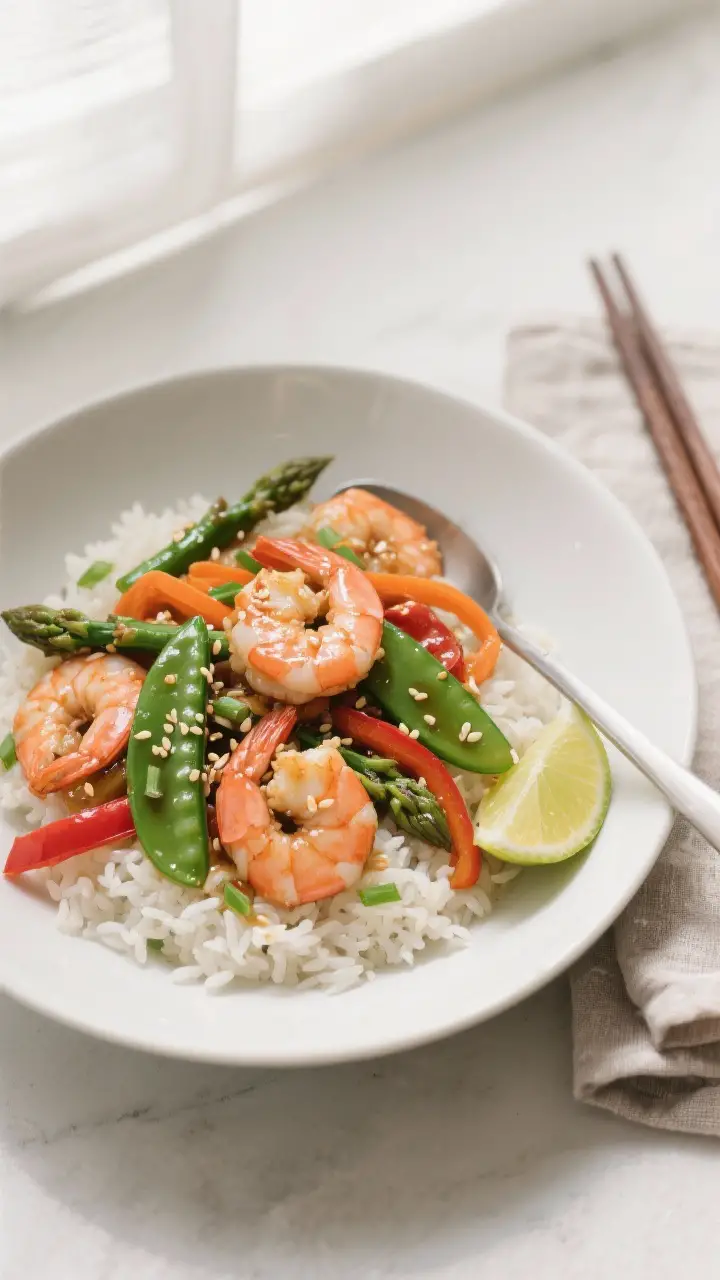
- Serve: Spoon over hot rice or noodles. Sprinkle with sesame seeds and fresh herbs if using.
How to Store
- Refrigerator: Store leftovers in an airtight container for up to 3 days.
Reheat gently in a skillet over medium heat or in the microwave in short bursts to avoid overcooking the shrimp.
- Freezer: Not ideal. Shrimp can turn rubbery and vegetables lose their snap. If you must freeze, do so without the sauce and add a fresh batch of sauce when reheating.
- Meal prep tip: Keep cooked rice separate so it doesn’t get soggy.
Reheat rice first, then add stir fry on top.
Health Benefits
- Lean protein: Shrimp are high in protein and low in calories, which helps support muscle and satiety.
- Spring vegetables: Asparagus and snap peas provide fiber, vitamin C, folate, and antioxidants that support immunity and energy.
- Balanced sauce: Using low-sodium soy sauce and a small amount of honey keeps flavors bright without excessive salt or sugar.
- Healthy fats: A touch of sesame oil adds flavor and heart-friendly fats without weighing down the dish.
What Not to Do
- Don’t overcrowd the pan: Overcrowding steams the ingredients and kills the crisp texture. Cook in batches if needed.
- Don’t overcook the shrimp: Pull them as soon as they turn opaque. They’ll finish gently in the sauce.
- Don’t skip drying the shrimp: Moisture prevents good browning and can dilute the sauce.
- Don’t add the sauce too early: Thicken it at the end so vegetables stay crisp and the sauce doesn’t burn.
Recipe Variations
- Spicy chili-lime: Add extra chili-garlic sauce and finish with more lime juice and zest.
- Garlic-butter twist: Swap sesame oil for 1 tablespoon butter at the end and add extra garlic for a rich, restaurant-style finish.
- Citrus-ginger: Add 1 teaspoon orange zest and replace half the broth with fresh orange juice for a bright, fragrant sauce.
- Low-carb option: Serve over cauliflower rice or shredded cabbage sautéed quickly with a splash of soy.
- Vegetarian-friendly: Replace shrimp with extra-firm tofu, pressed and cubed.
Pan-sear until golden before stir-frying vegetables.
- Gluten-free: Use tamari instead of soy sauce and check labels on oyster/hoisin sauces.
FAQ
Can I use frozen shrimp?
Yes. Thaw them overnight in the fridge or quickly under cold running water. Pat very dry before cooking to get a good sear and avoid a watery stir fry.
What’s the best pan for stir fry?
A carbon steel wok is ideal, but a large stainless steel or cast iron skillet works well.
The key is high heat and enough surface area so ingredients don’t steam.
How do I keep vegetables crisp?
Cut them evenly, cook the harder ones first, and keep the heat high. Only cook until just tender, then finish with the sauce for a quick glaze.
Can I make it without oyster sauce?
Absolutely. Use hoisin for a slightly sweeter profile, or skip it and add an extra teaspoon of soy and a splash of fish sauce for depth.
What if I don’t like asparagus?
Try broccolini, bok choy, zucchini, or thin green beans.
Keep the pieces small and cook times short so they stay crisp.
How do I avoid soggy stir fry?
Dry your shrimp and vegetables, preheat the pan well, and cook in batches if necessary. Add the sauce at the end and cook just until it thickens.
Is this dish kid-friendly?
Usually, yes. Keep the chili minimal and use hoisin instead of oyster sauce for a gentler, slightly sweeter flavor.
Can I make the sauce ahead?
Yes.
Mix the sauce up to 2 days ahead and refrigerate. Stir well before using because the cornstarch will settle.
Wrapping Up
This shrimp stir fry with spring vegetables is fresh, colorful, and ready in the time it takes to cook a pot of rice. With tender shrimp, crisp greens, and a bright sauce, it hits all the right notes for a weeknight meal.
Keep the heat high, the cook time short, and the flavors balanced, and you’ll have a dish that feels both simple and special. Bookmark it for spring and make it your go-to when you want something fast and fresh.
Printable Recipe Card
Want just the essential recipe details without scrolling through the article? Get our printable recipe card with just the ingredients and instructions.