
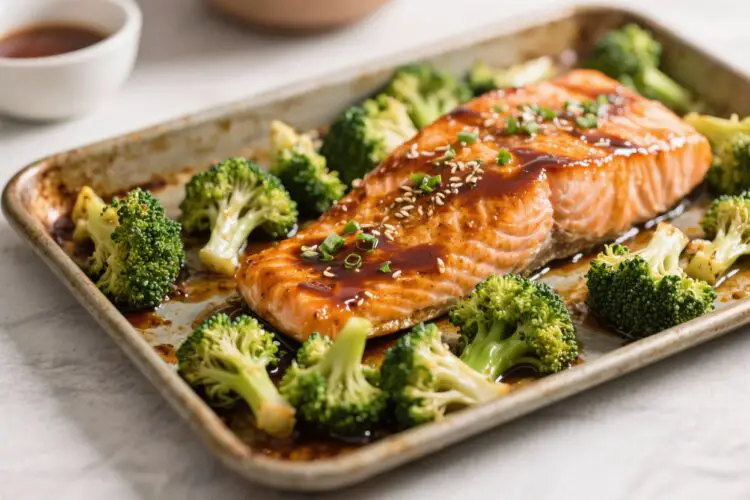
Weeknights call for meals that are fast, satisfying, and easy to clean up. This sheet pan teriyaki salmon with broccoli checks every box while delivering big flavor. You’ll get tender, flaky salmon with a glossy teriyaki glaze and crisp-tender broccoli that soaks up the sauce.
Everything cooks on one pan in under 20 minutes, with minimal prep and no fuss. It’s a balanced, feel-good dinner you’ll want to make on repeat.
What Makes This Special

This recipe is all about simplicity and punchy flavor without the mess. The teriyaki sauce uses pantry staples and comes together in minutes, but it tastes like a restaurant classic.
Roasting the salmon and broccoli on the same pan means everything finishes at the same time. You’ll also avoid overcooked fish thanks to a quick, hot roast that keeps the salmon juicy. Plus, it’s super flexible—swap veggies, adjust sweetness, or add heat to match your mood.
Ingredients
- 4 salmon fillets (about 5–6 oz each), skin-on or skinless
- 4 cups broccoli florets, cut into bite-size pieces
- 1 tablespoon avocado oil or olive oil
- 1/2 teaspoon kosher salt, plus more to taste
- 1/4 teaspoon black pepper
- 2 teaspoons sesame seeds, for garnish (optional)
- 2 scallions, thinly sliced, for garnish (optional)
For the teriyaki sauce:
- 1/3 cup low-sodium soy sauce or tamari
- 3 tablespoons honey or maple syrup
- 1 tablespoon rice vinegar
- 1 tablespoon mirin (optional, for extra depth)
- 2 teaspoons toasted sesame oil
- 2 cloves garlic, grated or minced
- 1 teaspoon fresh ginger, grated (or 1/4 teaspoon ground ginger)
- 1 tablespoon cornstarch
- 1/3 cup water
- Optional heat: 1/4 to 1/2 teaspoon red pepper flakes or a squeeze of sriracha
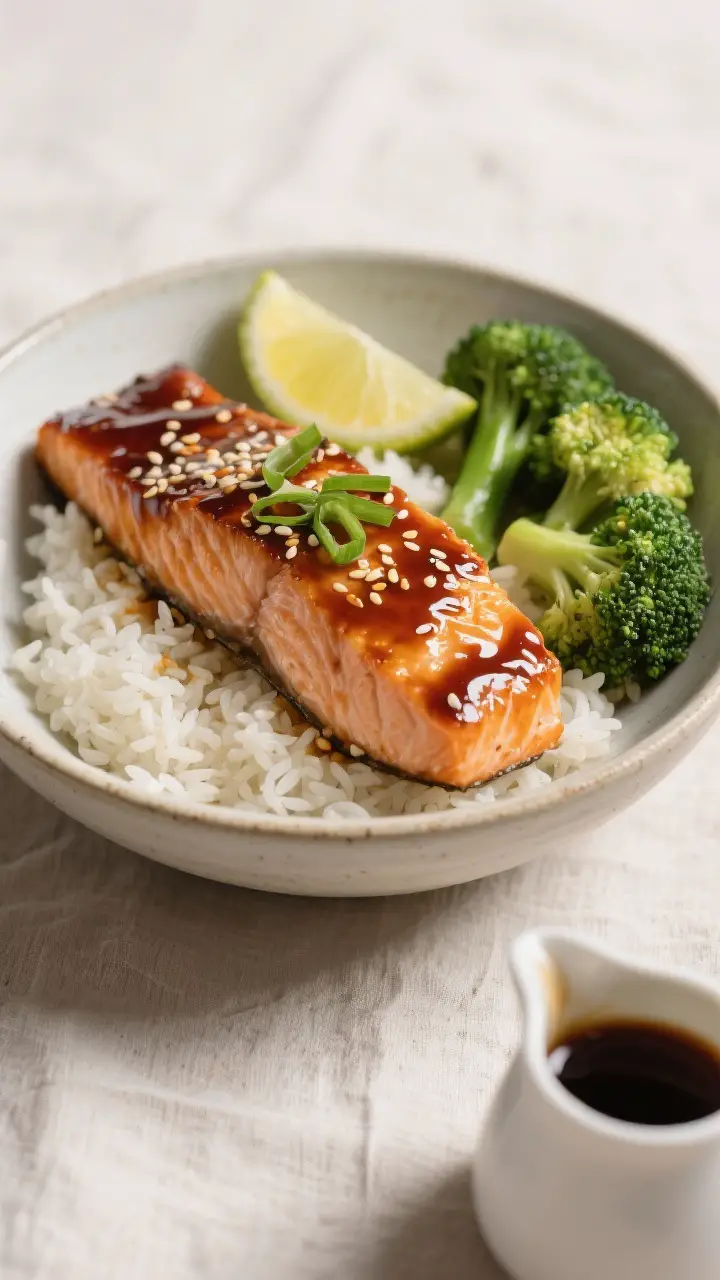
To serve (optional): Steamed rice, cauliflower rice, or quinoa; lime or lemon wedges
How to Make It
- Preheat and prep the pan. Heat the oven to 425°F (220°C).
Line a rimmed sheet pan with foil or parchment for easy cleanup. Lightly oil the surface.
- Toss the broccoli. Add broccoli to the pan. Drizzle with the oil, and sprinkle with 1/4 teaspoon salt and the pepper.
Toss to coat and spread in an even layer, leaving space for the salmon.
- Start roasting the broccoli. Roast for 6–8 minutes to give it a head start. This ensures tender stems and crisp edges without overcooking the fish.
- Make the teriyaki sauce. While broccoli roasts, whisk soy sauce, honey, rice vinegar, mirin (if using), sesame oil, garlic, ginger, cornstarch, and water in a small saucepan. Bring to a simmer over medium heat, whisking, until glossy and slightly thickened, 2–3 minutes.
Adjust sweetness or heat to taste.
- Season the salmon. Pat the fillets dry with paper towels and sprinkle with the remaining 1/4 teaspoon salt. This helps the glaze stick and keeps the fish flavorful.
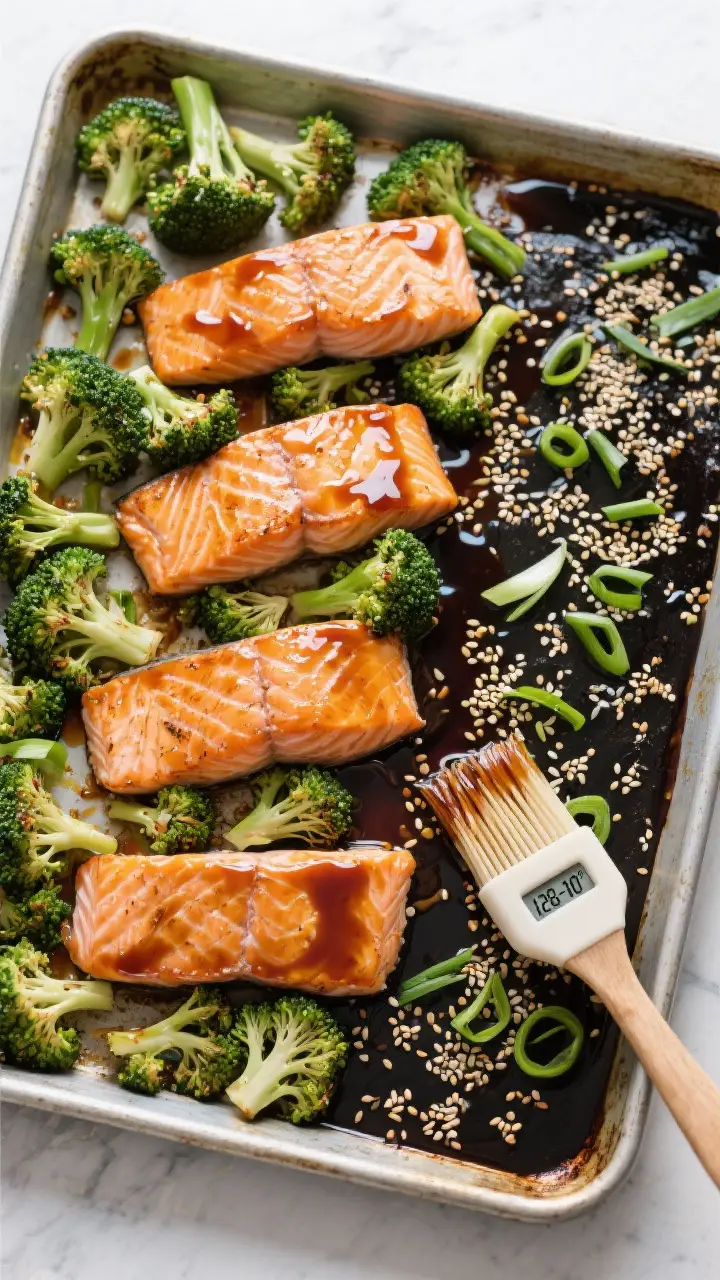
- Add salmon to the pan. Pull the pan from the oven. Scoot the broccoli to the sides and nestle salmon in the center, skin-side down if using skin-on fillets.
- Glaze generously. Spoon about half the teriyaki sauce over the salmon and drizzle a little over the broccoli.
Reserve the rest for serving.
- Roast to perfection. Return the pan to the oven and roast 8–12 minutes, depending on thickness. Salmon is done when it flakes easily and reaches an internal temperature of 125–130°F for medium (or up to 140°F if you prefer more done).
- Finish and garnish. Brush the salmon with a final swipe of sauce. Sprinkle with sesame seeds and scallions if you like.
Serve with rice or quinoa and extra sauce on the side.
Keeping It Fresh
Leftovers keep well for 2–3 days in an airtight container in the fridge. Store the salmon and broccoli together, and keep any extra sauce in a separate small container. Reheat gently in a 300°F oven or in a covered skillet over low heat until warm—this helps prevent the salmon from drying out.
If reheating in the microwave, use short bursts and low power. For meal prep, cook the rice fresh or reheat with a splash of water to bring back moisture.
Health Benefits
- Omega-3 powerhouse: Salmon provides heart-healthy omega-3 fats that support brain function and reduce inflammation.
- Lean protein: Each serving packs quality protein to keep you full and support muscle recovery.
- Fiber and micronutrients: Broccoli is rich in fiber, vitamin C, vitamin K, and antioxidants that support immunity and gut health.
- Balanced plate: Pairing protein, fiber-rich veggies, and a moderate amount of carbs (like rice) creates a steady, satisfying meal.
- Lower sodium option: Using low-sodium soy sauce keeps the salt in check without losing flavor.
Pitfalls to Watch Out For
- Overcooking the salmon: It can go from perfect to dry fast. Start checking a couple of minutes early, especially for thinner fillets.
- Skipping the broccoli head start: Without that initial roast, the fish may finish before the broccoli gets tender.
- Watery sauce: Simmer the teriyaki until it thickens and clings to a spoon.
If it’s thin, cook another minute or add a tiny pinch more cornstarch mixed with water.
- Overcrowding the pan: Give space for air to circulate so broccoli roasts instead of steaming.
- Too-salty sauce: Taste before glazing. If it’s too salty, add a splash of water and a bit more honey or rice vinegar to balance.
Recipe Variations
- Veggie swap: Try snap peas, asparagus, green beans, or thinly sliced carrots. Adjust timing as needed—more delicate veggies may not need the head start.
- Citrus twist: Add orange zest and a squeeze of orange juice to the teriyaki for a bright, slightly sweet finish.
- Spicy kick: Stir in sriracha, gochujang, or red pepper flakes for heat.
- Gluten-free: Use tamari or coconut aminos instead of soy sauce, and confirm your cornstarch is gluten-free.
- No cornstarch: Reduce the sauce longer to thicken, or use arrowroot starch (add off the heat to avoid sliminess).
- Skin-on sear: If you love crispy skin, sear the salmon skin-side down in a hot skillet for 2–3 minutes, then transfer to the sheet pan to finish roasting with the broccoli.
- Grain options: Serve with brown rice, jasmine rice, quinoa, or soba noodles.
For low-carb, use cauliflower rice.
FAQ
Can I use frozen salmon?
Yes. Thaw the fillets in the fridge overnight or in a sealed bag under cold water. Pat dry very well so the glaze adheres and the salmon roasts instead of steaming.
What if I don’t have mirin?
Skip it or add a touch more honey and a small splash of rice vinegar.
Mirin adds depth and mild sweetness, but the sauce will still be delicious without it.
How do I know when the salmon is done?
Look for opaque flesh that flakes easily with a fork. A thermometer reading of 125–130°F in the thickest part gives a moist, tender result. It will rise a couple of degrees as it rests.
Can I make the sauce ahead?
Absolutely.
Make the teriyaki up to 5 days in advance and store it in the fridge. Reheat gently and whisk before using. If it thickens too much, loosen with a splash of water.
What other fish works here?
Arctic char, steelhead trout, or cod fillets work well.
Adjust the roasting time based on thickness—cod may need a couple of extra minutes.
How can I make it less sweet?
Reduce the honey to 2 tablespoons and increase rice vinegar slightly. You can also add a squeeze of lemon at the end for brightness that cuts sweetness.
Any tips for extra-crispy broccoli?
Use a large pan and don’t crowd the florets. Roast them dry (no sauce) during the head start, then lightly drizzle with sauce at the end.
You can also broil for the last 1–2 minutes.
Is this meal good for meal prep?
Yes. Portion salmon, broccoli, and rice into containers with extra sauce on the side. Reheat gently.
For best texture, add scallions and sesame seeds after reheating.
Wrapping Up
Sheet pan teriyaki salmon with broccoli brings big flavor and weeknight ease to your table. With a glossy, savory-sweet glaze and crisp-tender veggies, it tastes special without extra work. Keep the ingredients simple, watch the cook time, and finish with fresh garnishes for a polished, restaurant-style plate at home.
Once you try it, you’ll have a new go-to that’s both comforting and fresh.