
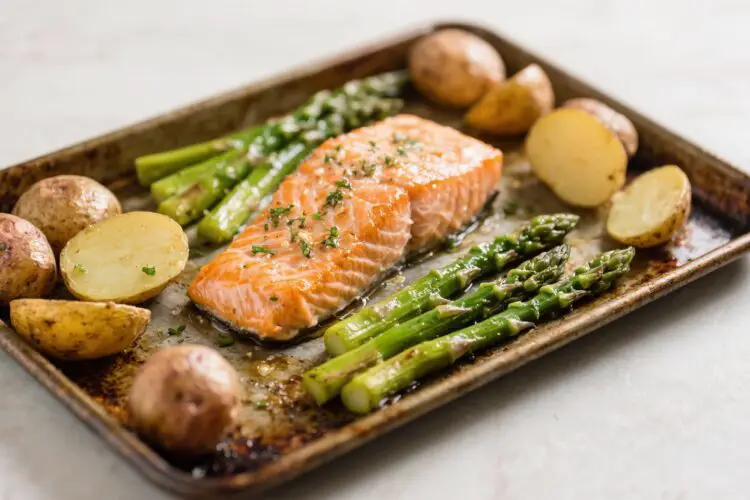
This is the kind of dinner that makes a busy evening feel easy. You toss everything on one pan, slide it into the oven, and about half an hour later, you’ve got flaky salmon, tender asparagus, and golden new potatoes on your plate. The flavors are clean and bright, with lemon, garlic, and a touch of herbs doing the heavy lifting.
It’s hearty without feeling heavy, and it looks impressive with almost no effort. If you like meals that are both fast and fresh, this one’s going to be a regular.
What Makes This Recipe So Good
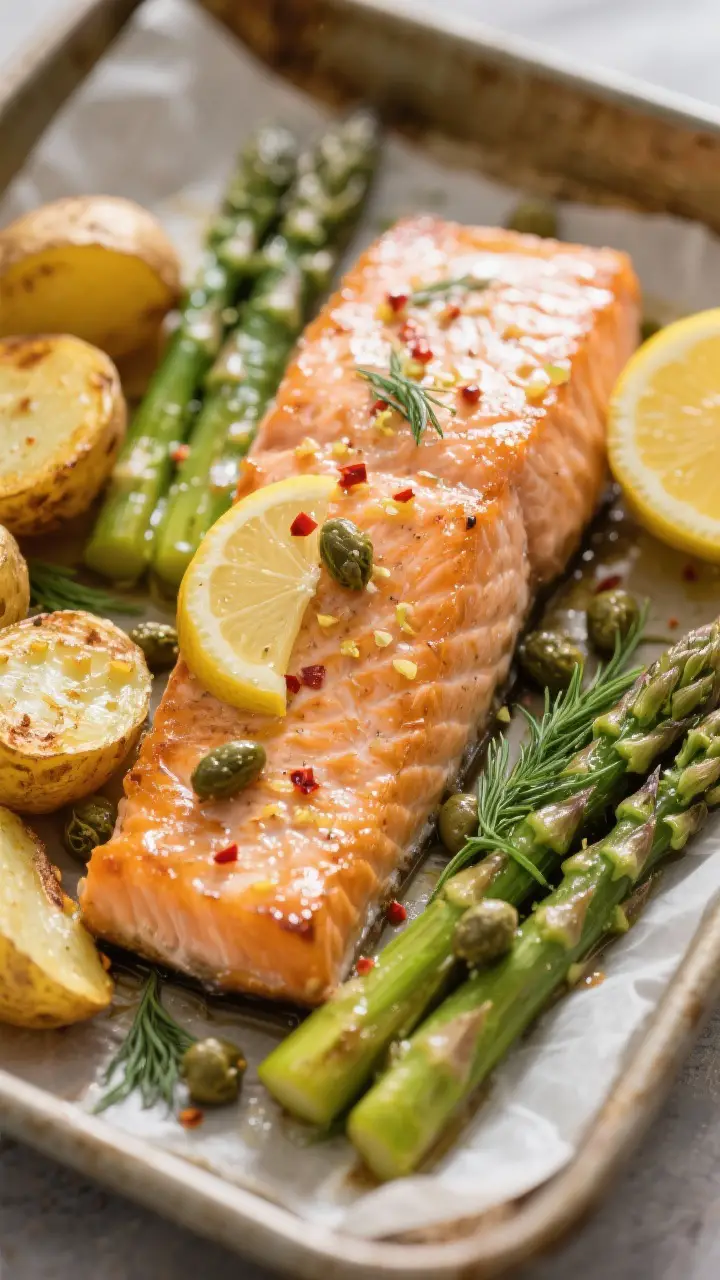
- One-pan convenience: Fewer dishes, less hassle, and a complete meal made on a single sheet pan.
- Balanced flavors: Crispy potatoes, juicy salmon, and snappy asparagus, all tied together with lemon and garlic.
- Quick cook time: Most of the work is hands-off, and dinner is ready in roughly 35–40 minutes.
- Easy to customize: Swap herbs, add spices, or use a different vegetable without changing the method.
- Nutritious and satisfying: Protein, fiber, and healthy fats make this both filling and good for you.
Ingredients
- 1.5 pounds new potatoes, halved (quarter if larger than 1.5 inches)
- 2 tablespoons olive oil, plus 1 tablespoon for the salmon
- 1 teaspoon kosher salt, divided (more to taste)
- 1/2 teaspoon black pepper, divided
- 4 salmon fillets (about 6 ounces each), skin-on or skinless
- 1 pound asparagus, trimmed (snap off woody ends)
- 2 cloves garlic, minced
- 1 lemon: zest and juice, plus extra wedges for serving
- 1 teaspoon Dijon mustard
- 1 teaspoon honey or maple syrup (optional, for balance)
- 1 teaspoon dried Italian seasoning or 1 tablespoon chopped fresh herbs (dill, parsley, or thyme)
- 1 tablespoon capers, drained (optional, for a briny pop)
- Red pepper flakes, to taste (optional)
Instructions
- Preheat the oven: Set to 425°F (220°C). Line a large rimmed sheet pan with parchment for easy cleanup, or oil it lightly.
- Start the potatoes: In a bowl, toss the halved new potatoes with 2 tablespoons olive oil, 1/2 teaspoon kosher salt, and 1/4 teaspoon black pepper.
Spread them cut-side down on the sheet pan. Roast for 15–18 minutes until just starting to brown.
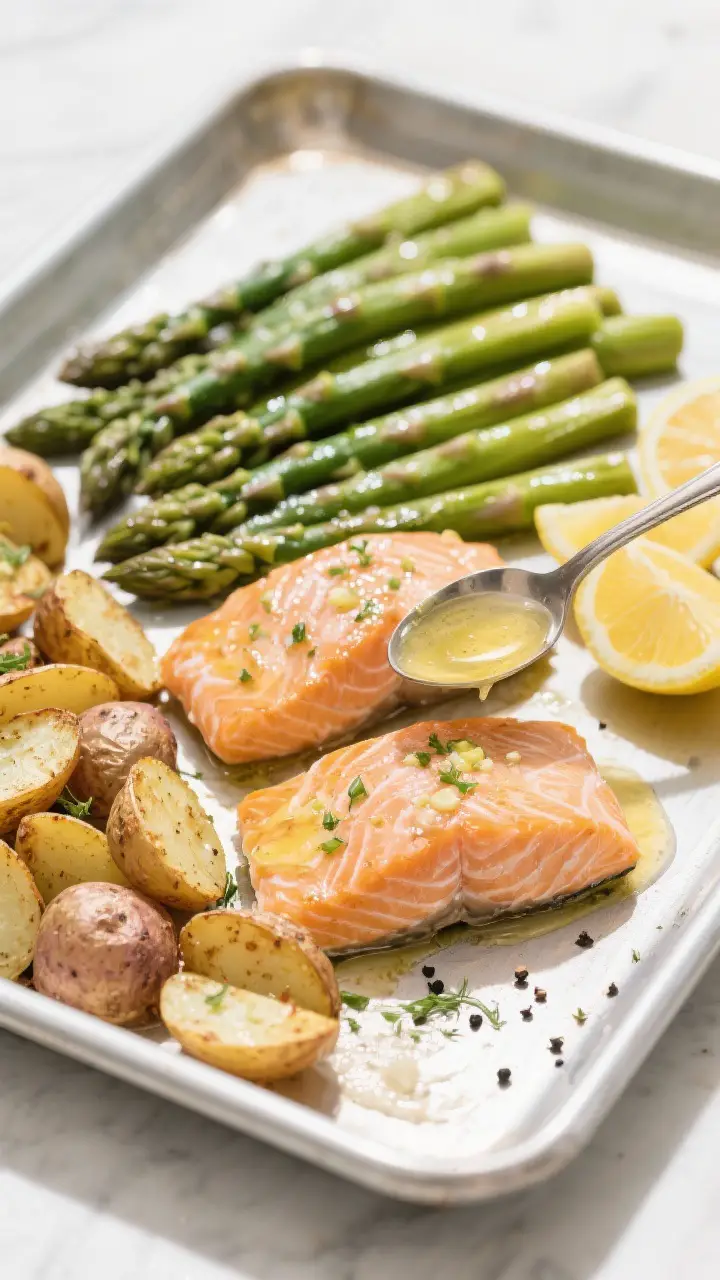
- Make the lemon-garlic mix: In a small bowl, combine 1 tablespoon olive oil, minced garlic, lemon zest, 1 tablespoon lemon juice, Dijon, honey (if using), Italian seasoning or fresh herbs, and a pinch of red pepper flakes.
- Season the salmon: Pat the fillets dry. Sprinkle with 1/2 teaspoon kosher salt and 1/4 teaspoon black pepper.
Spoon half of the lemon-garlic mixture over the salmon. Let sit while the potatoes roast.
- Prep the asparagus: Trim the woody ends. If thick, peel the lower third with a vegetable peeler.
Toss with a drizzle of olive oil and a pinch of salt and pepper.
- Add salmon and asparagus to the pan: Remove the pan from the oven. Scoot the potatoes to one side to make space. Place the salmon fillets skin-side down (if skin-on) and arrange the asparagus in a single layer.
- Roast to finish: Return the pan to the oven for 10–12 minutes, or until the salmon flakes easily and reads 125–130°F in the center for medium.
Asparagus should be tender-crisp and potatoes golden.
- Toss with lemon and capers: Spoon the remaining lemon-garlic mixture over the salmon and vegetables. Sprinkle capers over the top if using. Squeeze more lemon juice to taste.
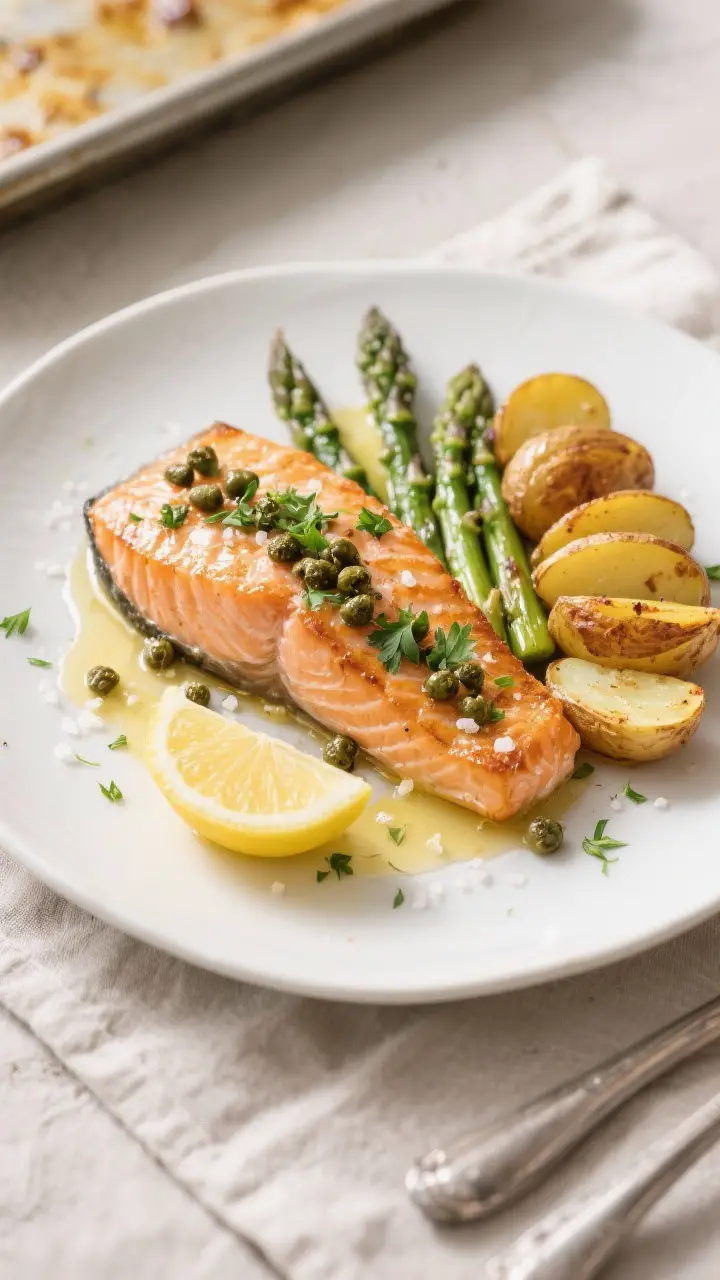
- Serve: Plate everything hot with extra lemon wedges.
Add a final pinch of salt if needed.
Storage Instructions
- Refrigerate: Cool completely, then store in airtight containers for up to 2 days.
- Reheat: Warm gently in a 300°F oven for 8–10 minutes, or microwave in short bursts at 50% power. Avoid overcooking the salmon.
- Freezing: Not ideal for asparagus or potatoes, which can get mushy. If you must freeze, do so with the salmon only, up to 2 months.
Thaw in the fridge and reheat gently.
- Meal prep tip: Keep the salmon separate from the vegetables to prevent overcooking when reheating.
Why This is Good for You
- Protein and omega-3s: Salmon brings high-quality protein and heart-friendly fats that support brain and heart health.
- Fiber and vitamins: Asparagus and potatoes offer fiber, vitamin C, vitamin K, folate, and potassium.
- Balanced plate: You get carbs, protein, and healthy fats all in one go, which helps keep you full and energized.
- Lower sodium, big flavor: Lemon, garlic, and herbs add brightness without relying on heavy sauces or excess salt.
Common Mistakes to Avoid
- Crowding the pan: Overlapping ingredients steam instead of roast. Use a large pan or two smaller pans if needed.
- Uneven potato size: Cut potatoes to similar sizes so they cook evenly. Larger pieces take longer and can throw off timing.
- Overcooking salmon: Start checking at 10 minutes after adding the salmon.
Pull it when it flakes and looks slightly translucent in the center.
- Skipping the dry pat: Patting the salmon dry helps it sear and prevents a watery texture.
- Adding asparagus too early: It cooks fast. Add it when you add the salmon so it stays crisp-tender.
Variations You Can Try
- Herb switch: Swap Italian seasoning for fresh dill and parsley, or try thyme and a pinch of smoked paprika.
- Citrus twist: Use orange zest and juice for a sweeter, mellow note. Add a squeeze of lemon at the end for brightness.
- Spicy version: Rub salmon with chili powder and cayenne, and finish with a drizzle of hot honey.
- Veggie swap: Use broccolini, green beans, or halved Brussels sprouts.
Adjust roasting times: start firmer veggies with the potatoes.
- Mustard crust: Brush salmon with extra Dijon and sprinkle with panko and herbs for a light crust.
- Dairy finish: Add a few small pats of butter to the pan in the last 5 minutes for a richer sauce.
FAQ
Can I use frozen salmon?
Yes. Thaw it fully in the refrigerator overnight, then pat very dry before seasoning. Frozen fillets may be slightly thinner, so start checking doneness at the 8-minute mark after you add them to the pan.
What if my asparagus is very thick or very thin?
For thick spears, peel the lower third and roast for the full time with the salmon.
For thin spears, add them in the last 6–8 minutes so they don’t overcook.
How do I know when the salmon is done?
It should flake easily with a fork and look slightly translucent in the center. An instant-read thermometer should read about 125–130°F for medium. It will continue to cook slightly from residual heat.
Can I cook this at a lower temperature?
You can, but the potatoes may not crisp as well.
If you need to use 400°F, add a few extra minutes to the potato roasting time and keep a close eye on the salmon.
What can I use instead of new potatoes?
Baby gold or red potatoes work well. You can also use fingerlings or diced Yukon Golds. Just keep the pieces uniform and adjust the roasting time as needed.
Is skin-on or skinless salmon better for this?
Either works.
Skin-on helps keep the fillet moist and releases easily from the pan once cooked. If using skinless, oil the pan or parchment well so the salmon doesn’t stick.
Final Thoughts
This sheet pan salmon with asparagus and new potatoes is the kind of recipe you’ll rely on when you need something fast, fresh, and dependable. It’s weeknight-friendly, yet it feels special enough for company.
Keep lemons, garlic, and a few herbs on hand, and you’re halfway to dinner. Once you try it, you’ll see how easy it is to make a healthy, satisfying meal with almost no cleanup.
Printable Recipe Card
Want just the essential recipe details without scrolling through the article? Get our printable recipe card with just the ingredients and instructions.