
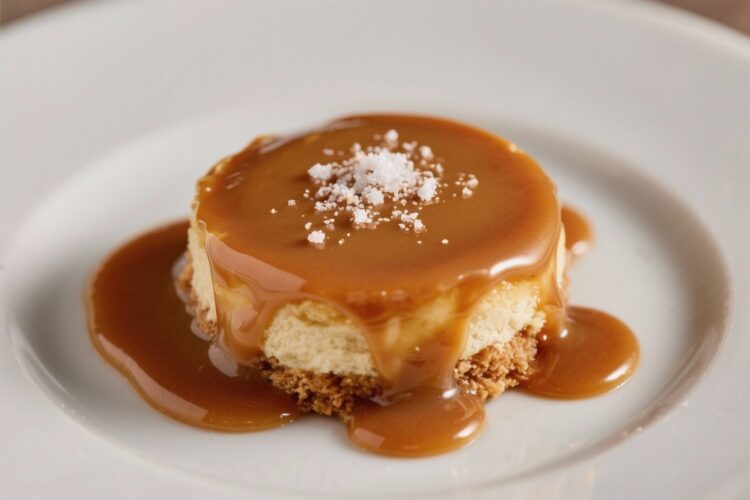
Salted caramel hits that perfect sweet-salty balance that makes everything taste better. Drizzled over ice cream, stirred into coffee, or spooned straight from the jar, it’s a small luxury you can make at home with just a few ingredients. This version is smooth, glossy, and deeply flavored—no candy thermometer required.
If caramel has ever intimidated you, don’t worry. With a little patience and the right steps, you’ll get it right on the first try.
What Makes This Recipe So Good
- Simple ingredient list: You only need sugar, butter, cream, vanilla, and salt—nothing fancy.
- Big flavor payoff: Cooking the sugar to an amber color brings out a rich, toasty taste you can’t get from shortcuts.
- Reliable texture: The method prevents grainy crystals and gives you a silky, pourable sauce.
- No special equipment: A sturdy saucepan and a heatproof spatula are all you need.
- Versatile: Use it as a topping, filling, or mix-in for desserts and drinks.
Shopping List
- Granulated sugar: 1 cup (200 g)
- Unsalted butter: 6 tablespoons (85 g), cut into pieces
- Heavy cream: 1/2 cup (120 ml), at room temperature
- Vanilla extract: 1 teaspoon
- Fine sea salt or kosher salt: 1/2 to 3/4 teaspoon, to taste
- Optional: Flaky sea salt for finishing
Instructions
- Set up your tools. Use a medium heavy-bottomed saucepan (at least 2–3 quarts) and a heatproof spatula or wooden spoon. Have the butter and cream measured and ready.
This goes fast once the sugar melts.
- Warm the cream slightly. If your cream is cold, microwave it for 20–30 seconds. Warm cream helps prevent the caramel from seizing and sputtering too aggressively.
- Melt the sugar. Add the granulated sugar to the dry saucepan and place over medium heat. As it warms, the sugar will clump, then melt into a clear syrup.
Stir occasionally at first, then more steadily as it begins to liquefy. Keep the heat moderate to avoid scorching.
- Cook to amber. Continue cooking until the melted sugar turns a deep amber color—think the shade of honey moving toward copper. This usually takes 8–10 minutes. Watch closely; caramel can go from perfect to burnt in seconds.
- Add the butter. Reduce the heat to low and quickly stir in the butter pieces.
The mixture will bubble up vigorously—this is normal. Stir until the butter is fully melted and incorporated.
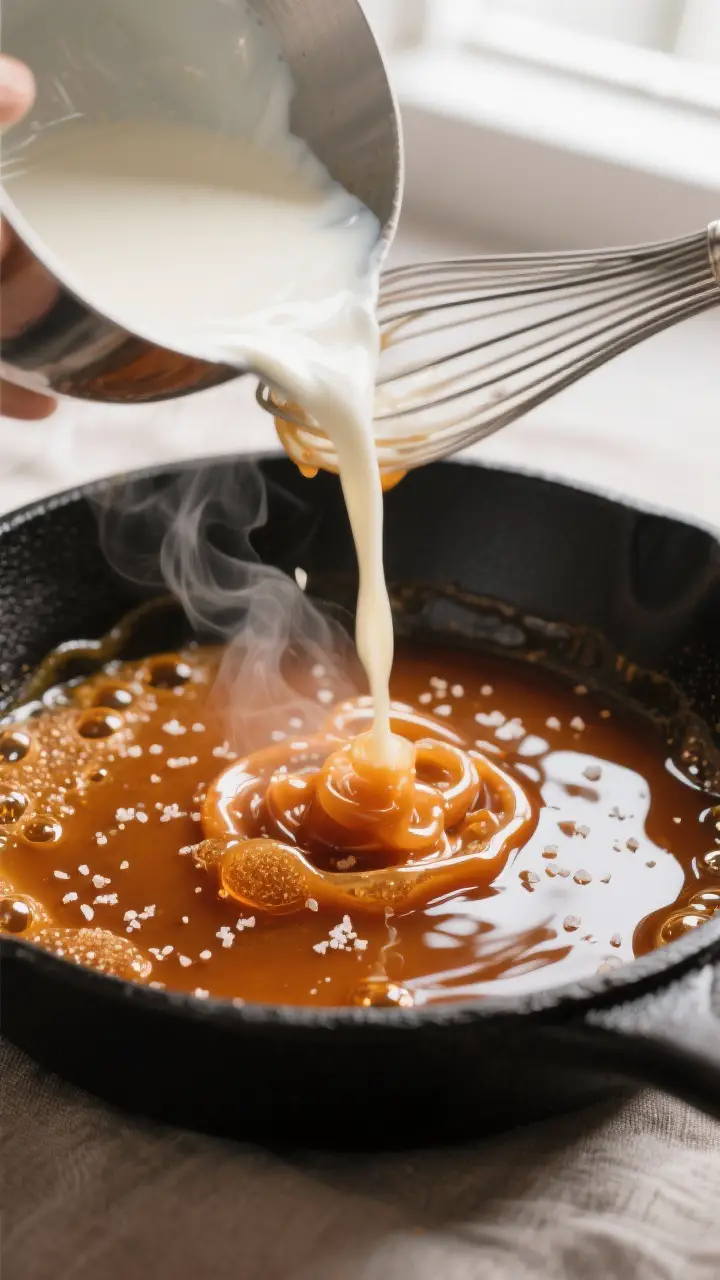
- Stream in the cream. Slowly pour in the warm heavy cream while stirring constantly. The caramel will foam again.
Keep stirring until it becomes smooth and glossy, about 1–2 minutes.
- Finish with vanilla and salt. Remove from heat. Stir in the vanilla extract and 1/2 teaspoon of salt. Taste carefully (it’s hot!), and add more salt if you like a bolder salted flavor.
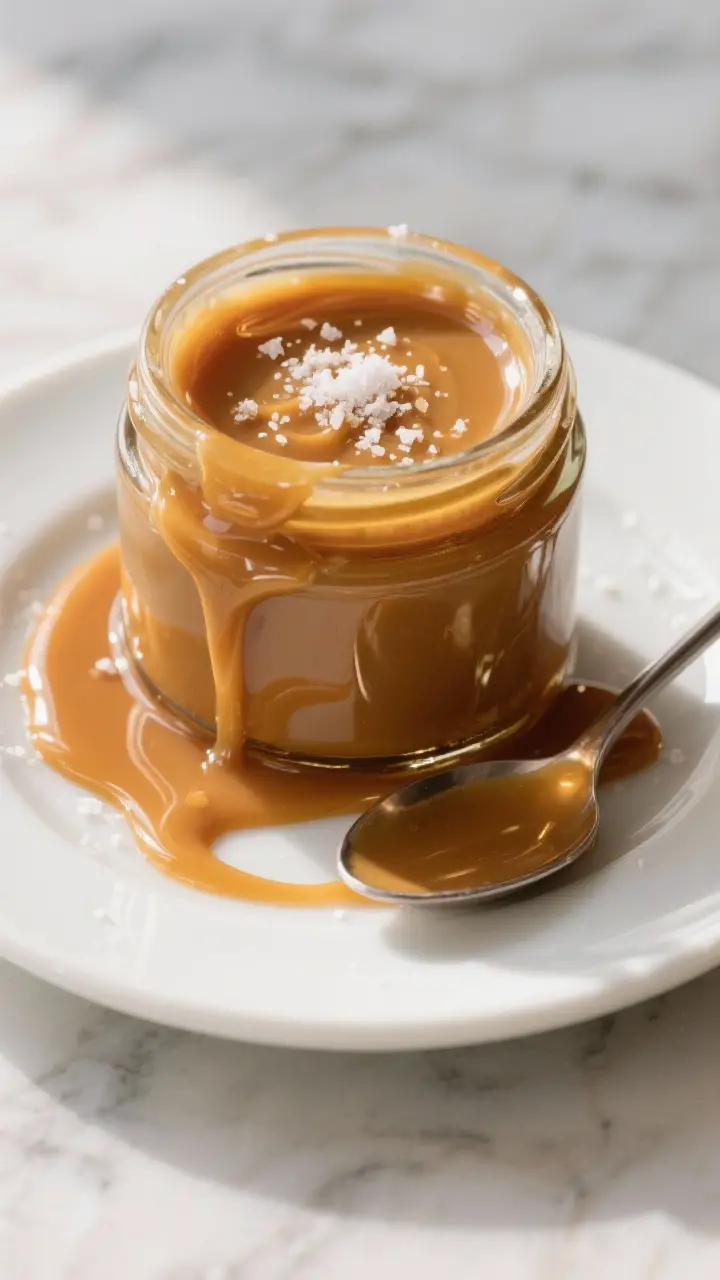
- Cool and thicken. Let the caramel cool in the pan for 10 minutes, then transfer to a clean glass jar.
It will thicken as it cools to room temperature.
- Serve or store. Use warm for drizzling, or chill for a thicker consistency. If it gets too thick, rewarm gently.
Storage Instructions
- Refrigerator: Store in an airtight glass jar for up to 3 weeks. The sauce will firm up in the fridge.
- Freezer: Freeze for up to 2 months.
Thaw overnight in the fridge, then warm before using.
- Reheating: Warm gently in a saucepan over low heat or in short microwave bursts (10–15 seconds), stirring between intervals. If it separates, whisk until smooth.
Benefits of This Recipe
- Cost-effective: Gourmet salted caramel can be pricey. Making your own is cheaper and just as delicious.
- Customizable: Adjust the salt level, add different extracts (like almond or bourbon), or infuse the cream with spices.
- Gift-worthy: Pack it in small jars with a label and ribbon—it makes a thoughtful homemade gift.
- Fresh and clean ingredients: No preservatives or artificial flavors—just pure, rich caramel.
What Not to Do
- Don’t walk away: Caramel needs constant attention.
Even 20 seconds can burn it.
- Don’t use a thin pan: Thin pans create hot spots and uneven cooking, leading to scorched sugar.
- Don’t add cold cream or butter straight from the fridge: This can cause violent bubbling and lumps. Slightly warm is best.
- Don’t stir nonstop at the start: During early melting, gentle stirring is fine, but excessive stirring can encourage crystals. As it liquefies, stir enough to keep it even and prevent burning.
- Don’t scrape burnt bits: If a small area scorches, avoid scraping the dark patch into the sauce.
Tilt and swirl instead to even out the color.
Alternatives
- Dry caramel vs. wet caramel: This recipe uses a dry method (sugar only). If you prefer a wet caramel, dissolve 1 cup sugar in 1/4 cup water and cook without stirring until amber. It’s slower but a bit more forgiving.
- Dairy-free version: Use full-fat coconut cream and a plant-based butter.
The flavor will have a coconut note but still be rich and delicious.
- Different salts: Fine sea salt blends smoothly; kosher salt works too. Finish with flaky sea salt for crunch and pops of flavor.
- Flavor boosts: Add a splash (1–2 teaspoons) of bourbon, spiced rum, or apple brandy off the heat. Try infusing the cream with a cinnamon stick, vanilla bean, or espresso powder.
- Thicker vs. thinner: For a thicker sauce, cook the caramel a touch darker or use 2–3 tablespoons less cream.
For a thinner drizzle, add an extra tablespoon of cream.
FAQ
How do I know when the caramel is done?
Aim for a deep amber color—darker than honey, lighter than mahogany. If you smell a hint of bitterness, you’ve gone too far. Remove from heat just before it reaches the perfect shade, as it continues to darken off the heat.
Why did my caramel turn grainy?
Sugar crystals can form if undissolved sugar on the sides falls back in.
To avoid this, use a clean pan, keep the sides wiped with a damp pastry brush if needed, and avoid over-stirring early on. Gentle swirling helps.
Can I use brown sugar instead of white?
You’ll get a butterscotch-like sauce with brown sugar, which is tasty but different. For classic salted caramel flavor and texture, granulated sugar is best.
What if my caramel seizes when I add cream?
If it clumps, keep the pan over low heat and stir or whisk until smooth again.
It may take a few minutes, but it will come back together.
Is a thermometer necessary?
No. Color and aroma are your best guides for this recipe. If you prefer numbers, aim for around 350°F (177°C) when the sugar hits the right amber tone.
Can I double the recipe?
Yes, but use a larger, heavy pot and be extra cautious when adding butter and cream—the bubbling will be more dramatic.
Cook time may increase slightly.
How salty should it be?
It’s personal. Start with 1/2 teaspoon of fine sea salt, then taste and add more up to 3/4 teaspoon. If finishing with flaky salt, lean lighter in the sauce.
What can I use salted caramel for?
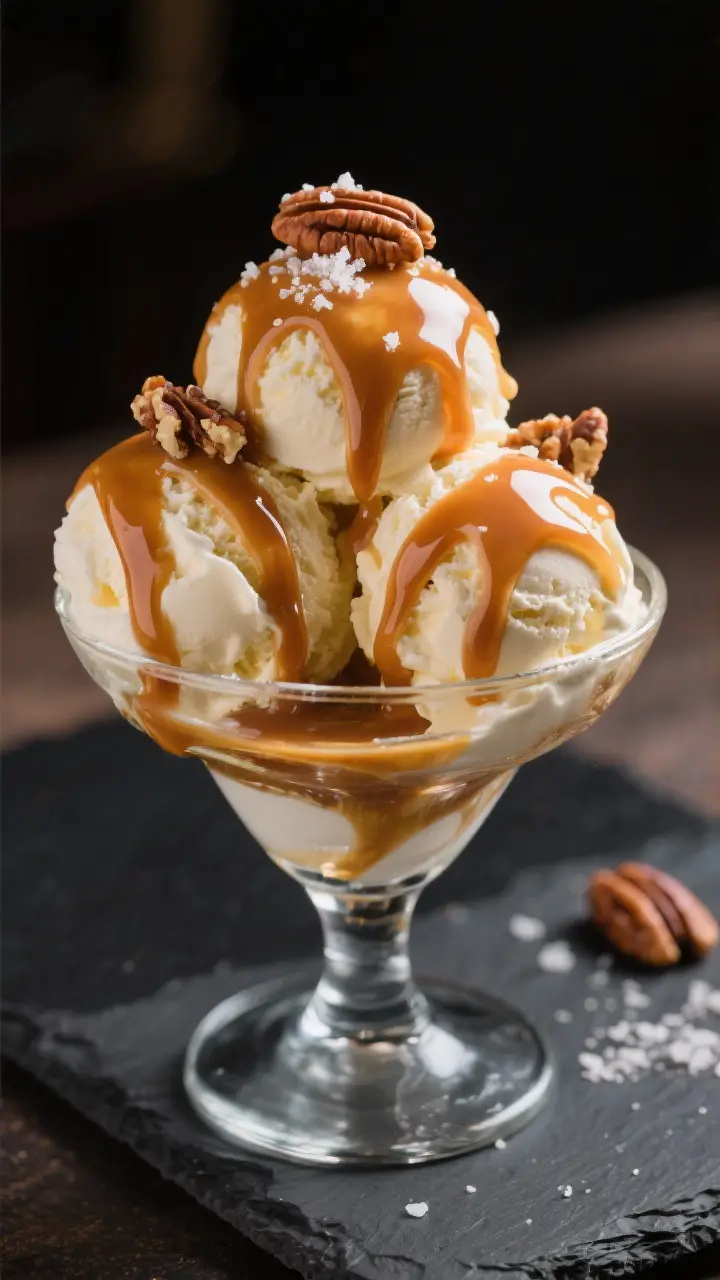
Drizzle on ice cream, pancakes, brownies, or cheesecake.
Swirl into brownie batter, latte foam, or yogurt. It’s great between cake layers or as a dip for sliced apples.
Final Thoughts
Homemade salted caramel isn’t complicated—just a little attention and the right timing. With a handful of pantry staples, you get a glossy, buttery sauce that makes simple desserts feel special.
Keep a jar in the fridge, and you’ll always have a quick way to elevate a treat or sweeten your coffee. Once you make it, you’ll wonder why you ever bought it. Enjoy, and don’t forget that final sprinkle of flaky salt for a perfect finish.
Printable Recipe Card
Want just the essential recipe details without scrolling through the article? Get our printable recipe card with just the ingredients and instructions.