
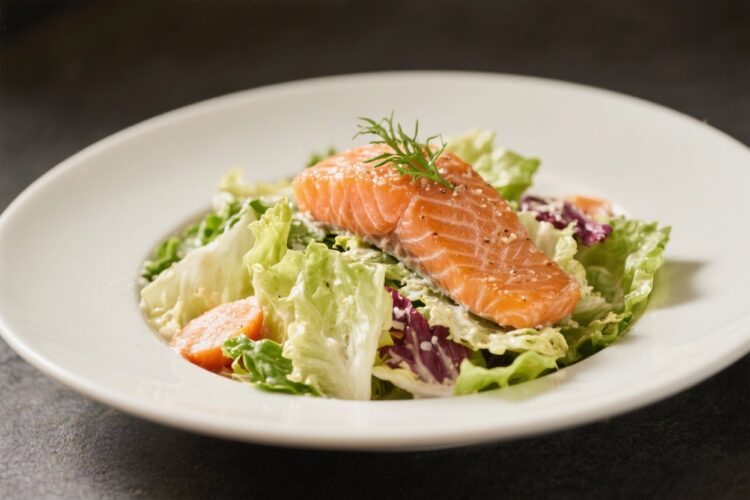
A good Caesar salad is comforting in the best way: crisp lettuce, creamy dressing, and plenty of crunch. Add flaky, pan-seared salmon and it turns into a full meal that feels both fresh and indulgent. This version keeps the classic flavors you expect, with a few smart tweaks for better texture and balance.
It’s simple enough for a weeknight and polished enough for guests. If you love Caesar but want a little more substance, this is the salad to make.
What Makes This Special
This isn’t just a Caesar with salmon on top—it’s built to match the fish’s richness. The dressing has bright lemon and a touch of Dijon to cut through the salmon’s buttery flavor.
Homemade croutons bring a crunch that won’t go soggy too fast. You also get a mix of textures: crisp romaine, creamy dressing, delicate flakes of salmon, and a little bite from fresh black pepper. The result is a balanced salad that feels complete without being heavy.
What You’ll Need
- Salmon: 2 skin-on fillets (about 6 ounces each), pin bones removed
- Romaine lettuce: 2 hearts, chopped into bite-size pieces
- Bread for croutons: 3 cups of torn rustic bread (day-old is ideal)
- Olive oil: For croutons and searing salmon
- Parmesan: Freshly grated or shaved, about 1/2 cup
- Lemon: 1 large, for juice and zest
- Anchovies: 2–3 fillets (or 1 teaspoon anchovy paste)
- Garlic: 1 small clove
- Dijon mustard: 1 teaspoon
- Worcestershire sauce: 1/2 teaspoon
- Mayonnaise: 1/3 cup (for a creamy, stable dressing)
- Greek yogurt (optional): 2 tablespoons, for lightening the dressing
- Extra-virgin olive oil: 3 tablespoons for the dressing
- Black pepper: Freshly ground
- Kosher salt: To season the salmon and dressing
How to Make It
- Prep the lettuce: Wash and dry the romaine very well.
Moist leaves dilute the dressing. Chill in the fridge for extra crunch.
- Make croutons: Toss torn bread with 2 tablespoons olive oil, a pinch of salt, and a little pepper. Bake at 375°F (190°C) for 10–12 minutes, stirring once, until golden and crisp.
Let cool.
- Mix the dressing base: Finely mash anchovies and garlic with a pinch of salt until it forms a paste. Whisk in Dijon, Worcestershire, lemon juice (about 2 tablespoons), and zest from half the lemon.
- Finish the dressing: Whisk in mayonnaise (and yogurt if using). Slowly stream in 3 tablespoons extra-virgin olive oil while whisking until smooth.
Stir in 2 tablespoons grated Parmesan. Season with salt and plenty of black pepper. Taste and adjust lemon or salt as needed.
- Season the salmon: Pat fillets dry.
Season both sides with salt and pepper. Lightly oil the skin.
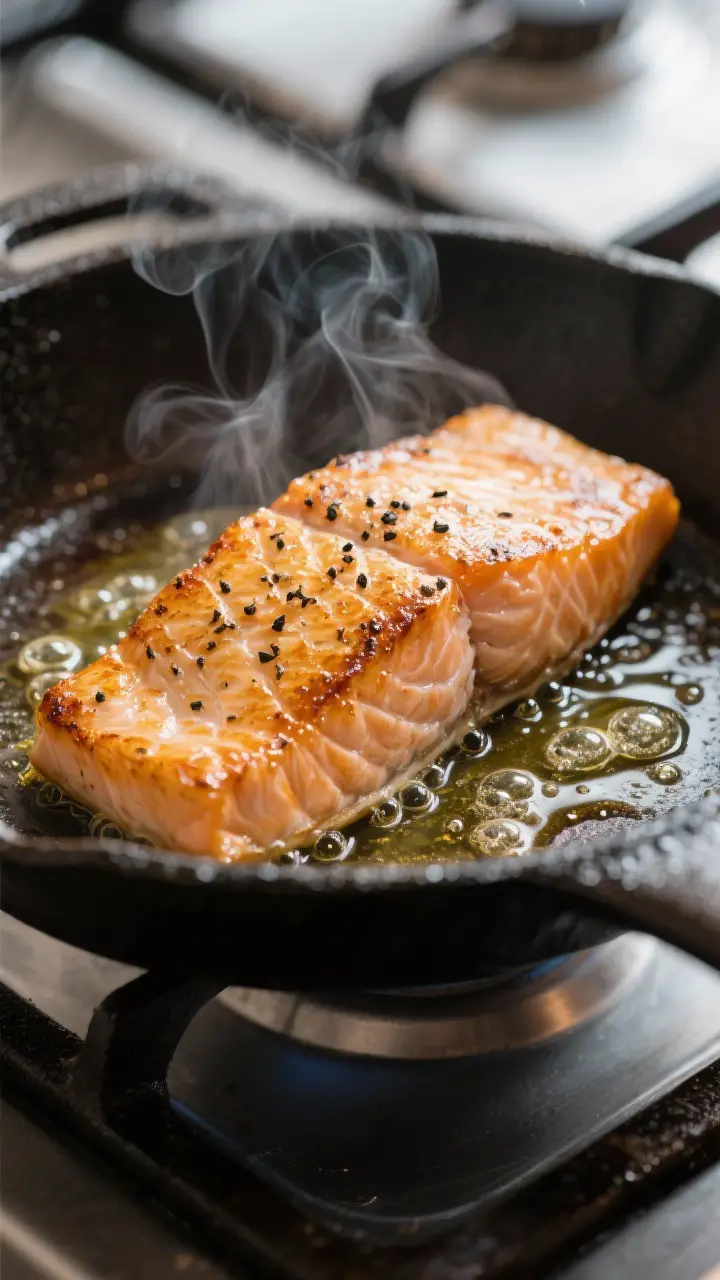
- Cook the salmon: Heat a nonstick or well-seasoned skillet over medium-high. Add a thin film of olive oil.
Place salmon skin-side down and press gently for 10 seconds to prevent curling. Cook 4–5 minutes until the skin is crisp and the sides turn opaque about two-thirds up. Flip and cook 1–2 minutes more, depending on thickness, until medium or to your preference.
- Rest and flake: Transfer salmon to a plate and rest 2 minutes.
Remove skin if you like (keep for snacking, it’s delicious), then break the fish into large flakes.
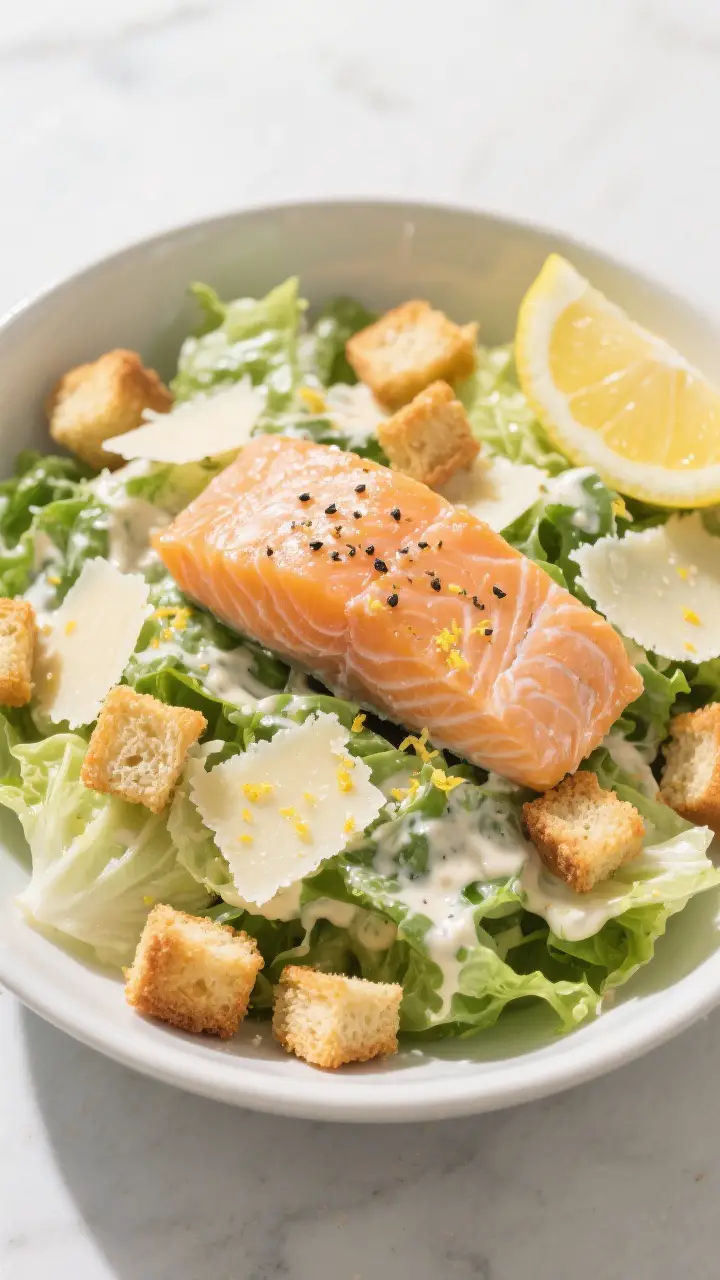
- Toss the salad: In a large bowl, toss romaine with enough dressing to lightly coat. Add croutons and a shower of Parmesan. Toss again gently.
- Assemble: Top the salad with salmon flakes.
Finish with a squeeze of lemon, more Parmesan shavings, and fresh black pepper.
- Serve: Serve immediately while the croutons are crisp and the salmon is warm.
Keeping It Fresh
To keep the salad crisp, dress right before serving. If you’re prepping ahead, store components separately: romaine in a sealed container with a paper towel, croutons at room temperature, and dressing in the fridge. Salmon can be cooked up to a day in advance and gently reheated or served cold.
If you have leftover dressed salad, it’s best within a few hours. For longer storage, keep everything undressed and combine at the last minute.
Why This is Good for You
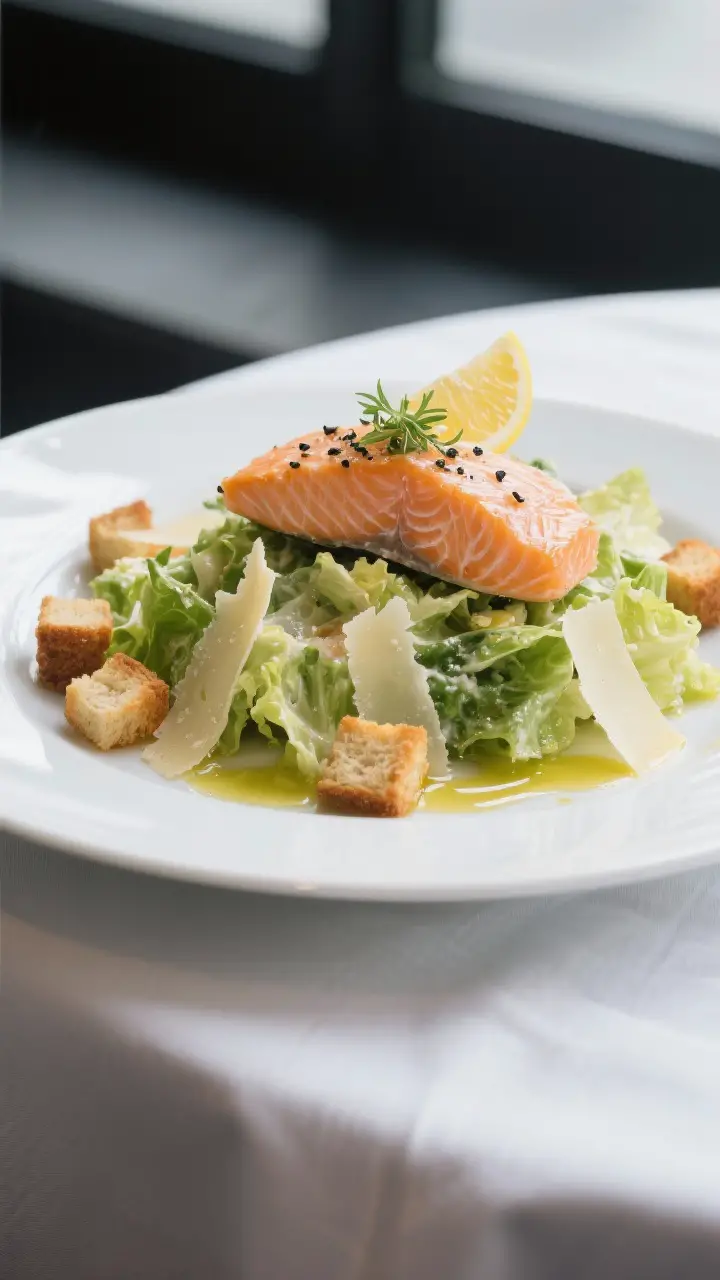
Salmon is rich in omega-3 fatty acids, which support heart and brain health. Romaine brings hydration and fiber, while Parmesan adds calcium and protein.
The dressing uses olive oil, a source of healthy monounsaturated fats. If you swap in a bit of Greek yogurt, you’ll cut some calories while keeping the creamy texture. Overall, it’s a satisfying meal that doesn’t weigh you down.
Common Mistakes to Avoid
- Wet lettuce: Any water on the leaves will thin out the dressing and make the salad limp.
Dry thoroughly.
- Overcooked salmon: Salmon goes from tender to dry quickly. Pull it when the center is just slightly translucent; it will finish as it rests.
- Too much dressing: Caesar should coat, not drown. Add a little at a time and toss.
- Skipping anchovies: They don’t make the dressing fishy—they add savory depth.
If you’re hesitant, use a small amount of paste.
- Soggy croutons: Use day-old bread and toast until truly crisp. Add them right before serving.
- Cold pan for salmon: Start with a hot pan for crisp skin and even sear.
Recipe Variations
- Grilled Salmon Caesar: Brush salmon with oil, salt, and pepper. Grill over medium-high, 3–4 minutes per side.
Adds a subtle smokiness.
- Kale Caesar with Salmon: Swap half the romaine for finely chopped lacinato kale. Massage with a teaspoon of olive oil and a pinch of salt before dressing.
- Lightened Dressing: Use half mayonnaise and half Greek yogurt. Add extra lemon for brightness.
- No-anchovy Version: Replace anchovies with 1 teaspoon capers and a splash more Worcestershire for a briny kick.
- Garlic-Parmesan Panko Crunch: Instead of croutons, toast panko with olive oil and grated Parmesan until golden, then sprinkle over the top.
- Spicy Twist: Add a pinch of red pepper flakes to the dressing or dust salmon with smoked paprika and cayenne before cooking.
FAQ
Can I use canned salmon?
Yes.
Drain it well and flake it gently. It won’t have the crispy edges of seared salmon, but it’s convenient and still tasty. Choose skinless, boneless cans packed in water or olive oil.
Is Caesar dressing safe without raw egg?
This recipe uses mayonnaise for a creamy base, so there’s no raw egg involved.
If you prefer the classic raw egg version, use pasteurized eggs to reduce risk.
What can I use instead of anchovies?
Try anchovy paste for a milder taste, or use capers for a briny note. A little extra Parmesan and Worcestershire can also boost savoriness.
How do I know when the salmon is done?
Look for the sides to turn opaque most of the way up and for the center to feel just firm with a gentle press. An instant-read thermometer should read about 125°F (52°C) for medium.
Can I make the dressing ahead?
Yes.
The dressing keeps well in the fridge for up to 5 days. Whisk or shake before using, and adjust lemon and salt to taste after chilling.
What if I don’t have Worcestershire sauce?
Add a tiny splash of soy sauce or fish sauce. Both bring the umami that Worcestershire would provide.
How can I make it gluten-free?
Use gluten-free bread for croutons or skip them and add toasted almonds or roasted chickpeas for crunch.
What pairs well with this salad?
A crisp white wine like Sauvignon Blanc, sparkling water with lemon, or iced tea.
For sides, try roasted asparagus or grilled corn.
Wrapping Up
This Salmon Caesar Salad delivers the comfort of a classic with the protein and richness of perfectly cooked fish. It’s easy, fast, and satisfying without being fussy. Keep the lettuce crisp, the dressing punchy, and the salmon tender, and you’ll have a go-to meal for busy nights or casual company.
Once you’ve made it, you’ll likely keep it in your regular rotation.