

A roasted vegetable galette is comfort food with a little flair. It’s rustic, unfussy, and tastes like something you’d find at a cozy café. The crisp, buttery crust wraps around tender, caramelized vegetables and a creamy, herby base.
It looks impressive but is surprisingly easy to pull off, even if you don’t bake often. Make it for a weekend lunch, a simple dinner, or a centerpiece side for a gathering.
What Makes This Special
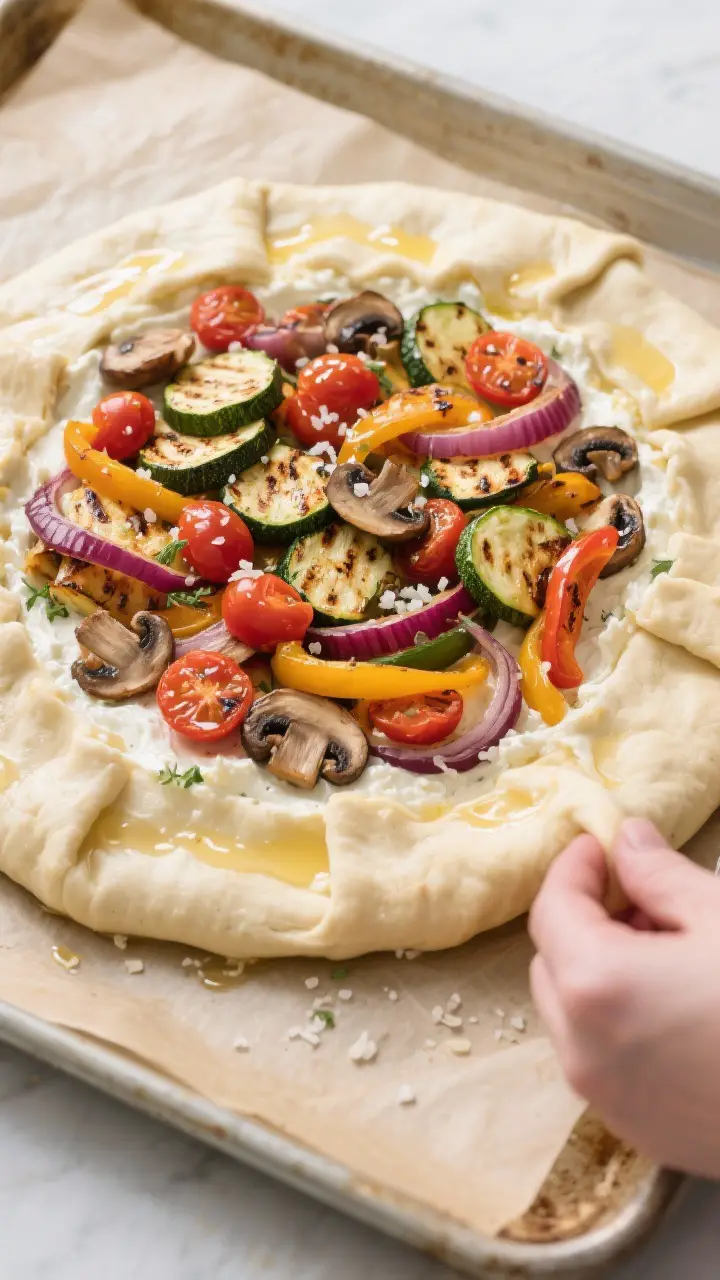
This galette celebrates the natural sweetness of roasted vegetables. As they roast, they develop deeper flavors and a bit of char that gives the whole dish a savory edge.
The free-form crust keeps everything relaxed—no pie plate or crimping required. You get a flaky, golden crust, a creamy layer that keeps the vegetables moist, and a hint of fresh herbs to tie it together. It’s flexible too; you can use whatever vegetables you have on hand.
What You’ll Need
- For the crust:
- 1 1/4 cups (160 g) all-purpose flour
- 1/2 teaspoon fine salt
- 1/2 cup (115 g) cold unsalted butter, cut into small cubes
- 3–4 tablespoons ice water
- 1 teaspoon apple cider vinegar or lemon juice (optional, for tenderness)
- For the roasted vegetables:
- 2 cups mixed vegetables, cut into small bite-size pieces (e.g., zucchini, bell peppers, cherry tomatoes, red onion, mushrooms, carrots, or squash)
- 2 tablespoons olive oil
- 1/2 teaspoon kosher salt
- 1/4 teaspoon black pepper
- 1/2 teaspoon dried thyme or Italian seasoning
- For the filling base:
- 1/2 cup ricotta or soft goat cheese
- 1/3 cup grated Parmesan (or Pecorino)
- 1 garlic clove, finely grated
- 1 tablespoon chopped fresh herbs (parsley, basil, or chives)
- Zest of 1/2 lemon (optional)
- Pinch of red pepper flakes (optional)
- To finish:
- 1 egg, beaten with 1 teaspoon water (for egg wash)
- Flaky sea salt, to sprinkle
Step-by-Step Instructions

- Make the dough. In a bowl, whisk the flour and salt.
Work in the cold butter with your fingers or a pastry cutter until you see pea-size bits. Sprinkle in the vinegar (if using) and 3 tablespoons ice water. Gently mix until the dough just holds together; add the last tablespoon of water only if needed.
- Chill. Press the dough into a disk, wrap, and chill for at least 30 minutes.
This helps prevent shrinking and makes the crust flaky.
- Prep the vegetables. Heat the oven to 425°F (220°C). Toss the chopped vegetables with olive oil, salt, pepper, and thyme. Spread on a sheet pan in a single layer.
- Roast. Roast for 18–25 minutes, stirring once, until tender and lightly charred at the edges.
Let them cool slightly. If the vegetables release a lot of moisture, blot them with a paper towel.
- Mix the filling base. In a small bowl, combine ricotta (or goat cheese), Parmesan, garlic, herbs, lemon zest, and red pepper flakes. Taste and adjust salt and pepper.
- Roll out the dough. Reduce the oven to 400°F (205°C).
On a lightly floured surface, roll the dough into a 12-inch round, about 1/8 inch thick. Transfer to a parchment-lined baking sheet.
- Assemble. Spread the cheese mixture in the center of the dough, leaving a 2-inch border. Pile the roasted vegetables on top in an even layer.
- Fold and finish. Fold the edges of the dough up over the filling, pleating as you go.
Brush the crust with egg wash and sprinkle with flaky salt.
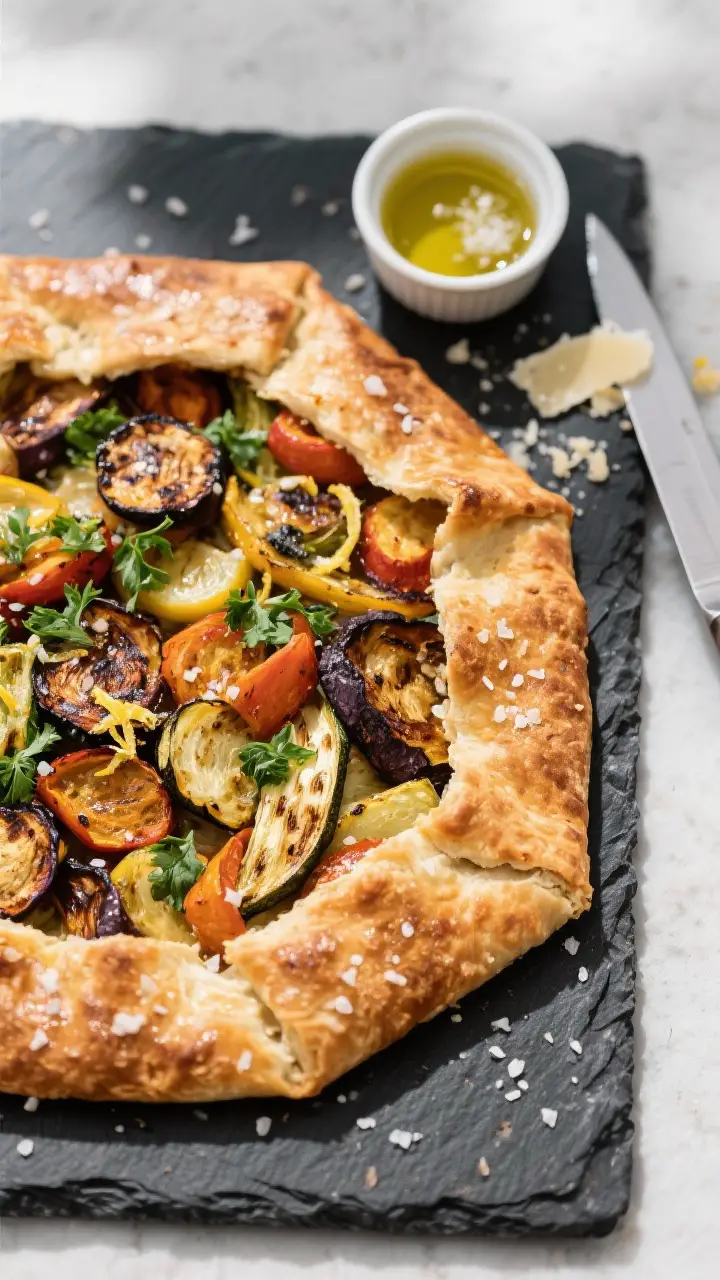
- Bake. Bake for 30–35 minutes, until the crust is deep golden and the filling is bubbling. If the bottom needs more color, bake an extra 5 minutes.
- Rest and serve. Let the galette cool for 10–15 minutes. Slice and serve warm or at room temperature.
How to Store
- Refrigerate: Store leftovers in an airtight container for up to 3 days.
- Reheat: Warm in a 350°F (175°C) oven for 10–15 minutes to crisp the crust.
Avoid the microwave if possible; it softens the pastry.
- Freeze: Freeze slices, tightly wrapped, for up to 2 months. Reheat from frozen at 375°F (190°C) until hot and crisp, about 18–22 minutes.
Benefits of This Recipe
- Flexible and seasonal: Use what’s in your fridge or what looks best at the market.
- Approachable baking: The free-form crust removes the pressure of perfect edges or a pie plate.
- Balanced flavors: Buttery crust, creamy cheese, and sweet-roasted vegetables hit all the right notes.
- Make-ahead friendly: The dough and roasted veggies can be prepared ahead for quick assembly.
- Great for sharing: Works as a main with a simple salad or as a side dish at gatherings.
Pitfalls to Watch Out For
- Soggy crust: Don’t overload with wet vegetables. Roast them well and blot extra moisture.
- Warm dough: If the dough softens, pop it in the fridge for 10 minutes before folding and baking.
- Undersalting: Season each layer—vegetables and cheese base—so the final result doesn’t fall flat.
- Thick slices of veg: Cut vegetables into similar, bite-size pieces to roast evenly and fit neatly in the crust.
- Overfilling: A tall mound can split the crust.
Aim for an even, modest layer.
Alternatives
- Cheese swaps: Try Boursin, feta, or a mix of cream cheese and Parmesan for the base.
- Herb twists: Use rosemary in winter, basil in summer, or a pesto smear under the filling.
- Gluten-free: Use a gluten-free all-purpose blend and add an extra tablespoon of water if the dough seems dry.
- Vegan: Use a plant-based butter for the crust and a vegan ricotta or cashew spread in the filling.
- Protein add-ins: Add cooked crumbled sausage, shredded rotisserie chicken, or chickpeas.
- Spice it up: Add harissa to the cheese base or sprinkle with smoked paprika.
FAQ
Which vegetables work best?
Most sturdy vegetables roast well: zucchini, bell peppers, onions, mushrooms, tomatoes, carrots, broccoli, or squash. Avoid super watery options like raw spinach unless you sauté them first and drain.
Can I make the dough in advance?
Yes. The dough keeps in the fridge for up to 2 days or in the freezer for up to 2 months.
Thaw overnight in the fridge before rolling.
Do I have to use ricotta?
No. Goat cheese, feta, or a mix of cream cheese and Parmesan all work. You want a spreadable base that adds flavor and keeps the vegetables in place.
How do I prevent a pale bottom crust?
Preheat your baking sheet with the oven or bake on the lower rack for the first 15 minutes.
A hot surface helps set and brown the bottom.
Can I serve this cold?
Yes, it tastes good at room temperature or chilled. For the best texture, though, slightly warm is ideal.
What should I serve with it?
A simple green salad with lemony vinaigrette, a bowl of soup, or a side of marinated beans makes a complete meal.
Can I double the recipe?
Absolutely. Make two smaller galettes on separate baking sheets for even cooking, or bake one after the other.
Final Thoughts
A roasted vegetable galette is the kind of recipe that rewards good ingredients and simple technique.
With a flaky crust and a colorful, caramelized filling, it feels special without much fuss. Keep the dough cold, roast the vegetables well, and don’t be afraid to mix and match what you have. Once you make it, you’ll have a new go-to for relaxed dinners and casual entertaining.
Printable Recipe Card
Want just the essential recipe details without scrolling through the article? Get our printable recipe card with just the ingredients and instructions.