
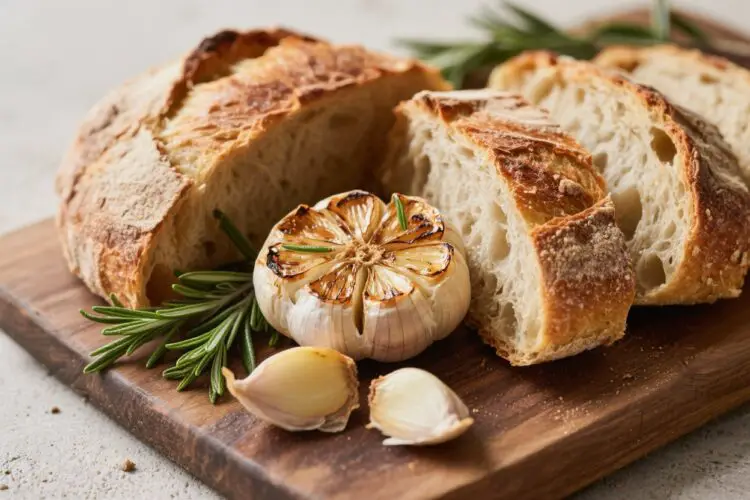
Roasted garlic and rosemary sourdough is the kind of bread that makes your kitchen smell like a bakery. It’s warm, savory, and deeply aromatic, with a golden crust and tender, open crumb. The roasted garlic melts into the dough, while rosemary adds a fresh, piney note that feels cozy and satisfying.
Whether you’re new to sourdough or already in love with it, this loaf is a crowd-pleaser. It pairs beautifully with soups, pasta, or a simple smear of butter.
What Makes This Recipe So Good
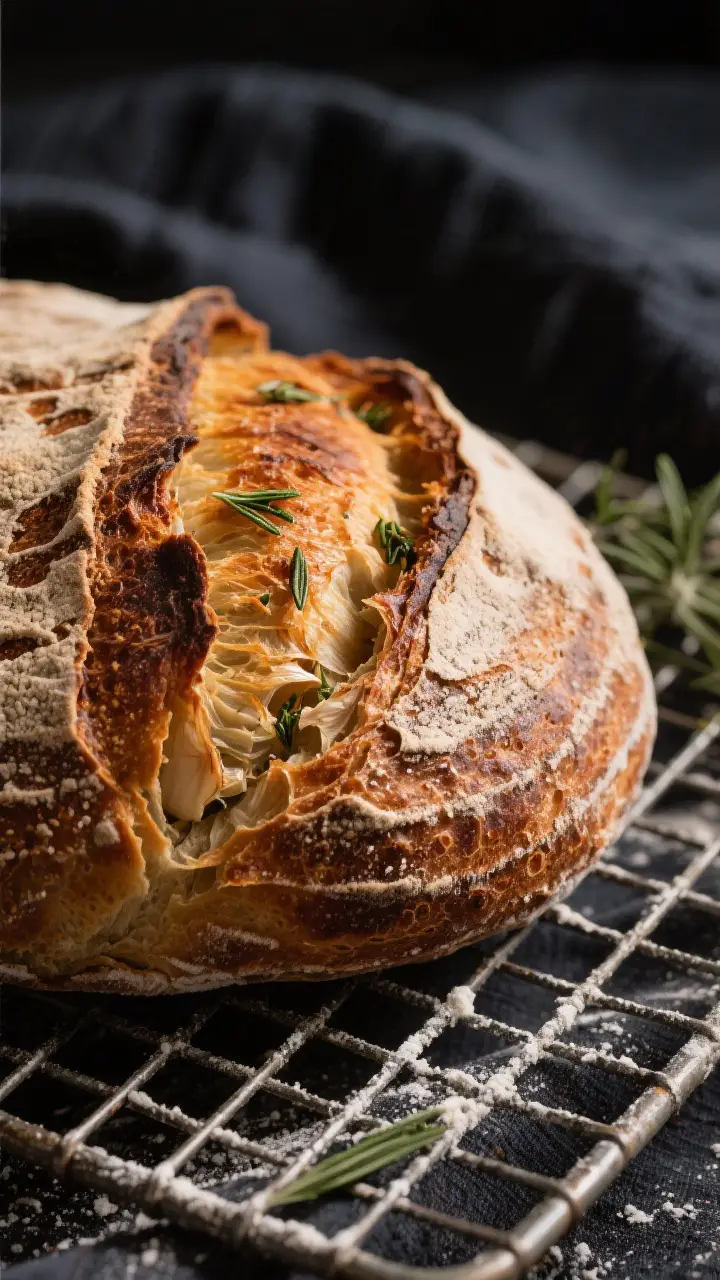
- Layered flavor: Sweet, mellow roasted garlic and fresh rosemary create a balanced, savory loaf that tastes special without being fussy.
- Fantastic texture: Crisp crust, chewy interior, and a tender crumb that’s perfect for slicing or tearing.
- Naturally leavened: Sourdough starter adds depth and better keeping quality, with gentle tang—not overwhelming.
- Meal-friendly: Works for toast, sandwiches, charcuterie boards, and soaking up sauces.
- Make-ahead elements: Roast the garlic and prep the rosemary in advance to make baking day easy.
Ingredients
- Active sourdough starter: 100 g, bubbly and recently fed
- Warm water: 350 g (about 95°F/35°C)
- Bread flour: 420 g
- Whole wheat flour: 80 g
- Fine sea salt: 10 g
- Garlic: 1 large head, roasted and cooled
- Fresh rosemary: 2–3 teaspoons, finely chopped (leaves only)
- Olive oil: 1 teaspoon (optional, for garlic roasting or a softer crust)
- Rice flour: for dusting the proofing basket
How to Make It
- Roast the garlic. Slice the top off the garlic head to expose the cloves, drizzle with a little olive oil, wrap in foil, and roast at 400°F (200°C) for 35–45 minutes until soft and golden. Cool, then squeeze out the cloves.
Lightly mash into a paste. Set aside.
- Mix the dough. In a large bowl, combine warm water and active starter. Stir to dissolve.
Add bread flour and whole wheat flour. Mix until no dry bits remain. The dough will be shaggy.
Cover and rest for 30–45 minutes (autolyse).
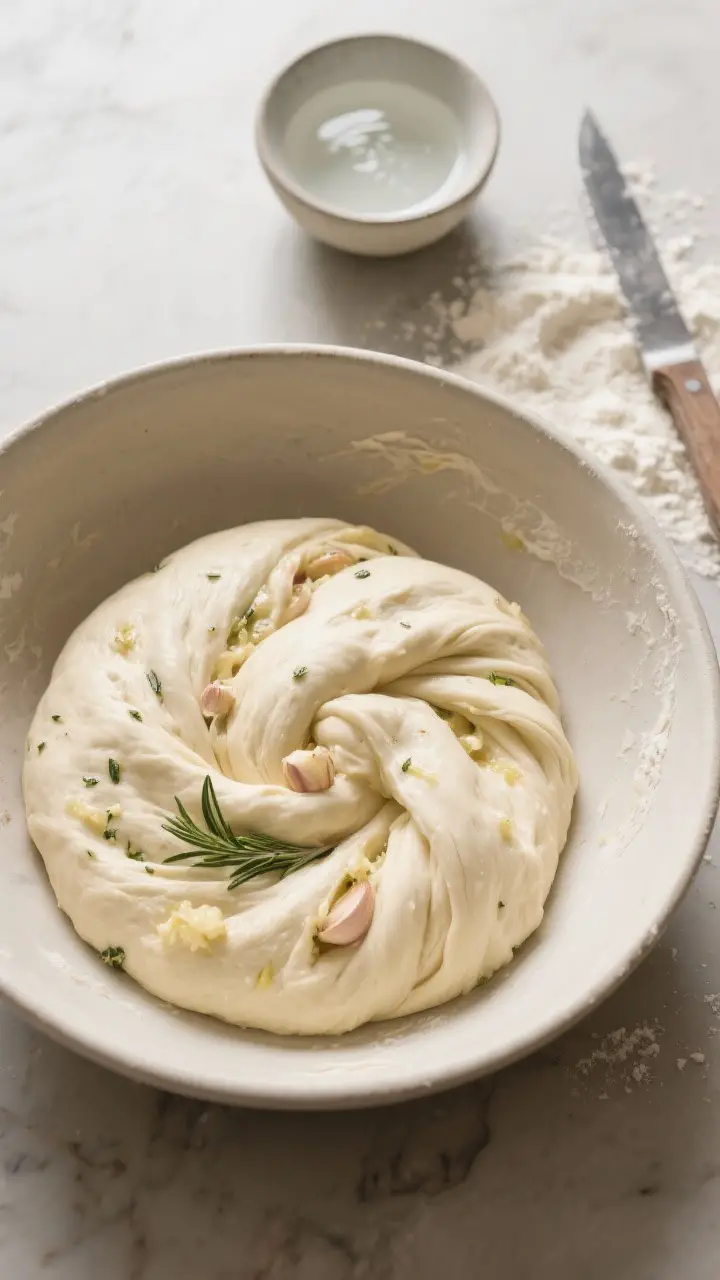
- Add salt and flavor. Sprinkle in the salt, then add the mashed roasted garlic and chopped rosemary. Wet your hands and pinch, fold, and squeeze the dough to incorporate. It’s messy at first; it will come together.
- Bulk fermentation with folds. Over the next 2.5–3.5 hours at room temperature (75°F/24°C is ideal), perform 3–4 sets of stretch-and-folds every 30 minutes.
With each set, lift one side of the dough and fold it over itself; rotate the bowl and repeat 3–4 times. The dough should become smoother and more elastic.
- Check for readiness. When the dough looks airy, slightly domed, and jiggles when the bowl moves, it’s ready to shape. If your kitchen is cool, add 30–60 minutes.
- Pre-shape. Lightly flour the counter.
Gently turn out the dough, pat into a loose rectangle, and fold the edges toward the center. Flip seam-side down and use a bench knife to create gentle surface tension. Rest 15–20 minutes.
- Final shape. Shape into a tight boule or batard.
Avoid tearing the surface. Place seam-side up in a well-dusted banneton (use rice flour for best release).
- Cold proof. Cover and refrigerate for 8–14 hours. This improves flavor, helps with scoring, and makes timing flexible.
- Preheat the oven. Place a Dutch oven with lid inside and preheat to 475°F (246°C) for at least 30–45 minutes.
If using a baking stone and steam, preheat those instead.
- Score and bake. Turn the dough onto parchment, score with a sharp lame or knife (a deep central slash works well), and carefully transfer to the hot Dutch oven. Cover and bake 20 minutes. Reduce heat to 450°F (232°C), uncover, and bake another 20–25 minutes until deep golden-brown.
- Cool completely. Remove to a rack and cool at least 1 hour before slicing.
This sets the crumb and keeps it moist.
Keeping It Fresh
- Room temperature: Store cut-side down on a board or in a paper bag for up to 2 days. Avoid plastic; it softens the crust.
- Longer storage: Slice and freeze in a zip-top bag for up to 2 months. Toast straight from frozen.
- Revive the crust: If the crust softens, reheat the loaf at 350°F (175°C) for 8–10 minutes.
Why This is Good for You
- Garlic perks: Roasted garlic is gentler on the stomach than raw and brings antioxidants and potential heart-friendly benefits.
- Rosemary lift: Rosemary offers anti-inflammatory compounds and a fresh herbal aroma that can make meals feel lighter.
- Sourdough advantages: The long fermentation can make minerals more available and may be easier for some people to digest.
- Balanced grains: A touch of whole wheat adds fiber and flavor without weighing down the crumb.
Common Mistakes to Avoid
- Using weak starter: If your starter isn’t bubbly and active, the loaf will be dense.
Feed it 6–12 hours before mixing.
- Overloading with garlic: Too much puree can weaken gluten and create gummy spots. Stick to one head.
- Skipping the autolyse: That short rest makes mixing easier and improves structure. Don’t skip it.
- Underproofing: A tight crumb and small loaf usually mean it needed more time.
Look for a gentle jiggle and slight rise.
- Cutting too soon: Slicing hot bread compresses the crumb. Let it cool to set properly.
- Wet hands forgotten: Handling sticky dough with dry hands leads to tearing. Keep a bowl of water nearby.
Variations You Can Try
- Olive and rosemary: Fold in 60–80 g chopped pitted olives during the second set of folds.
- Lemon zest: Add 1 teaspoon finely grated lemon zest with the rosemary for brightness.
- Cheesy crust: Sprinkle grated Parmesan on top after scoring for a savory crunch.
- Whole grain boost: Swap up to 30% of the bread flour with spelt or more whole wheat; add a splash more water if needed.
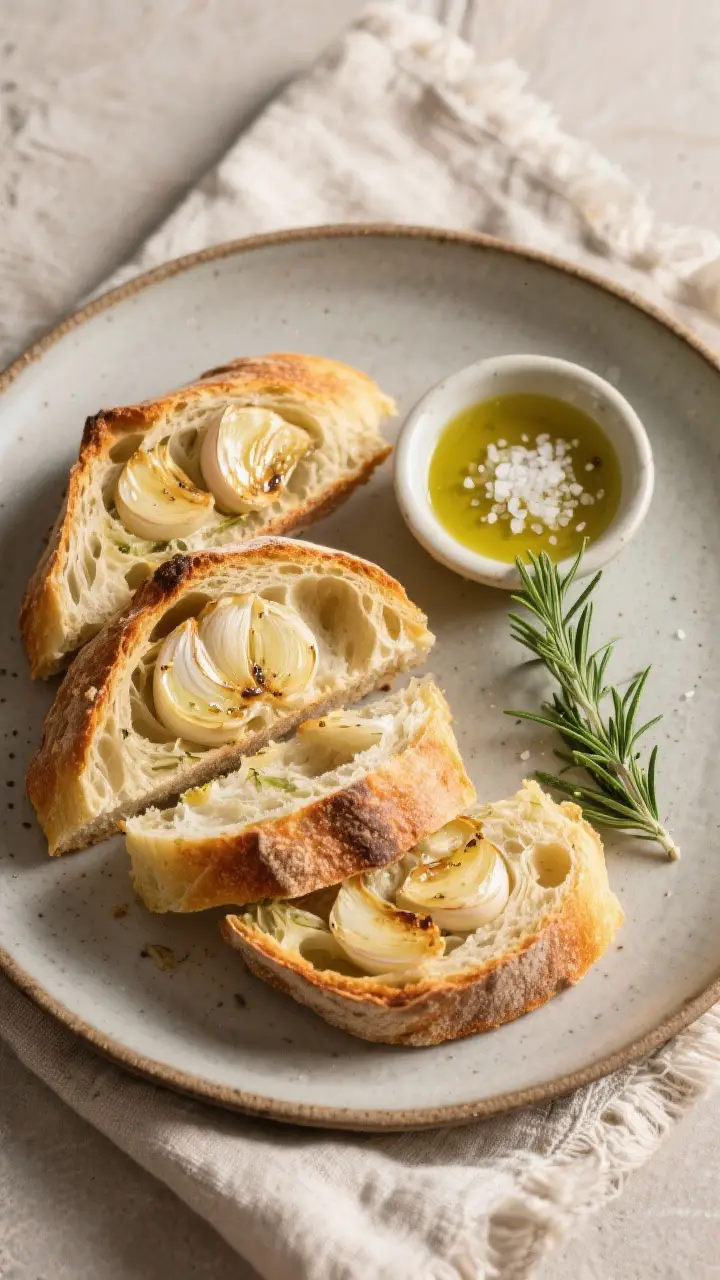
- Roasted garlic chips: Reserve a few whole roasted cloves and tuck them in during shaping for pockets of flavor.
FAQ
Can I use dried rosemary?
Yes.
Use 1 teaspoon of dried rosemary, finely crushed between your fingers to release the oils. Fresh rosemary gives a brighter flavor, but dried works in a pinch.
What if I don’t have a Dutch oven?
Use a preheated baking stone or sheet. Create steam by placing a metal pan on the lower rack and pouring in a cup of hot water when you load the bread.
Bake times are similar.
How do I know my starter is ready?
It should double in volume after feeding, look bubbly, and pass the float test: a small spoonful should float in water. If it sinks, give it more time or another feeding.
Can I shorten the cold proof?
Yes. Even 4–6 hours in the fridge helps, but 8–14 hours develops better flavor and makes scoring cleaner.
Why is my loaf flat?
Likely underdeveloped gluten, weak starter, or overproofing.
Make sure you perform all folds, use an active starter, and watch the dough’s signs rather than the clock.
Can I make it vegan?
It already is, as long as your starter is just flour and water. The olive oil for roasting garlic is optional.
How do I keep garlic from clumping in the dough?
Mash it into a smooth paste and add it with the salt. Incorporate during folding rather than dumping it all in at once.
What flour can I substitute for bread flour?
All-purpose works, but reduce the water by 10–20 g at first and adjust as needed.
The crumb may be slightly less chewy.
In Conclusion
Roasted Garlic and Rosemary Sourdough brings together comfort and character in one beautiful loaf. It’s fragrant, flavorful, and surprisingly achievable with a little planning. Keep your starter lively, give the dough time, and let the oven do the rest.
Once you slice into that crackling crust, you’ll want this bread in your regular rotation.