
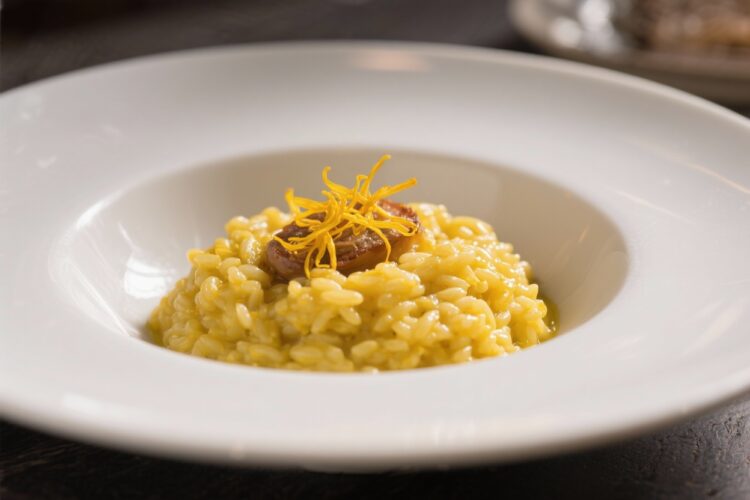
Risotto alla Milanese is comfort food dressed in elegance. It’s golden from saffron, rich with butter and cheese, and deeply aromatic thanks to a gentle onion base and good broth. You don’t need fancy tricks—just patience, heat, and attention.
With a few simple ingredients, you can create a silky, restaurant-level risotto right at home. It’s the kind of dish that makes an ordinary evening feel special.
What Makes This Special
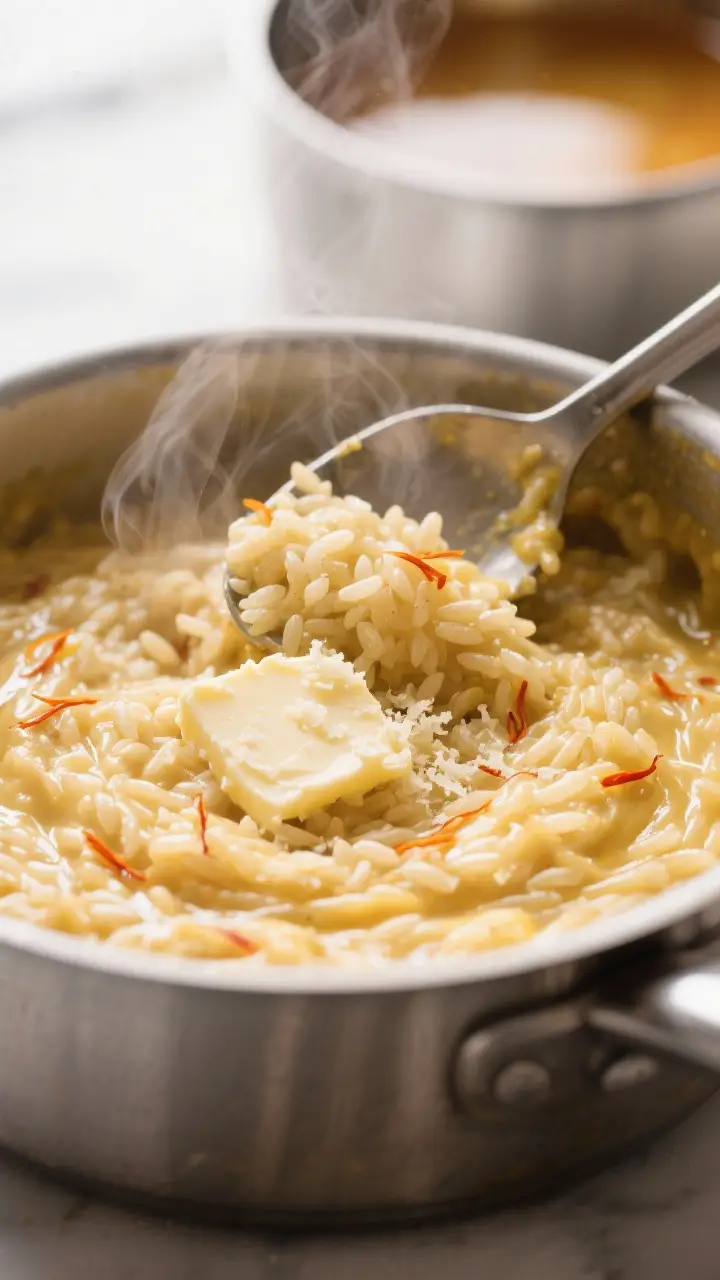
Risotto alla Milanese is more than rice cooked in broth. It’s about coaxing starch from Arborio or Carnaroli rice to create a velvety, spoonable texture.
The saffron brings a warm, honey-like aroma and a striking golden color that feels celebratory. In Milan, this risotto is often served alongside ossobuco, but it’s wonderful on its own. The magic is in the balance: the gentle sweetness of onion, the savory depth of broth, and the creamy finish of butter and Parmigiano-Reggiano.
Each spoonful should taste rich yet clean, with saffron leading the way rather than shouting.
What You’ll Need
- Arborio or Carnaroli rice (1 1/2 cups) – short-grain, high-starch rice is essential for creaminess.
- Unsalted butter (4 tablespoons) – divided for cooking and finishing.
- Olive oil (1 tablespoon) – helps sauté the onion without burning the butter.
- Yellow onion or shallot (1 small, finely minced) – for a soft, sweet base.
- Dry white wine (1/2 cup) – adds brightness and balance.
- Chicken or vegetable stock (5–6 cups, hot) – keep it warm on the stove.
- Saffron threads (a generous pinch, about 1/2 teaspoon) – the signature flavor and color.
- Parmigiano-Reggiano (3/4 cup, finely grated) – for body and umami.
- Salt – to taste; add gradually.
- Freshly ground black pepper – optional, use lightly.
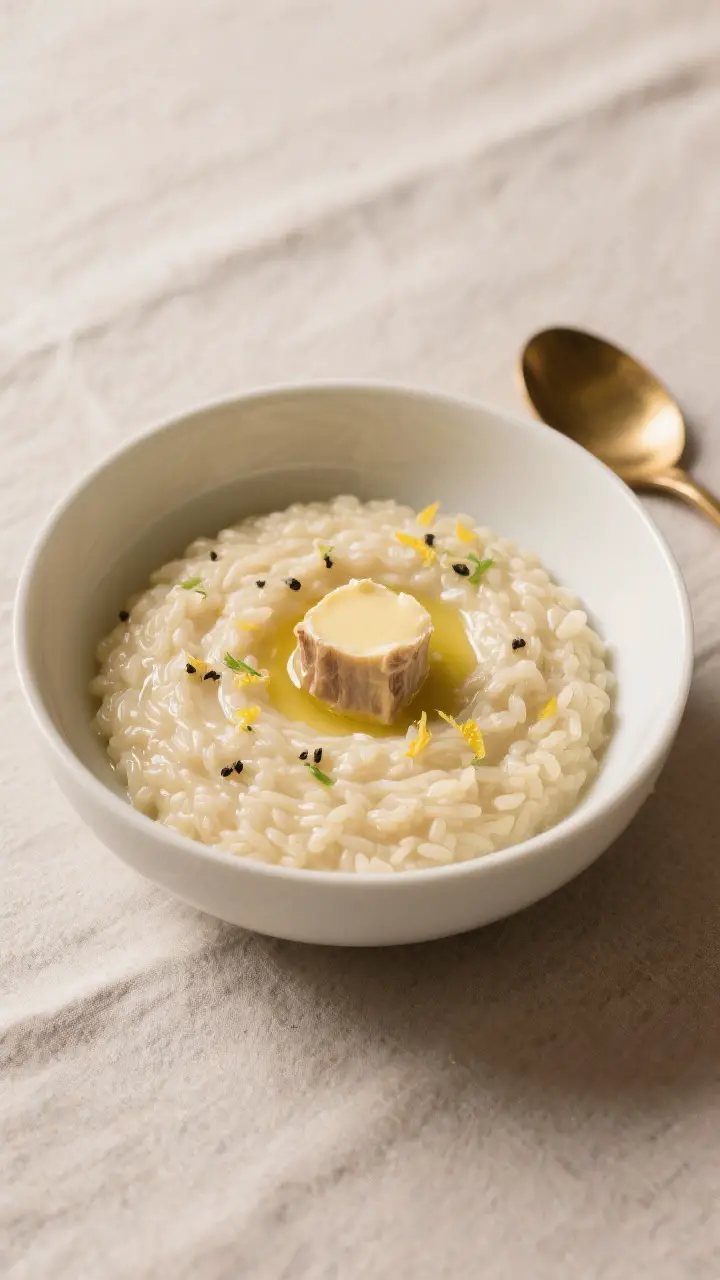
- Bone marrow or beef marrow butter (optional) – traditional in Milan for extra richness.
Step-by-Step Instructions
- Bloom the saffron. Warm 1/2 cup of the hot stock in a small bowl. Add the saffron threads and let them steep while you cook. This releases color and aroma more evenly.
- Heat your stock. Keep the remaining stock at a bare simmer in a saucepan.
Hot stock prevents temperature shocks that can hinder starch release.
- Sweat the onion. In a wide, heavy pot, melt 2 tablespoons butter with the olive oil over medium heat. Add the minced onion and a pinch of salt. Cook gently until soft and translucent, 5–7 minutes.
Do not brown.
- Toast the rice (tostatura). Stir in the rice and cook for 2–3 minutes, coating every grain. You should hear a soft crackle. This step builds flavor and helps the grains hold their shape.
- Deglaze with wine. Pour in the white wine and stir until almost fully absorbed.
The pot should smell bright and fragrant, with no harsh alcohol aroma.
- Begin ladling stock. Add a ladle of hot stock and stir gently but consistently. Keep the rice at a steady simmer—not boiling hard. When the liquid is mostly absorbed, add another ladle and continue.
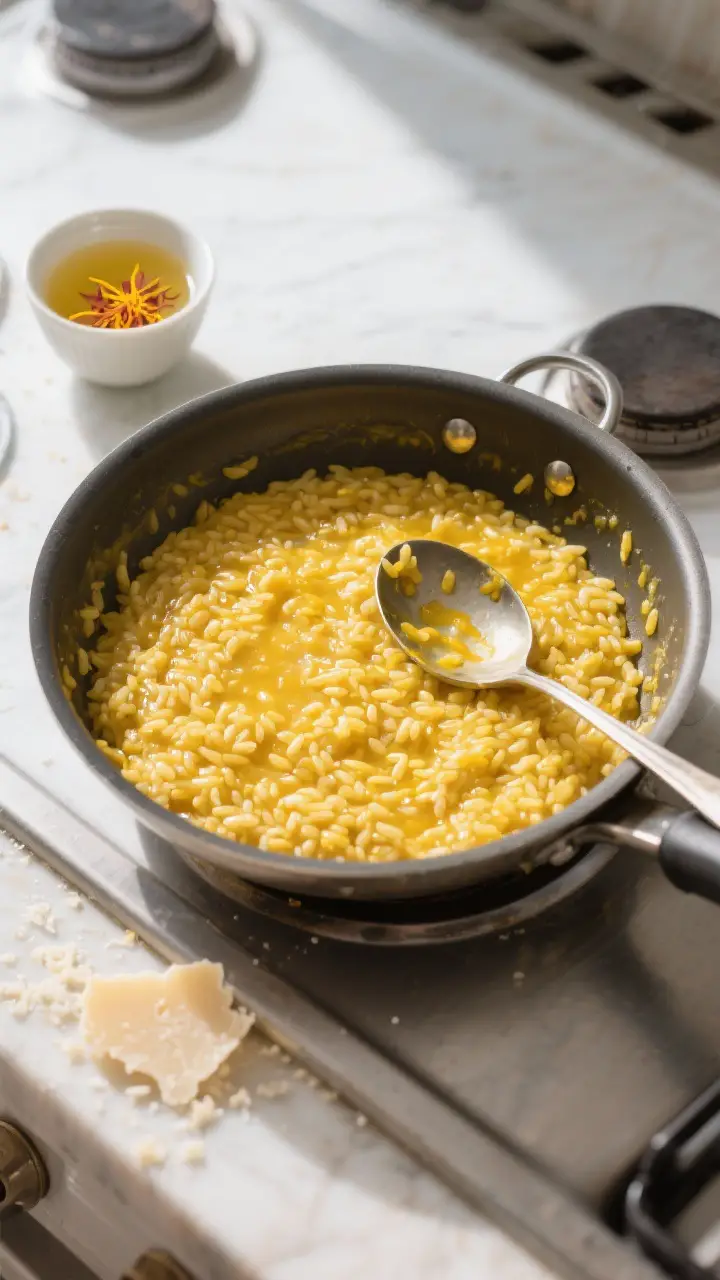
- Add the saffron. After 2–3 ladles, pour in the saffron-infused stock.
Stir well. The rice will gradually turn a golden yellow and take on saffron’s distinctive scent.
- Stir and monitor texture. Continue adding stock a ladle at a time, stirring frequently. Taste along the way.
The rice should be tender with a slight bite at the core. This usually takes 16–20 minutes total.
- Adjust seasoning. As the rice nears done, season with salt. The stock and cheese add saltiness, so go slowly.
- Mantecatura (the creamy finish). When the rice is al dente and loose, remove from heat.
Vigorously stir in the remaining 2 tablespoons butter and the Parmigiano-Reggiano. If using, fold in a little bone marrow or marrow butter. Aim for a flowing, creamy texture—called all’onda, like gentle waves.
- Rest and serve. Let the risotto sit for 1 minute, then stir once more.
If it thickens too much, loosen with a splash of hot stock. Serve immediately in warm bowls.
How to Store
- Refrigerate: Cool quickly and store in an airtight container for up to 3 days.
- Reheat: Warm gently on the stove with a splash of stock or water to restore creaminess. Stir until smooth; add a touch of butter if needed.
- Do not freeze: Freezing breaks the texture and turns the rice grainy and mushy.
- Leftover idea: Shape cold risotto into patties, bread lightly, and pan-fry for crispy cakes.
Why This is Good for You
- Saffron’s benefits: Saffron contains antioxidants like crocin and safranal, which may support mood and overall well-being.
- Customizable: You can use low-sodium stock and adjust salt to your preference.
It’s also naturally gluten-free.
- Portion-friendly: A small bowl is filling and comforting, making it easy to enjoy in moderation.
What Not to Do
- Don’t rinse the rice. Washing removes surface starch that’s crucial for creaminess.
- Don’t use cold stock. Cold liquid shocks the rice and interferes with even cooking.
- Don’t rush the heat. A roaring boil can split the grains and evaporate liquid too fast. Keep a steady simmer.
- Don’t skip the toasting step. Tostatura develops flavor and improves texture.
- Don’t add cheese too early. Add cheese off the heat during mantecatura to avoid clumping and greasiness.
- Don’t overcook. Aim for al dente. Mushy risotto loses elegance and becomes gluey.
Alternatives
- Rice swaps: Carnaroli tends to stay firmer than Arborio and is preferred by many chefs.
Avoid long-grain rice; it won’t turn creamy.
- Broth choices: Chicken stock adds warmth; vegetable stock keeps it lighter. A touch of beef stock gives a deeper, more traditional Milanese edge.
- Wine-free: Skip wine and add a teaspoon of lemon juice at the end for brightness.
- Dairy adjustments: For lactose sensitivity, use lactose-free butter and a hard cheese you tolerate, or finish with extra-virgin olive oil for silkiness.
- Marrow substitute: If you don’t have bone marrow, a small knob of beef tallow butter or a bit more Parmigiano adds richness.
- Herb accent: Traditionally, this risotto is clean and saffron-forward. If you want a twist, finish with a whisper of lemon zest—just enough to lift, not dominate.
FAQ
Can I make it ahead?
You can par-cook the risotto to about 75% doneness, spread it on a tray to cool, and refrigerate.
When ready to serve, return it to the pot with hot stock and finish cooking, then do the mantecatura. It won’t be quite as perfect as cooking straight through, but it’s a helpful strategy for hosting.
How much saffron should I use?
A generous pinch is enough—about 1/2 teaspoon of threads. Too much can taste medicinal.
Blooming saffron in warm stock helps you use less while getting full color and aroma.
What if my risotto gets too thick?
Add hot stock a little at a time and stir. Risotto should be fluid and creamy, not a solid mound. It naturally tightens as it rests, so keep extra stock on hand until the moment you serve.
Is Parmigiano-Reggiano essential?
It’s traditional and adds a deep savory note.
If you need a substitute, use Grana Padano. Avoid pre-grated powdery cheese; it won’t melt smoothly.
Can I add proteins or vegetables?
Classic Milanese risotto is simple and meant to accompany dishes like ossobuco. If you’re serving it as a main, keep additions subtle—perhaps a few sautéed mushrooms or a spoon of slow-cooked beef marrow—so saffron remains the star.
What pot should I use?
Use a wide, heavy-bottomed pot or sauté pan.
The larger surface area helps liquid evaporate evenly and makes stirring easier.
In Conclusion
Risotto alla Milanese is proof that simple ingredients can create extraordinary results. With saffron’s warmth, carefully cooked rice, and a luxurious finish of butter and cheese, you get a creamy, golden dish that feels both comforting and refined. Take your time, stir with intention, and serve it while it gently ripples on the spoon.
It’s a classic for good reason—and one you’ll want to make again and again.
Printable Recipe Card
Want just the essential recipe details without scrolling through the article? Get our printable recipe card with just the ingredients and instructions.