
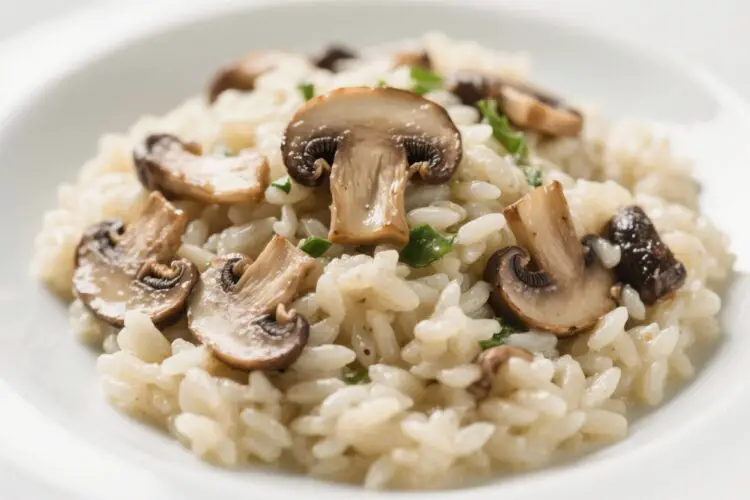
Risotto ai Funghi is one of those dishes that feels special without being fussy. Creamy rice, savory mushrooms, and a hint of Parmesan come together in a way that’s cozy and elegant all at once. You don’t need fancy tricks—just patience and good ingredients.
This version keeps the technique classic and the flavors clean. If you’ve ever wanted restaurant-quality risotto at home, this is the recipe to trust.
Why This Recipe Works
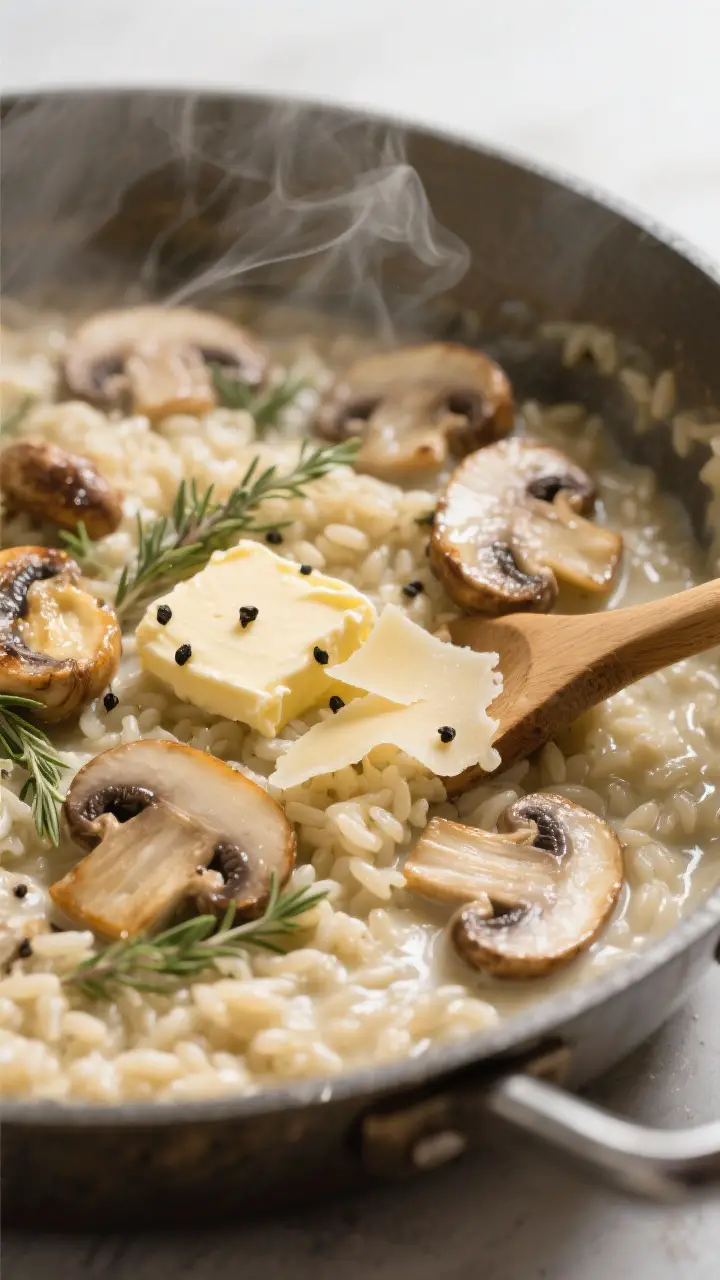
This recipe builds flavor in layers. Toasting the rice in butter and olive oil deepens its nutty character and helps it keep a pleasant bite. Deglazing with wine adds brightness that balances the earthy mushrooms. Gradual broth additions release the rice’s natural starch, creating a creamy texture without cream. Finishing with butter and Parmesan pulls everything together with a glossy, luxurious finish.
Shopping List
- Arborio or Carnaroli rice (1 1/2 cups) – short-grain risotto rice
- Assorted mushrooms (1 pound) – cremini, shiitake, oyster, or wild mix; plus optional dried porcini (1/2 ounce)
- Unsalted butter (4 tablespoons)
- Olive oil (2 tablespoons)
- Shallot (1 large) or yellow onion (1 small), finely chopped
- Garlic (2 cloves), minced
- Dry white wine (1/2 cup) – Pinot Grigio, Sauvignon Blanc, or similar
- Vegetable or chicken stock (5–6 cups), warmed
- Parmesan cheese (3/4 cup), finely grated
- Fresh thyme (a few sprigs) or parsley, chopped
- Kosher salt and freshly ground black pepper
- Optional: Lemon zest (1/2 teaspoon), truffle oil (a few drops), mascarpone (2 tablespoons), or a splash of cream
Instructions
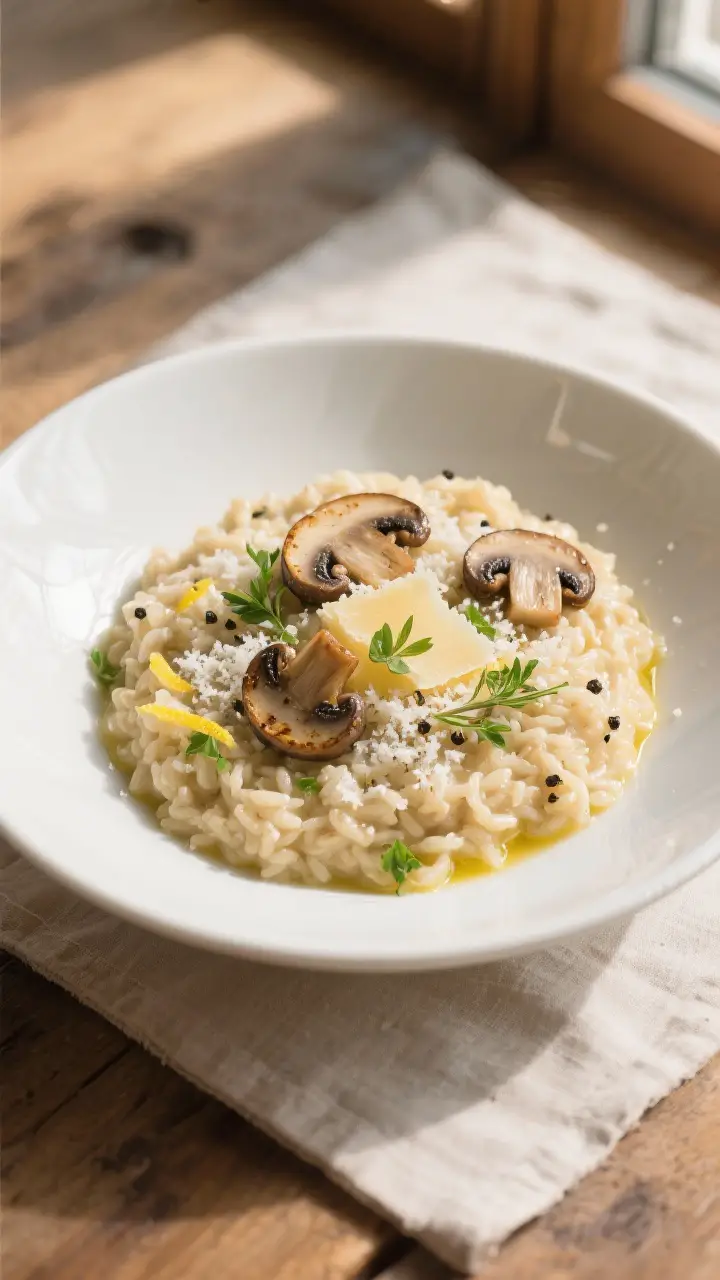
- Prep the mushrooms: Wipe mushrooms clean and slice. If using dried porcini, soak them in 1 cup of hot water for 15 minutes, then chop and reserve the soaking liquid, straining out any grit.
- Warm the stock: In a saucepan, bring stock to a gentle simmer.
Keep it warm on low; hot stock helps the rice cook evenly.
- Sauté the mushrooms: In a large skillet, heat 1 tablespoon butter and 1 tablespoon olive oil over medium-high heat. Add mushrooms in batches so they brown instead of steam. Season with a pinch of salt.
Cook until golden and tender, 6–8 minutes. Set aside.
- Start the base: In a wide, heavy pot, heat the remaining butter and olive oil over medium heat. Add shallot and a pinch of salt.
Cook until translucent, 2–3 minutes. Stir in garlic and cook 30 seconds.
- Toast the rice: Add the rice and stir to coat, 1–2 minutes, until the edges look slightly translucent. This step locks in texture.
- Deglaze with wine: Pour in the white wine and stir until mostly absorbed.
If using porcini soaking liquid, add it now and cook until absorbed.
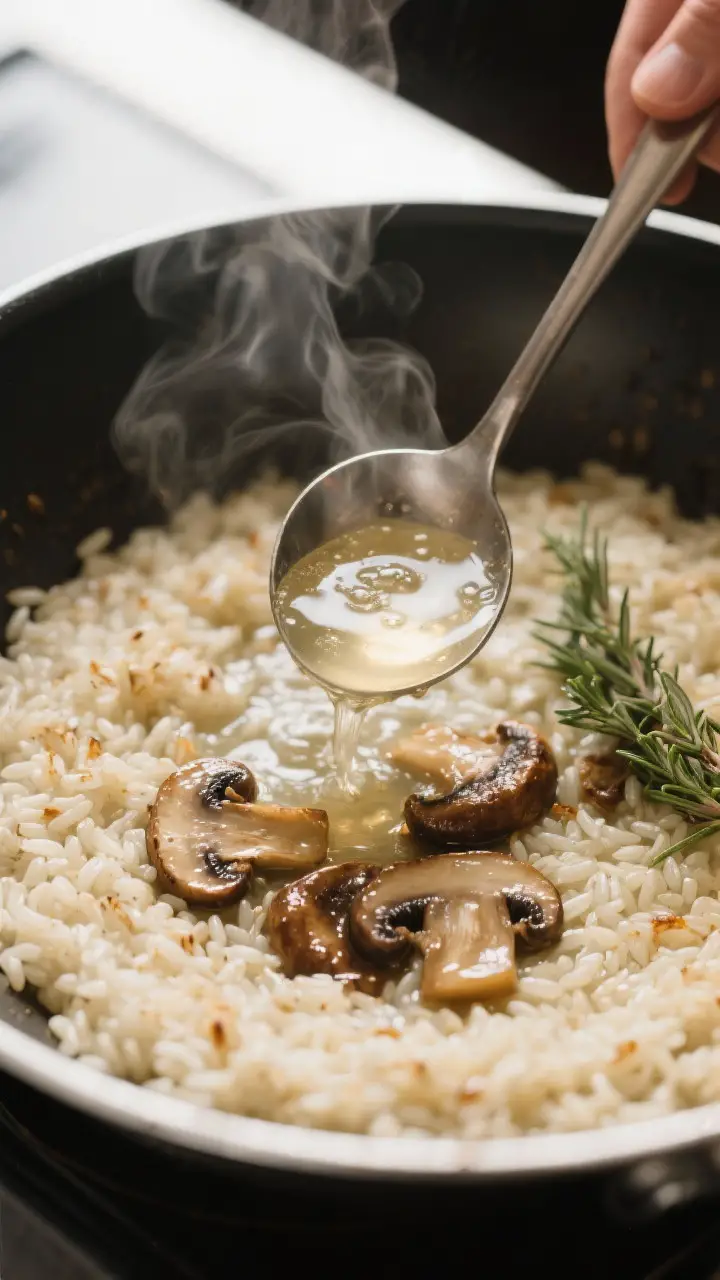
- Add stock gradually: Add a ladle of hot stock and stir gently. When the liquid is mostly absorbed, add another ladle. Continue, stirring often, until the rice is creamy and al dente, about 18–22 minutes.
- Fold in mushrooms: When the rice is nearly done, stir in the sautéed mushrooms and any juices.
Add thyme leaves. Taste and season with salt and pepper.
- Finish the risotto: Remove from heat. Stir in Parmesan and an extra knob of butter.
The risotto should be loose and glossy, flowing slowly when you tilt the pot. Adjust with a splash of hot stock if needed.
- Optional enhancements: Add lemon zest for brightness, a spoonful of mascarpone for extra richness, or a few drops of truffle oil just before serving.
- Serve: Spoon into warm bowls. Top with more Parmesan and a sprinkle of parsley or thyme.
Serve immediately.
Keeping It Fresh
Risotto is best served right away, when it’s at its creamiest. If you need to hold it, keep it on the stove over very low heat with a splash of hot stock and stir occasionally. For leftovers, refrigerate in a shallow container for up to 3 days.
To reheat, warm gently with stock or water until creamy again.
If the texture feels tight, loosen with more liquid and a small knob of butter. For a fun twist with leftovers, shape chilled risotto into patties or balls and pan-fry for crispy risotto cakes.
Health Benefits
- Mushrooms: Rich in B vitamins, selenium, and antioxidants. They add umami without extra saturated fat.
- Whole flavor, moderate richness: This dish tastes indulgent but relies mostly on starch and technique for creaminess, not heavy cream.
- Protein boost: Parmesan adds protein and calcium.
You can also stir in peas or white beans for extra fiber and protein.
- Gluten-free friendly: Risotto rice is naturally gluten-free; just confirm your stock and add-ins are, too.
Common Mistakes to Avoid
- Rinsing the rice: Don’t rinse. You need the starch to create that signature creamy texture.
- Cold stock: Adding cold stock shocks the rice and stalls cooking. Keep it hot and steady.
- Overcrowding mushrooms: Mushrooms steam when crowded.
Sauté in batches to get real browning and flavor.
- Walking away: Risotto needs attention. Stir often to massage out the starch and prevent sticking.
- Overcooking: Aim for al dente—tender with a slight bite. If it turns mushy, you’ve gone too far.
- Too tight or too soupy: Finished risotto should be loose and creamy, not stiff.
Adjust with a little stock at the end to reach the right flow.
Recipe Variations
- Porcini and Truffle: Use dried porcini for depth and finish with a few drops of truffle oil.
- Mushroom and Pea: Stir in 1 cup of thawed peas during the last 3 minutes for sweetness and color.
- Garlic-Herb: Add rosemary or sage with the mushrooms for a woodsy, aromatic twist.
- Mascarpone Finish: Swap half the butter at the end for mascarpone to make it extra silky.
- Vegan: Use olive oil, vegetable stock, and a vegan Parmesan alternative or nutritional yeast. Finish with a splash of good olive oil and lemon zest.
- Grain Swap: Try farro or barley for a nuttier, heartier take. Cooking time will be longer, and you’ll need more stock.
FAQ
What’s the best rice for risotto?
Carnaroli is often preferred for its texture and forgiveness, but Arborio is widely available and works beautifully.
Avoid long-grain rice; it won’t release enough starch.
Can I skip the wine?
Yes. Replace it with an equal amount of stock plus a teaspoon of lemon juice to mimic the acidity. The flavor will still be balanced.
How do I know when the risotto is done?
It should be creamy and slightly flowing, with the rice grains tender but not mushy.
Taste a grain—there should be a gentle, pleasant bite at the center.
Why isn’t my risotto creamy?
You may have added stock too quickly or not stirred enough. The gradual addition and stirring are what release the starch that creates creaminess.
What mushrooms are best?
A mix is ideal: cremini for body, shiitake or oyster for aroma, and dried porcini for deep, woodsy flavor. Use what’s fresh and available.
Can I make it ahead?
For entertaining, you can par-cook the risotto: stop when it’s about 70% done, spread on a sheet pan to cool, and refrigerate.
Finish with hot stock, mushrooms, and cheese just before serving.
Should I add cream?
Traditional risotto doesn’t need cream. If you like a richer finish, add a spoonful of mascarpone or a splash of cream at the end.
What wine pairs well with mushroom risotto?
Choose a medium-bodied white like Chardonnay (unoaked) or a Pinot Grigio. For red, try a light Pinot Noir or Barbera—they match the earthiness without overpowering it.
How much salt should I use?
Season in layers.
Lightly salt the mushrooms and shallots, then adjust at the end after adding Parmesan, which is salty on its own. Taste as you go.
Can I add protein?
Absolutely. Fold in sautéed chicken, seared scallops, or crispy pancetta near the end.
Keep portions modest so the risotto remains the star.
Final Thoughts
Risotto ai Funghi is all about simple technique and good timing. With warm stock, steady stirring, and quality mushrooms, you get a restaurant-worthy bowl every time. Keep it loose, finish with butter and Parmesan, and serve it hot.
It’s comfort food with finesse—perfect for weeknights or dinner guests alike.
Printable Recipe Card
Want just the essential recipe details without scrolling through the article? Get our printable recipe card with just the ingredients and instructions.