
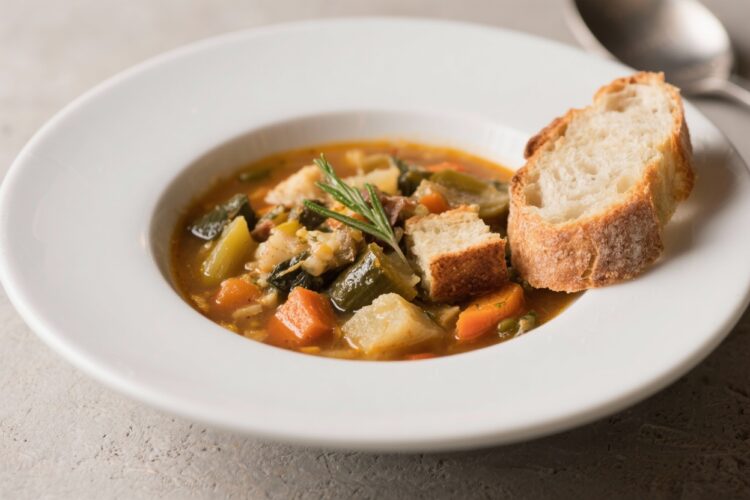
Ribollita is the kind of soup that tastes like home, even if you’ve never been to Tuscany. It’s thick, cozy, and full of vegetables, beans, and chunks of bread that soak up all the flavor. This isn’t a fussy dish—it’s a brilliant way to turn humble ingredients into something deeply satisfying.
Whether you’re cooking for a crowd or prepping for the week, ribollita delivers warmth and substance without much effort.
Why This Recipe Works
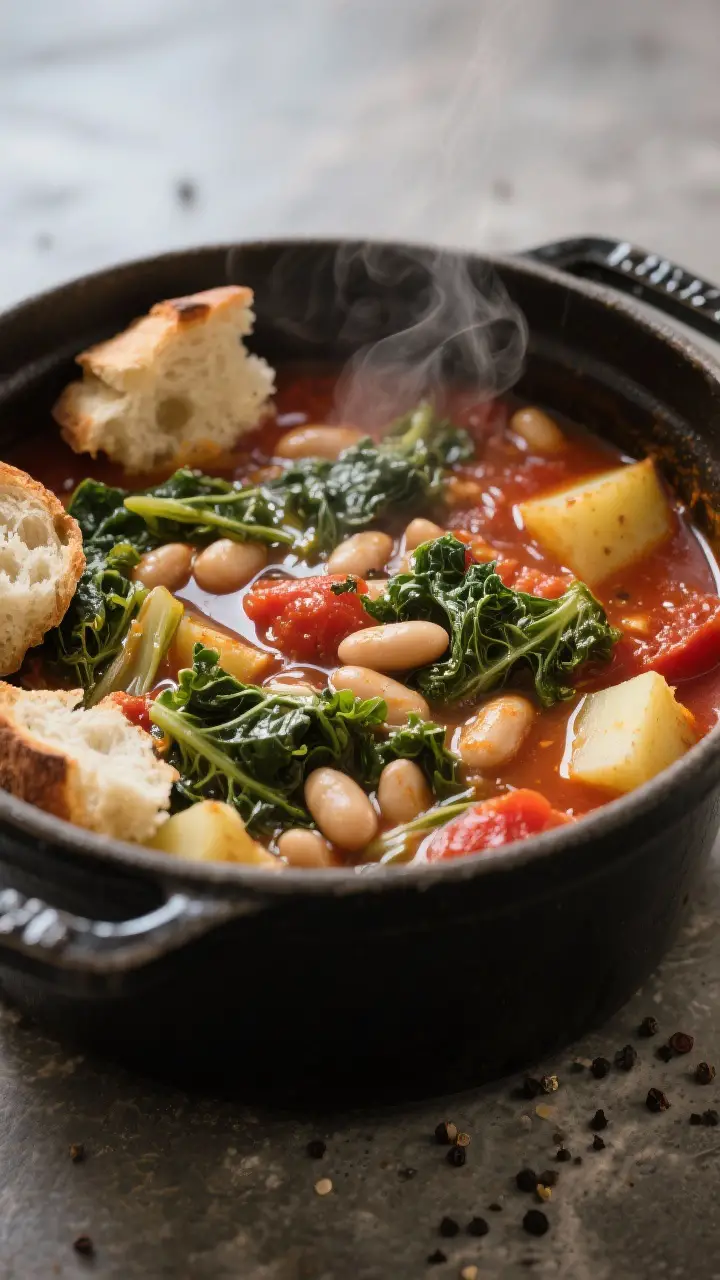
- Layered flavors: Slowly cooked onions, carrots, and celery create a savory base. Tomato paste, garlic, and herbs round it out, while the greens add freshness.
- Perfect texture: The bread thickens the soup, turning it into a spoonable stew. Cannellini beans add creaminess and body without dairy.
- Make-ahead friendly: Ribollita literally means “reboiled.” It tastes even better the next day when the flavors meld and the bread softens.
- Flexible and forgiving: Use whatever hearty greens and vegetables you have.
This recipe invites swaps and improvisation.
Ingredients
- Olive oil: 4 tablespoons, plus more for serving
- Yellow onion: 1 large, diced
- Carrots: 2 medium, diced
- Celery stalks: 2, diced
- Garlic: 4 cloves, minced
- Tomato paste: 2 tablespoons
- Crushed tomatoes: 1 cup (optional but recommended for depth)
- Thyme: 1 teaspoon dried (or 1 tablespoon fresh, chopped)
- Rosemary: 1 teaspoon dried (or 1 tablespoon fresh, chopped)
- Bay leaf: 1
- Red pepper flakes: A pinch (optional)
- Cannellini beans: 2 cans (15 oz each), drained and rinsed, or 3 cups cooked
- Vegetable broth: 6 cups (or chicken broth, if preferred)
- Kale or cavolo nero (Tuscan kale): 1 large bunch, ribs removed, chopped
- Savoy cabbage: 2 cups, chopped (optional but traditional)
- Potato: 1 medium, peeled and diced (for extra body)
- Parmesan rind: 1 piece (optional, for umami)
- Day-old rustic bread: 4–6 cups, torn into chunks (preferably unsalted Tuscan-style or country bread)
- Salt and black pepper: To taste
- Lemon: 1, for finishing (optional)
- Grated Parmesan: For serving (optional)
Step-by-Step Instructions
- Sauté the base: Warm the olive oil in a large pot over medium heat. Add onion, carrot, and celery. Season with a pinch of salt and cook 8–10 minutes until softened and lightly golden.
- Add aromatics: Stir in garlic, tomato paste, thyme, rosemary, bay leaf, and red pepper flakes.
Cook 1–2 minutes until fragrant and the tomato paste darkens slightly.
- Build the soup: Add crushed tomatoes (if using), broth, potato, and the Parmesan rind. Bring to a gentle simmer.
- Simmer the vegetables: Cook for about 10 minutes, then add the cabbage and kale. Simmer another 15–20 minutes, until the greens are tender and the potatoes are soft.
- Add beans: Mash about 1 cup of the beans with a fork and stir them in to thicken the broth.
Add the remaining whole beans. Simmer 5–10 minutes. Taste and season with salt and pepper.
- Thicken with bread: Stir in the torn bread pieces.
Let them soak and soften in the hot soup for 10 minutes, stirring occasionally. Add more broth or water if it becomes too thick.
- Adjust and finish: Remove the bay leaf and rind. Add a squeeze of lemon to brighten the flavors.
Drizzle with good olive oil.
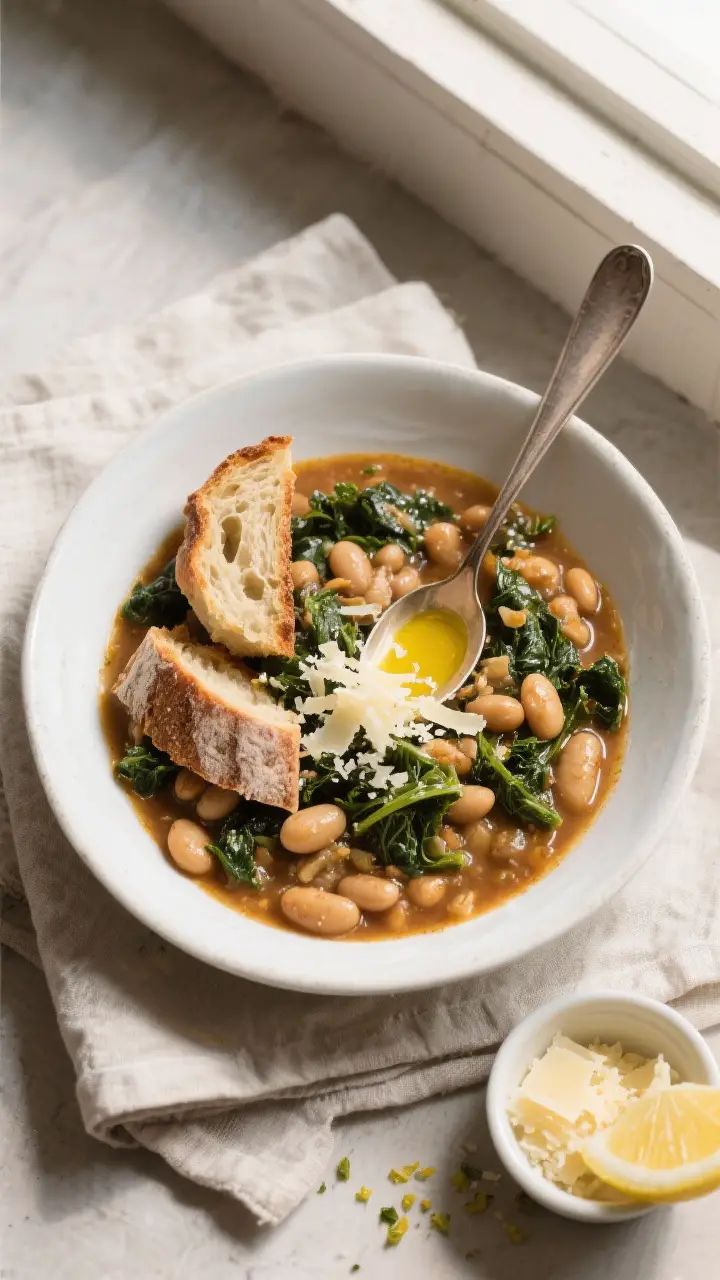
- Serve: Ladle into bowls and top with grated Parmesan and more olive oil if you like. The soup should be hearty, almost stew-like.
- For true ribollita: Let the soup cool, chill overnight, then reheat the next day. It thickens beautifully and tastes even better “reboiled.”
How to Store
- Refrigerator: Store in an airtight container for up to 4 days.
It thickens as it sits; add a splash of water or broth when reheating.
- Freezer: Freeze up to 3 months. For best texture, freeze the soup without bread, then add fresh bread when reheating.
- Reheating: Warm gently on the stove over low heat, stirring often. Add liquid as needed to reach your preferred consistency.

Health Benefits
- High in fiber: Beans, kale, and bread offer plenty of fiber to support digestion and steady energy.
- Rich in micronutrients: Leafy greens bring vitamins A, C, and K, plus minerals like iron and calcium.
- Plant-forward protein: Cannellini beans add steady, satisfying protein without heaviness.
- Heart-healthy fats: Olive oil provides monounsaturated fats and antioxidants.
- Naturally budget-friendly: It uses accessible, inexpensive ingredients while still delivering big nutritional value.
What Not to Do
- Don’t skip the sauté: Rushing the onion-carrot-celery step leads to a flat-tasting soup.
The caramelization is key.
- Don’t use very soft bread: Flimsy sandwich bread disintegrates into paste. Choose crusty, day-old country bread.
- Don’t over-salt early: The soup reduces and the bread is often salted. Season gradually and taste at the end.
- Don’t boil aggressively: A gentle simmer keeps greens tender and prevents beans from breaking apart.
- Don’t forget acidity: A touch of lemon or a splash of vinegar at the end keeps the soup bright, not muddy.
Recipe Variations
- Traditional Tuscan: Use cavolo nero (Tuscan kale), savoy cabbage, cannellini beans, and unsalted Tuscan bread for the most classic profile.
- Smoky twist: Add a bit of smoked paprika or a small piece of pancetta (sautéed at the start) for depth.
If using pancetta, reduce salt.
- Hearty winter version: Add diced turnip or parsnip, and a handful of barley or farro. Increase broth as needed.
- Gluten-free: Swap the bread for gluten-free rustic bread or use extra beans and a few diced potatoes to thicken.
- Vegan umami: Skip the Parmesan rind and add a teaspoon of white miso or a splash of soy sauce toward the end.
- Herb-forward: Stir in chopped fresh parsley and a little basil before serving for a fresher finish.
FAQ
What kind of bread is best for ribollita?
A sturdy, crusty, day-old country loaf is ideal. It should be dense enough to hold its shape while absorbing liquid.
Avoid soft sandwich bread, which turns gummy.
Can I make ribollita without tomatoes?
Yes. You can skip the crushed tomatoes and use only broth and aromatics. The soup will be paler but still rich, especially if you mash some beans and use a Parmesan rind.
How thick should ribollita be?
It’s traditionally very thick—more stew than soup.
You should be able to stand a spoon in it. Adjust with more broth or water if you prefer a looser texture.
Can I use different beans?
Cannellini beans are classic, but great northern beans or navy beans work well. Aim for a creamy bean that holds its shape.
Is ribollita better the next day?
Absolutely.
The flavors deepen and the bread fully integrates. Reheat gently and add a bit of broth if it’s too thick.
What if I don’t have kale?
Use other sturdy greens like Swiss chard, collard greens, or savoy cabbage. Spinach is too delicate and will wilt away quickly.
How do I make it more protein-rich?
Add extra beans, some diced cooked chicken, or stir in a spoonful of miso at the end for savory depth and a small protein boost.
Can I cook this in a slow cooker?
Yes.
Sauté the aromatics and tomato paste first on the stove, then transfer to a slow cooker with the broth, beans, potato, and greens. Cook on low 6–8 hours. Stir in bread in the last 30 minutes.
Final Thoughts
Ribollita proves that simple ingredients can deliver big comfort.
With a little patience and good bread, you get a hearty, nourishing bowl that tastes better with time. Keep it classic or make it your own—the method is forgiving, and the results are always generous. Drizzle with olive oil, add a shower of Parmesan, and enjoy a timeless Tuscan staple at your own table.
Printable Recipe Card
Want just the essential recipe details without scrolling through the article? Get our printable recipe card with just the ingredients and instructions.