
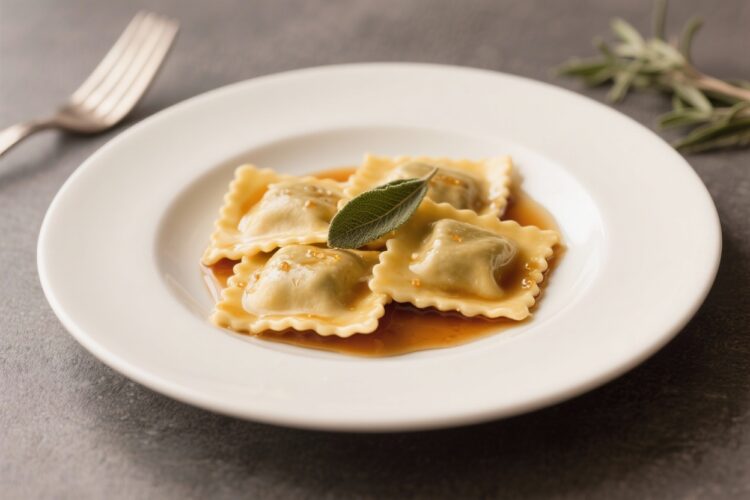
Brown butter and sage is one of those combinations that feels like a little magic trick. It takes minutes to make and turns store-bought ravioli into something you’d happily serve to guests. The butter turns nutty and toasty, the sage gets crisp at the edges, and a squeeze of lemon brings it all to life.
It’s rich, cozy, and surprisingly light on effort. Whether it’s a weeknight dinner or a simple date-night meal, this dish delivers every time.
What Makes This Recipe So Good
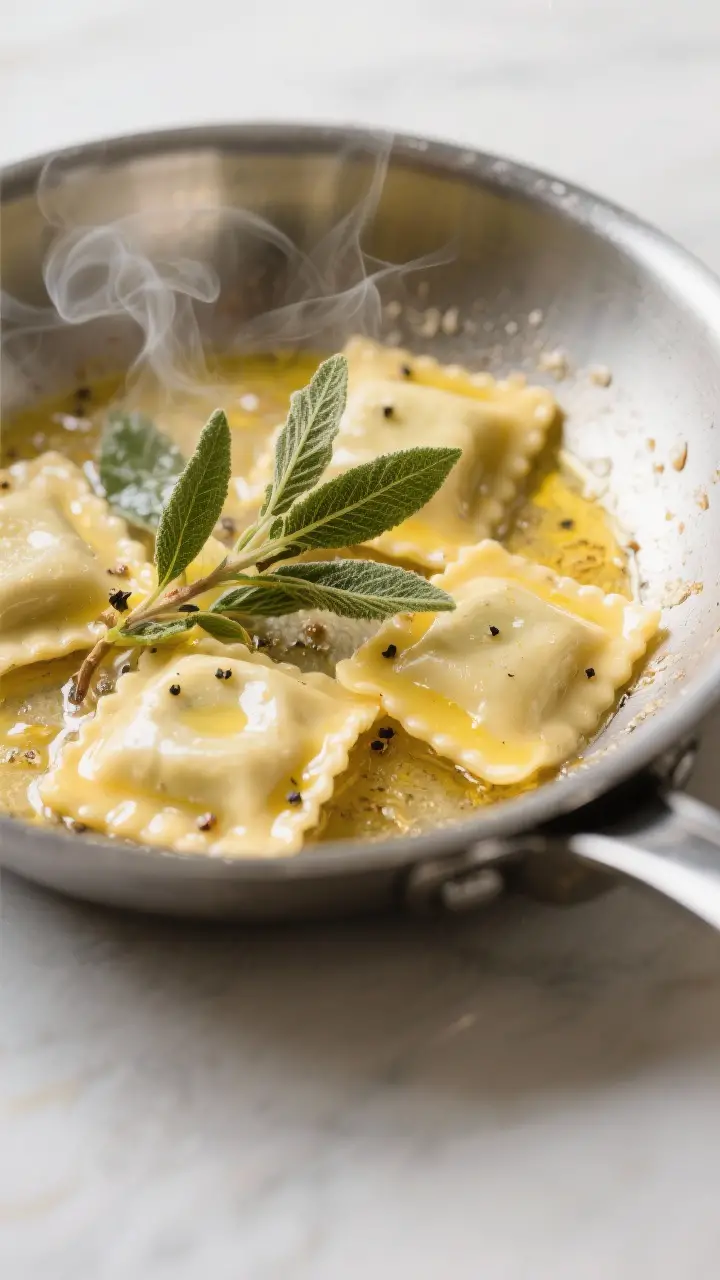
- Huge flavor, minimal effort: Brown butter adds a deep, nutty taste without complicated steps.
- Works with any ravioli: Cheese, mushroom, butternut squash, spinach—this sauce loves them all.
- Fast: You can get this on the table in about 15 minutes.
- Flexible and forgiving: A pinch more lemon, a handful of walnuts, or a shower of Parmesan—make it yours.
- Restaurant results at home: Crisp sage leaves and glossy butter make the plate look and taste special.
Ingredients
- 18–20 ounces fresh or frozen ravioli (cheese, mushroom, spinach, or butternut squash)
- 6 tablespoons unsalted butter
- 12–15 fresh sage leaves
- 1 small garlic clove, lightly crushed (optional)
- 1–2 tablespoons fresh lemon juice, plus more to taste
- 1/3 cup freshly grated Parmesan or Pecorino Romano, plus more for serving
- Salt and freshly ground black pepper
- Red pepper flakes, to taste (optional)
- Toasted chopped walnuts or pine nuts, for garnish (optional)
Step-by-Step Instructions
- Boil the water: Bring a large pot of well-salted water to a lively boil. Use about 1 tablespoon of salt per 3–4 quarts of water for proper seasoning.
- Cook the ravioli: Gently add the ravioli and cook according to package directions until tender.
Fresh ravioli usually needs 3–4 minutes; frozen may take a bit longer. Save 1/2 cup of pasta water before draining.
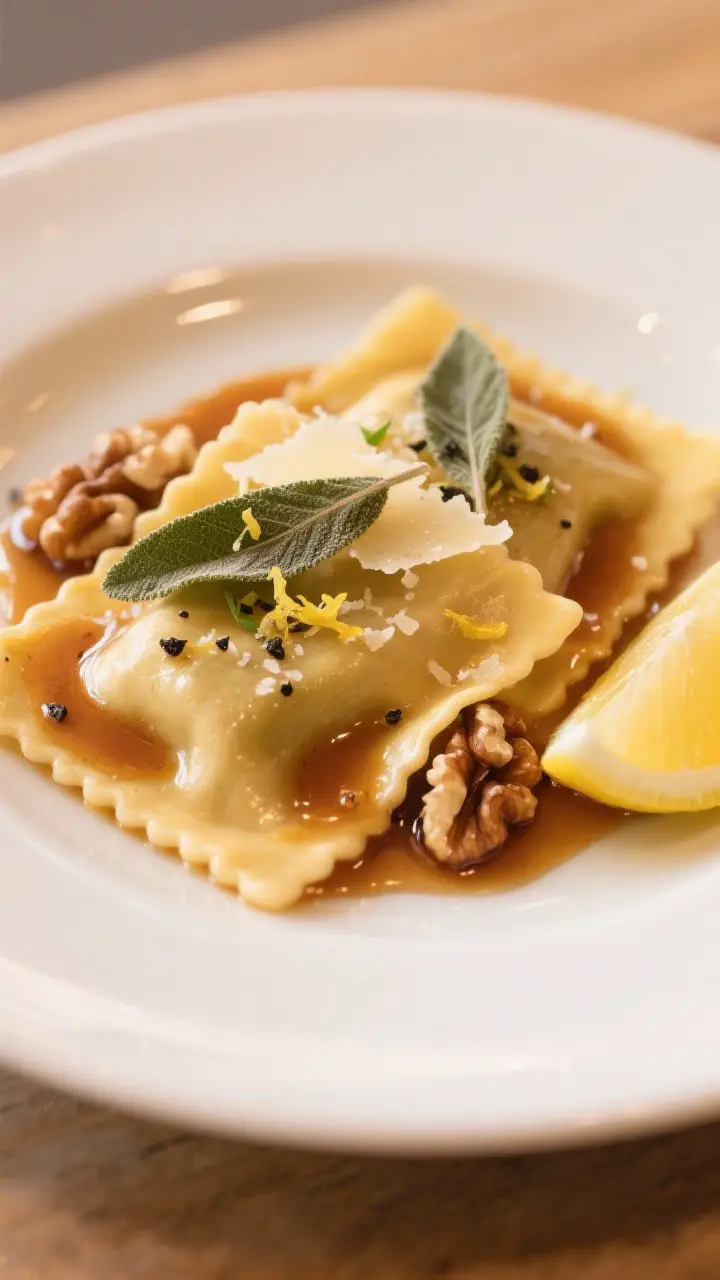
- Start the brown butter: While the pasta cooks, add the butter to a large skillet over medium heat. Let it melt and foam, then continue to cook, stirring often, until the milk solids turn golden brown and smell nutty, about 3–5 minutes.
- Crisp the sage: Add the sage leaves to the butter. They will sizzle and darken slightly in about 30–60 seconds.
If using garlic, add it now and let it perfume the butter for 30 seconds, then remove and discard if you prefer a subtle flavor.
- Brighten the sauce: Take the pan off the heat. Stir in 1 tablespoon lemon juice, a pinch of salt, and some black pepper. Taste and add more lemon if you like a sharper finish.
- Combine: Add the drained ravioli to the skillet with the brown butter and sage.
Toss gently to coat. If the sauce seems thick or the pasta looks dry, splash in a tablespoon or two of the reserved pasta water to help it gloss and cling.
- Finish with cheese: Sprinkle in the grated Parmesan and toss again. The cheese will melt into the butter and make a silky sauce.
Add red pepper flakes if you want a little heat.
- Plate and garnish: Divide among warm plates. Top with extra cheese, more black pepper, and a few chopped toasted nuts if you like crunch.
Keeping It Fresh
- Leftovers: Store in an airtight container in the fridge for up to 2 days. The butter may solidify; that’s normal.
- Reheating: Warm gently in a skillet over low heat with a tablespoon of water to loosen the sauce, or microwave in short bursts, stirring between intervals.
Add a squeeze of lemon to wake up the flavors.
- Make-ahead tips: You can brown the butter and crisp the sage up to a day ahead. Rewarm gently and finish with lemon just before tossing with the ravioli.
Why This is Good for You
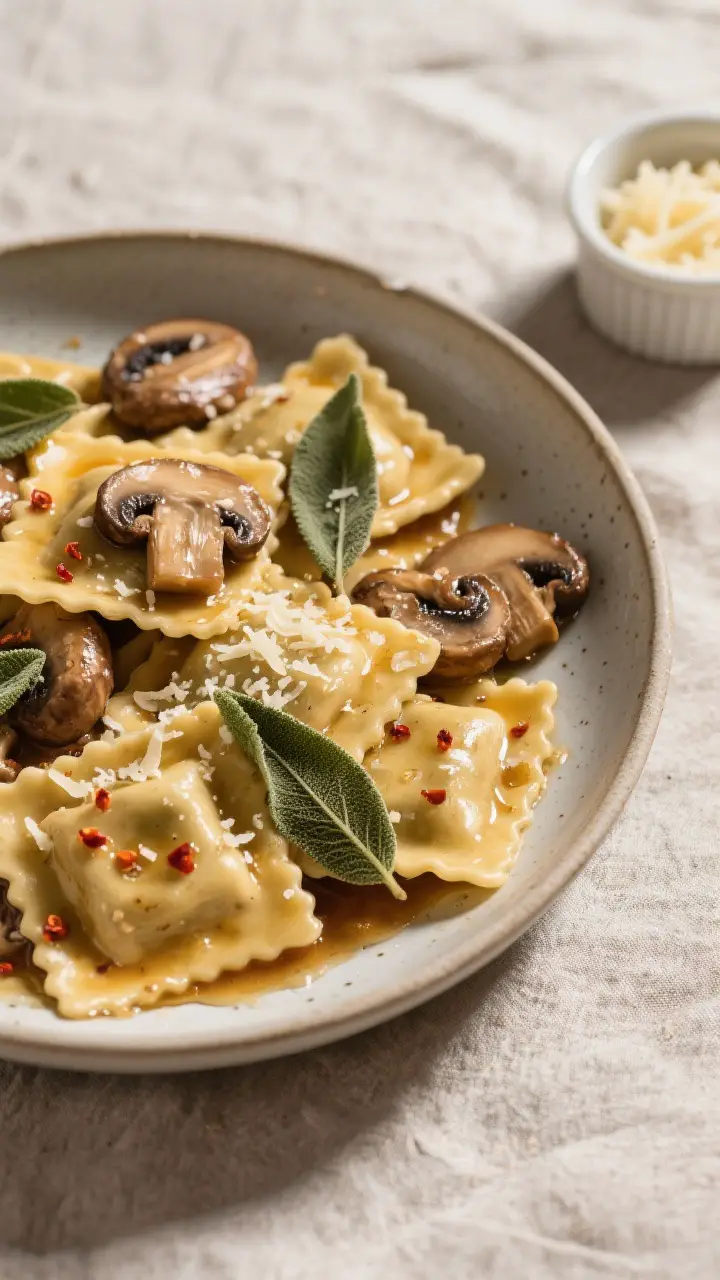
- Satisfying without excess: This dish is rich, so a moderate portion feels filling. You get steady energy from the pasta and fat for satiety.
- Herbs with benefits: Sage is fragrant and offers antioxidants.
It’s a small addition with a big payoff.
- Customizable balance: Pair with a simple green salad or steamed vegetables to add fiber and freshness, keeping the meal balanced.
- Mindful ingredients: Using good-quality butter and cheese means you don’t need much to get great flavor.
What Not to Do
- Don’t walk away from the butter: Brown butter goes from perfect to burnt fast. Stir and watch for the color and aroma to turn nutty and golden, not dark brown or black.
- Don’t skip the salt in the pasta water: It seasons the ravioli from the inside out and makes the whole dish taste better.
- Don’t overcook the ravioli: Mushy pasta will break apart when tossed with the sauce. Pull it as soon as it’s tender.
- Don’t forget acidity: A little lemon makes the butter feel lighter and keeps the flavors lively.
- Don’t drown it in cheese: Cheese is great, but too much can make the sauce clumpy.
Add gradually and toss.
Variations You Can Try
- Nutty crunch: Add toasted walnuts, hazelnuts, or pine nuts for texture and flavor.
- Brown butter and balsamic: Swap lemon for a teaspoon of good balsamic vinegar for a deeper, slightly sweet finish.
- Garlic-forward: Mince the garlic and let it gently toast in the butter just before browning finishes. Keep heat moderate to avoid bitterness.
- Veg boost: Toss in a handful of baby spinach or peas right at the end. The heat of the pasta will wilt or warm them quickly.
- Sausage splash: Brown a bit of crumbled Italian sausage in the pan first, then proceed with the butter and sage for a heartier version.
- Gluten-free: Use gluten-free ravioli and watch the cooking time, as some brands cook faster.
- Brown butter plus ricotta: Dollop fresh ricotta on top just before serving for extra creaminess.
FAQ
How do I know when the butter is browned and not burned?
You’ll see golden-brown specks at the bottom of the pan and smell a warm, nutty aroma, like toasted hazelnuts.
The foam will subside, and the color shifts from yellow to amber. If it turns very dark quickly or smells acrid, it’s gone too far—start again with lower heat.
Can I use dried sage instead of fresh?
Fresh sage is best here. It crisps in the butter and becomes a tasty garnish.
If you only have dried, use a very small amount—about 1/2 teaspoon—added with the butter, but expect a different texture and a slightly muted flavor.
What type of ravioli works best?
Cheese or mushroom ravioli are classic with brown butter and sage, but butternut squash or pumpkin ravioli are excellent too. Choose good-quality pasta with a filling that isn’t overly wet, so it holds together well.
Is there a way to lighten the dish?
Yes. Use 4 tablespoons of butter instead of 6, add more lemon, and toss in a handful of steamed vegetables like peas, asparagus tips, or spinach.
Serve with a big salad to round it out.
Can I make this with gnocchi or tortellini?
Absolutely. Potato gnocchi is great with brown butter and sage. Tortellini works too—just follow the same steps and adjust cooking time per package instructions.
What if my sauce turns greasy or clumpy?
If the cheese clumps, add a splash of warm pasta water and toss gently to emulsify.
Keep the heat low when adding cheese, and add it gradually to avoid seizing.
How can I make it spicy?
Add a pinch of red pepper flakes to the butter when you add the sage, or finish with a drizzle of Calabrian chili oil. Start small and adjust to taste.
Can I brown the butter ahead of time?
Yes. Store cooled brown butter in a sealed container in the fridge for up to a week.
Reheat gently, add fresh sage to crisp, then finish with lemon before tossing with the pasta.
Wrapping Up
Ravioli with brown butter and sage is the kind of meal that feels special without asking much from you. A handful of ingredients, a few careful minutes at the stove, and you get deep, toasty flavor with silky sauce and crisp herbs. Keep lemon and good Parmesan on hand, and you’ll always have a fast path to something comforting and elegant.
Serve it hot, keep the portions reasonable, and enjoy every bite.
Printable Recipe Card
Want just the essential recipe details without scrolling through the article? Get our printable recipe card with just the ingredients and instructions.