
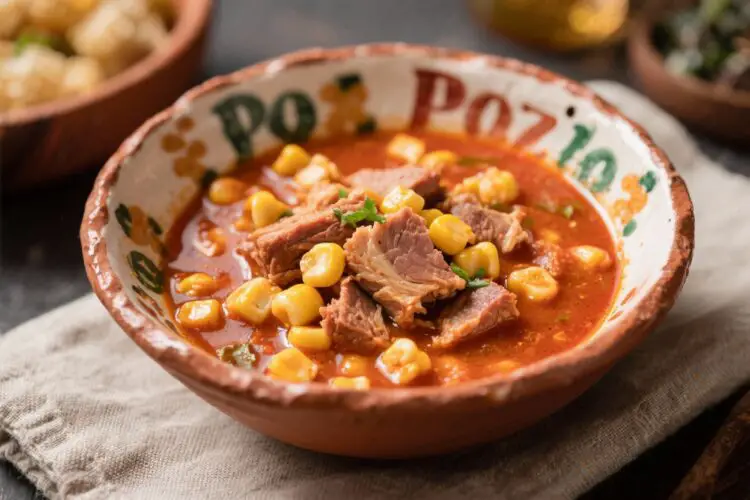
Pozole rojo is the kind of comforting stew that warms you from the inside out. It’s rich, savory, and layered with just enough heat to keep every spoonful interesting. Tender pork, chewy hominy, and a vibrant red chile broth make it feel special enough for a celebration, but it’s easy enough for a weekend dinner.
Top it with crisp cabbage, radishes, onions, and a squeeze of lime, and you’ve got a bowl that’s hearty yet bright. If you’re craving something satisfying and full of character, this is it.
What Makes This Recipe So Good
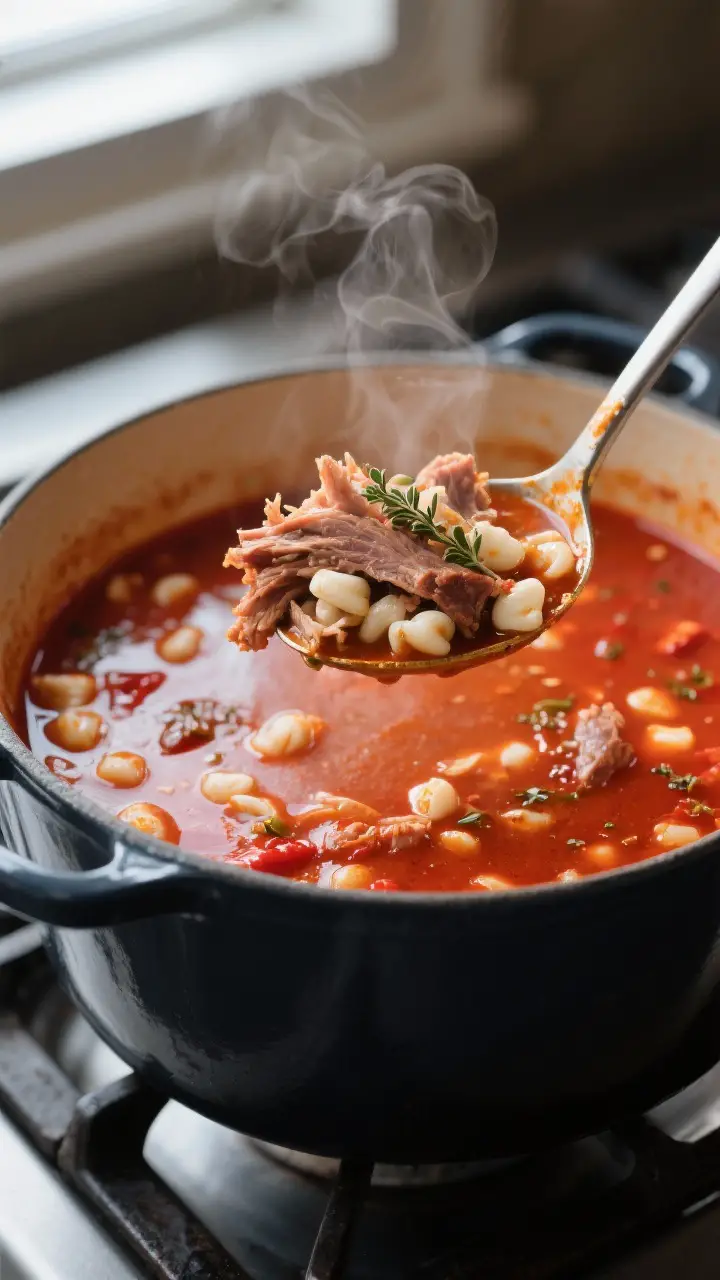
- Deep, developed flavor: Toasted dried chiles build a bold, smoky base without being overwhelmingly spicy.
- Comforting texture: Pork shoulder gets fall-apart tender, while hominy adds a pleasantly chewy bite.
- Customizable heat and toppings: Adjust the spice level and finish with fresh garnishes for balance and crunch.
- Make-ahead friendly: Pozole tastes even better the next day, making it great for meal prep or entertaining.
- Affordable ingredients: Pork shoulder, dried chiles, and canned hominy keep costs reasonable for a crowd.
Ingredients
- 3 pounds pork shoulder (butt), cut into large chunks, excess fat trimmed
- 1 onion, halved
- 1 garlic bulb, halved crosswise
- 2 bay leaves
- 1 tablespoon kosher salt, plus more to taste
- 10 cups water (or enough to cover)
- 3 dried guajillo chiles, stemmed and seeded
- 3 dried ancho chiles, stemmed and seeded
- 1–2 dried arbol chiles (optional, for heat)
- 1 teaspoon ground cumin
- 1 teaspoon Mexican oregano (or regular oregano)
- 1 teaspoon smoked paprika (optional, for depth)
- 2 tablespoons neutral oil (avocado, canola, or vegetable)
- 2 (29-ounce) cans hominy, drained and rinsed
- Freshly ground black pepper, to taste
For serving (highly recommended):
- Finely shredded green cabbage
- Sliced radishes
- Diced white onion
- Lime wedges
- Chopped cilantro
- Dried oregano and crushed red pepper (for sprinkling)
- Tostadas or warm tortillas
Step-by-Step Instructions

- Simmer the pork: In a large pot or Dutch oven, add pork, onion, garlic bulb halves, bay leaves, salt, and water. Bring to a boil, skim foam, then reduce to a gentle simmer.
Cook uncovered for 1.5–2 hours, until the pork is very tender.
- Soften the chiles: While the pork simmers, toast guajillo, ancho, and arbol chiles in a dry skillet over medium heat for 30–45 seconds per side, until fragrant. Don’t burn them. Place in a bowl and cover with hot water.
Soak 15–20 minutes until pliable.
- Blend the chile sauce: Drain chiles and add to a blender with 1.5 cups of the pork cooking liquid, cumin, oregano, smoked paprika, and a pinch of salt. Blend until very smooth. If needed, strain through a fine sieve for a silky texture.
- Fry the sauce: Heat oil in a skillet over medium heat.
Pour in the chile puree and cook 3–5 minutes, stirring, until it darkens slightly and thickens. This step deepens flavor.
- Shred the pork: Remove pork from the pot to a cutting board. Discard bay leaves, onion, and garlic.
Shred pork into bite-size pieces, discarding excess fat.
- Build the pozole: Return shredded pork to the pot. Stir in the fried chile sauce and hominy. Add more water or broth if needed to reach a stew-like consistency.
- Simmer to marry flavors: Let the pozole simmer on low for 20–30 minutes.
Taste and adjust salt and pepper. If it’s too intense, add a splash of water; if it needs brightness, a squeeze of lime helps.
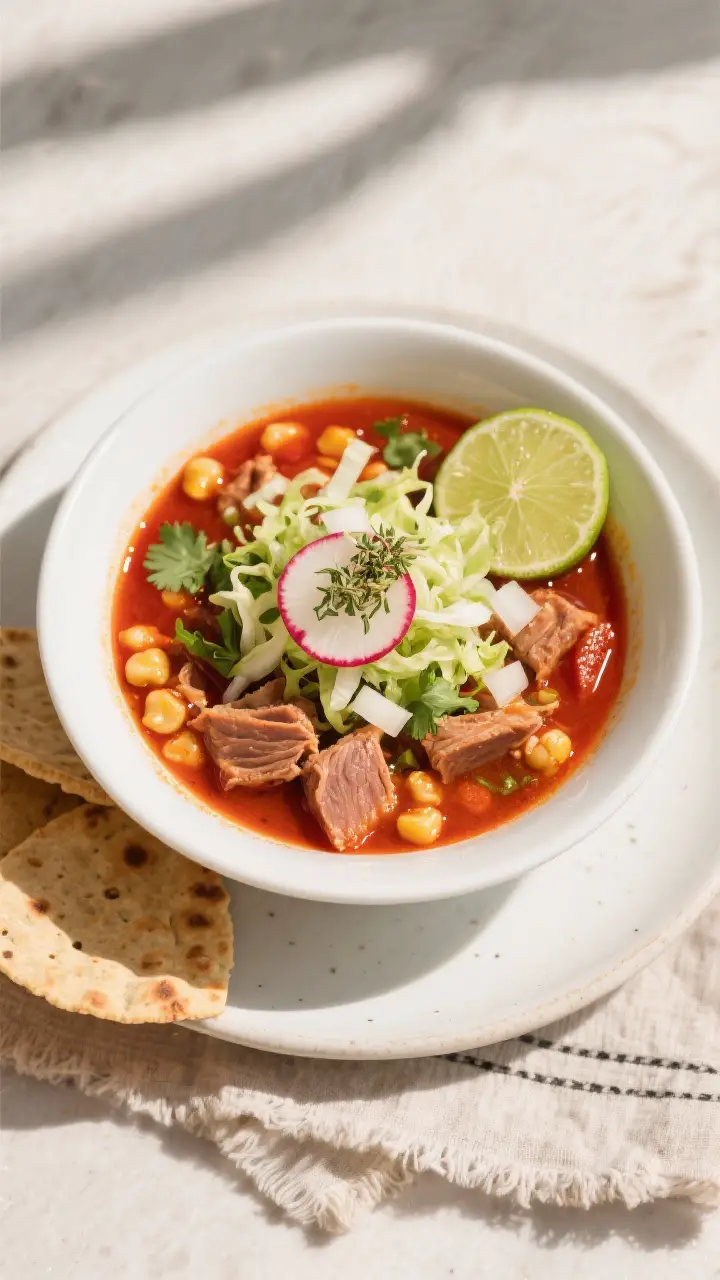
- Serve with toppings: Ladle into bowls and load with cabbage, radishes, onion, cilantro, oregano, and lime. Add crushed red pepper if you like more heat.
Serve with tostadas or tortillas.
Storage Instructions
- Refrigerator: Cool completely, then store in airtight containers for up to 4 days. The flavor improves on day two.
- Freezer: Freeze in portions for up to 3 months. Leave a little headspace in containers.
Thaw overnight in the fridge before reheating.
- Reheating: Warm gently on the stovetop over medium heat. Add a splash of water or broth if it has thickened. Top with fresh garnishes after reheating.
Health Benefits
- Protein-rich: Pork shoulder provides sustained energy and supports muscle repair.
- High in fiber: Hominy, made from nixtamalized corn, contributes fiber for digestion and a satisfying, steady fullness.
- Antioxidant boost: Dried chiles are rich in vitamins A and C and beneficial plant compounds.
- Customizable sodium and fat: You control the salt and can skim excess fat from the broth after chilling if desired.
- Fresh toppings add nutrients: Cabbage, radishes, onions, and lime bring vitamins, minerals, and extra fiber.
Pitfalls to Watch Out For
- Skipping chile toasting: Untoasted chiles taste flat.
A quick toast unlocks aroma and depth.
- Overheating the chiles: Burned chiles turn the whole pot bitter. Keep heat moderate and watch closely.
- Under-salting the broth: Taste at the end. The hominy and pork need enough seasoning to shine.
- Rushing the simmer: Pozole needs time to tenderize the pork and meld flavors.
Plan for a slow, gentle cook.
- Skipping the sauce “fry” step: Cooking the blended chiles in oil concentrates flavor and tames any harsh edges.
Variations You Can Try
- Chicken pozole: Swap pork shoulder for bone-in chicken thighs. Simmer until tender, shred, and proceed as directed.
- Pozole verde: Replace dried red chiles with roasted tomatillos, poblanos, jalapeños, cilantro, and pumpkin seeds for a green version.
- Vegetarian pozole: Use vegetable broth, add mushrooms or jackfruit for meatiness, and finish with extra beans for protein.
- Spice control: For mild pozole, skip arbol chiles. For extra heat, add more arbols or a spoonful of chile de árbol flakes when serving.
- Broth boosters: Add a pork hock or a small piece of bone-in pork for a richer stock.
Remove before shredding.
FAQ
What is hominy, and can I substitute it?
Hominy is corn that’s been nixtamalized, giving it a puffed, chewy texture and distinct flavor. Canned hominy is easiest and works perfectly. If you can’t find it, you can use canned white beans in a pinch, but the dish won’t taste like traditional pozole.
How spicy is this pozole rojo?
With guajillo and ancho chiles, it’s usually medium and very flavorful, not fiery.
The heat mostly comes from arbol chiles, which are optional. Adjust to your preference.
Can I make this in a slow cooker?
Yes. Add pork, onion, garlic, bay leaves, salt, and water to the slow cooker and cook on Low for 7–8 hours.
Shred the pork, make the chile sauce on the stovetop, then stir in the sauce and hominy and cook 30–60 minutes more.
Do I need to strain the chile sauce?
Straining isn’t mandatory, but it creates a smoother, more polished broth. If your blender is powerful and you blended well, you can skip it.
What toppings are essential?
Shredded cabbage, sliced radishes, diced onion, cilantro, a squeeze of lime, and a sprinkle of oregano are classic. They add crunch, freshness, and balance to the rich stew.
Can I use chicken broth instead of water?
Absolutely.
Using low-sodium chicken broth adds extra body and flavor. Adjust salt accordingly.
How can I skim excess fat?
Let the soup cool, then refrigerate. The fat solidifies on top, and you can lift it off easily before reheating.
How far in advance can I make pozole?
You can make it 1–2 days ahead.
Store the stew separately from the garnishes and add toppings right before serving.
What if my pozole tastes bitter?
Bitter flavors often come from scorched chiles. Next time, toast them lightly and avoid burning. A small pinch of sugar and a squeeze of lime can help balance bitterness.
Can I halve or double the recipe?
Yes.
Halve for a smaller household, or double for a party. Use a large stockpot and adjust salt gradually as volume increases.
Final Thoughts
Pozole rojo is the kind of recipe that brings people to the table and keeps them talking. It’s bold but balanced, simple yet satisfying, and endlessly customizable.
With a little time and a few pantry-friendly ingredients, you’ll get a pot of stew that feels like a celebration. Don’t forget the garnishes—they turn a good bowl into a great one. Enjoy, and make extra for tomorrow—it only gets better.
Printable Recipe Card
Want just the essential recipe details without scrolling through the article? Get our printable recipe card with just the ingredients and instructions.