
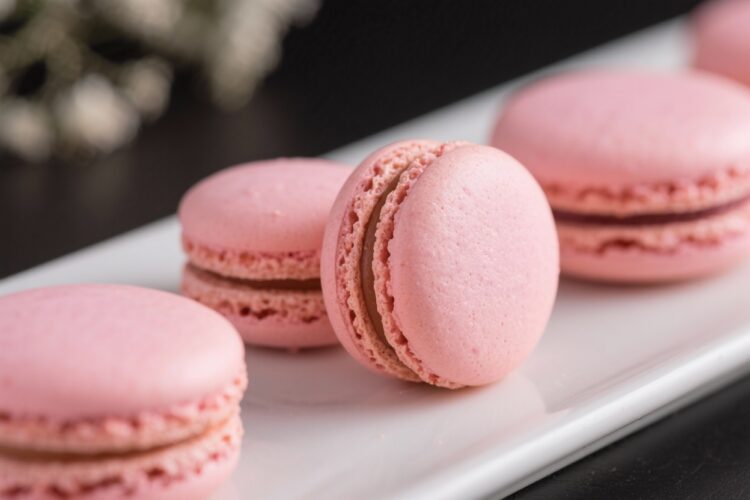
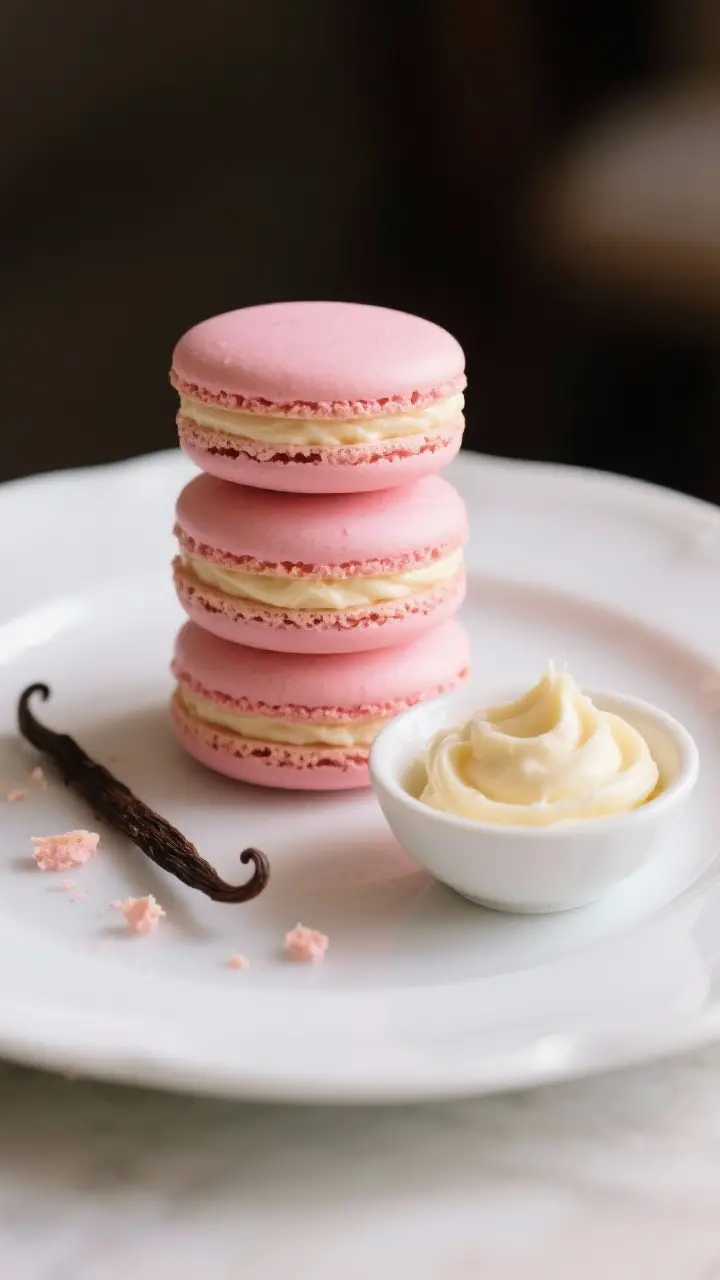
Macarons look fancy, but they’re really about a few simple steps done with care. These pink macarons bring a pop of color and a light, chewy bite that feels special without being fussy. Whether you’re baking for a celebration or just want a pretty treat, this recipe helps you get consistent results.
You’ll learn how to nail the macaron “feet,” get that smooth shell, and fill them with a creamy buttercream. No drama—just patient mixing, gentle folding, and a little rest time.
What Makes This Special
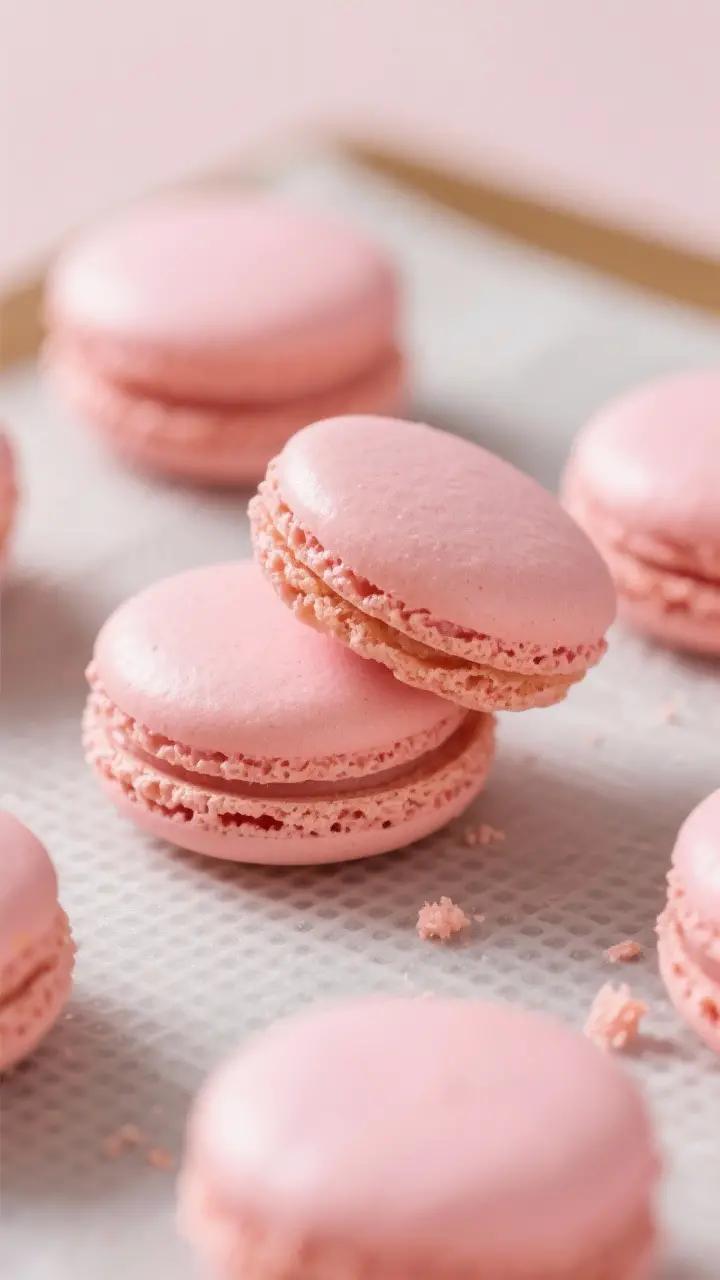
These pink macarons are all about balance: crisp shells, chewy centers, and a silky filling. The recipe uses almond flour for a naturally sweet, nutty base and meringue for lift and texture.
A hint of vanilla keeps the flavor clean, while the pink color gives them a playful, bakery-style finish. You’ll also get tips to avoid hollow shells and cracked tops—two common macaron issues. The result is a dessert that looks stunning and tastes even better.
Ingredients
- For the shells:
- 120 g almond flour (super-fine, blanched)
- 200 g powdered sugar
- 100 g egg whites (about 3 large), at room temperature
- 100 g granulated sugar
- 1/4 tsp cream of tartar (optional, helps stabilize meringue)
- 1 tsp vanilla extract (optional)
- Pink gel food coloring (a few drops)
- For the filling (vanilla buttercream):
- 115 g unsalted butter, softened
- 180–220 g powdered sugar, sifted
- 1–2 tbsp heavy cream or milk
- 1 tsp vanilla extract
- Pinch of salt
Step-by-Step Instructions
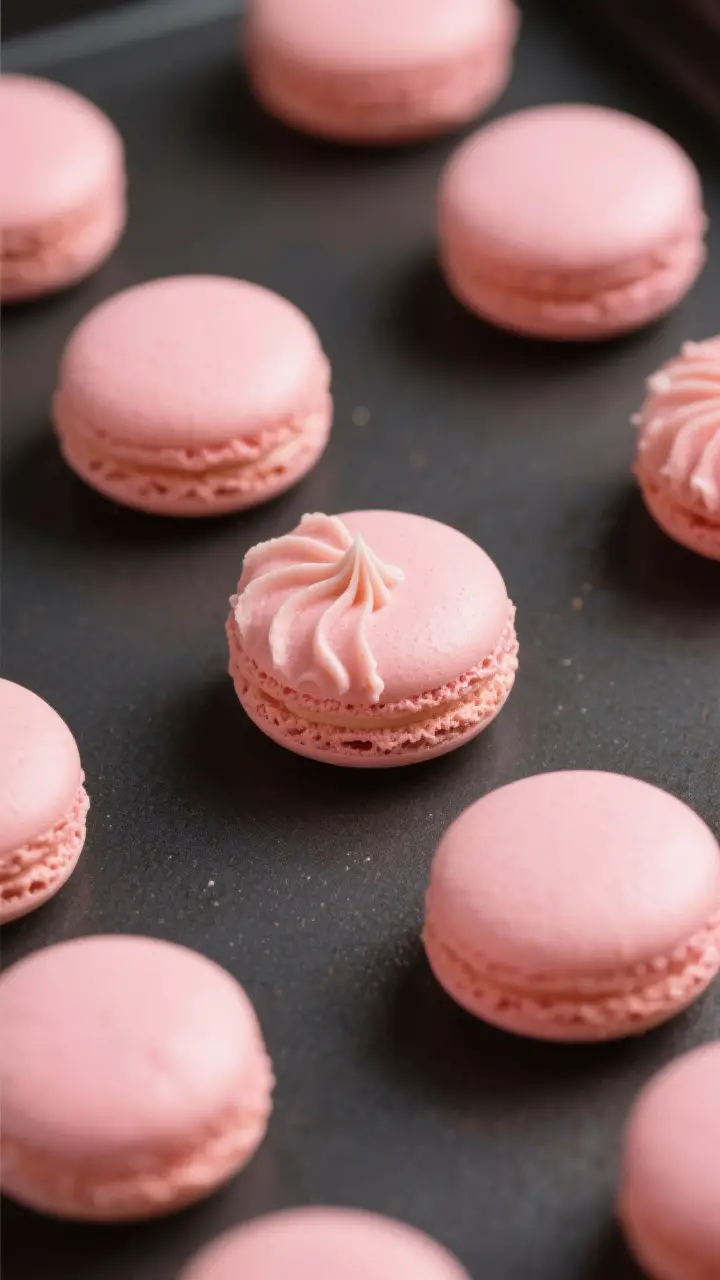
- Prep your tools. Line two baking sheets with parchment paper or silicone mats.
Fit a piping bag with a round tip (about 1/2 inch). Have a spatula, two mixing bowls, and a fine sieve ready.
- Sift the dry mix. Combine almond flour and powdered sugar. Sift them together twice to remove lumps. Discard any coarse bits left in the sieve; this helps keep shells smooth.
- Make the French meringue. In a clean bowl, whip egg whites on medium speed until frothy.
Add cream of tartar. Gradually add granulated sugar, then increase to medium-high. Beat until stiff, glossy peaks form.
Mix in vanilla and a few drops of pink gel.
- Macaronage (folding). Add the dry mix to the meringue in two additions. Fold with a spatula, scraping around the bowl and cutting through the center. Stop when the batter flows like thick lava and falls off the spatula in ribbons that settle within 10–15 seconds. Do not overmix.
- Pipe the shells. Transfer batter to your piping bag.
Pipe 1.25–1.5 inch circles, spacing them about an inch apart. Aim for consistent size so they bake evenly.
- Release air bubbles. Tap the trays firmly on the counter 3–4 times. Use a toothpick to pop any visible bubbles and smooth the surface.
- Rest the shells. Let the trays sit at room temperature for 25–45 minutes, or until the tops feel dry and no batter sticks to your finger. This step prevents cracking.
- Bake. Preheat oven to 300°F (150°C).
Bake one tray at a time for 14–17 minutes, rotating once if needed. Shells are done when they don’t wobble at the feet and release cleanly from the mat after cooling a few minutes.
- Cool completely. Let shells cool on the tray, then transfer to a rack. Match similar sizes into pairs.
- Make the buttercream. Beat softened butter until creamy.
Add powdered sugar, salt, and vanilla. Mix in cream to reach a smooth, pipeable consistency. It should hold shape but spread softly.
- Fill and mature. Pipe a small dollop of buttercream onto one shell and sandwich with its partner.
Press gently until the filling reaches the edges. For best texture, mature macarons in the fridge for 12–24 hours, then bring to room temperature before serving.
Keeping It Fresh
Macarons taste best after maturing overnight, when the shells soften slightly and the flavor melds. Store them in an airtight container in the refrigerator for up to 5 days.
For longer storage, freeze filled macarons in a sealed container for up to 1 month. Thaw in the fridge, then let them come to room temperature before serving. Avoid humid environments, which can make shells sticky.
Benefits of This Recipe
- Beginner-friendly method: Uses French meringue, which is simpler than Italian meringue and requires no hot sugar syrup.
- Reliable texture: The sifted almond-sugar mix and proper resting lead to smooth shells and defined feet.
- Customizable flavor: Vanilla keeps it classic, but you can swap in other extracts or fillings easily.
- Make-ahead friendly: Macarons improve after a day in the fridge, making them perfect for parties.
- Elegant presentation: The pink hue looks polished for showers, birthdays, or holiday tables.
What Not to Do
- Don’t skip the sifting. Skipping it can leave bumps and uneven shells.
- Don’t overmix the batter. Overmixing deflates the meringue, causing flat, hollow shells.
- Don’t bake on a hot tray. Always cool trays between batches to avoid spreading and uneven feet.
- Don’t use liquid food coloring. It can thin the batter.
Use gel for strong color without extra moisture.
- Don’t rush the resting stage. Piping to oven without a skin often leads to cracks.
- Don’t open the oven too early. Wait until feet are set; opening early can cause collapse.
Recipe Variations
- Raspberry Pink: Add 1–2 teaspoons freeze-dried raspberry powder to the dry mix. Fill with raspberry buttercream or jam center.
- Rose and Vanilla: Replace half the vanilla with 1/4 teaspoon rose water. Keep it light; rose is potent.
- Strawberry Cheesecake: Mix cream cheese into the buttercream (about 60 g) and add strawberry jam to the center.
- Pink Lemonade: Add lemon zest to the shells and use a lemon buttercream filling.
- Chocolate-Dipped: After filling, dip half the macaron in melted white chocolate and let set.
FAQ
Why are my macarons hollow?
Hollow shells often come from overmixing the batter or underbaking.
Make sure your meringue is at stiff peaks and the batter ribbons slowly. Bake until the shells don’t wobble and release cleanly after cooling.
How do I know the batter is ready?
When lifted with a spatula, the batter should flow in thick ribbons that settle into the surface within 10–15 seconds. You should be able to draw a figure eight without the batter breaking.
Can I make these without cream of tartar?
Yes.
Cream of tartar helps stabilize the meringue, but you can leave it out. Just whip the egg whites carefully and avoid any grease in the bowl.
What if I don’t have almond flour?
Macarons rely on almond flour for texture. Other nut flours can work, but results vary.
If you must substitute, try finely ground, blanched almond meal that’s sifted well.
How much food coloring should I use?
Use a few drops of gel coloring to reach your preferred shade. Add slowly—macaron shells often deepen slightly in color as they bake.
Do I need to age the egg whites?
Aging can help by reducing moisture, but it’s not mandatory. Room-temperature whites whip better than cold ones, so let them sit out for 30–60 minutes before whipping.
Why did my shells crack?
Cracking can come from skipping the resting period, high oven temperature, or trapped air bubbles.
Rest until the tops are dry, pop visible bubbles, and consider an oven thermometer for accuracy.
How long should I mature the filled macarons?
Ideally 12–24 hours in the refrigerator. This allows the shells to soften slightly and the flavor to meld with the filling.
Can I use Italian meringue instead?
Yes, but that method requires hot sugar syrup and is a bit more technical. The French method here is simpler and works well for most home bakers.
What size should I pipe each shell?
About 1.25–1.5 inches wide.
Keep sizes consistent so pairs match and bake evenly.
Final Thoughts
Pink macarons feel like a bakery treat, but with a few mindful steps, they’re totally doable at home. Focus on smooth dry ingredients, a stable meringue, and careful folding, and you’ll get those pretty feet and shiny tops. Let them rest, bake with patience, and give them time to mature.
The payoff is a delicate, chewy cookie that tastes as lovely as it looks. Share them, gift them, or keep a few in the freezer for a sweet pink pick-me-up anytime.
Printable Recipe Card
Want just the essential recipe details without scrolling through the article? Get our printable recipe card with just the ingredients and instructions.