
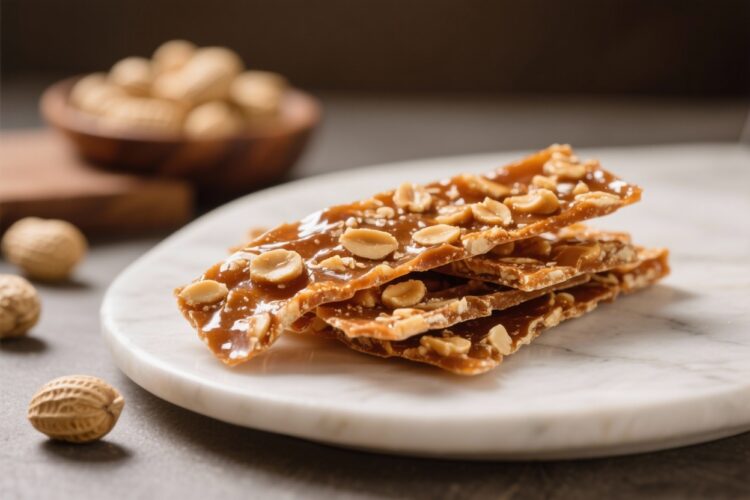
Peanut brittle is one of those nostalgic treats that instantly takes you back to family kitchens and holiday gift tins. It’s sweet, buttery, and perfectly crisp with a satisfying snap. Even better, it’s simple to make with pantry staples and a bit of patience.
If you’ve never tried homemade brittle before, this recipe gives you the confidence to nail it on your first go. You’ll get shiny, golden sheets dotted with roasted peanuts, and they’ll taste miles better than anything store-bought.
Why This Recipe Works
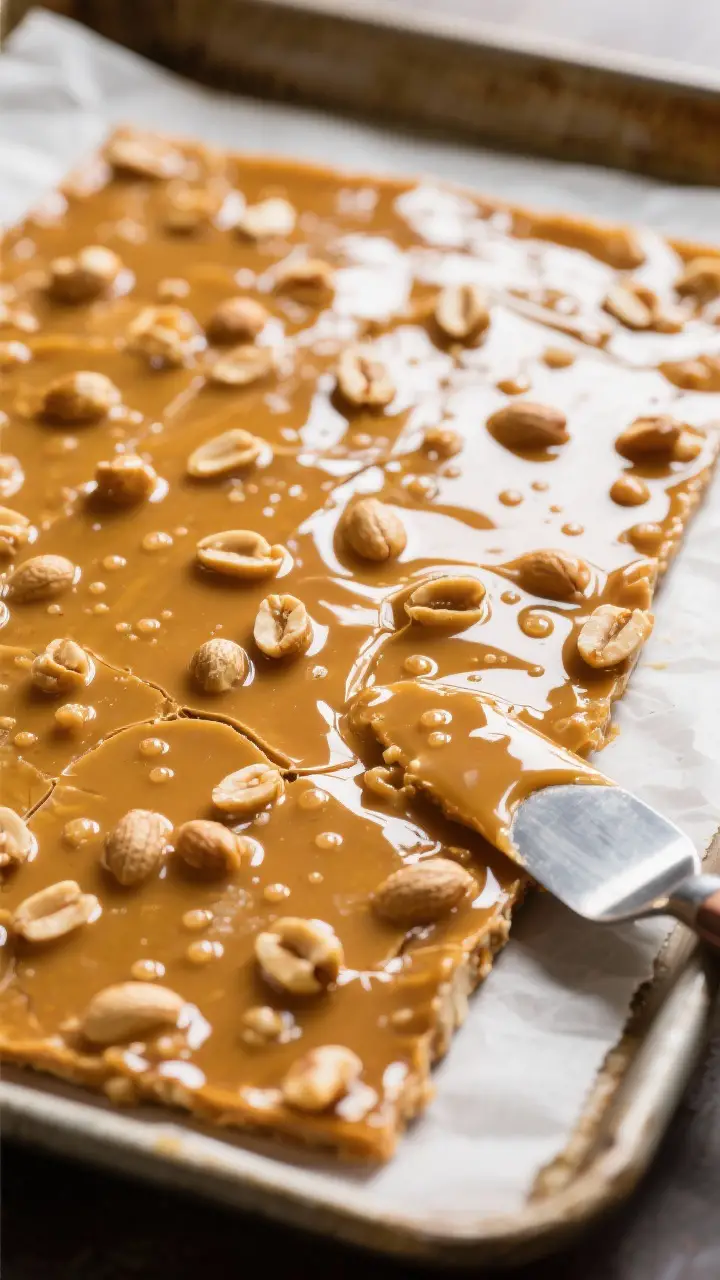
This peanut brittle uses the classic method of cooking sugar to the hard-crack stage, which gives the candy its signature crunch. A small amount of baking soda creates tiny air bubbles, making the brittle easier to bite and giving it that delicate, airy texture.
Butter adds richness and helps prevent the sugar from crystallizing. Finally, the recipe is streamlined and uses clear visual cues, so you won’t need special tools beyond a thermometer and a sturdy pan.
Ingredients
- 1 cup granulated sugar
- 1/2 cup light corn syrup
- 1/4 cup water
- 1 cup roasted, salted peanuts (or unsalted, see note)
- 2 tablespoons unsalted butter
- 1 teaspoon vanilla extract
- 1 teaspoon baking soda
- 1/4 teaspoon fine sea salt (skip if using salted peanuts)
- Neutral oil or nonstick spray for the pan
Note: If using unsalted peanuts, keep the 1/4 teaspoon salt. If using salted peanuts, you can skip the added salt or add just a pinch to taste.
How to Make It
- Prep your station: Line a baking sheet with parchment paper or a silicone mat and lightly grease it.
Measure all ingredients in advance. Once the sugar is hot, you’ll need to move fast.
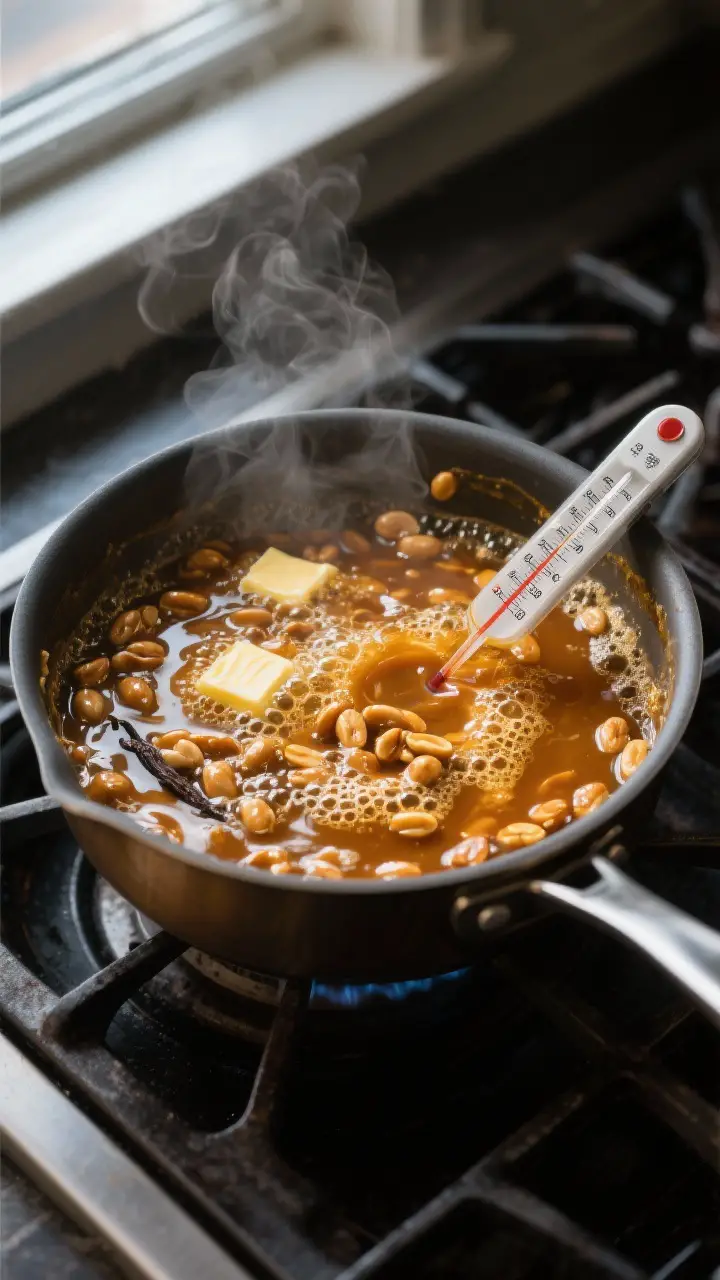
- Mix the sugar base: In a heavy saucepan, combine sugar, corn syrup, and water. Stir just to combine, then cook over medium heat.
Attach a candy thermometer to the pot if you have one.
- Bring to a boil: Once it starts boiling, stop stirring. Let it cook undisturbed. The syrup will go from clear to pale gold.
If crystals form on the sides, brush them down with a wet pastry brush.
- Add peanuts: At around 280°F (soft-crack), stir in the peanuts. Keep cooking, stirring occasionally, until the mixture turns a deep golden amber and reaches 300°F (hard-crack stage). This step goes quickly—watch closely.
- Finish with flavor: Remove from heat and immediately stir in the butter, vanilla, and salt (if using).
The mixture will bubble vigorously.
- Lighten it up: Sprinkle in the baking soda and stir fast. The candy will foam and lighten in color. This creates that signature crisp texture.
- Spread it: Quickly pour the candy onto the prepared sheet.
Use a greased spatula (or two forks) to gently stretch and spread it thin, about 1/4 inch thick. Don’t overwork it or you’ll lose the bubbles.
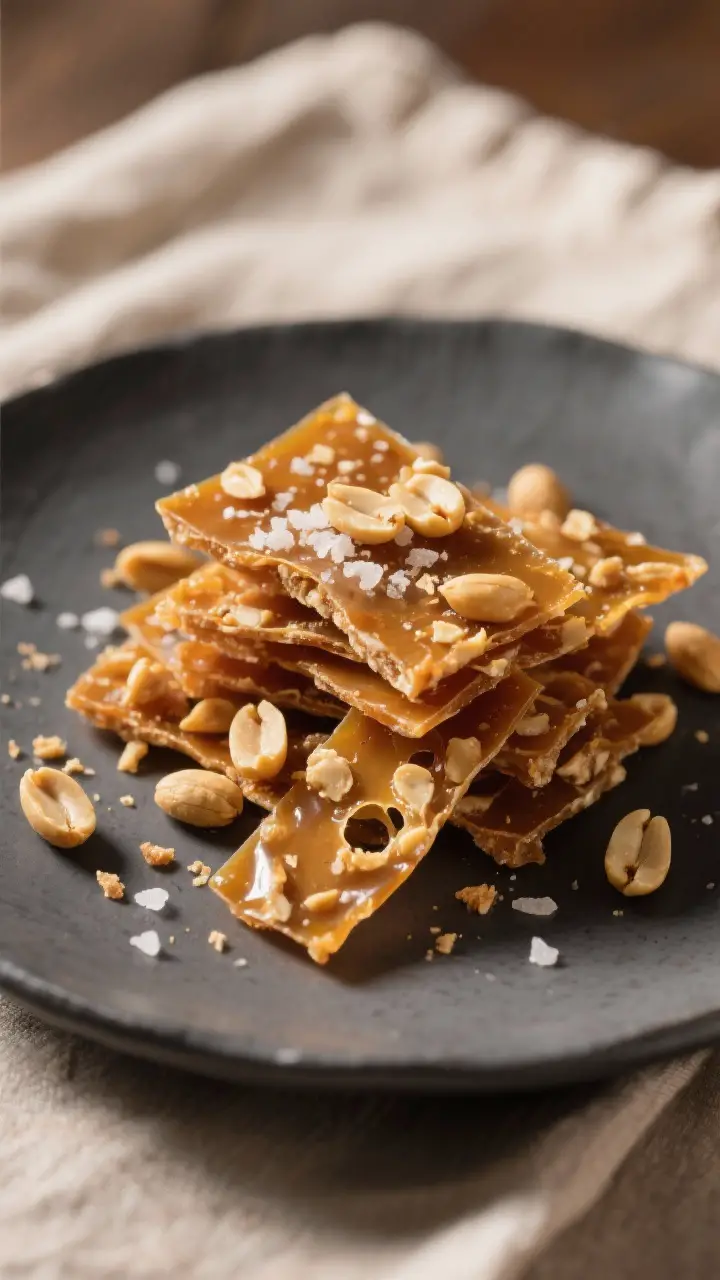
- Cool and break: Let it cool completely, about 20–30 minutes. Break into pieces with your hands.
Enjoy the shatter.
Tip: If you don’t have a thermometer, test a small drop of syrup in ice water. If it hardens into brittle threads and snaps cleanly, you’re at hard crack.
Storage Instructions
- Room temperature: Store in an airtight container at cool room temperature for up to 3 weeks. Keep it dry—moisture makes it sticky.
- Layering: Place parchment between layers to prevent pieces from sticking.
- Humidity control: In humid climates, add a few silica gel food-safe packets to the tin, or store near a dehumidifier.
- Freezing: Not recommended.
Condensation can ruin the texture when thawing.
Health Benefits
Peanut brittle is candy, so it’s a treat, not a health food. That said, peanuts do bring a few perks. They offer plant-based protein and healthy fats, plus minerals like magnesium and potassium.
You’ll also get some fiber from the nuts, which helps you feel more satisfied. Enjoy it in small portions, and consider pairing a piece with a handful of extra roasted peanuts to balance the sweetness.
Common Mistakes to Avoid
- Stirring too much while boiling: Once the syrup boils, avoid stirring. Agitation can encourage crystallization and make the candy grainy.
- Skipping the thermometer: Guessing the temperature often leads to undercooked (chewy) or overcooked (bitter) brittle.
A thermometer makes it foolproof.
- Delaying the spread: The mixture sets fast. Have your sheet ready and spread immediately after adding baking soda.
- Over-browning: Dark amber is good; deep brown can taste burnt. Pull it off the heat right at 300°F or when it’s a rich golden amber.
- Too thick: Thin brittle snaps better.
Gently stretch it to about 1/4 inch for the best bite.
- Ignoring humidity: Moist air turns brittle sticky. Store it airtight, away from steam or dishwashers.
Variations You Can Try
- Spicy peanut brittle: Add 1/4 to 1/2 teaspoon cayenne or chili powder with the salt for a sweet-heat finish.
- Salted chocolate drizzle: After the brittle cools, drizzle with melted dark chocolate and sprinkle with flaky sea salt.
- Nut mix: Swap in half almonds or cashews. Keep total nuts at 1 cup, and use roasted nuts for flavor.
- Espresso twist: Stir in 1 teaspoon instant espresso powder with the vanilla for a coffee-scented brittle.
- Maple brittle: Replace 2 tablespoons of corn syrup with pure maple syrup.
Expect a deeper, toasty note.
- Sesame crunch: Add 2 tablespoons toasted sesame seeds along with the peanuts for extra nuttiness.
FAQ
Can I make peanut brittle without corn syrup?
Yes, but it’s trickier. Corn syrup helps prevent crystallization. You can use golden syrup or a mix of honey and sugar, though the texture may be slightly less glassy and more prone to graininess.
Keep the heat steady and avoid stirring once it boils.
Why did my brittle turn out chewy?
It likely didn’t reach hard-crack stage. Make sure the mixture hits 300°F or passes the cold-water snap test. Also, high humidity can soften brittle after it cools, so store it airtight.
Can I use raw peanuts?
You can, but the flavor is better with roasted peanuts.
If using raw, add them a bit earlier so they toast in the syrup, and watch closely to avoid burning.
How thin should I spread the brittle?
Aim for about 1/4 inch. Thinner pieces snap cleanly and feel lighter. Use a greased spatula or pull it gently with greased hands once it’s cool enough to handle.
Do I need a candy thermometer?
It’s highly recommended for accuracy, but not mandatory.
Use the ice-water test and visual cues (deep golden amber) if you don’t have one. Work carefully—hot sugar is extremely hot.
Can I double the recipe?
Yes, but use a large, heavy pot and be ready to spread quickly. The window between perfect and overdone narrows with larger batches.
It’s often easier to make two single batches back-to-back.
How do I clean the pot after making brittle?
Fill the pot with water and bring to a simmer. The hardened sugar will dissolve. Rinse and dry as usual.
Final Thoughts
Homemade peanut brittle is pure kitchen magic: simple ingredients transformed into glossy, golden shards that crackle with every bite.
With a good thermometer, a prepped pan, and a quick hand, you’ll get consistent results every time. Keep a batch on hand for gifts, game-day snacks, or those moments when you crave something sweet and crunchy. Once you make it yourself, you may never go back to the store-bought kind.
Printable Recipe Card
Want just the essential recipe details without scrolling through the article? Get our printable recipe card with just the ingredients and instructions.