
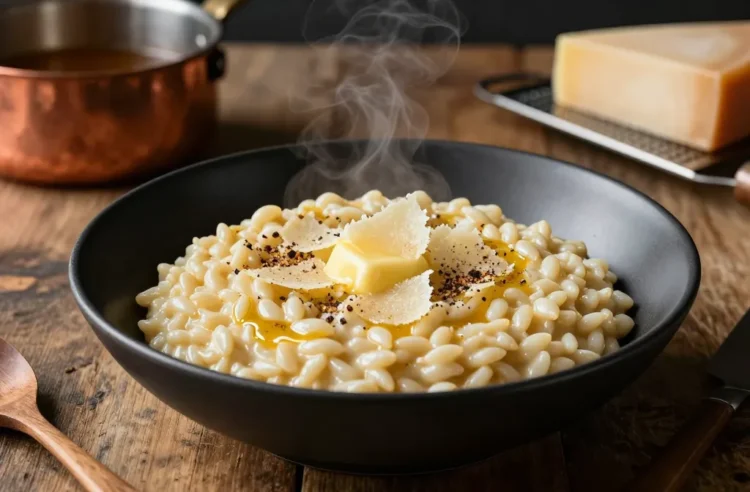
Creamy, cozy, and just fancy enough to impress without requiring a culinary degree—that’s Parmesan risotto. It turns simple ingredients into pure comfort with a silky texture and a ridiculous amount of flavor. Yes, you stir a lot. No, it’s not hard. By the time your spoon glides through that glossy rice, you’ll wonder why you ever feared it.
Why Parmesan Risotto Slaps (And Yes, It’s Worth Stirring)
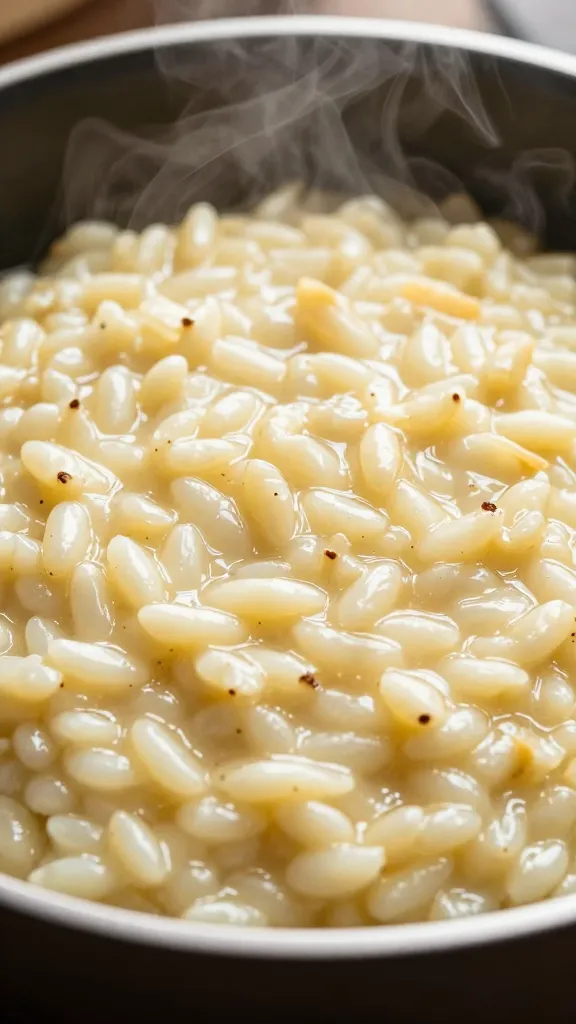
Risotto gets a dramatic reputation because people think it’s fussy. It isn’t. You just pay attention for 20 minutes and stir like you mean it. That attention transforms humble rice and broth into a creamy, rich bowl that feels like a hug.
You don’t need truffles or saffron here. Parmesan does the heavy lifting. It brings deep umami, salty punch, and that magical “why is this so good?” finish. IMO, Parmesan risotto is the ultimate blank canvas—unbeatable alone, unstoppable with add-ins.
Ingredients That Actually Matter
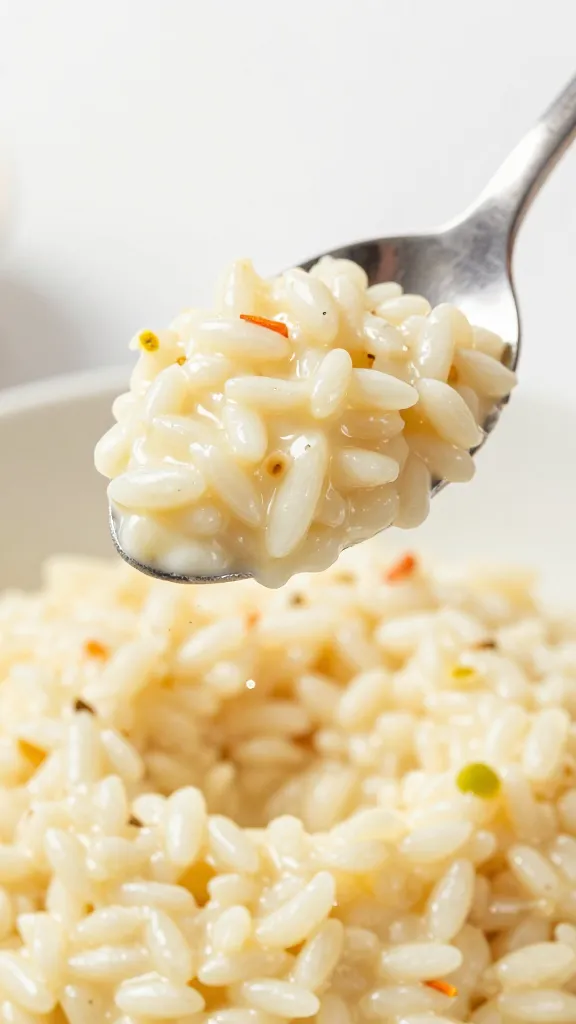
You only need a handful of items, but each one pulls its weight. Skimp on quality and you’ll feel it. Keep it simple, but keep it good.
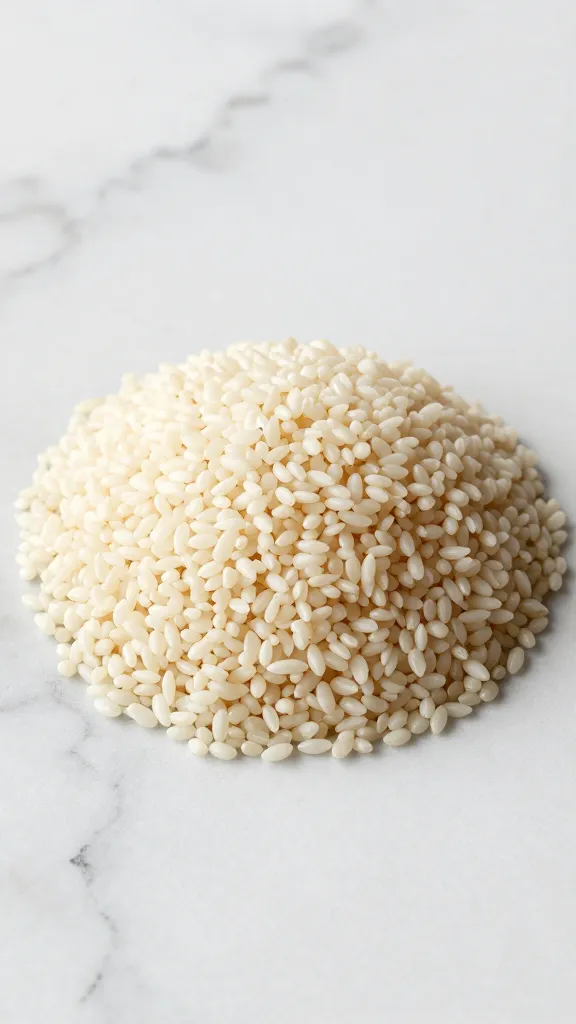
- Arborio, Carnaroli, or Vialone Nano rice: These short-grain rices release starch for creaminess. Carnaroli gives extra forgiveness, FYI.
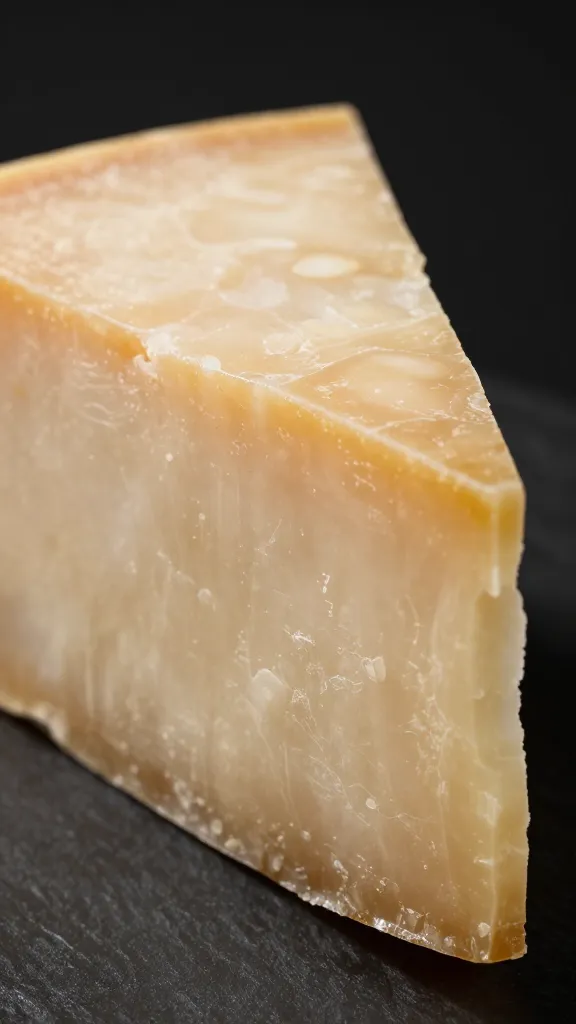
- Parmesan (Parmigiano Reggiano): Freshly grated only. Pre-grated stuff won’t melt as smoothly and often tastes flat. Sorry, not sorry.
- Good stock: Chicken or vegetable. Warm it in a pot so it doesn’t shock the rice.
- Onion or shallot: Finely minced. It melts into the base and brings sweetness.
- Butter and olive oil: Oil to sauté, butter to finish. That final butter gives gloss.
- Dry white wine: Optional but recommended for brightness. Think Pinot Grigio or Sauvignon Blanc.
- Salt and black pepper: Go light on salt until you add Parmesan. It’s salty on its own.
Optional but Fun Extras
- Finishing fat: A drizzle of extra-virgin olive oil at the end adds fruity richness.
- Lemon zest: Just a whisper for lift.
- Chives or parsley: Fresh herbs for color and freshness.
The Risotto Flow (A.K.A. Your Game Plan)
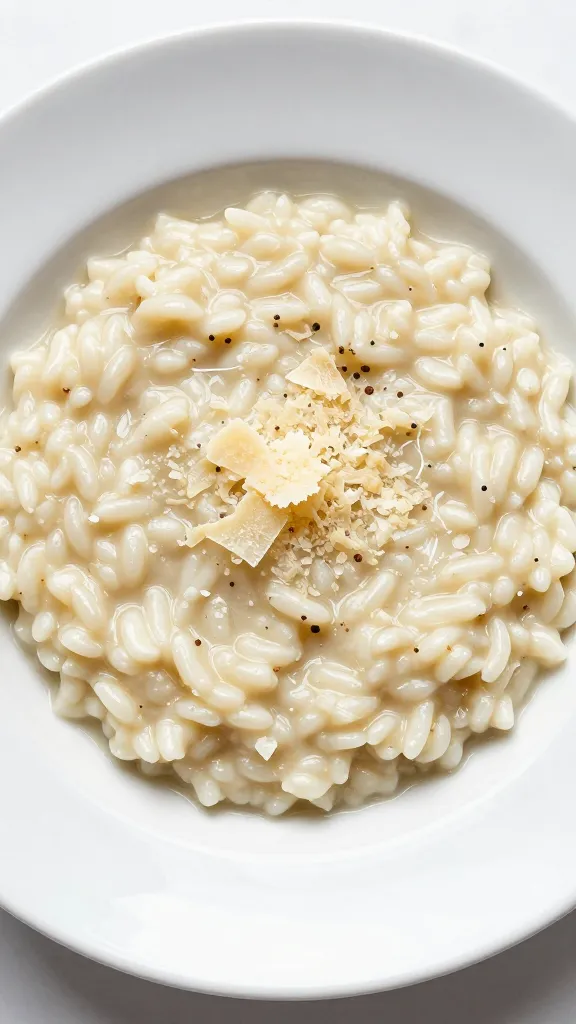
You’ll cook risotto in stages. The steps stay the same every time, which makes it weirdly calming. Once you learn the rhythm, you’ll nail it every single time.
- Warm the stock: Keep it at a gentle simmer in a separate pot.
- Sauté aromatics: In a wide pan, heat oil and a bit of butter. Cook shallot or onion until soft and translucent, not browned.
- Toast the rice: Stir the rice into the pan for 2 minutes. It should look glossy and smell nutty.
- Deglaze with wine: Add a splash of white wine and stir until it mostly evaporates.
- Add stock gradually: One ladle at a time. Stir frequently, letting each addition absorb before adding more.
- Taste early and often: Start tasting at the 15-minute mark. You want al dente with a creamy cloak.
- Finish strong: Off the heat, beat in butter and a big handful of Parmesan. Adjust salt and pepper. Rest 1 minute.
Texture Targets
Your risotto should spread gently on a plate, not sit in a stiff mound. Italians call this all’onda—like a soft wave. If it’s too thick, add a splash of warm stock. Too loose? Cook another minute. No panic needed.
Common Mistakes (And How to Dodge Them)
You can’t mess this up beyond repair. You can, however, make it slightly less dreamy. Let’s avoid that.
- Cold stock: It shocks the rice and slows cooking. Keep it warm, always.
- Too much stirring: Yes, you need to stir, but you can set the spoon down sometimes. Constant fury can break the grains.
- Adding cheese too early: Wait until the end, off heat, or it turns gummy.
- Overcooking rice: Aim for al dente—tender with a tiny core. Mushy risotto still tastes fine but loses its charm.
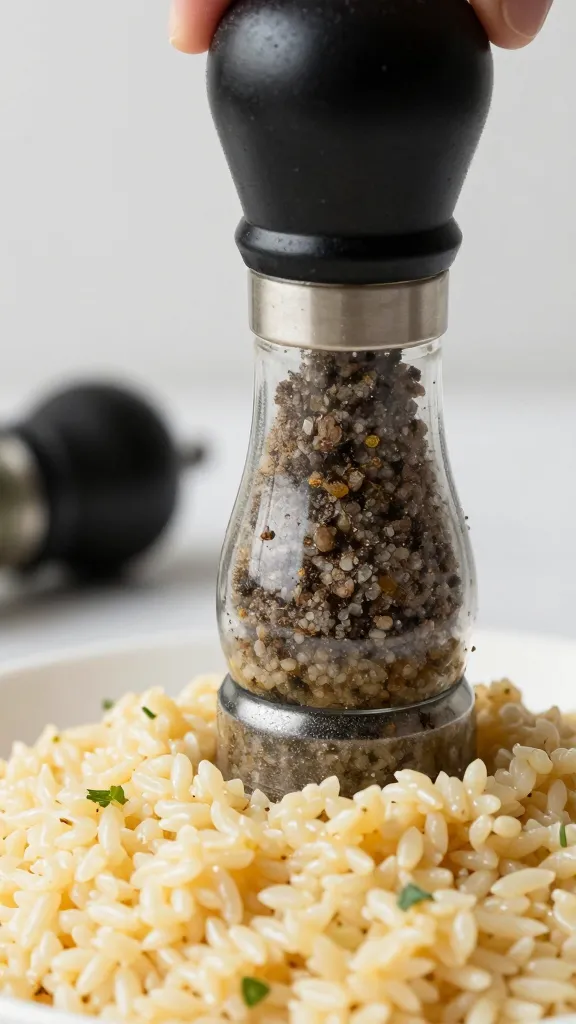
- Under-seasoning: Parmesan is salty, but you still need a pinch of salt and a crank of pepper to balance.
Flavor Upgrades Without Losing the Plot
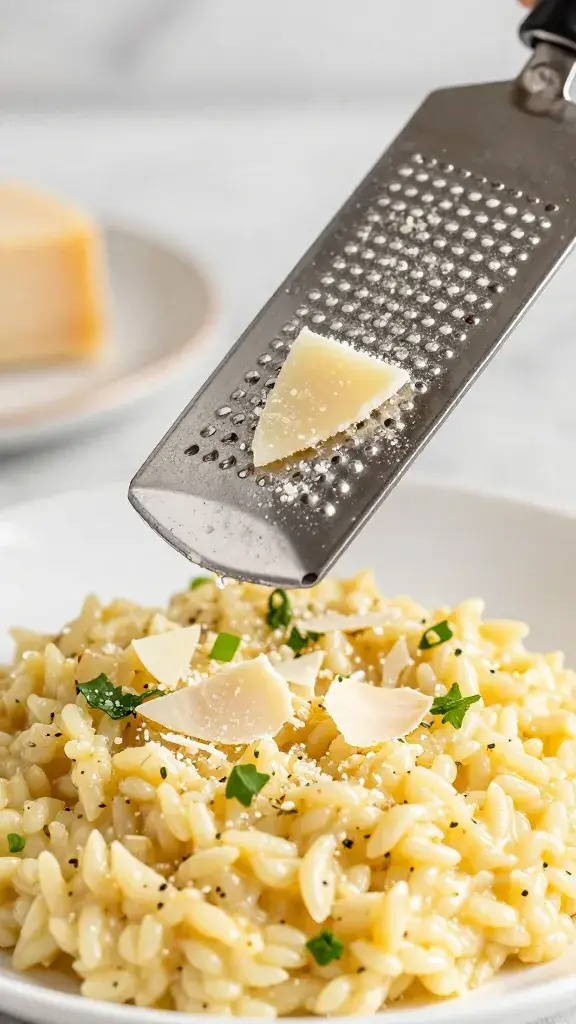
Parmesan risotto shines on its own, but it also plays nice with others. Keep the base the same, then add one or two accents so it doesn’t feel like a kitchen-sink situation.
Vegetable Add-Ins
- Peas and mint: Stir peas in during the last 3 minutes. Finish with chopped mint.
- Roasted mushrooms: Fold them in at the end with thyme. Earthy and luxurious.
- Lemony asparagus: Blanch the spears, slice, and add at the end with lemon zest.
Protein Boosts
- Crispy pancetta: Cook separately and sprinkle on top for salty crunch.
- Poached or roasted chicken: Stir in shredded pieces near the end.
- Sautéed shrimp: Quick-sear and perch on top. Add a squeeze of lemon.
Chef-y Finishes
- Brown butter: Swap in for some finishing butter for nutty depth.
- Truffle oil (light hand, please): A few drops. Not a bath.
- Pepper blast: Coarse black pepper or pink peppercorns for a pop.
Serving Like You Mean It
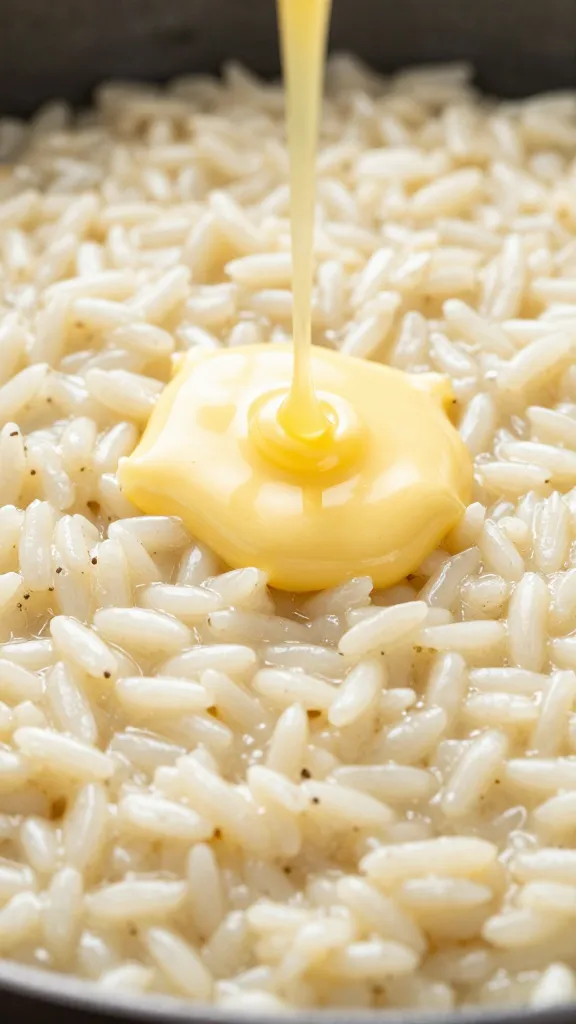
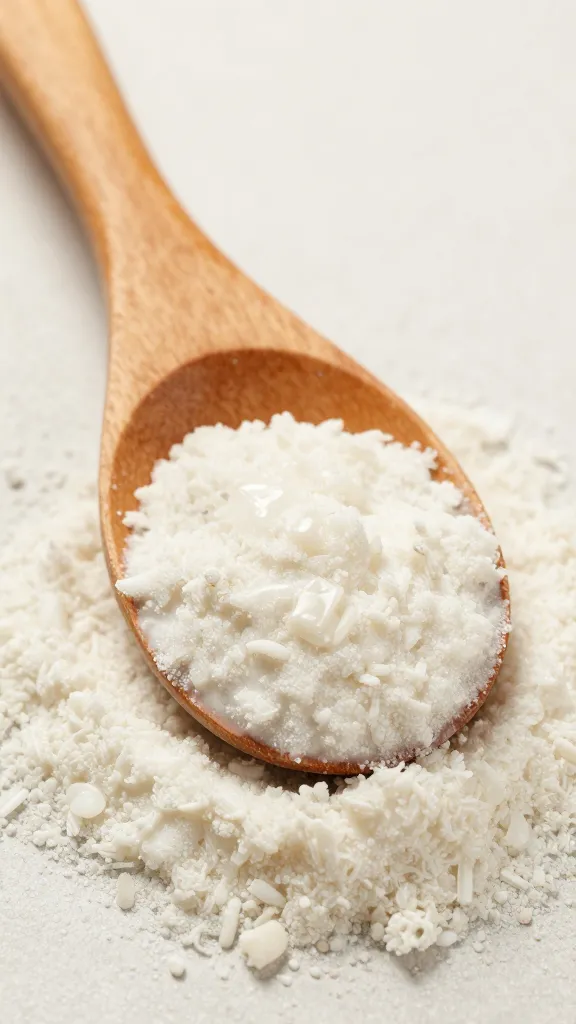
Plate it immediately—risotto waits for no one. If you need a minute, keep a little warm stock handy to loosen it right before serving. A final snowfall of Parmesan and a drizzle of olive oil make it restaurant-pretty.
Pair it with something crisp and bright to cut the richness. Think a simple arugula salad with lemon and olive oil. For wine, go white: Pinot Grigio, Gavi, or a lean Chardonnay. Red drinker only? Try a light Pinot Noir, chilled slightly.
Make-Ahead and Leftovers (Yes, You Can)
Risotto tastes best fresh, but life happens. For make-ahead, cook it to just under al dente, spread it on a sheet pan to cool, then refrigerate. Reheat gently with warm stock, then finish with butter and Parmesan as usual.
Leftovers? Turn them into arancini—cheesy fried rice balls. Stir in extra Parmesan, chill, shape, bread, and fry. Serve with marinara and feel like a hero.
Step-by-Step: Foolproof Parmesan Risotto
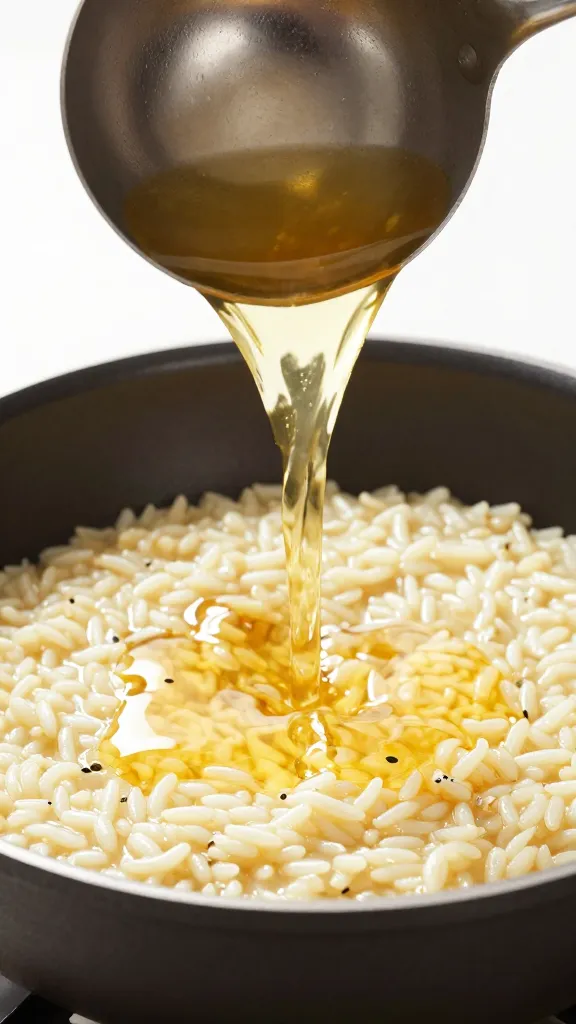
Here’s a clean roadmap you can follow without stress. No micromanaging needed—just a vibe and a spoon.
- Simmer 4–5 cups stock in a small pot.
- In a wide pan, heat 1 tbsp olive oil and 1 tbsp butter. Soften 1 small minced shallot for 2–3 minutes.
- Add 1.5 cups Arborio or Carnaroli. Stir to coat and toast 2 minutes.
- Pour in 1/2 cup dry white wine. Stir until mostly absorbed.
- Add a ladle of hot stock. Stir occasionally until it’s nearly absorbed. Repeat for 16–20 minutes.
- Taste. When grains are al dente and the texture is creamy, turn off the heat.
- Stir in 2–3 tbsp cold butter and 3/4–1 cup freshly grated Parmesan. Season with salt and pepper.
- Adjust consistency with a splash of stock so it flows gently. Serve immediately with more Parmesan.
FAQ
Can I use regular long-grain rice?
You can, but it won’t get that signature creaminess. Short-grain risotto rice releases surface starch that creates the sauce. Long-grain stays separate and drier. For true risotto, use Arborio, Carnaroli, or Vialone Nano. IMO, Carnaroli is the MVP.
Do I need wine?
No, but it helps. Wine adds acidity and complexity that balance the richness. If you skip it, add a squeeze of lemon at the end to perk things up. Your risotto won’t be mad.
Why is my risotto gluey?
Likely too much agitation, cheese added too early, or overcooked rice. Stir gently and not nonstop, add Parmesan off the heat, and pull it when the grains still have a tiny bite. Also, avoid pre-shredded cheese—it often contains starches.
How much Parmesan is too much?
When the risotto turns stiff and salty, you’ve crossed the line. Start with 3/4 cup, taste, and add more as needed. Different wheels of Parm vary in saltiness, so adjust slowly and taste often.
Can I make it vegan?
Yes. Use vegetable stock, olive oil instead of butter, and a plant-based Parmesan-style cheese that melts well. Finish with a touch of miso or nutritional yeast for umami. It won’t be exactly the same, but it’ll still slap.
What should the final texture look like?
Creamy and slightly fluid—think soft waves. It should spread a bit on the plate, not sit in a brick. If it’s too thick, loosen with hot stock right before serving. Easy fix.
Conclusion
Parmesan risotto proves you don’t need a dozen ingredients to cook something special—you just need attention and a good cheese. Learn the flow, taste as you go, and finish boldly with butter and Parm. The result? A silky, savory bowl that feels like culinary witchcraft, minus the drama. Now grab a spoon and stir your way to glory.