
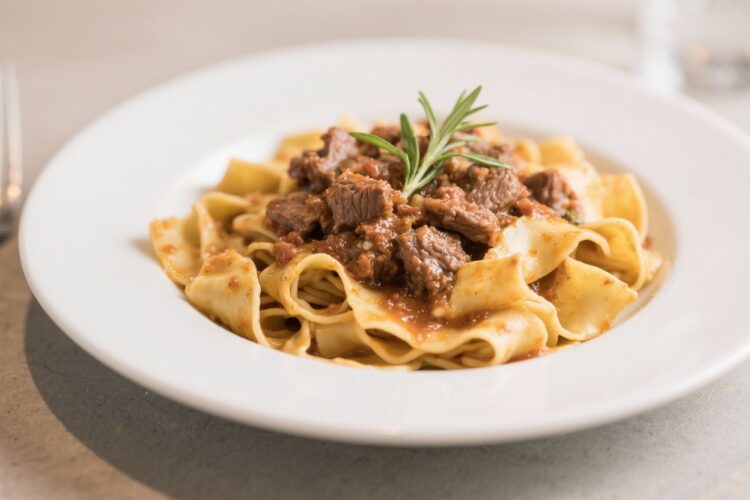
Spring lamb and wide ribbons of pasta are a classic match for a reason. This dish brings tender, slow-simmered lamb together with fresh herbs, bright lemon, and silky pappardelle for a bowl that feels both cozy and light. It’s the kind of recipe you make on a weekend afternoon, then savor through the week.
The sauce is rich without being heavy, and the flavors are familiar yet fresh. If you love pasta that tastes like it took all day—but doesn’t actually demand it—this one hits the mark.
What Makes This Special
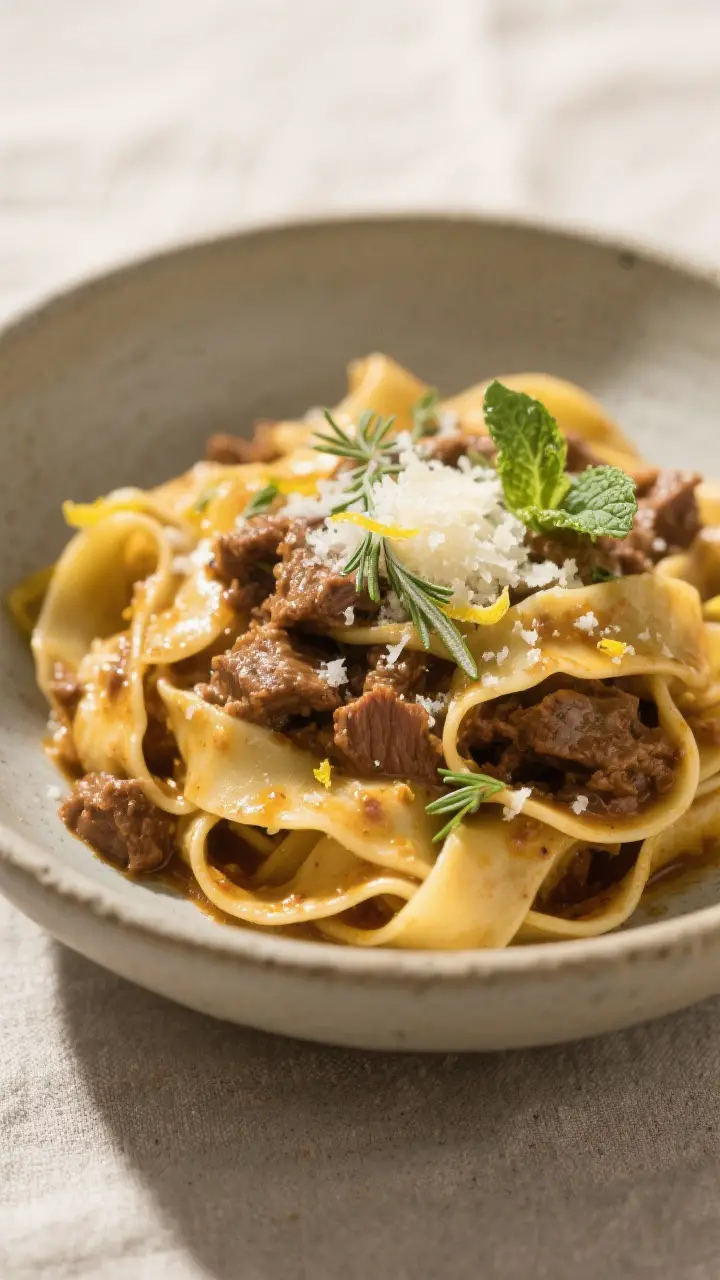
This ragu leans into spring’s best flavors without overcomplicating things. You get the deep, savory notes of lamb, balanced by fresh mint, parsley, and lemon zest.
The sauce uses white wine and chicken stock instead of red wine and beef stock, keeping it lighter but still full-bodied. A spoonful of tomato paste adds depth without turning it into a heavy red sauce. And because pappardelle has a wide, flat shape, it catches every strand of tender meat and glossy sauce.
Ingredients
- 1.5 pounds (700 g) boneless lamb shoulder or leg, trimmed and cut into small cubes (½ inch)
- 2 tablespoons olive oil
- 1 medium yellow onion, finely chopped
- 2 medium carrots, finely chopped
- 2 celery stalks, finely chopped
- 3 garlic cloves, minced
- 2 tablespoons tomato paste
- ½ cup dry white wine (Sauvignon Blanc or Pinot Grigio)
- 2 cups low-sodium chicken stock (plus more as needed)
- 1 bay leaf
- 1 teaspoon fresh thyme leaves (or ½ teaspoon dried)
- 1 teaspoon finely chopped rosemary
- Zest of 1 lemon, plus 1 tablespoon lemon juice
- ¼ cup finely chopped fresh parsley
- 2 tablespoons chopped fresh mint (optional but excellent)
- 12 ounces (340 g) pappardelle, fresh or dried
- 2 tablespoons unsalted butter
- ½ cup grated Pecorino Romano or Parmesan, plus more for serving
- Salt and freshly ground black pepper
- Red pepper flakes (optional, to taste)
How to Make It
- Season and sear the lamb. Pat the lamb dry and season generously with salt and pepper.
Heat olive oil in a heavy pot over medium-high. Sear the lamb in batches until browned on most sides, 5–7 minutes total. Transfer to a bowl.
- Build the base. Lower heat to medium.
Add onion, carrot, and celery with a pinch of salt. Cook, stirring, until soft and lightly golden, about 8–10 minutes. Stir in garlic and cook 1 minute.
- Tomato paste and deglaze. Add tomato paste and cook, stirring, for 2 minutes until it darkens slightly.
Pour in white wine, scraping up any browned bits. Let it reduce by half, 2–3 minutes.
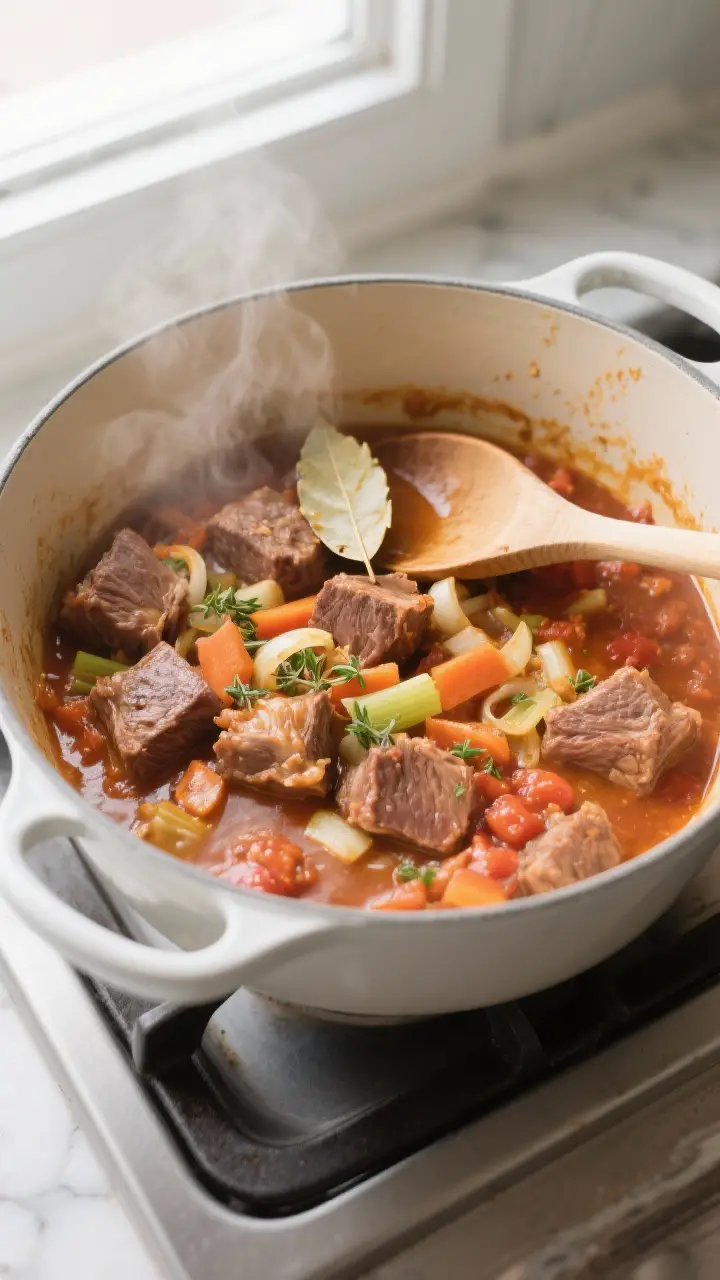
- Simmer the ragu. Return lamb and any juices to the pot. Add chicken stock, bay leaf, thyme, and rosemary.
Bring to a gentle simmer. Cover partially and cook on low for 60–75 minutes, stirring occasionally, until the lamb is very tender. Add a splash more stock if it gets too thick.
- Brighten the flavors. Remove bay leaf.
Stir in lemon zest and juice. Taste and adjust salt and pepper. If you like heat, add a pinch of red pepper flakes.
- Cook the pasta. Bring a large pot of salted water to a boil.
Cook pappardelle until al dente, reserving about 1 cup of pasta water.
- Bring it together. Add butter to the ragu and swirl until glossy. Transfer the drained pasta to the pot with the ragu. Toss with a splash of pasta water and the grated cheese until the sauce clings to the noodles.
Add parsley and mint.
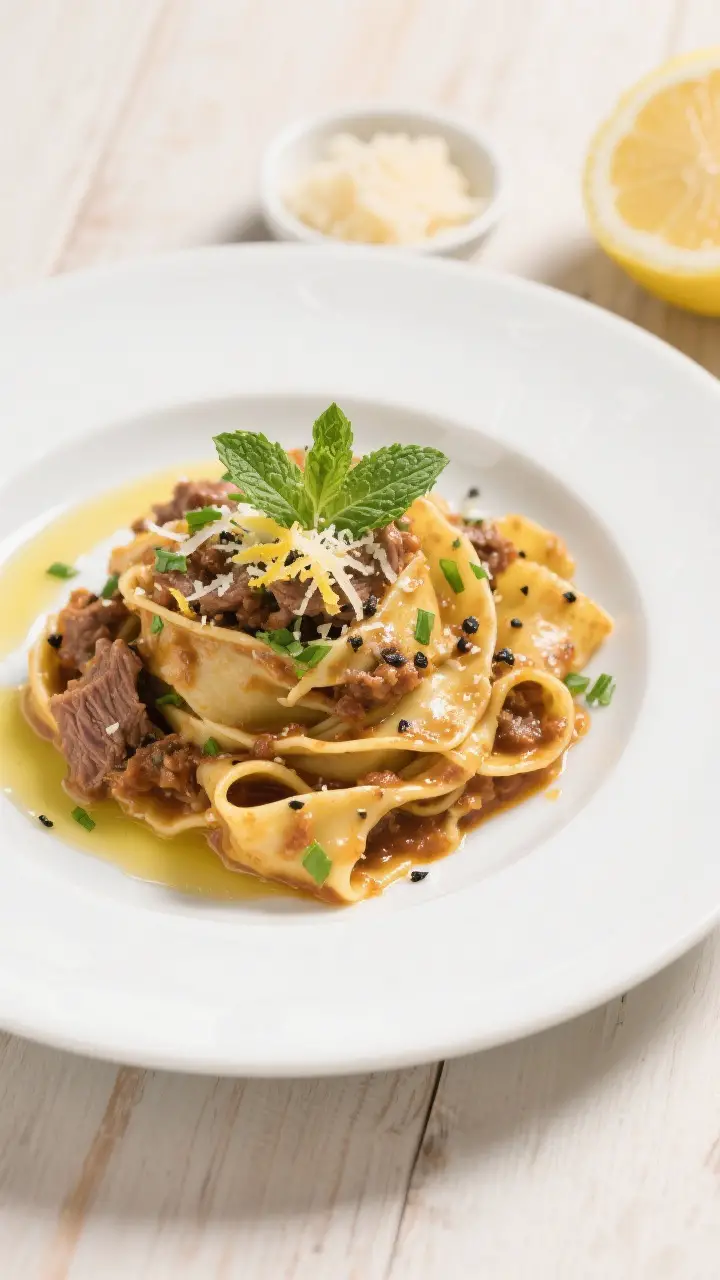
- Serve. Twirl into warm bowls and finish with more cheese, a drizzle of olive oil, and freshly ground pepper. A little extra lemon zest on top is lovely.
Keeping It Fresh
Because lamb is rich, it helps to layer in brightness. The lemon zest, fresh herbs, and a small squeeze of lemon at the end keep the sauce lively.
If you’re reheating leftovers, stir in a splash of stock or water and a bit of lemon juice to wake it up. Fresh mint is optional, but it gives the dish a springlike lift you’ll notice right away.
For serving, pair with a simple green salad with a lemony vinaigrette. A crisp white wine mirrors the sauce’s lightness, while a light red like Pinot Noir also works if that’s your preference.
Benefits of This Recipe
- Balanced richness: The white wine, lemon, and herbs keep the lamb from feeling heavy.
- Make-ahead friendly: The ragu tastes even better the next day, and it freezes well.
- Flexible: Works with dried or fresh pasta and adapts to different herbs you have on hand.
- Comfort meets seasonality: You get a cozy, slow-cooked feel with bright spring energy.
What Not to Do
- Don’t rush the browning. Skipping a good sear means less flavor.
Take the time to brown the lamb in batches.
- Don’t boil the sauce hard. A gentle simmer keeps the meat tender. A rolling boil can make it tough and reduce the sauce too quickly.
- Don’t forget to salt the pasta water. It should taste like the sea; this is your main opportunity to season the pasta itself.
- Don’t add all the cheese at once without liquid. Use a splash of pasta water to help the cheese melt smoothly into the sauce.
- Don’t overcook fresh pappardelle. Fresh pasta cooks fast—often in 2–3 minutes. Check early.
Recipe Variations
- Peas and asparagus: Stir in blanched peas or diced asparagus tips in the last 5 minutes of simmering for extra spring color and sweetness.
- Tomato-forward: Add a 14-ounce can of crushed tomatoes with the stock for a redder, more traditional ragu.
- Herb swap: Use tarragon or dill instead of mint for a softer, anise-like note.
- Creamy finish: Add 2 tablespoons of mascarpone or a splash of heavy cream at the end for a silkier sauce.
- Pasta alternatives: Tagliatelle, fettuccine, or mafaldine work well if you can’t find pappardelle.
- Different protein: Ground lamb can substitute for cubed lamb; cook it like a Bolognese, breaking it up and simmering for 45–60 minutes.
For a lighter option, try ground turkey and keep the herbs and lemon.
FAQ
Can I make the ragu ahead of time?
Yes. The sauce keeps well for up to 4 days in the fridge and freezes for up to 3 months. Reheat gently with a splash of stock or water until glossy again.
What cut of lamb works best?
Lamb shoulder is ideal because it has enough fat and connective tissue to become tender and flavorful.
Leg also works if trimmed well, though it’s leaner and may need a touch more olive oil or butter at the end.
Do I have to use wine?
No. You can replace the wine with more chicken stock plus a teaspoon of white wine vinegar or lemon juice to bring some acidity. Add the acid at the end so it doesn’t cook off completely.
How do I avoid a greasy sauce?
Trim visible fat from the lamb before cooking and skim any excess fat from the top of the sauce during simmering.
Finishing with lemon zest brightens the flavor so it feels lighter, even if the lamb is rich.
Can I use store-bought fresh pappardelle?
Absolutely. Fresh pasta is great here. Just check the package timing and cook it in well-salted water, tasting early to avoid overcooking.
What cheese is best?
Pecorino Romano brings a salty, tangy kick that pairs nicely with lamb.
Parmesan offers a milder, nutty flavor. Use what you like or mix the two.
How do I thicken the sauce if it’s too thin?
Let it simmer uncovered for a few minutes to reduce. You can also toss the pasta with the ragu and cook together for 1–2 minutes; the starch from the pasta will help the sauce cling.
Can I make it in a slow cooker?
Yes.
Sear the lamb and sauté the vegetables on the stovetop first. Transfer everything to the slow cooker with the stock, herbs, and bay leaf, then cook on low for 6–7 hours. Finish with lemon zest, juice, butter, and herbs before tossing with pasta.
Final Thoughts
Pappardelle with Spring Lamb Ragu strikes a sweet spot between hearty and bright.
The lamb turns silky and tender, while lemon and herbs keep each bite fresh. It’s a great dish for a relaxed weekend meal and even better for leftovers on a busy weeknight. Keep the technique simple, lean on good ingredients, and let the pasta do the rest.
A sprinkle of cheese and a little extra zest at the end bring the whole bowl to life.