
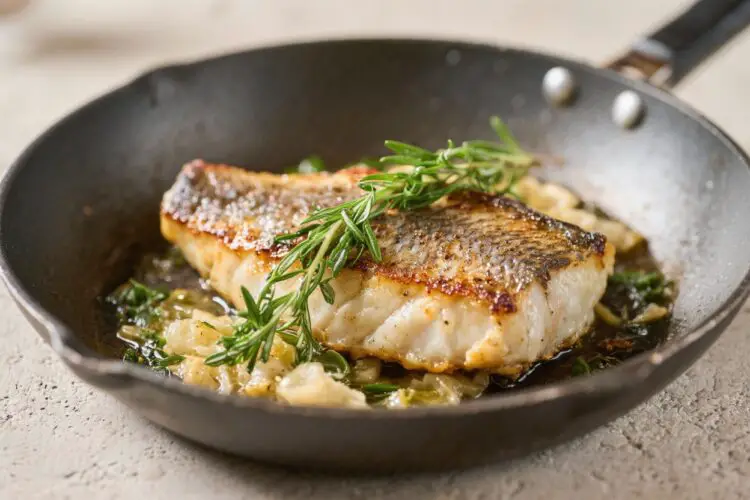
Pan seared sea bass is one of those dishes that feels restaurant-worthy but is surprisingly easy to make at home. The fish cooks quickly, the skin gets perfectly crisp, and the fresh herbs bring everything to life. It’s light, aromatic, and pairs well with almost anything—roasted veggies, a green salad, or buttery potatoes.
If you’re looking for a weeknight dinner that still feels special, this one hits the mark. With a few smart tips, you’ll get golden, flaky fish every time.
Why This Recipe Works
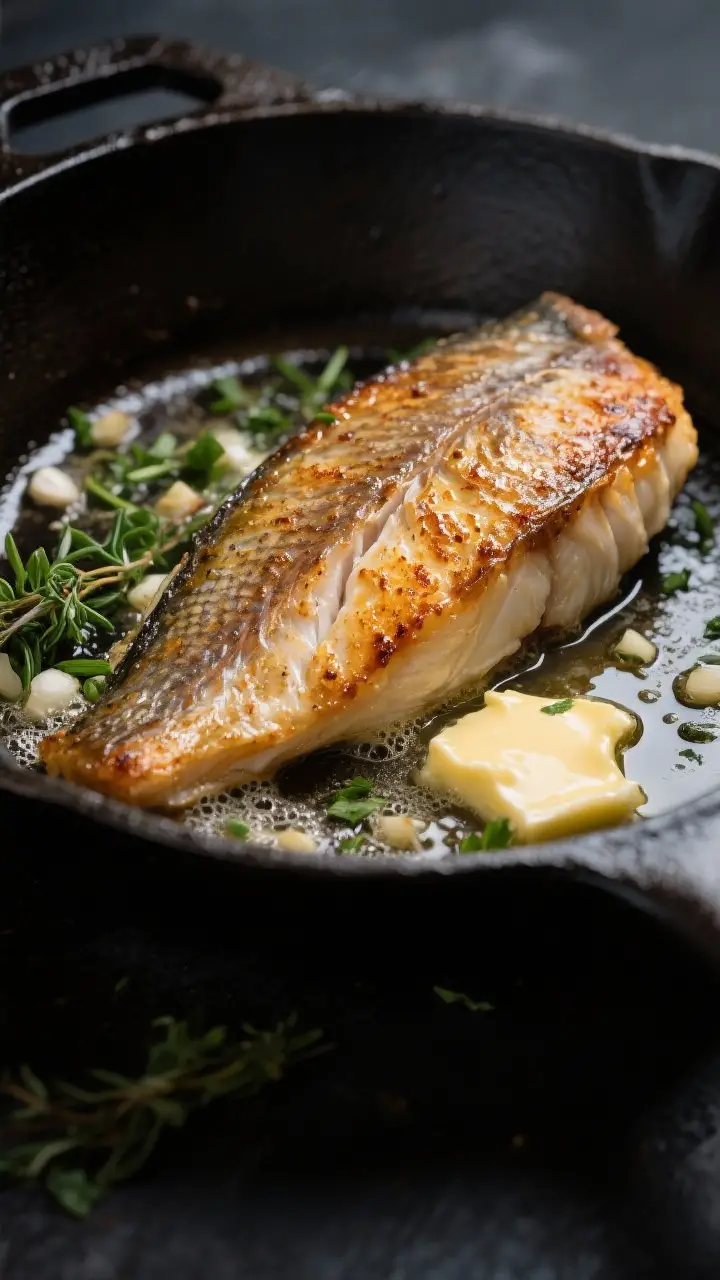
This recipe focuses on two things: heat and simplicity. High heat gives the sea bass a crisp, golden crust while keeping the flesh tender and juicy inside.
A short list of fresh herbs and a squeeze of lemon brighten the flavor without overpowering the fish.
Using a neutral oil with a high smoke point prevents burning, and finishing with butter adds richness. The technique is straightforward, repeatable, and easy to master. You’ll end up with a dish that’s balanced, clean, and deeply satisfying.
What You’ll Need
- Sea bass fillets (skin-on) – 2 fillets, about 5–6 ounces each
- Fresh herbs – A mix of parsley, chives, and thyme (or dill and tarragon)
- Lemon – 1, for zest and juice
- Garlic – 1 clove, finely minced
- Unsalted butter – 1–2 tablespoons
- Olive oil or neutral oil – 1–2 tablespoons (grapeseed or avocado oil work well)
- Salt and freshly ground black pepper
- Optional garnish – Lemon wedges and extra chopped herbs
Equipment: A heavy skillet (cast iron or stainless steel), paper towels, a fish spatula, and tongs.
Instructions
- Prep the fish: Pat the sea bass fillets very dry with paper towels.
Dry skin is key to crisping. Season both sides with salt and pepper.
- Prep the herbs: Finely chop the parsley, chives, and thyme. Zest the lemon and set both aside.
Keep a wedge or two for serving.
- Preheat the pan: Place your skillet over medium-high heat and let it get hot for 2–3 minutes. Add the oil and swirl to coat. The oil should shimmer but not smoke heavily.
- Sear skin-side down: Place the fillets in the pan, skin-side down.
Press gently with a spatula for the first 10 seconds to prevent curling. Don’t move them after that.
- Cook until the skin is crisp: Let the fish cook undisturbed for 3–4 minutes, depending on thickness. You should see the flesh turning opaque about two-thirds of the way up.
- Flip and finish: Carefully flip the fillets and reduce heat to medium.
Add the butter and minced garlic to the pan. Tilt the pan and spoon the foaming butter over the fish for 30–60 seconds.
- Add the herbs: Sprinkle in the chopped herbs and lemon zest during the last 30 seconds of cooking. The aroma will bloom without burning.
- Check doneness: The fish is done when it flakes easily and is just opaque in the center.
This usually takes another 1–2 minutes after flipping.
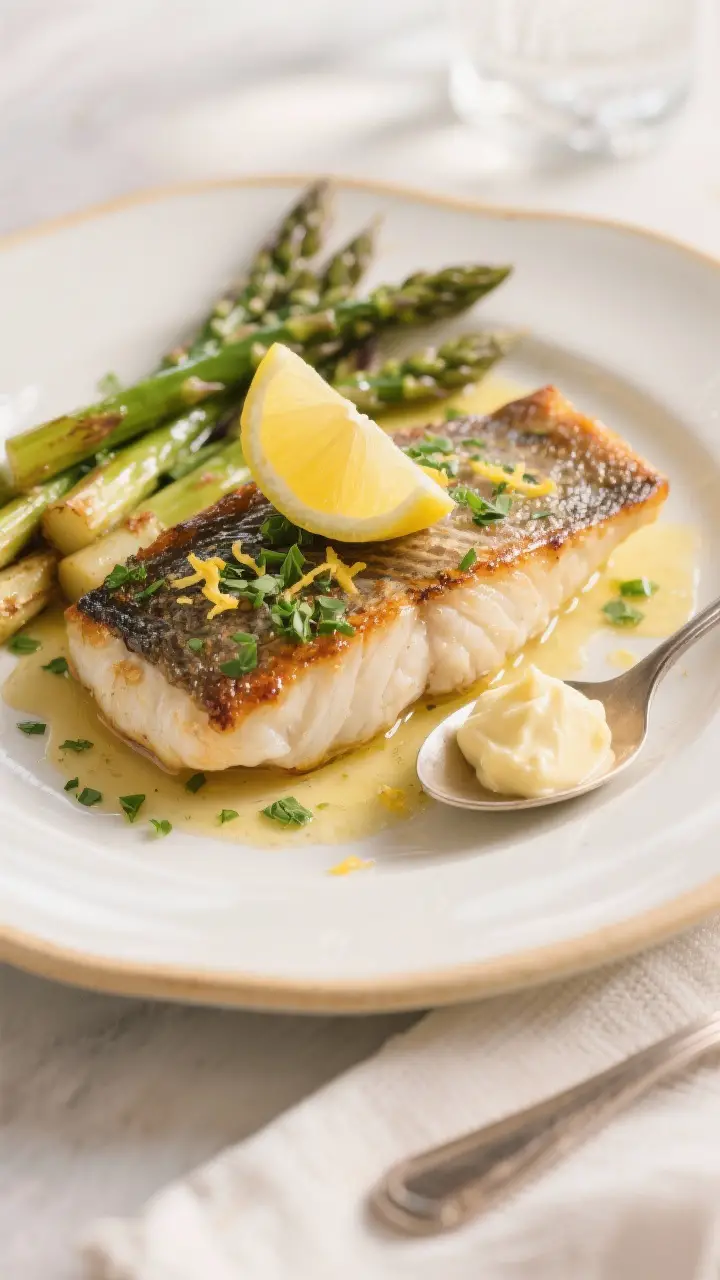
- Rest and serve: Transfer to plates, spoon a little herb butter from the pan over the top, and finish with a squeeze of fresh lemon. Garnish with extra herbs if you like.
How to Store
Sea bass is best eaten right after cooking. If you have leftovers, let them cool slightly, then store in an airtight container in the fridge for up to 2 days.
Reheat gently in a nonstick skillet over low heat to avoid drying it out.
Avoid the microwave if possible; it can turn the fish rubbery. Leftover fish is great flaked over a salad or folded into warm rice with extra herbs and lemon.
Benefits of This Recipe
- Fast and reliable: From prep to plate in under 20 minutes, with consistent results.
- Healthy and light: Sea bass is a lean protein, and the recipe uses minimal oil and fresh herbs.
- Flexible flavors: You can swap herbs based on what you have without losing the essence.
- Restaurant quality at home: Crisp skin, tender flesh, and a bright, buttery finish.
- Pairs with anything: Great with greens, grains, or roasted vegetables.
Common Mistakes to Avoid
- Not drying the fish: Moisture is the enemy of crispy skin. Pat very dry before seasoning.
- Pan not hot enough: A warm pan leads to sticking and pale skin.
Preheat until the oil shimmers.
- Overcrowding the pan: Cook in batches if needed. Too many fillets drop the temperature and cause steaming.
- Moving the fish too soon: Let the crust form before flipping. If it resists, give it another 30 seconds.
- Burning the garlic: Add garlic late, with the butter, and keep heat moderate to prevent bitterness.
- Overcooking: Sea bass cooks quickly.
Pull it when just opaque and flaky.
Recipe Variations
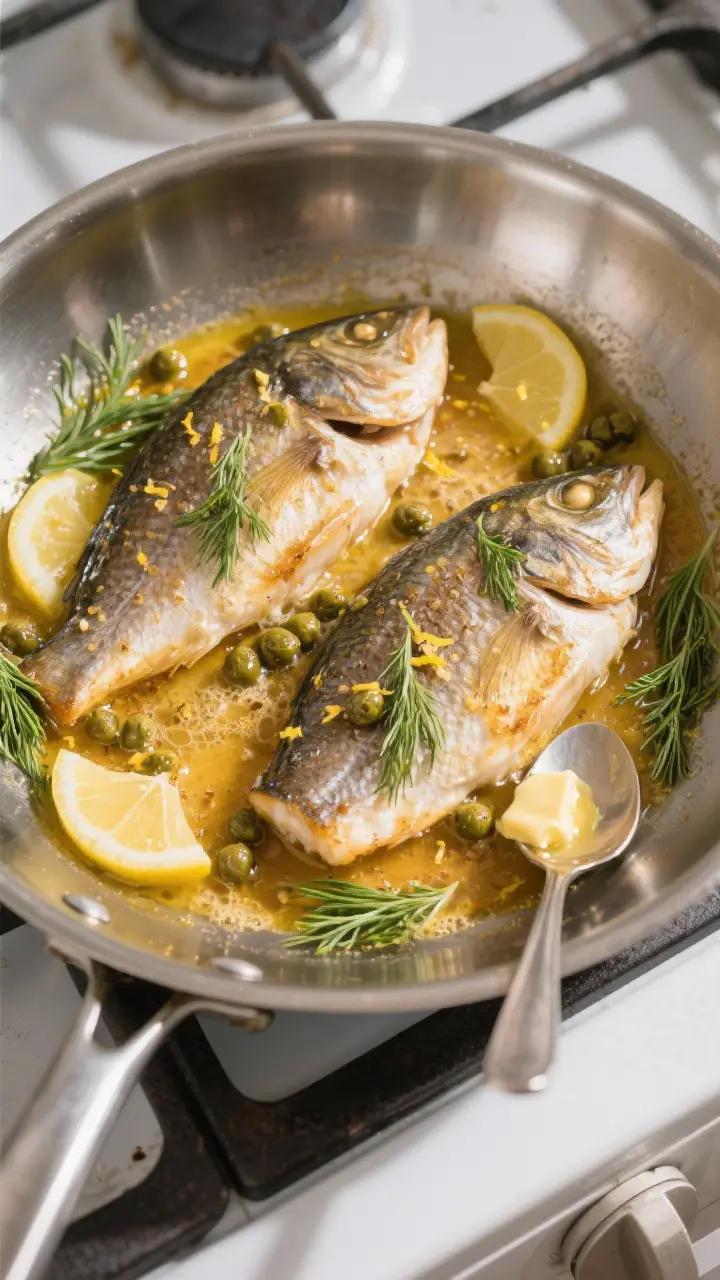
- Citrus and Capers: Add a tablespoon of capers and a splash of white wine to the butter, then finish with lemon segments.
- Dill and Tarragon: Swap parsley and thyme for dill and tarragon for a delicate, anise-like flavor.
- Garlic-Lime Twist: Use lime zest and juice with cilantro and chives. Great with a side of charred corn.
- Spice-Rubbed: Dust the flesh side lightly with smoked paprika and coriander before searing for a warm, earthy note.
- Brown Butter Sage: Let the butter brown slightly and add fresh sage leaves for a nutty, cozy flavor.
FAQ
Can I use a different fish?
Yes. This method works well with skin-on fillets like halibut, snapper, cod, or salmon.
Adjust cooking time based on thickness.
Do I have to use skin-on sea bass?
No, but skin-on helps protect the flesh and gives you that crispy texture. If using skinless, reduce the initial sear time and be gentle when flipping.
What if my fish sticks to the pan?
Two things help: a properly heated pan and dry skin. If it still sticks, wait another 20–30 seconds.
The crust releases when it’s ready.
Which herbs are best?
Parsley and chives are reliable, thyme adds depth, and dill works beautifully with lemon. Use what’s fresh and avoid heavy-handed woody herbs.
Can I make a quick sauce?
Absolutely. After cooking, add a splash of white wine to the pan, reduce slightly, whisk in a small knob of butter, and finish with lemon and herbs.
How do I know when the fish is done?
Look for opaque flesh that flakes easily with a fork.
If you use a thermometer, aim for about 130–135°F in the thickest part for moist, tender fish.
What should I serve with it?
Good sides include roasted asparagus, sautéed green beans, lemony couscous, garlicky mashed potatoes, or a simple arugula salad.
Can I make this dairy-free?
Yes. Skip the butter and finish with extra olive oil and lemon. You’ll still get a bright, clean flavor.
Is sea bass sustainable?
It depends on the source.
Look for responsibly sourced or certified options. Your fishmonger can guide you, or check labels for sustainability certifications.
Can I prepare the fish ahead?
You can season and chill the fillets for up to an hour. Pat dry again before cooking to ensure the skin crisps properly.
Final Thoughts
Pan seared sea bass with herbs is a simple way to make a fresh, elegant meal without fuss.
With a hot pan, dry fish, and a few bright flavors, you’ll get crisp skin and tender flakes every time. Keep the ingredients seasonal and the method steady, and this will become a reliable go-to. Serve it with something green, add a wedge of lemon, and enjoy a clean, satisfying plate.
Printable Recipe Card
Want just the essential recipe details without scrolling through the article? Get our printable recipe card with just the ingredients and instructions.