
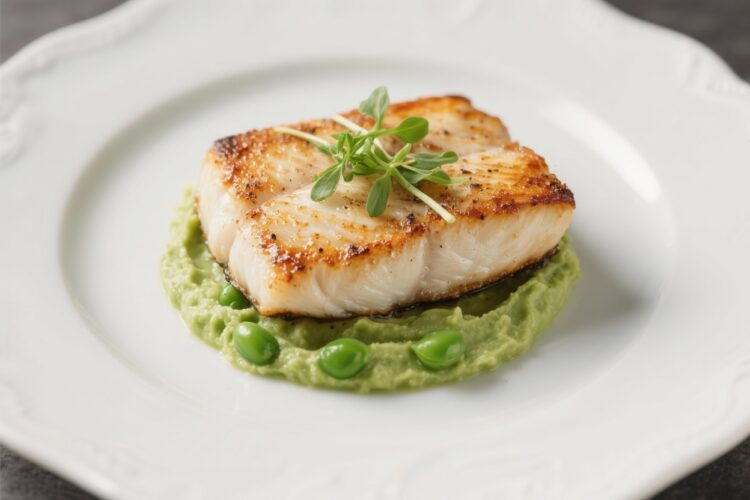
Pan seared halibut with a silky spring pea puree is the kind of meal that looks restaurant-level but feels easy enough for a Tuesday. The fish cooks in minutes, and the puree comes together in one pot and a blender. It’s fresh, light, and full of color—exactly what you want when you’re craving something clean yet satisfying.
The best part: the flavors are simple and focused, so every bite tastes like spring. If you’re new to cooking fish at home, this is a great place to start.
Why This Recipe Works
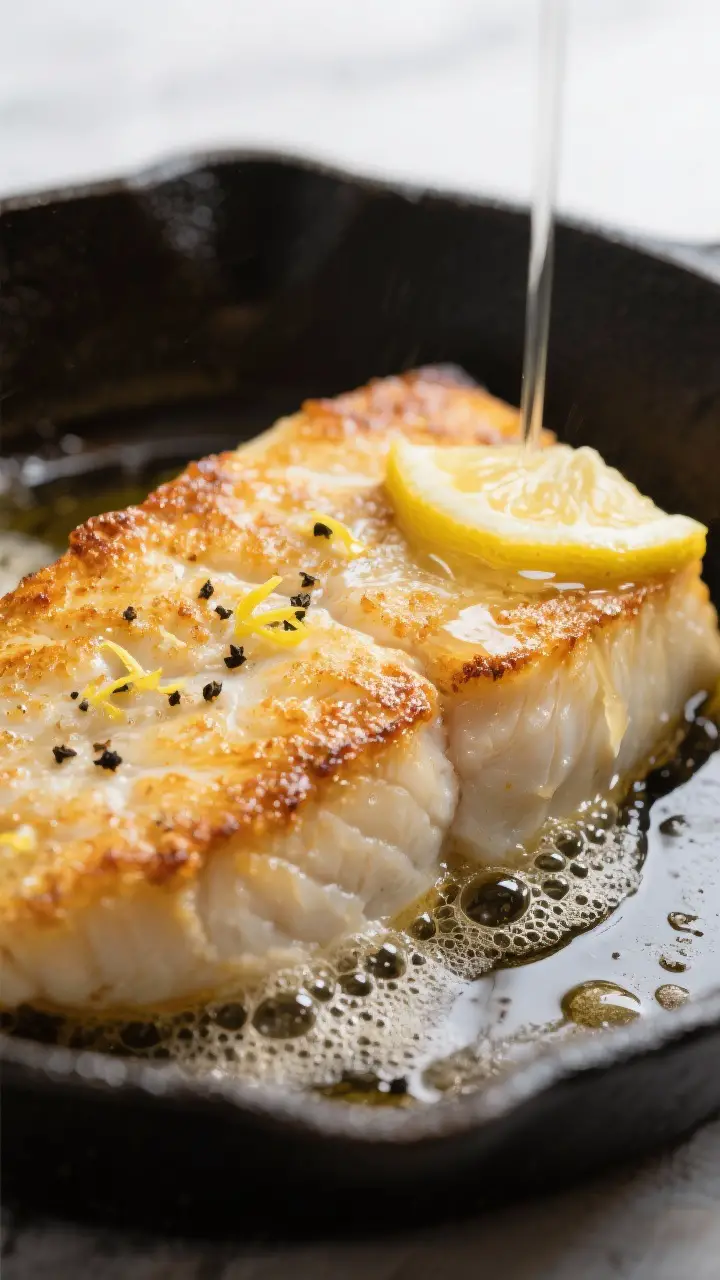
This dish pairs delicate, flaky halibut with a creamy, slightly sweet pea puree that balances the fish’s mild flavor. Searing the halibut in a hot pan gives you a crisp, golden crust without drying the interior.
The puree uses a touch of lemon, mint, and garlic to add brightness, while butter (or olive oil) brings a smooth finish. It’s a smart mix of techniques—quick sear and quick blend—that makes a simple plate taste refined.
What You’ll Need
- Halibut fillets: 4 fillets (5–6 ounces each), skin removed if you prefer
- Salt and black pepper: For seasoning
- Olive oil: For searing
- Butter: 1–2 tablespoons for finishing the fish (optional but recommended)
- Lemon: 1 lemon for zest and juice
- Peas: 2 cups fresh or frozen peas
- Shallot or onion: 1 small, chopped
- Garlic: 1–2 cloves, sliced
- Vegetable or chicken broth: About 1 cup (plus more as needed)
- Fresh mint: A small handful of leaves (or substitute basil)
- Greek yogurt or crème fraîche: 2–3 tablespoons for creaminess (optional)
- Extra-virgin olive oil: For finishing the puree
- Optional garnishes: Pea shoots, microgreens, chives, or a drizzle of herb oil
How to Make It
- Prep the fish: Pat the halibut dry with paper towels. Season both sides with salt and pepper.
Let it sit at room temperature for 10–15 minutes while you start the puree.
- Sweat the aromatics: In a small pot, warm a splash of olive oil over medium heat. Add the chopped shallot and a pinch of salt. Cook until translucent, about 3–4 minutes.
Add the garlic and cook 30 seconds more.
- Cook the peas: Add the peas and enough broth to just cover them. Bring to a simmer and cook until the peas are tender and bright, 2–3 minutes for fresh, 3–4 minutes for frozen. Remove from heat.
- Blend the puree: Transfer peas and some of the cooking liquid to a blender.
Add a few mint leaves, a squeeze of lemon, a drizzle of extra-virgin olive oil, and the yogurt or crème fraîche if using. Blend until very smooth, adding broth a little at a time until creamy but thick enough to hold on a spoon. Taste and adjust with salt, pepper, and more lemon if needed.
Keep warm.
- Heat the pan: Set a large skillet (stainless or cast iron) over medium-high heat. Add enough olive oil to thinly coat the bottom. When the oil shimmers, you’re ready.
- Sear the halibut: Place fillets in the pan and press gently so they make full contact.
Cook without moving them for 3–4 minutes, until the bottom is deeply golden and the sides look opaque about halfway up.
- Flip and finish: Flip the fillets. Add a small knob of butter and a strip of lemon zest to the pan. Tilt the pan and spoon the foaming butter over the fish for 1–2 minutes more, or until the fish flakes easily with a fork.
Total time depends on thickness; aim for an internal temp around 130–135°F for moist, medium.
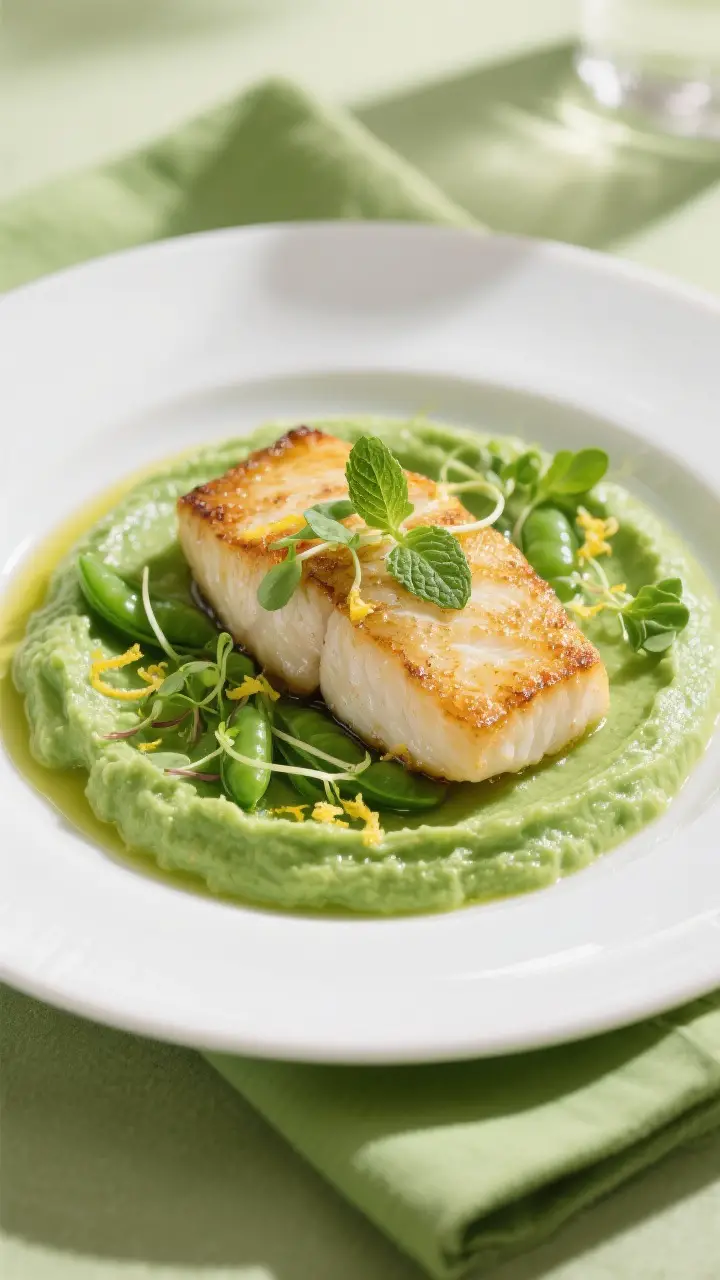
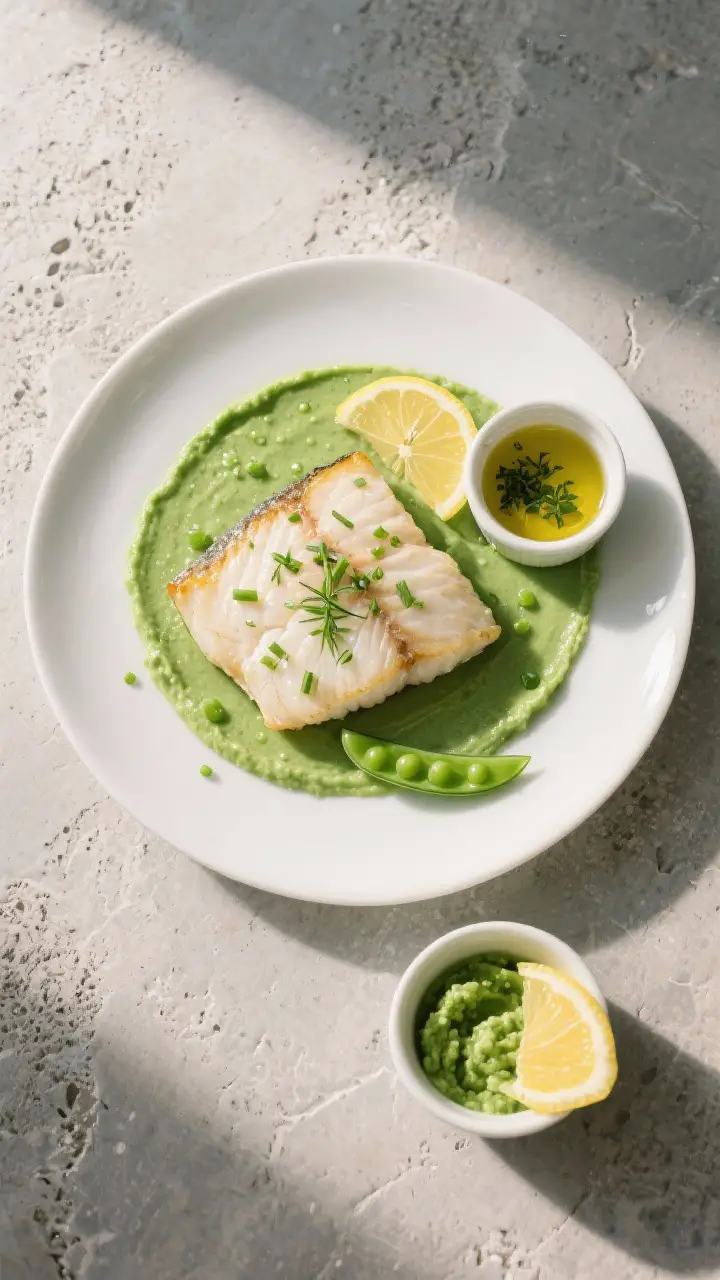
- Plate: Spoon a generous pool of warm pea puree onto each plate. Set the halibut on top. Finish with a squeeze of lemon, a drizzle of olive oil, and fresh herbs or pea shoots.
How to Store
- Halibut: Store cooked fillets in an airtight container for up to 2 days.
Reheat gently in a low oven (275°F) for 8–10 minutes or flake cold over salads.
- Pea puree: Keeps in the fridge for 3–4 days. Rewarm over low heat with a splash of broth or water to loosen. Avoid boiling to preserve color.
- Freezing: The puree freezes well for up to 2 months.
Thaw in the fridge and reblend for smoothness. Cooked halibut isn’t ideal for freezing—texture suffers.
Health Benefits
- Lean protein: Halibut offers high-quality protein with relatively low fat, supporting muscle repair and satiety.
- Omega-3s: While not as high as salmon, halibut still provides heart-friendly omega-3 fatty acids.
- Fiber and micronutrients: Peas bring fiber, vitamin C, vitamin K, and plant-based protein. The mint and lemon add antioxidants and brightness without extra calories.
- Balanced meal: With protein, fiber, and healthy fats from olive oil, this dish feels light yet filling.
Common Mistakes to Avoid
- Putting wet fish in the pan: Moisture kills the sear.
Always pat the fillets dry before seasoning.
- Overcrowding the skillet: Too many fillets drop the pan temperature and cause steaming. Work in batches if needed.
- Overcooking: Halibut goes from tender to dry quickly. Pull it when it flakes with gentle pressure and looks just opaque.
- Blending the puree too thick or too thin: Add broth slowly.
You want a smooth, spoonable consistency that holds its shape.
- Skipping acid: A touch of lemon brings the dish to life. Add some to both the puree and the finished fish.
Variations You Can Try
- Herb swap: Use basil or tarragon instead of mint for a different herbal profile.
- Dairy-free: Skip the butter and yogurt; use extra-virgin olive oil for richness. Add a splash of oat cream if you like.
- Spice it up: Add a pinch of Aleppo pepper or chili flakes to the butter baste for gentle heat.
- Citrus twist: Swap lemon with Meyer lemon or a mix of lemon and lime for a floral note.
- Add texture: Top with toasted pine nuts, crushed pistachios, or crisped prosciutto for crunch.
- Different fish: Try cod, sea bass, or haddock if you can’t find halibut.
Adjust cook time for thinner fillets.
FAQ
How do I know when the halibut is done?
Look for a golden crust and flesh that turns opaque and flakes easily with a fork. An instant-read thermometer should read about 130–135°F in the thickest part for a moist, medium finish.
Can I make the puree ahead of time?
Yes. Make it up to two days in advance and refrigerate.
Rewarm gently and whisk in a splash of broth or water to loosen before serving.
Do I need a nonstick pan?
No. A well-heated stainless steel or cast-iron skillet works great. Proper preheating and not moving the fish during the first few minutes help prevent sticking.
What if I only have frozen peas?
Frozen peas are perfect here.
They’re picked and frozen at peak ripeness, so you’ll still get bright flavor and color.
How can I keep the pea puree bright green?
Don’t overcook the peas, and avoid boiling the puree after blending. A quick simmer and gentle reheat keep the color vibrant.
Can I bake the halibut instead of searing?
Yes. Bake at 400°F for about 10–12 minutes, depending on thickness.
You won’t get the same crust, but it’s a low-effort option. Finish with a quick broil for color if you like.
What should I serve with this?
Try roasted asparagus, a simple lemony salad, or baby potatoes tossed with olive oil and herbs. Keep sides light to match the dish’s freshness.
How thick should the fillets be?
About 1 to 1.5 inches thick is ideal for pan searing.
Thinner pieces cook faster, so reduce the time to avoid overcooking.
Is halibut sustainable?
Availability and sustainability vary by region. Look for certifications like MSC or consult a trusted seafood guide. You can swap in a similar white fish if needed.
Can I use a handheld blender?
Yes, though you may not get the same ultra-smooth texture.
Blend a little longer and add a bit more broth if needed.
Wrapping Up
Pan seared halibut with spring pea puree is simple, bright, and surprisingly quick. With a golden crust on the fish and a lush, minty pea base, it tastes like a breath of fresh air. Keep your heat hot, your fish dry, and your puree balanced, and you’ll have a dish that feels special any night of the week.
Serve it with a squeeze of lemon and something crisp on the side, and enjoy a clean, satisfying plate that’s all about flavor and freshness.