
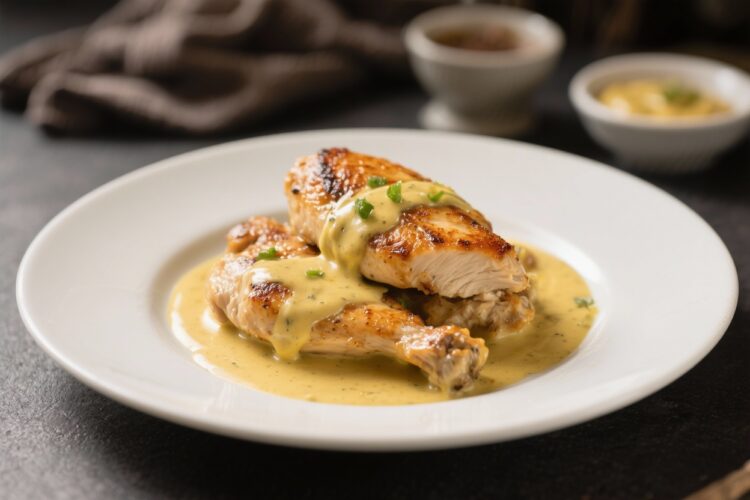
Pan seared chicken with mustard cream sauce is one of those weeknight recipes that feels restaurant-worthy without the fuss. It’s rich, tangy, and comforting, with crispy golden chicken and a silky sauce that begs to be spooned over everything. You don’t need special tools or tricky techniques—just a good pan and a few pantry staples.
This dish pairs easily with pasta, rice, or roasted vegetables, making it a quick win for dinner. If you’re after something satisfying but low-effort, this is the one.
Why This Recipe Works
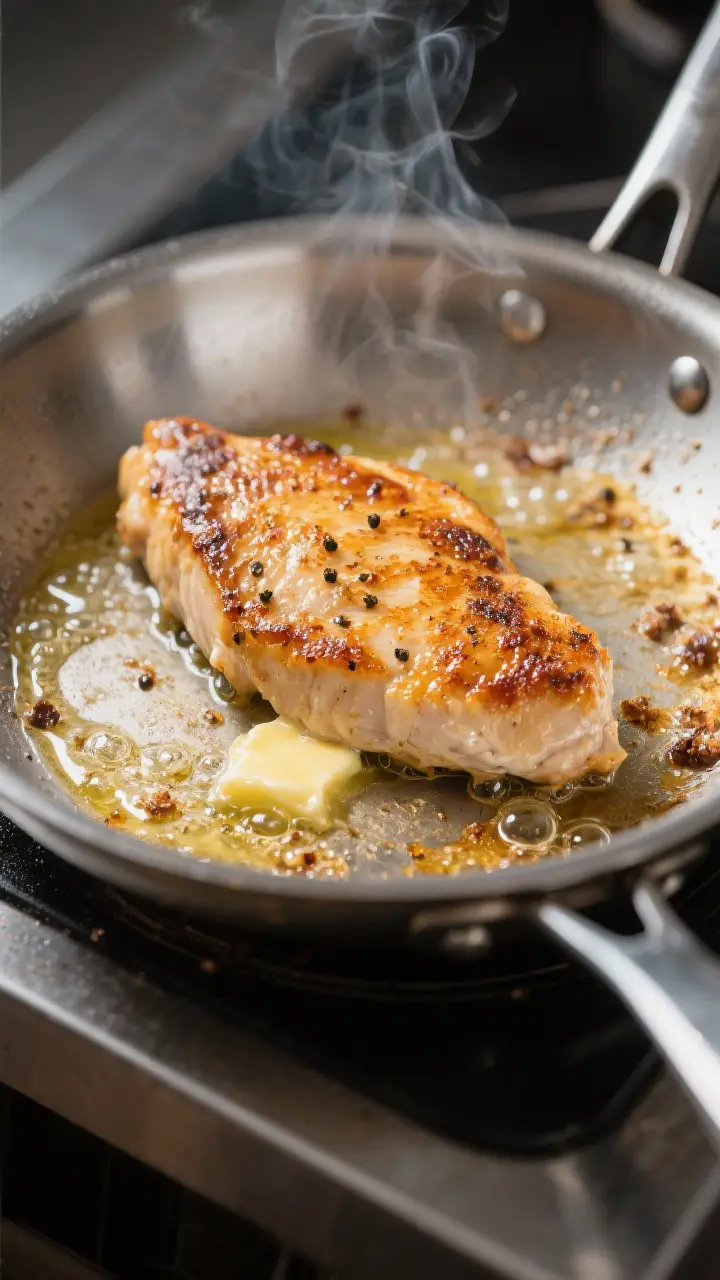
This recipe leans on solid techniques and smart flavor pairing. Pan searing chicken in a hot skillet develops a deep, caramelized crust that locks in juices.
Deglazing the pan with broth or wine pulls up all the browned bits, which adds layers of flavor to the sauce. The cream smooths out the sharpness of the mustard, and a splash of lemon brightens the whole dish. Fresh herbs finish it with a clean, fragrant note that keeps the sauce from feeling heavy.
Ingredients
- 4 boneless, skinless chicken breasts (or 6–8 chicken cutlets)
- 1 teaspoon kosher salt, plus more to taste
- 1/2 teaspoon black pepper
- 1/2 teaspoon garlic powder (optional but helpful)
- 2 tablespoons olive oil (or a mix of oil and butter)
- 2 tablespoons unsalted butter
- 2 cloves garlic, minced
- 1 small shallot, finely minced (or 1/4 small onion)
- 1/2 cup dry white wine (or chicken broth)
- 3/4 cup low-sodium chicken broth
- 1 cup heavy cream (or 3/4 cup cream + 1/4 cup milk)
- 2 tablespoons Dijon mustard
- 1 teaspoon whole grain mustard (optional for texture)
- 1 teaspoon fresh lemon juice (plus more to taste)
- 1 teaspoon fresh thyme leaves (or 1/2 teaspoon dried)
- 1 tablespoon chopped fresh parsley (for garnish)
Step-by-Step Instructions
- Prep the chicken. If using thick breasts, slice them horizontally to make cutlets about 1/2 to 3/4 inch thick.
Pat dry with paper towels. Season both sides with salt, pepper, and garlic powder.
- Heat the pan. Set a large skillet over medium-high heat. Add the olive oil and 1 tablespoon butter.
When the butter foams and the oil shimmers, you’re ready to cook.
- Sear the chicken. Lay the chicken in the pan without crowding. Don’t move it for 3–5 minutes, until the underside is deep golden. Flip and cook another 3–4 minutes, or until the internal temperature reaches 165°F (74°C).
Transfer to a plate and tent loosely with foil.
- Sauté aromatics. Reduce heat to medium. Add remaining 1 tablespoon butter, then the shallot and garlic. Cook 30–60 seconds until fragrant, stirring so they don’t brown.
- Deglaze. Pour in the white wine (or a splash of broth).
Scrape up browned bits with a wooden spoon. Let it simmer for 1–2 minutes to reduce by about half.
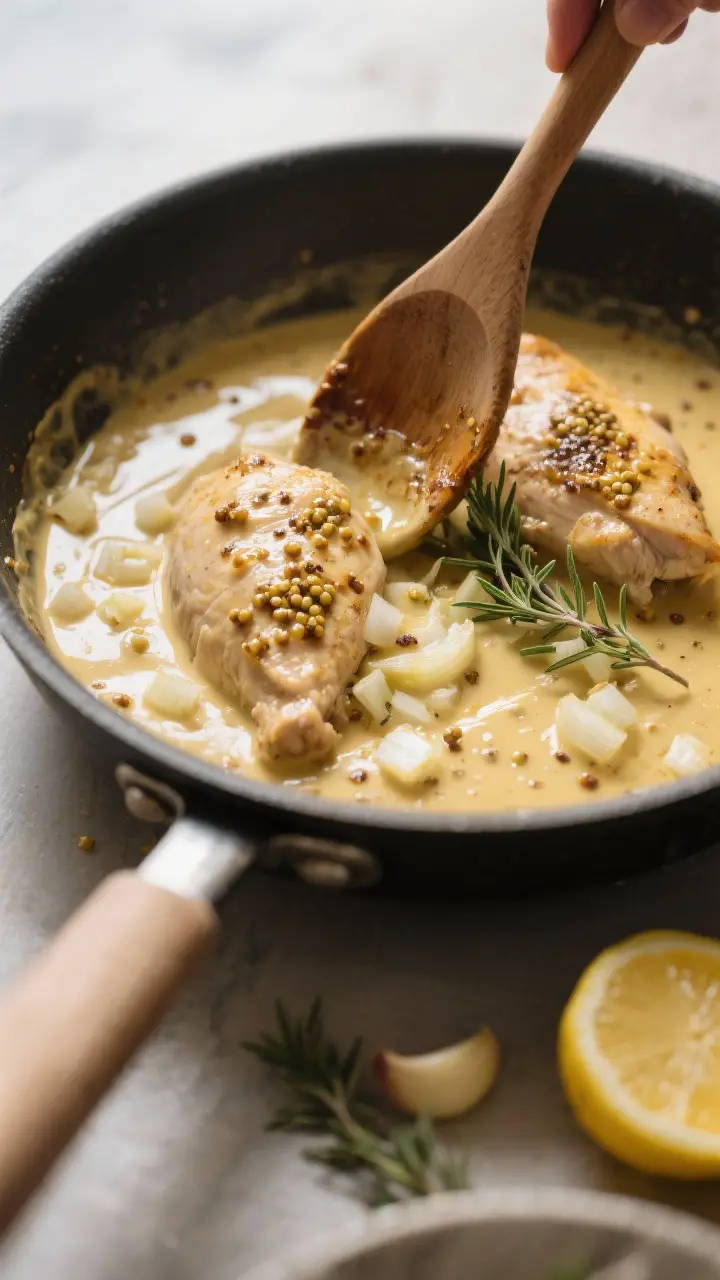
- Build the sauce. Stir in the chicken broth and bring to a gentle simmer. Add the cream, Dijon mustard, and whole grain mustard if using.
Whisk until smooth. Simmer 3–5 minutes, stirring, until slightly thickened and glossy.
- Season and brighten. Add thyme and lemon juice. Taste and adjust with more salt, pepper, or mustard.
If it feels heavy, a few extra drops of lemon help balance it.
- Return the chicken. Nestle the chicken and any juices back into the pan. Spoon sauce over the top and simmer 1–2 minutes to warm through.
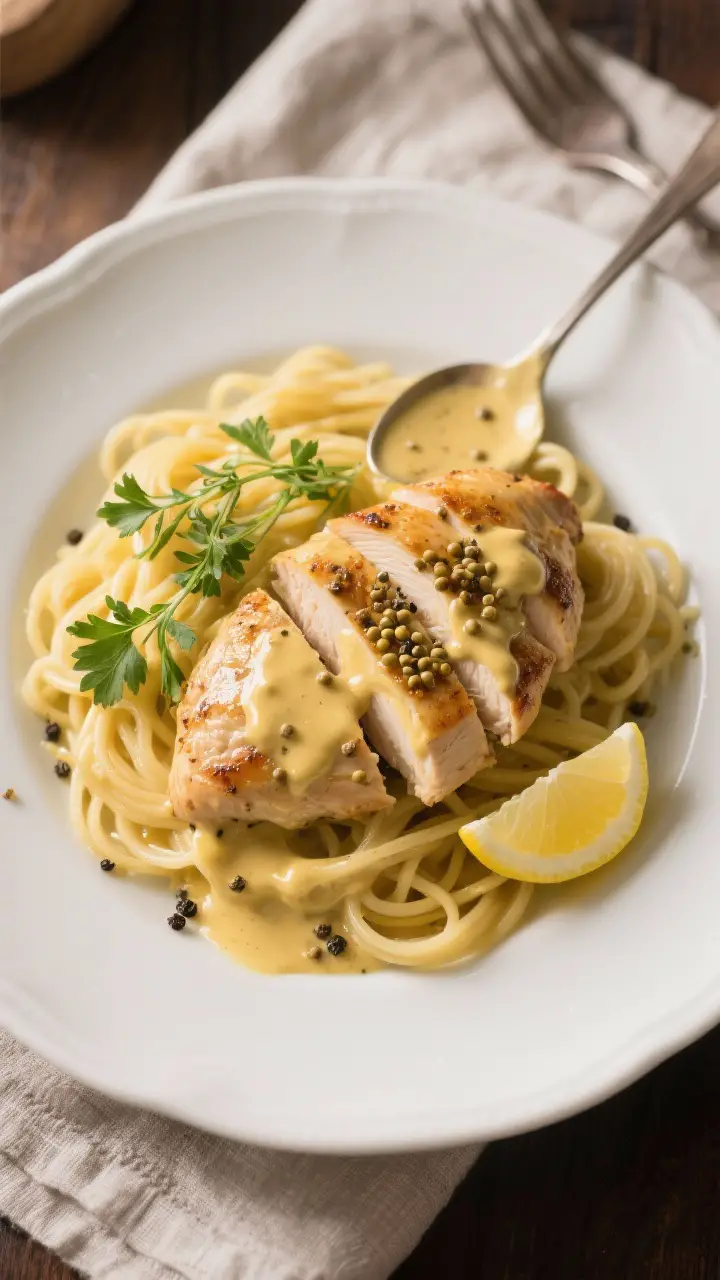
- Finish and serve. Sprinkle with parsley. Serve with rice, mashed potatoes, buttered noodles, or roasted vegetables.
Spoon plenty of sauce over everything.
How to Store
- Refrigerator: Store leftovers in an airtight container for up to 3–4 days.
- Freezer: Cream sauces can split when frozen, but this one holds up reasonably well. Freeze up to 2 months in a freezer-safe container. Thaw overnight in the fridge.
- Reheating: Warm gently on the stove over low heat.
Add a splash of broth, milk, or water to loosen the sauce. Avoid boiling to prevent separation.
- Meal prep tip: Keep the chicken and sauce separate if you plan to reheat multiple times. Combine just before serving.
Health Benefits
This dish offers a good source of lean protein from the chicken, which supports muscle repair and satiety.
Mustard adds flavor with virtually no sugar and minimal calories, and it contains compounds like selenium that support immune function. Using fresh herbs provides small amounts of antioxidants and adds flavor without extra salt. To lighten the sauce, you can swap part of the cream for milk or use Greek yogurt (tempered) to reduce saturated fat while keeping the sauce creamy.
Common Mistakes to Avoid
- Skipping the pat-dry step: Moisture prevents browning.
Dry chicken equals better crust.
- Overcrowding the pan: That traps steam, leading to pale chicken. Cook in batches if needed.
- Using low heat to sear: You want medium-high heat for a quick, golden crust without overcooking the interior.
- Boiling the cream: A hard boil can cause the sauce to separate. Keep it at a gentle simmer.
- Underseasoning: Taste as you go.
The sauce needs enough salt and acid to balance the richness.
- Adding lemon too early: Add at the end. Prolonged cooking can dull the brightness.
Variations You Can Try
- Chicken thighs: Use boneless, skinless thighs for extra juiciness. Sear 5–6 minutes per side.
- Mushroom addition: Sauté 8 ounces of sliced mushrooms after searing the chicken.
Remove, then proceed with the sauce and add mushrooms back in.
- Grainy Dijon swap: Use all whole grain mustard for a rustic, textured sauce.
- Herb variations: Try tarragon for a classic French twist, or rosemary for a woodsy note. Add tender herbs (parsley, chives) at the end.
- Lighter sauce: Use 1/2 cup cream + 1/2 cup milk and simmer a bit longer. Or stir in 1/4 cup Greek yogurt off heat.
- Gluten-free and low-carb: This recipe is naturally gluten-free as written.
Serve with cauliflower mash or zucchini noodles.
- With bacon or pancetta: Cook 2–3 slices until crisp, remove, and use the rendered fat to sear the chicken. Crumble bacon over the finished dish.
- Wine-free: Skip the wine and use extra broth plus 1 teaspoon apple cider vinegar for acidity.
FAQ
Can I use chicken tenders instead of breasts?
Yes. Chicken tenders cook quickly and stay tender.
Sear 2–3 minutes per side and be careful not to overcook. The rest of the recipe stays the same.
What’s the best mustard for the sauce?
Dijon is the backbone. It’s smooth, sharp, and blends well.
Whole grain mustard adds texture and visual appeal, but it’s optional. Avoid yellow mustard here, as it’s too tangy and one-note for a cream sauce.
How do I prevent the sauce from breaking?
Keep the heat moderate, avoid rapid boiling, and add acidic ingredients like lemon at the end. If it does separate, whisk in a tablespoon of cold cream or a knob of cold butter off heat to bring it back together.
Can I make this dairy-free?
You can.
Use olive oil for searing and a full-fat coconut milk or an unsweetened cashew cream for the sauce. The flavor will be slightly different, but mustard and herbs will keep it balanced.
What sides go best with this dish?
Mashed potatoes, buttered egg noodles, or rice are classic. For veg, try roasted asparagus, green beans, or a simple arugula salad with lemon vinaigrette.
Crusty bread is great for mopping up sauce.
Can I make it ahead?
Yes, but it’s best fresh. If making ahead, cook the chicken to just under 165°F, cool, and store separately from the sauce. Reheat gently in the sauce so the chicken finishes heating without drying out.
Is there a way to add more depth of flavor?
Absolutely.
Brown the butter slightly before adding the shallot for a nutty note, or add a teaspoon of Worcestershire sauce to the pan after deglazing. A splash of brandy instead of wine is another nice touch.
Can I use bone-in chicken?
You can, but the timing changes. Sear bone-in, skin-on pieces until deeply browned, then finish in a 375°F oven until done.
Make the sauce in the same pan using the drippings.
Wrapping Up
Pan seared chicken with mustard cream sauce is the kind of recipe that earns a spot in your regular rotation. It’s quick, reliable, and flexible enough to match whatever’s in your pantry. With a golden sear, a tangy-smooth sauce, and a handful of fresh herbs, it tastes far more impressive than the time it takes.
Keep these simple tips in mind, and you’ll have a cozy, crowd-pleasing dinner any night of the week.
Printable Recipe Card
Want just the essential recipe details without scrolling through the article? Get our printable recipe card with just the ingredients and instructions.