
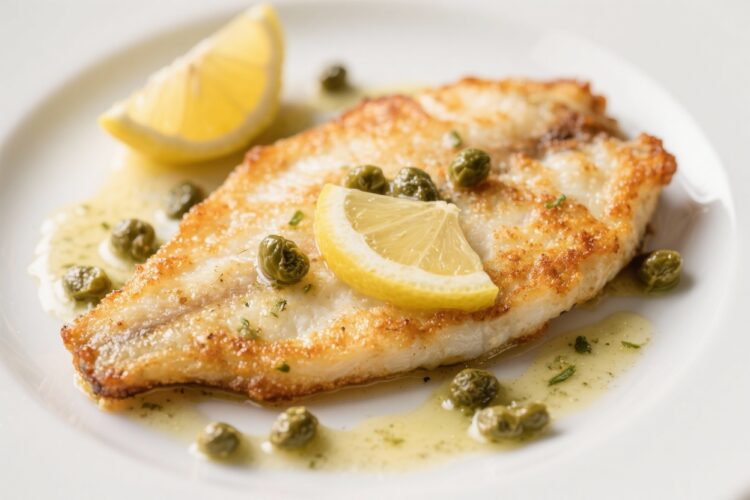
Pan fried flounder with lemon caper sauce is the kind of weeknight dinner that feels special without a lot of effort. The fish cooks in minutes, and the sauce comes together in the same pan, so cleanup is easy. The flavors are fresh and balanced: buttery, lemony, and briny from the capers.
If you’re new to cooking fish, this is a forgiving place to start. Serve it with a simple salad or steamed vegetables, and you’re done.
What Makes This Recipe So Good
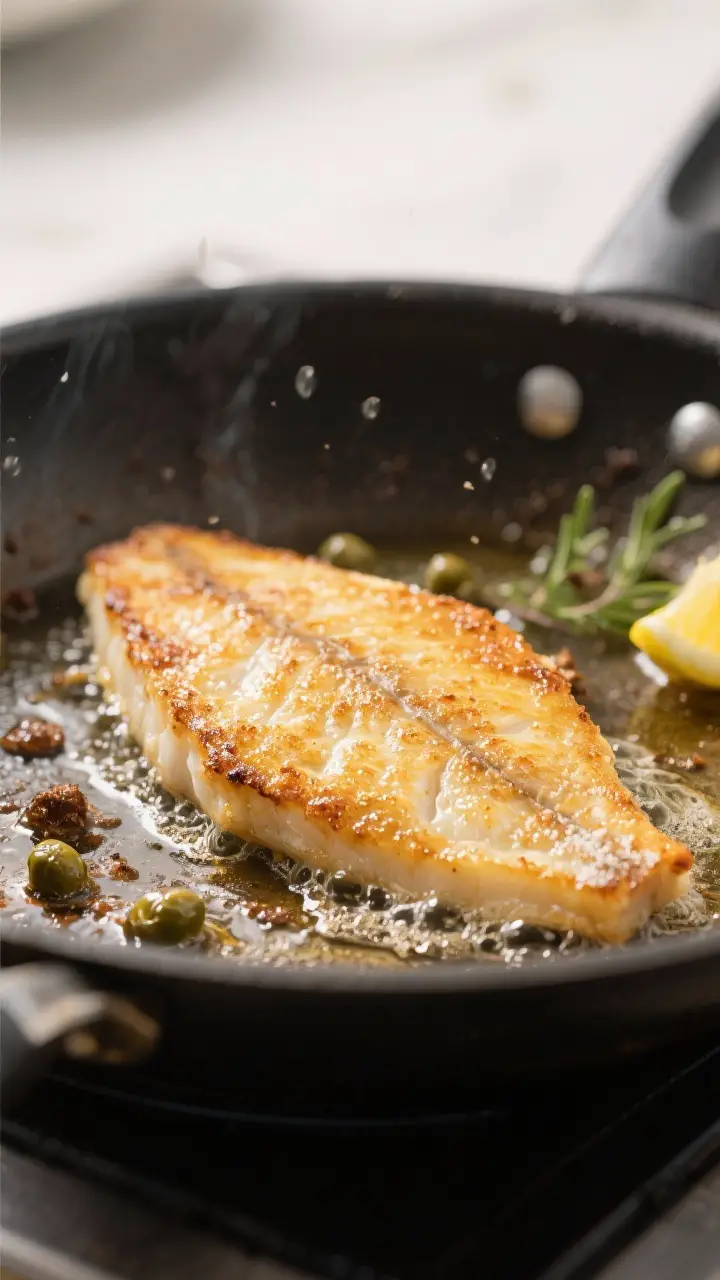
- Quick and simple: The fish cooks in under 6 minutes, and the sauce takes about 3 more. Perfect for busy nights.
- Light but satisfying: Flounder is delicate and mild, while the lemon caper sauce adds brightness without being heavy.
- One-pan cleanup: You sear the fish, then make the sauce in the same skillet.
Less mess, more flavor.
- Restaurant-quality results: A few smart techniques—patting the fish dry, a light flour coating, and quick pan time—make a big difference.
- Flexible: Works with other mild white fish like sole, tilapia, or cod, so you can use what’s available.
What You’ll Need
- 4 flounder fillets (about 4–6 ounces each), skinless if possible
- Salt and freshly ground black pepper
- 1/3 cup all-purpose flour (for dredging)
- 2 tablespoons olive oil
- 2 tablespoons unsalted butter (for searing)
- 2 tablespoons unsalted butter (for the sauce)
- 2 cloves garlic, minced
- 1/2 cup dry white wine or low-sodium chicken broth
- 3 tablespoons fresh lemon juice (about 1 large lemon)
- 1–2 teaspoons lemon zest
- 2 tablespoons capers, drained and rinsed
- 2 tablespoons fresh parsley, finely chopped
- Lemon wedges, for serving
Step-by-Step Instructions
- Prep the fish: Pat the flounder very dry with paper towels. Season both sides with salt and pepper. Lightly dredge in flour, shaking off excess.
This thin coating helps the fish brown and prevents sticking.
- Heat the pan: Place a large nonstick or stainless steel skillet over medium-high heat. Add the olive oil and 2 tablespoons butter. When the butter foams and just starts to brown, the pan is ready.
- Pan fry the flounder: Lay the fillets in the pan without crowding.
Cook for 2–3 minutes on the first side, until the edges turn opaque and the bottom is golden. Flip gently with a thin spatula and cook 1–2 minutes more. The fish should flake easily but still be moist.
- Rest the fish: Transfer fillets to a warm plate and tent loosely with foil.
This keeps them tender while you make the sauce.
- Sauté the garlic: Reduce heat to medium. If the pan seems dry, add a touch more oil. Add the minced garlic and cook 20–30 seconds until fragrant.
Do not brown it.
- Deglaze the pan: Pour in the white wine or broth. Scrape up any browned bits with a wooden spoon. Simmer 1–2 minutes to reduce slightly.
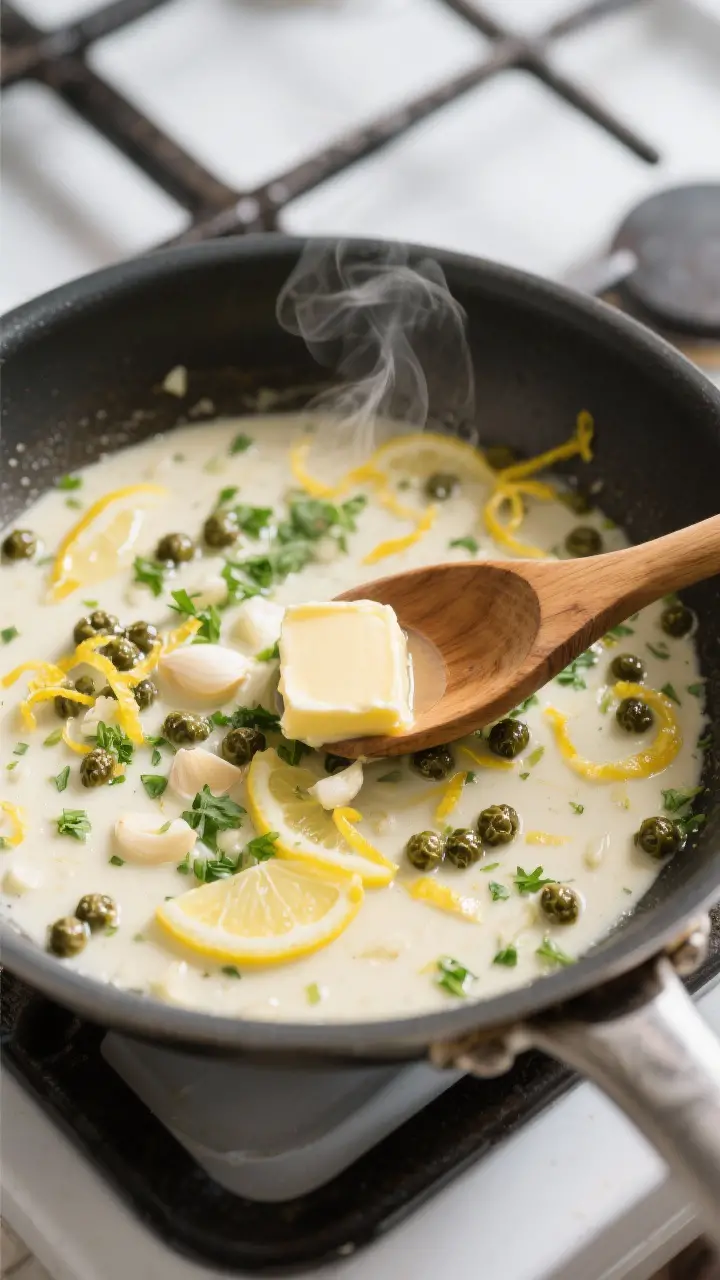
- Add lemon and capers: Stir in the lemon juice, lemon zest, and capers.
Simmer another minute to bring the flavors together.
- Finish with butter and herbs: Off the heat, whisk in the remaining 2 tablespoons butter until the sauce looks silky. Stir in the parsley. Taste and adjust salt and pepper as needed.
If it’s too tart, add a small knob of butter; if it needs brightness, add a splash more lemon.
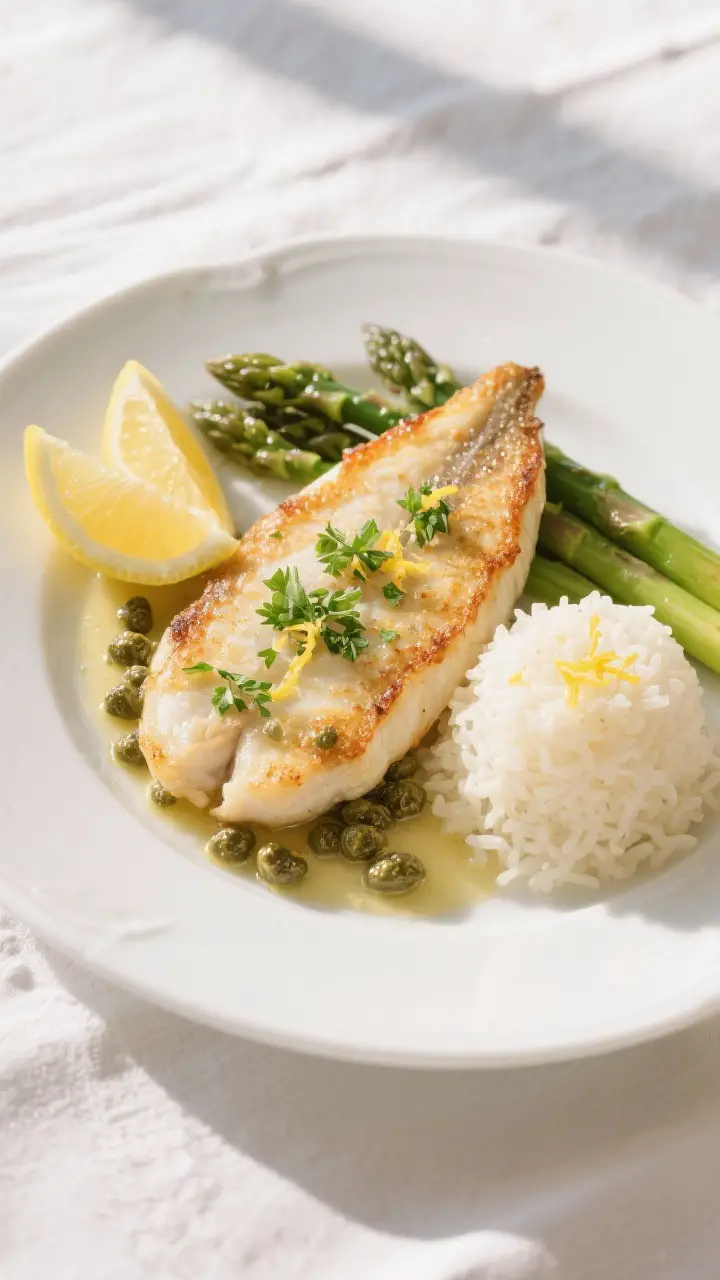
- Serve: Spoon the sauce over the flounder. Add lemon wedges on the side. Serve immediately with rice, roasted potatoes, or a simple green salad.
How to Store
- Refrigerate: Store leftovers in an airtight container for up to 2 days.
Keep the fish and sauce together to prevent drying.
- Reheat gently: Warm in a skillet over low heat with a splash of water or broth until just heated through. Avoid microwaving on high, which can turn the fish tough.
- Freezing: Not recommended. Flounder is delicate and can turn mushy after freezing with sauce.
Why This is Good for You
- Lean protein: Flounder offers high-quality protein with relatively low calories, helping you feel full without heaviness.
- Omega-3s: While not as rich as salmon, flounder still provides beneficial fats that support heart and brain health.
- Fresh flavors, lighter sauce: Lemon and capers bring big flavor, so you don’t need much butter to make it satisfying.
- Low in carbs: This dish pairs easily with vegetables for a balanced meal.
Common Mistakes to Avoid
- Not drying the fish: Moisture prevents browning and can make the coating gummy.
Pat it dry thoroughly.
- Overcrowding the pan: This traps steam and leads to pale, soggy fish. Cook in batches if needed.
- Too much flour: A heavy coating turns pasty. Use a light dusting and shake off excess.
- Overcooking: Flounder cooks fast.
Remove it from the pan as soon as it flakes easily.
- Scorching the garlic: Burned garlic tastes bitter. Lower the heat and cook it briefly.
- Skipping the pan sauce: Those browned bits are flavor gold. Deglaze the pan and build your sauce right there.
Recipe Variations
- Herb swap: Try dill, chives, or basil instead of parsley for a different herbal note.
- Brown butter twist: Let the butter brown slightly before adding lemon and capers for a nutty, richer sauce.
- Garlic-lemon panko: For extra texture, skip the flour and top the fish with toasted garlic-lemon panko crumbs after cooking.
- Olive-forward: Add 2 tablespoons chopped green olives with the capers for a briny Mediterranean vibe.
- Gluten-free: Use rice flour or finely ground almond flour for dredging, or skip the coating entirely and sear as-is.
- Creamy finish: Stir in 2 tablespoons of heavy cream at the end for a silkier sauce.
- No alcohol: Use chicken broth or vegetable broth instead of wine.
Add a touch more lemon to brighten.
FAQ
Can I use frozen flounder?
Yes. Thaw it fully in the refrigerator overnight, then pat it very dry before seasoning and dredging. Frozen fillets can hold more moisture, so give them extra time with paper towels.
What if my fish sticks to the pan?
Make sure the pan and fat are hot before adding the fish.
A light flour coating helps, and so does leaving the fish alone until it releases naturally. If it’s sticking, it may not be ready to flip yet.
Do I need a nonstick pan?
Nonstick makes this easy, but a well-heated stainless steel skillet works too. Just use enough oil and butter, and don’t move the fish until it forms a crust.
Can I substitute another fish?
Yes.
Sole, tilapia, haddock, or thin cod fillets work well. Adjust cooking time based on thickness; thicker fillets may need another minute per side.
How do I know when flounder is done?
It should flake easily with a fork and look opaque throughout. If you use a thermometer, aim for 130–135°F in the thickest part and let carryover heat finish the rest.
Is the sauce too salty with capers?
Rinse and drain the capers to remove excess salt.
Taste the sauce before adding extra salt, especially if you used salted butter or broth.
Can I make the sauce ahead?
It’s best fresh, but you can prep the garlic, lemon juice, zest, and parsley earlier in the day. The sauce cooks in minutes while the fish rests.
What side dishes go best?
Try steamed asparagus, sautéed spinach, roasted potatoes, buttered rice, or a simple arugula salad. The bright sauce pairs well with mild sides.
In Conclusion
Pan fried flounder with lemon caper sauce is a fast, fresh, and elegant meal anyone can pull off.
With a hot pan, a light hand on the flour, and a quick pan sauce, you get restaurant-level flavor at home. Keep the sides simple and let the fish and sauce shine. This is the kind of recipe you’ll turn to again and again—reliable, delicious, and weeknight-friendly.