
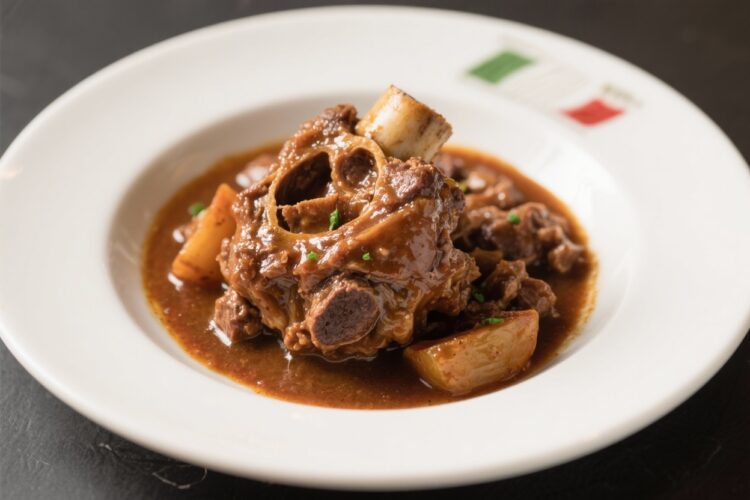
Osso Buco alla Milanese is comfort food with elegance. Thick-cut veal shanks simmer slowly in a tomato-wine sauce until the meat turns spoon-tender and the marrow melts into the braise. The aroma alone feels like a warm welcome on a cold night.
Serve it with saffron risotto or creamy polenta and you’ve got a meal that feels both rustic and special. It’s the kind of dish that rewards patience and makes everyone at the table linger a little longer.
What Makes This Special
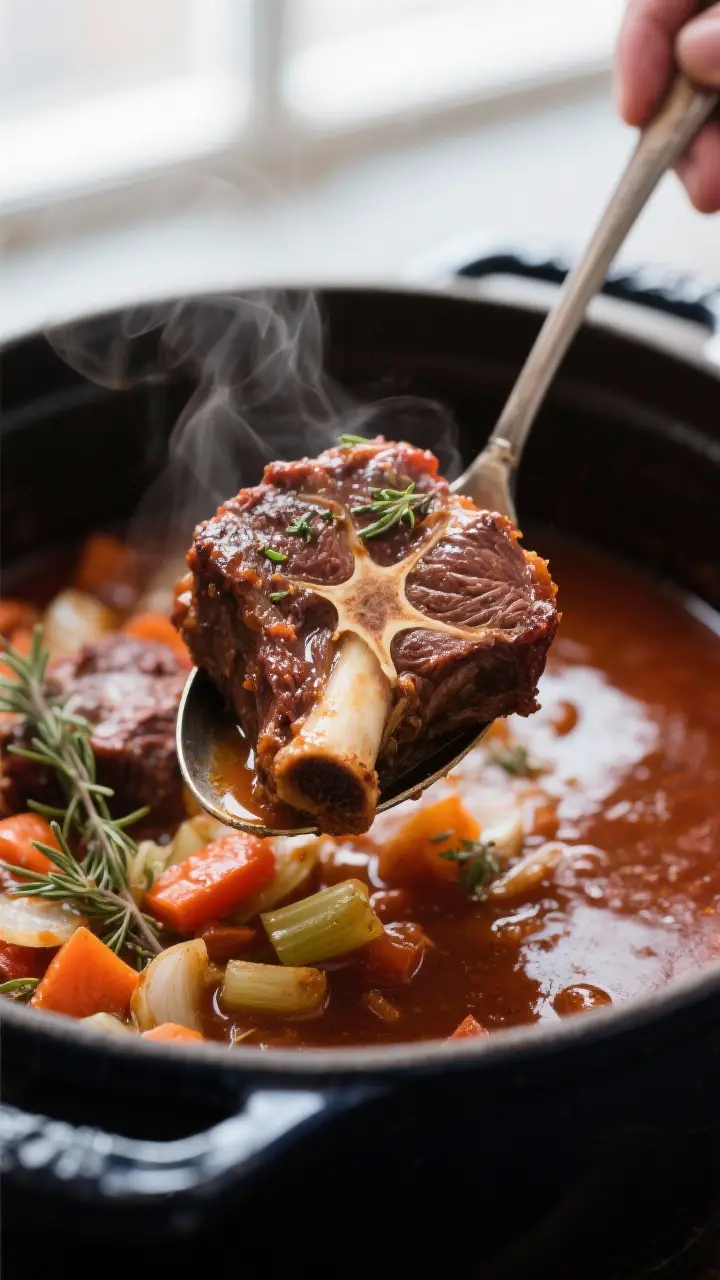
Veal shanks with marrow are the heart of this dish. As they braise, the connective tissue dissolves, turning the sauce silky and rich.
The marrow adds depth you can’t fake.
Gremolata—a mix of parsley, lemon zest, and garlic—brightens the entire dish at the end. That fresh pop cuts through the richness and wakes up every bite.
Milanese style typically means a light tomato presence, white wine, and aromatics. It’s balanced and clean, not heavy.
The result is luxurious without feeling overly rich.
Shopping List
- Veal shanks, 4 pieces, about 1.5–2 inches thick (with bone and marrow)
- All-purpose flour, for dredging
- Olive oil, extra-virgin
- Unsalted butter
- Yellow onion, 1 large, finely chopped
- Carrots, 2 medium, finely chopped
- Celery, 2 ribs, finely chopped
- Garlic, 4 cloves (2 for the braise, 2 for the gremolata)
- Tomato paste, 1–2 tablespoons
- Dry white wine, 1 cup
- Low-sodium beef or veal stock, 2–3 cups
- Crushed tomatoes, 1 cup (optional but classic in many Milanese versions)
- Bay leaf, 1
- Fresh thyme, a few sprigs (or 1/2 teaspoon dried)
- Lemon, 1 (for zest)
- Fresh parsley, small bunch
- Kosher salt and freshly ground black pepper
- Kitchen twine (optional, for tying shanks)
- For serving: Risotto alla Milanese, creamy polenta, or mashed potatoes
Instructions
- Prep the shanks: Pat the veal shanks dry. If the meat is loose around the bone, tie each shank with kitchen twine to hold its shape. Season generously with salt and pepper, then lightly dredge in flour, shaking off excess.
- Brown the meat: In a heavy Dutch oven, heat a mix of olive oil and a knob of butter over medium-high.
Sear shanks until deeply browned on both sides, about 3–4 minutes per side. Work in batches to avoid crowding. Transfer browned shanks to a plate.
- Sauté aromatics: Reduce heat to medium.
Add onion, carrot, and celery with a pinch of salt. Cook until softened and lightly golden, about 6–8 minutes. Add 2 minced garlic cloves and cook 30 seconds.
- Tomato paste and deglaze: Stir in tomato paste and cook until it darkens slightly, 1–2 minutes.
Pour in white wine, scraping up any browned bits. Simmer until the wine is reduced by half.
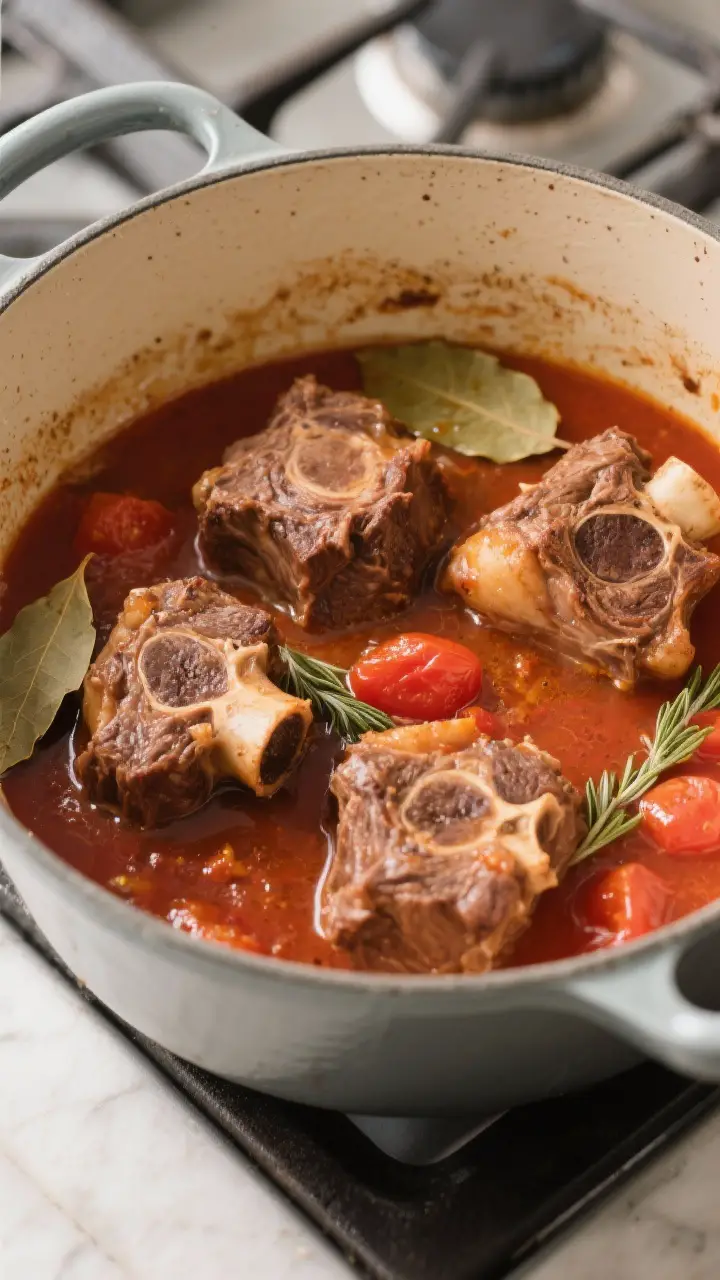
- Build the braise: Return the shanks and any juices to the pot. Add crushed tomatoes (if using), bay leaf, thyme, and enough stock to come about two-thirds up the sides of the meat.
Bring to a gentle simmer.
- Low and slow: Cover and cook at a bare simmer on the stovetop or in a 325°F (160°C) oven for 1.5 to 2 hours. Turn shanks once or twice during cooking. They’re done when the meat is very tender but not completely falling apart.
- Adjust the sauce: Transfer shanks to a warm platter and tent with foil.
Skim excess fat from the sauce. If needed, simmer the sauce uncovered to thicken to a spoon-coating consistency. Taste and season with salt and pepper.
- Make the gremolata: Finely chop parsley and mix with finely grated lemon zest and 2 minced garlic cloves.
Keep it bright and fresh.
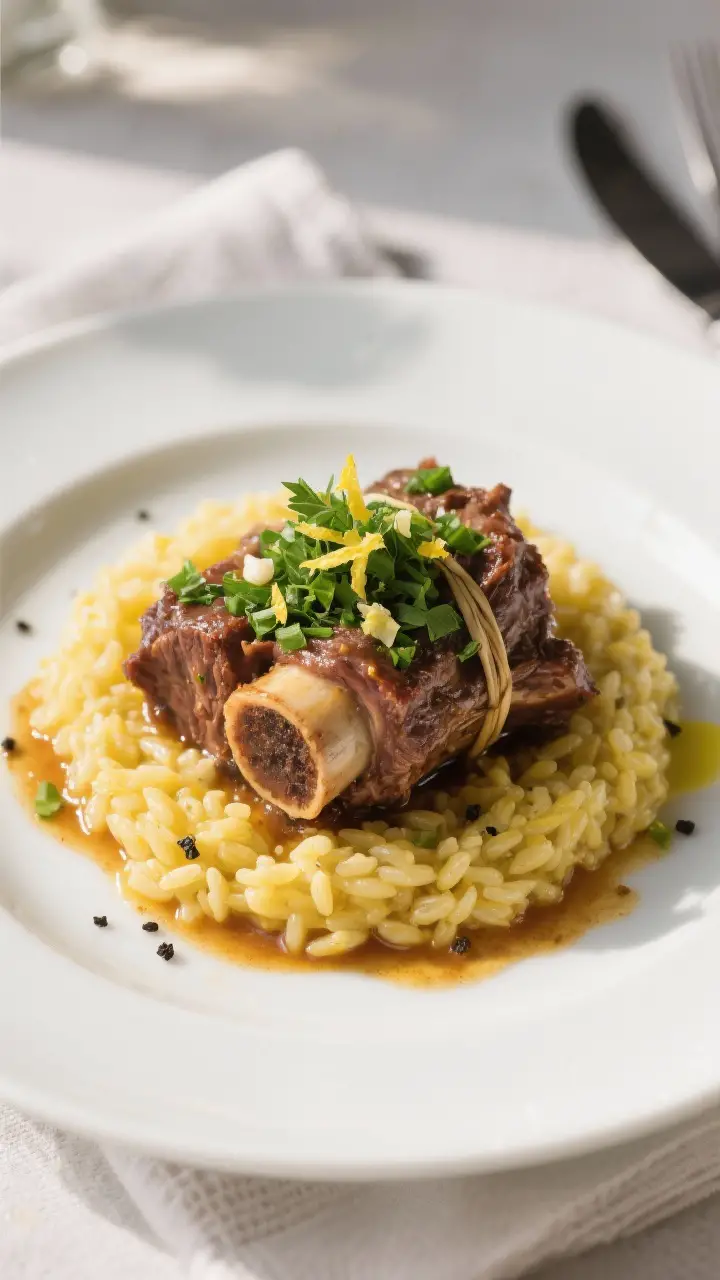
- Finish and serve: Nestle shanks back into the sauce or ladle sauce over shanks on plates. Sprinkle generously with gremolata. Serve with risotto, polenta, or potatoes to catch the sauce.
How to Store
Refrigerate leftovers in an airtight container for up to 3 days.
The flavors deepen overnight and can taste even better the next day.
Freeze in freezer-safe containers for up to 2 months. Cool completely before freezing. Thaw in the fridge, then reheat gently on the stovetop, adding a splash of stock or water if the sauce is too thick.
Reheat over low heat until warmed through.
Avoid vigorous boiling, which can tighten the meat and dull the sauce.
Health Benefits
- Protein and collagen: Veal shanks supply high-quality protein, and the slow braise develops gelatin from connective tissue, which contributes to a satisfying mouthfeel.
- Micronutrients: The marrow and meat provide iron, zinc, and B vitamins. The vegetable base adds fiber and antioxidants.
- Balanced richness: A modest amount of olive oil and the fresh gremolata keep the dish satisfying without feeling heavy. You control the salt by using low-sodium stock and seasoning at the end.
What Not to Do
- Don’t rush the browning: Pale shanks mean a flat-tasting sauce.
Get that deep golden crust.
- Don’t boil hard: A rolling boil toughens the meat. Keep it to a gentle simmer.
- Don’t skip gremolata: The fresh lemon-parsley-garlic finish balances the richness. It’s not just garnish.
- Don’t over-thicken: Reduce to a glossy sauce, not a paste.
It should coat a spoon and still pour.
- Don’t overcrowd the pot: Brown in batches so you build fond instead of steaming.
Alternatives
- Different meat: Try beef shanks or pork shanks if veal is unavailable. Cooking time may be slightly longer for beef.
- Wine swap: White wine is traditional, but a light red (like Pinot Noir) can work for a deeper profile. Keep it dry, not sweet.
- No tomatoes: Some versions skip tomatoes entirely.
Use only stock and wine for a lighter, golden braise.
- Herb variations: Rosemary or sage can replace thyme. Use sparingly so they don’t overpower.
- Gluten-free: Skip the flour or use a gluten-free blend. You can thicken the sauce by reducing it longer.
- Sides: Risotto alla Milanese is classic, but creamy polenta, parmesan mash, or buttered egg noodles all work beautifully.
FAQ
Can I make Osso Buco in advance?
Yes.
It actually improves after a day in the fridge. Reheat gently and add gremolata just before serving to keep it bright.
What’s the best pan to use?
A heavy Dutch oven with a tight-fitting lid is ideal. It keeps heat even and moisture steady for a silky braise.
Do I have to tie the shanks?
No, but tying helps them keep their shape and cook evenly.
If you skip it, handle them gently when turning.
How do I know the shanks are done?
The meat should be very tender and pull away from the bone with little resistance, but still hold together. If it’s tough, keep cooking and check every 15 minutes.
What should I serve with Osso Buco?
Risotto alla Milanese is traditional. Polenta, mashed potatoes, or crusty bread are also excellent for soaking up the sauce.
Can I use bone-in beef short ribs instead?
Yes, but you’ll get a different texture and flavor.
Adjust cooking time as needed; short ribs may take a bit longer to become tender.
Is the gremolata optional?
Technically yes, but it changes the dish. The lemon and parsley lift the richness and bring balance. It’s worth the extra minute.
Can I make it in a slow cooker?
Yes.
Brown the shanks and sauté aromatics on the stove first, then transfer everything to the slow cooker. Cook on low for 7–8 hours, finish the sauce on the stove if you need to thicken it, and add gremolata at the end.
What kind of white wine should I use?
Use a dry, crisp wine like Pinot Grigio, Sauvignon Blanc, or an unoaked Chardonnay. If you wouldn’t drink it, don’t cook with it.
How do I keep the sauce from being greasy?
Skim fat after cooking, and again after chilling if making ahead.
A quick chill in the fridge firms the fat so it’s easy to remove.
Wrapping Up
Osso Buco alla Milanese is slow cooking at its best: simple ingredients, careful technique, and a clean, lush flavor. With a patient braise and a burst of gremolata, the dish lands somewhere between hearty and refined. Set it alongside a saffron risotto or polenta, and you’ve got a classic that never goes out of style.
It’s a true dinner-table centerpiece—warm, generous, and unforgettable.
Printable Recipe Card
Want just the essential recipe details without scrolling through the article? Get our printable recipe card with just the ingredients and instructions.