
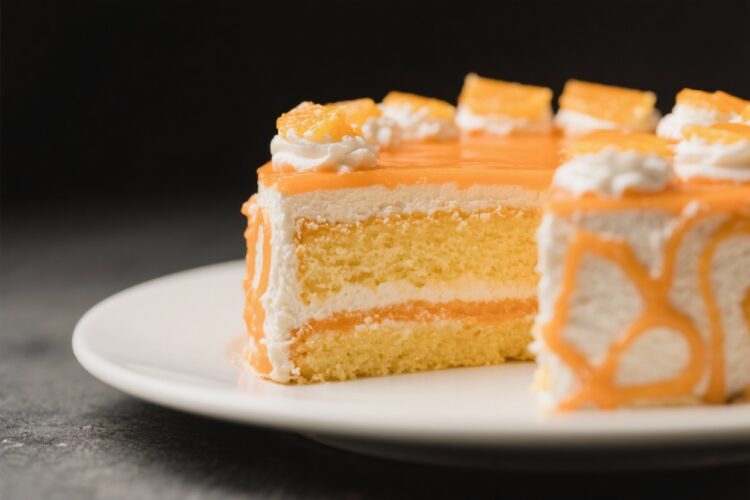
If you grew up loving orange creamsicles, this cake brings all that flavor to the table in a soft, citrusy slice. It’s bright, creamy, and not too sweet, with a light orange crumb and a silky vanilla cream frosting. The kind of cake that feels like sunshine on a plate.
Whether you’re baking for a birthday, brunch, or just because, it’s surprisingly simple and always a hit. And yes, it tastes like the classic frozen treat—without the stick.
What Makes This Recipe So Good
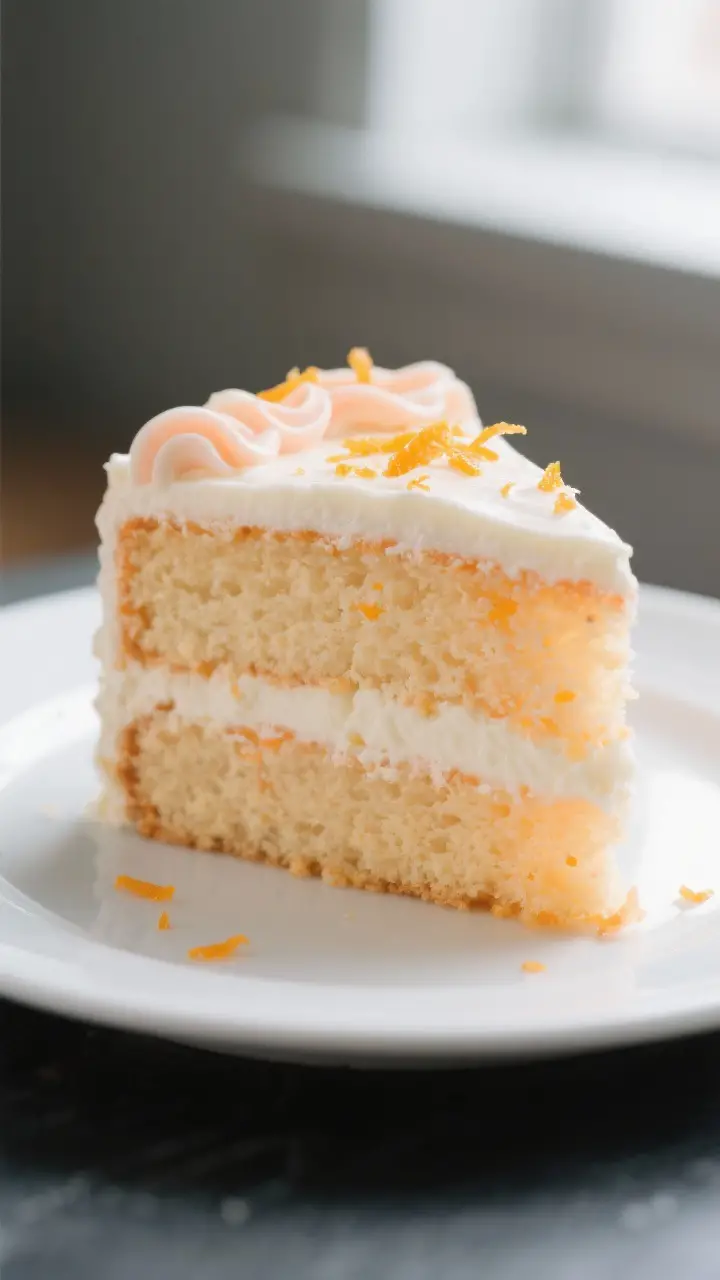
- True creamsicle flavor: Fresh orange zest and juice meet a smooth vanilla cream frosting for that nostalgic balance of citrus and cream.
- Moist and tender crumb: Buttermilk and oil keep the cake soft for days, so it’s great to make ahead.
- Simple pantry ingredients: No fancy tools or hard-to-find items—just a few fresh oranges and basics.
- Flexible format: Bake as a layer cake, a sheet cake, or cupcakes without changing the batter.
- Make-ahead friendly: The flavors deepen after a night in the fridge, making it perfect for parties.
What You’ll Need
- Flour: 2 1/2 cups all-purpose flour
- Leavening: 2 1/2 teaspoons baking powder, 1/2 teaspoon baking soda
- Salt: 1/2 teaspoon
- Sugar: 1 1/2 cups granulated sugar
- Eggs: 3 large, room temperature
- Oil: 1/2 cup neutral oil (canola or vegetable)
- Butter: 1/4 cup unsalted, melted and slightly cooled (optional but boosts flavor)
- Buttermilk: 1 cup, room temperature
- Orange juice: 1/2 cup fresh-squeezed
- Orange zest: 1 tablespoon, packed
- Vanilla extract: 2 teaspoons
- Orange extract: 1/2 teaspoon (optional, for extra orange punch)
- Food coloring: 1–2 drops orange gel (optional for a soft peach hue)
For the Vanilla Cream Frosting:
- 1 cup unsalted butter, room temperature
- 4 oz cream cheese, room temperature
- 3 1/2–4 cups powdered sugar, sifted
- 2–3 tablespoons heavy cream (or milk)
- 2 teaspoons vanilla bean paste (or vanilla extract)
- Pinch of salt
- Optional: 1–2 teaspoons orange zest for garnish
Step-by-Step Instructions
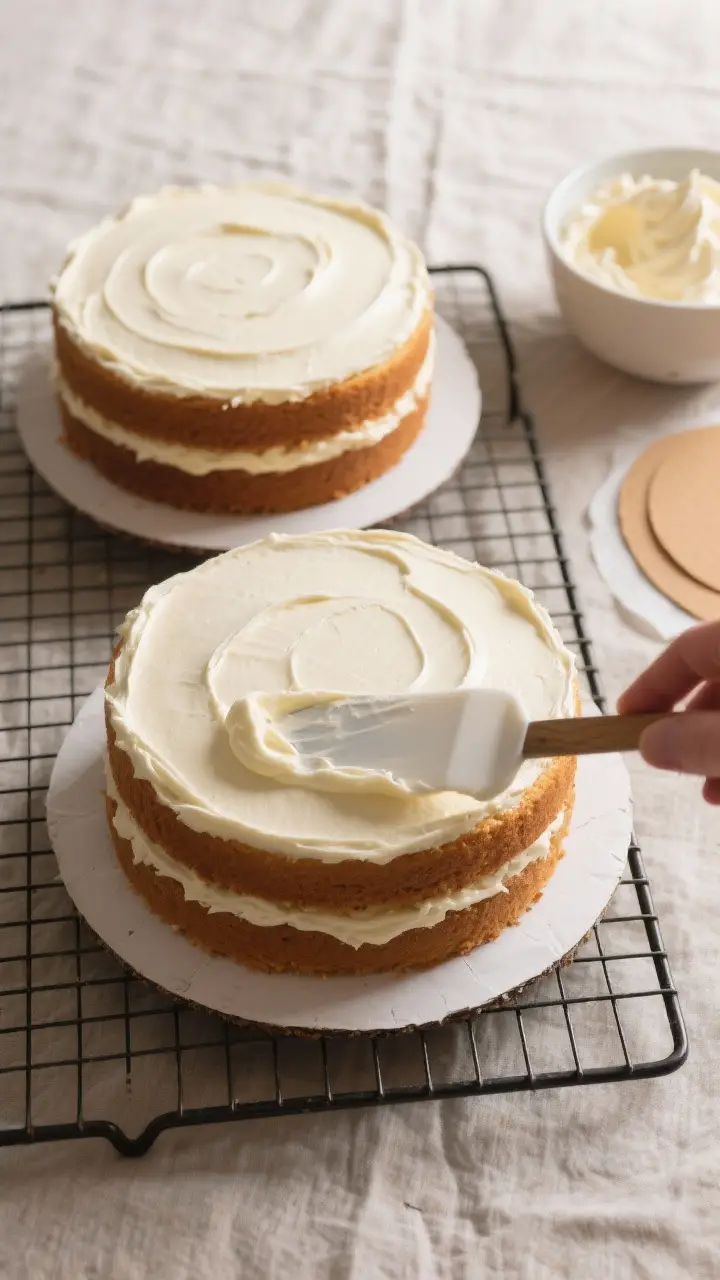
- Prep the pans and oven: Heat the oven to 350°F (175°C). Grease and line two 8-inch round cake pans with parchment.
Lightly flour the sides.
- Mix dry ingredients: In a bowl, whisk flour, baking powder, baking soda, and salt until evenly combined. Set aside.
- Combine wet ingredients: In a large bowl, whisk sugar, eggs, oil, and melted butter until glossy. Add buttermilk, orange juice, zest, vanilla, and orange extract (if using).
Whisk to blend. Add a tiny drop of orange gel if you want a pale creamsicle color.
- Bring it together: Add the dry ingredients to the wet in two additions. Stir gently with a spatula until just combined.
Don’t overmix—some small lumps are okay.
- Bake: Divide the batter evenly between pans. Bake 24–28 minutes, until the centers spring back and a toothpick comes out clean.
- Cool completely: Let cakes cool in pans 10 minutes, then turn out onto a rack. Peel off parchment and cool fully before frosting.
- Make the frosting: Beat butter and cream cheese on medium until smooth and fluffy, 2–3 minutes.
Add powdered sugar gradually, beating on low, then medium until creamy. Mix in vanilla, salt, and enough cream to reach a spreadable texture.
- Assemble: Level the cake layers if domed. Place one layer on a stand.
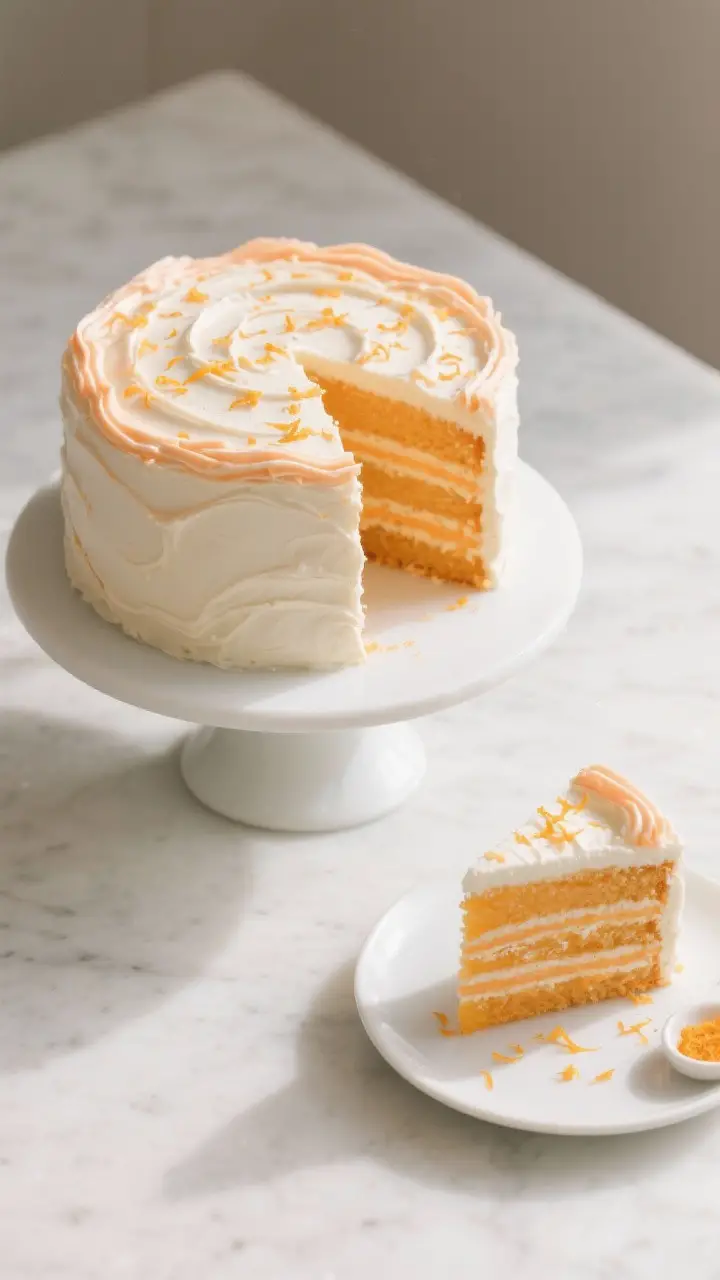
Spread a generous layer of frosting. Top with the second layer and frost the top and sides. For a creamsicle look, scatter orange zest on top or add faint swoops of pale orange frosting.
- Set and serve: Chill the cake for 20–30 minutes to set clean slices.
Serve slightly chilled or at cool room temperature.
How to Store
- Short term: Cover and refrigerate for up to 4 days. The flavor improves on day two.
- Freezer: Wrap unfrosted layers tightly in plastic and foil. Freeze up to 2 months.
Thaw in the fridge overnight, then frost.
- Leftover slices: Store in an airtight container in the fridge. Bring to room temp for 15–20 minutes before serving for the best texture.
Health Benefits
- Vitamin C from oranges: Fresh juice and zest provide a small boost of vitamin C, which supports immune health and collagen formation.
- Portion control: A balanced dessert approach helps satisfy cravings without overdoing it. Thin slices still deliver big flavor.
- Simple swaps available: You can lighten the frosting or reduce sugar without losing the creamsicle vibe.
See Alternatives for ideas.
What Not to Do
- Don’t skip the zest: The zest carries most of the orange aroma. Without it, the cake can taste flat.
- Don’t overmix the batter: Overmixing makes a dense, tough crumb. Stir just until combined.
- Don’t frost a warm cake: Warm layers melt frosting and cause sliding.
Cool completely.
- Don’t overbake: Check early. Dry cake loses that creamy-creamsicle feel.
- Don’t drown the frosting in liquid: Add cream slowly. Too much makes it runny and hard to set.
Alternatives
- Sheet cake: Bake in a 9×13-inch pan for 28–34 minutes.
Frost the top and serve right from the pan.
- Cupcakes: Fill liners 2/3 full and bake 16–19 minutes. Pipe tall swirls of frosting for a bakery look.
- Lighter frosting: Swap half the butter for Greek yogurt, and reduce powdered sugar by 1/2 cup. Chill well before spreading.
- Dairy-free: Use plant milk with 1 teaspoon vinegar as a buttermilk swap.
Choose dairy-free butter and cream cheese for the frosting.
- Gluten-free: Substitute a 1:1 gluten-free baking flour with xanthan gum. Let the batter sit 5 minutes before baking.
- Stronger orange flavor: Add 1 teaspoon orange extract to the batter and 1/2 teaspoon to the frosting, or brush baked layers with a quick orange syrup (equal parts sugar and orange juice warmed until dissolved).
- Less sugar: Reduce granulated sugar in the cake by 1/4 cup and frosting by 1/2 cup. The texture remains soft, and the citrus still shines.
FAQ
Can I use bottled orange juice?
Yes, but fresh juice and zest taste brighter.
If using bottled juice, add orange extract or extra zest to boost the citrus.
Do I have to use cream cheese in the frosting?
No. You can make a classic vanilla buttercream by swapping the cream cheese for more butter and adding an extra pinch of salt. The flavor will be less tangy but still delicious.
How do I keep the cake moist?
Measure flour correctly, don’t overbake, and use buttermilk.
Storing the cake in the fridge, well covered, helps retain moisture and lets the flavors meld.
Can I make this a three-layer cake?
Yes. Divide the batter among three 6-inch pans or scale the recipe by 1.5 for three 8-inch layers. Adjust bake time down slightly for thinner layers.
What if I don’t have buttermilk?
Make a quick substitute: add 1 tablespoon lemon juice or vinegar to a measuring cup, fill to 1 cup with milk, stir, and let sit 5 minutes.
Is food coloring necessary?
Not at all.
It’s purely visual. A micro-drop of orange gel gives a soft peach tone, but the cake tastes the same without it.
Why add both oil and butter?
Oil keeps the crumb tender for days, while butter adds flavor. Using both gives you the best of each.
Can I add fruit pieces to the batter?
Small bits of candied orange peel work, but fresh fruit pieces can add too much moisture.
If you want texture, fold in white chocolate chips or finely chopped peel.
Wrapping Up
This Orange Creamsicle Cake brings the best parts of a classic summer treat into a soft, creamy, anytime dessert. It’s easy to bake, flexible in format, and loved by kids and adults alike. Use fresh zest for bold flavor, keep the crumb tender with buttermilk and oil, and finish with that smooth vanilla cream frosting.
Make it a day ahead, chill, and slice—sunny, nostalgic goodness in every bite.
Printable Recipe Card
Want just the essential recipe details without scrolling through the article? Get our printable recipe card with just the ingredients and instructions.