
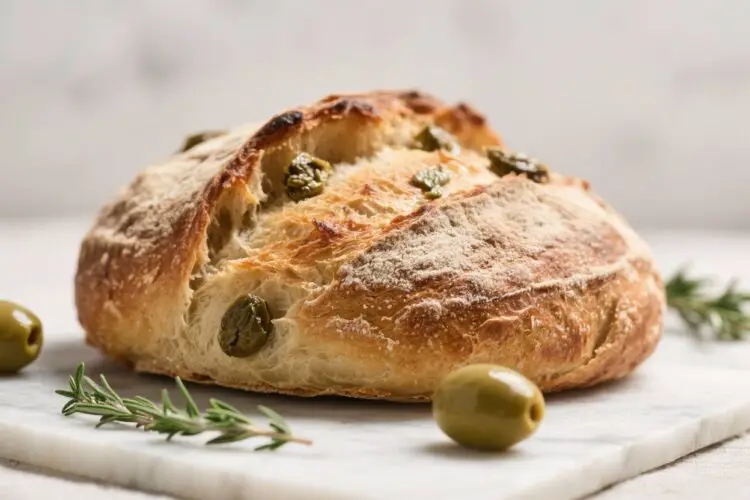
If you love a loaf with personality, this Olive and Thyme Sourdough is your kind of bread. It’s rustic, aromatic, and packed with briny olives and fresh herbs that make every slice taste special. The crumb is tender but sturdy, the crust sings when it cools, and the flavor only gets better by the next day.
Whether you’re new to naturally leavened breads or you’re building on your sourdough routine, this recipe is straightforward and rewarding. Serve it with soup, make fancy toast, or pair it with cheese and olive oil—this one’s a keeper.
Why This Recipe Works
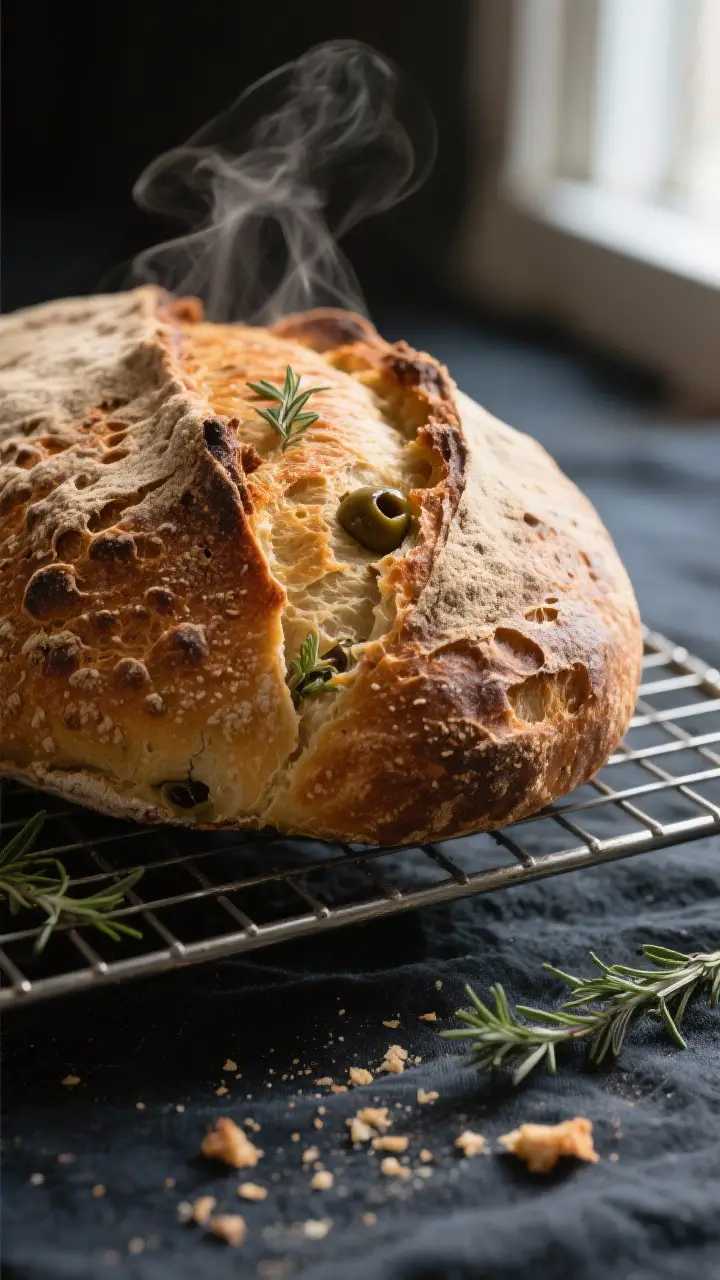
- Hydration that supports structure: A moderate hydration dough keeps the crumb open without turning sticky. It’s easier to handle and still bakes up beautifully.
- Fold-in method for mix-ins: Adding olives and thyme during stretches and folds distributes them evenly and prevents tearing the gluten network.
- Balanced flavors: Briny olives, bright thyme, and a gentle tang from sourdough create depth without overpowering the bread.
- Cold retard for flavor: An overnight chill in the fridge boosts sour notes, improves texture, and makes scoring easier.
Ingredients
- Active sourdough starter: 100 g (100% hydration), bubbly and doubled
- Warm water: 320 g (about 80–85°F / 27–29°C)
- Bread flour: 400 g
- Whole wheat flour: 100 g
- Salt: 10 g (about 2 tsp)
- Pitted olives: 150–180 g, roughly chopped (Kalamata, green, or a mix)
- Fresh thyme leaves: 1–2 tbsp, stripped from stems (or 1 tsp dried)
- Olive oil (optional): 1 tsp for coating bowl and hands
- Rice flour (for dusting): as needed for the banneton
How to Make It
- Build your starter: Feed your starter 4–8 hours before mixing, depending on your room temperature.
It should be bubbly, domed, and pass the float test. If it’s sluggish, give it another feeding.
- Autolyse the dough: In a large bowl, mix the warm water with both flours until no dry spots remain. The dough will look shaggy.
Cover and rest for 30–45 minutes. This helps gluten develop and makes mixing easier.
- Add starter and salt: Spread the starter over the dough, sprinkle in the salt, and pinch and fold to incorporate. Wet hands help prevent sticking.
Mix until the starter is well distributed and the dough tightens slightly.
- Bulk fermentation begins: Cover and rest 30 minutes. Keep the dough at a warm, draft-free spot around 75–78°F (24–26°C). If your kitchen is cooler, expect longer rise times.
- First set of stretches and folds: With wet hands, grab the edge of the dough, stretch it up, and fold over.
Turn the bowl and repeat 4–6 times. This strengthens the dough without kneading.
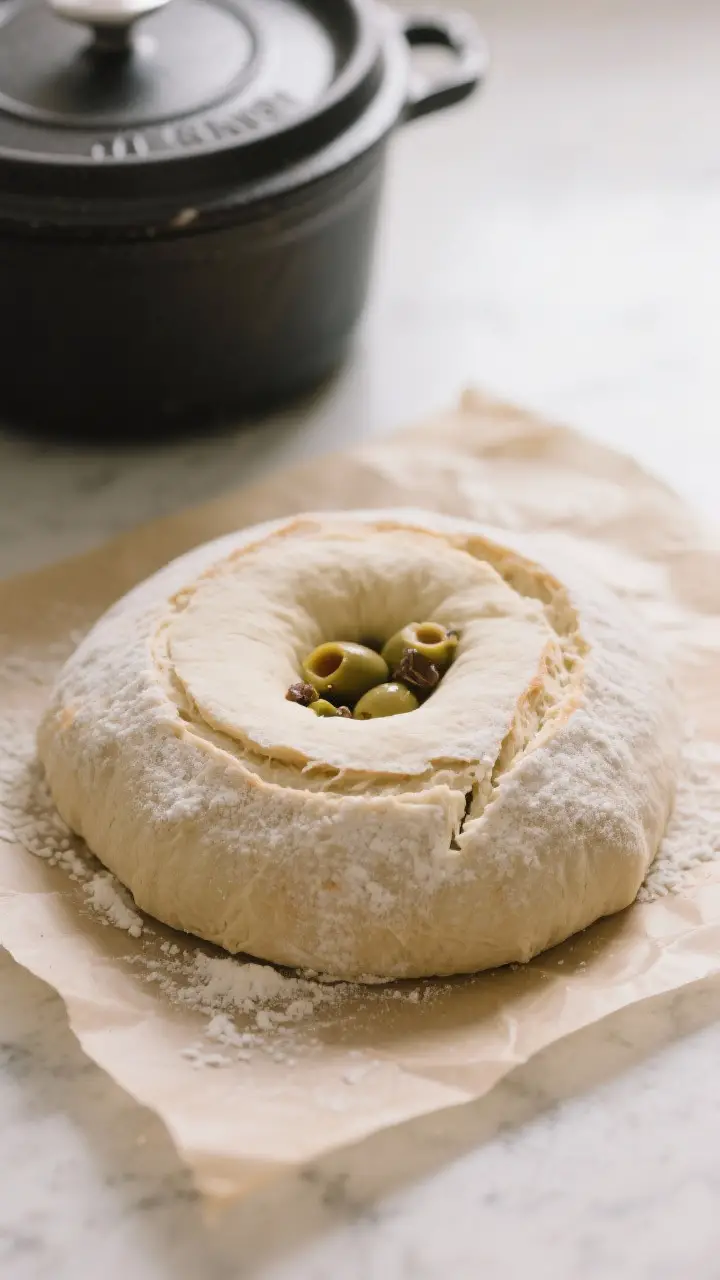
- Add olives and thyme: After the first fold, gently spread the chopped olives and thyme over the dough’s surface. Perform another round of gentle folds to tuck them in.
Avoid crushing the olives too much.
- Continue folding: Perform 2–3 more rounds of stretches and folds every 20–30 minutes. Stop once the dough feels smoother, holds shape, and shows bubbles along the edges.
- Finish bulk ferment: Let the dough rise until it’s roughly 50–75% larger, jiggly, and airy. This may take 3–5 hours total, depending on temperature and starter strength.
- Pre-shape: Lightly flour your surface.
Turn the dough out, then use a bench scraper to tuck the edges toward the center, creating a loose round. Rest uncovered for 15–20 minutes to relax.
- Final shape: For a boule, flip the dough seam-side up, gently stretch into a rectangle, fold sides toward the center, then roll up and tighten with a few pulls toward you. For a batard, shape into an oval with a similar motion.
Keep the olives tucked inside.
- Proof in a banneton: Dust a banneton or towel-lined bowl generously with rice flour. Place the dough seam-side up. Cover and proof at room temperature 30–60 minutes, then refrigerate 8–16 hours for cold retard.
- Preheat the oven and Dutch oven: Place a Dutch oven with lid inside and preheat to 475°F (246°C) for at least 30 minutes.
Hot equipment ensures great oven spring.
- Score and bake: Turn the dough seam-side down onto parchment. Score with a sharp blade—one long slash works well. Carefully place into the hot Dutch oven, cover, and bake 20 minutes.
Reduce heat to 450°F (232°C), remove lid, and bake 20–25 minutes more until deep golden.
- Cool completely: Move the loaf to a wire rack and let cool at least 1 hour. Cutting too soon compresses the crumb and makes it gummy.
Storage Instructions
- Room temperature: Store the cooled loaf in a paper bag or wrapped in a clean towel for 1–2 days. This keeps the crust crisp.
- Longer storage: Slice, then freeze in a zip-top bag for up to 2 months.
Toast straight from frozen.
- Avoid plastic on the counter: It softens the crust. If you prefer a softer crust, use a bread box or loosely wrapped plastic after day one.
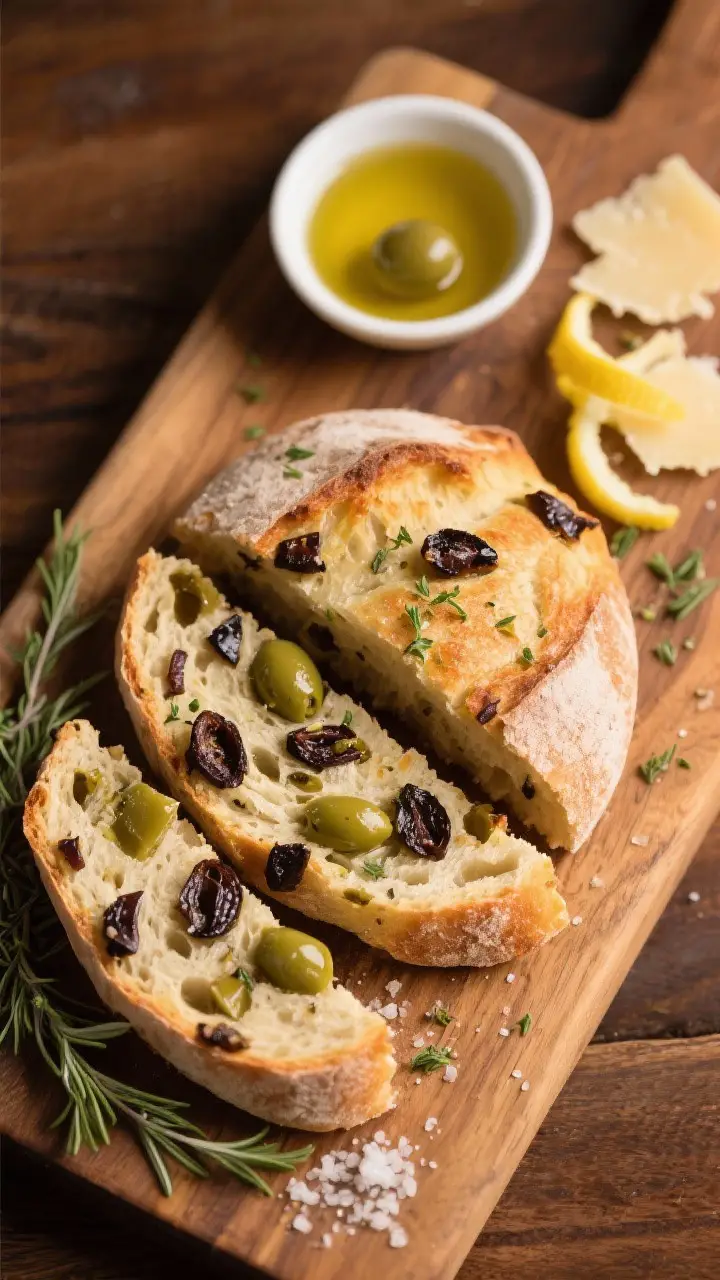
Benefits of This Recipe
- Big flavor with simple steps: You get bakery-level taste without special equipment beyond a Dutch oven and a starter.
- Flexible timing: The cold retard works around your schedule and deepens flavor.
- Better-for-you ingredients: Natural fermentation, whole wheat flour, and olive-rich add-ins offer fiber, healthy fats, and satisfying complexity.
- Versatile serving: Great for sandwiches, crostini, or alongside roasted vegetables and stews.
What Not to Do
- Don’t rush fermentation: Underproofed dough won’t rise well and can taste flat. Watch the dough, not the clock.
- Don’t over-salt: Olives bring their own salt.
Stick to the measured salt to avoid an overly briny loaf.
- Don’t overload with olives: Too many add-ins can weigh down the dough and tear the gluten. Keep to the suggested range.
- Don’t skip the cool-down: Cutting hot bread leads to a gummy interior. Let the crumb set.
- Don’t bake in a cold pot: A preheated Dutch oven is crucial for oven spring and crust.
Recipe Variations
- Lemon and thyme: Add 1–2 tsp finely grated lemon zest with the thyme for a bright lift.
- Olive, thyme, and garlic: Fold in 1–2 cloves roasted garlic, smashed, for mellow sweetness.
- Rosemary swap: Use chopped rosemary instead of thyme for a piney aroma that pairs with green olives.
- Cheesy crust: Sprinkle 20–30 g grated Parmesan over the dough surface before the final fold for savory notes.
- Grain twist: Replace 50 g of bread flour with spelt or rye for more character.
Hydration may need a small bump.
FAQ
Can I use all-purpose flour instead of bread flour?
Yes. The loaf may have a slightly softer structure and a tighter crumb, but it will still be delicious. If the dough feels loose, add an extra round of folds.
My dough feels too sticky—what should I do?
Use wet hands and a bench scraper.
Avoid adding a lot of flour. A short rest and a few gentle folds usually bring the dough together as gluten develops.
Do I have to use a Dutch oven?
No, but it helps. Without one, bake on a preheated stone or sheet and create steam by adding a pan of hot water to the oven or spritzing the walls.
Expect a slightly lighter crust.
What olives work best?
Kalamata and Castelvetrano are excellent. Use pitted olives and chop them so they distribute well. Pat them dry to minimize excess moisture in the dough.
How do I know when bulk fermentation is done?
Look for a puffed, airy dough with about 50–75% volume increase, a domed surface, and visible bubbles around the edges.
It should feel light and jiggly when you shake the bowl.
Can I skip the overnight proof?
You can proof at room temperature until the dough springs back slowly when poked, then bake. The flavor will be milder and scoring a bit trickier, but it still works.
Why is my crust too dark?
Your oven may run hot. Lower the final bake temperature by 15–25°F, or tent the loaf with foil for the last 10 minutes.
Also check that your rack is centered.
How do I keep olives from poking through the crust?
Tuck exposed olives inside during shaping and keep your score line away from large olive pockets. This helps prevent burnt bits on the surface.
Wrapping Up
This Olive and Thyme Sourdough delivers a savory, aromatic loaf that fits weeknight dinners and weekend gatherings alike. The method is simple, the ingredients are accessible, and the results feel special every time.
Once you try it, you’ll likely keep a batch on repeat—and play with the variations to suit your mood. Happy baking and enjoy the crackle as it cools.
Printable Recipe Card
Want just the essential recipe details without scrolling through the article? Get our printable recipe card with just the ingredients and instructions.