
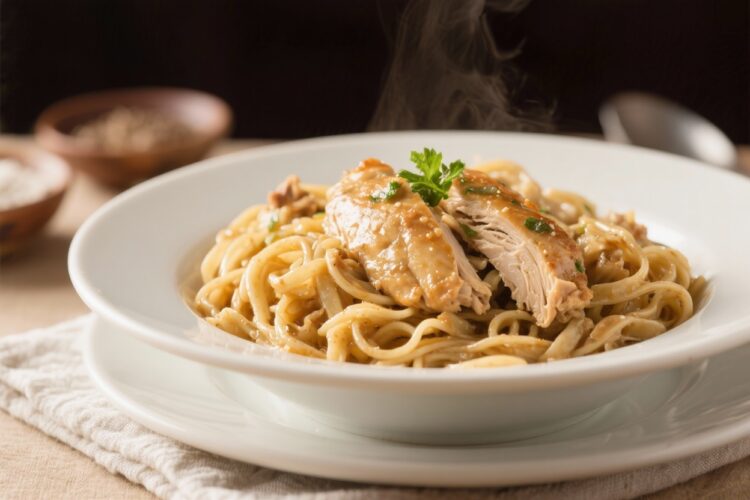
This is the kind of meal that makes the whole house smell inviting. Old fashioned chicken and noodles is simple, hearty, and deeply satisfying—like a hug in a bowl. It’s the dish you make when you want something warm and steady, with tender chicken, rich broth, and thick noodles that soak it all up.
No fancy tricks here, just honest ingredients and a little patience. If you’re craving comfort, this is it.
What Makes This Special
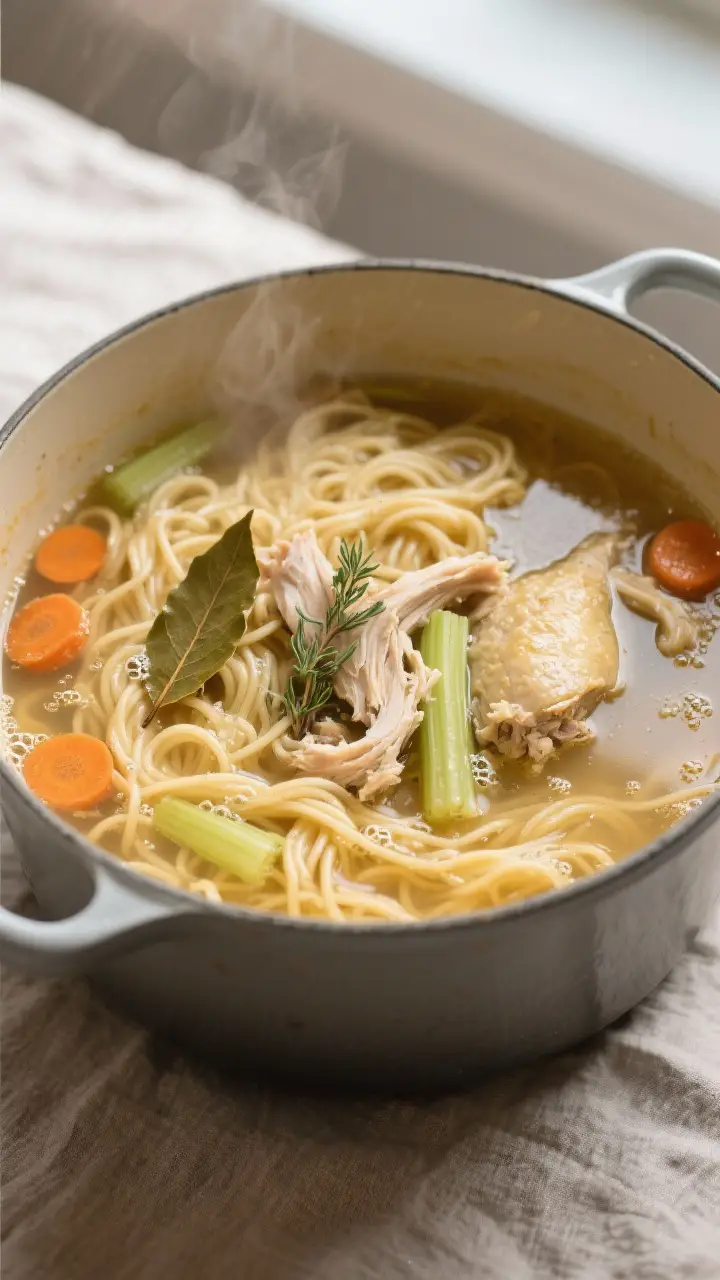
Old fashioned chicken and noodles isn’t just a recipe; it’s a ritual. You build flavor from scratch with a whole chicken or bone-in pieces, simmered until the broth turns golden and rich.
The noodles are thick and sturdy, either homemade or a hearty egg noodle that can stand up to long simmering.
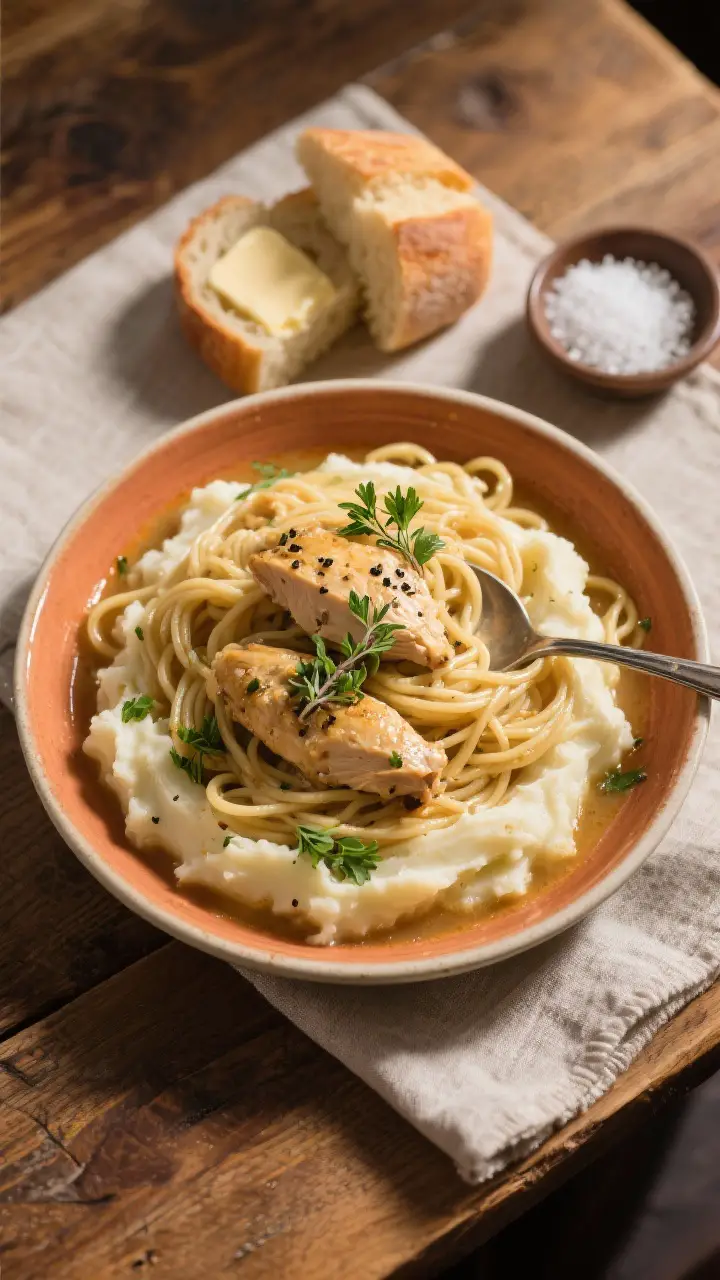
Unlike chicken soup, this version is more like a cozy stew—less broth, more body. It’s perfect over a pile of creamy mashed potatoes, spooned into a deep bowl, or even served with buttered bread. The best part?
It’s forgiving, flexible, and tastes even better the next day.
What You’ll Need
- Chicken: 3–4 lb whole chicken or 3 lb bone-in thighs/legs
- Water or chicken stock: 10–12 cups (enough to cover the chicken)
- Egg noodles: 12–16 oz thick, homestyle noodles (or homemade)
- Carrots: 2 medium, peeled and sliced
- Celery: 2 ribs, sliced
- Onion: 1 large, peeled and quartered
- Garlic: 3 cloves, smashed
- Bay leaf: 1
- Fresh thyme: 2–3 sprigs (or 1 teaspoon dried)
- Parsley: Handful, chopped (for serving)
- Butter:
- Flour: 2 tablespoons (optional, for a thicker broth)
- Salt and black pepper: To taste
- Optional flavor boosters: A splash of chicken bouillon, Worcestershire sauce, or a pinch of turmeric for color
Step-by-Step Instructions
- Build the base: Place the chicken in a large pot. Add onion, garlic, bay leaf, thyme, carrots, and celery. Pour in enough water or stock to cover by about an inch.
- Simmer gently: Bring to a boil, then immediately reduce to a slow simmer.
Skim off any foam. Cover partially and cook for 45–60 minutes, until the chicken is cooked through and tender.
- Remove and shred the chicken: Transfer chicken to a platter. When cool enough to handle, discard skin and bones, and shred the meat into bite-size pieces.
- Strain and season the broth: Remove the bay leaf and thyme stems.
Taste the broth and season with salt and pepper. If it tastes flat, add a pinch of bouillon or a splash of Worcestershire.
- Optional thickening step: In a small pan, melt butter and stir in flour to make a light roux. Cook 1–2 minutes.
Whisk this into the simmering broth for a slightly thicker, creamier texture.
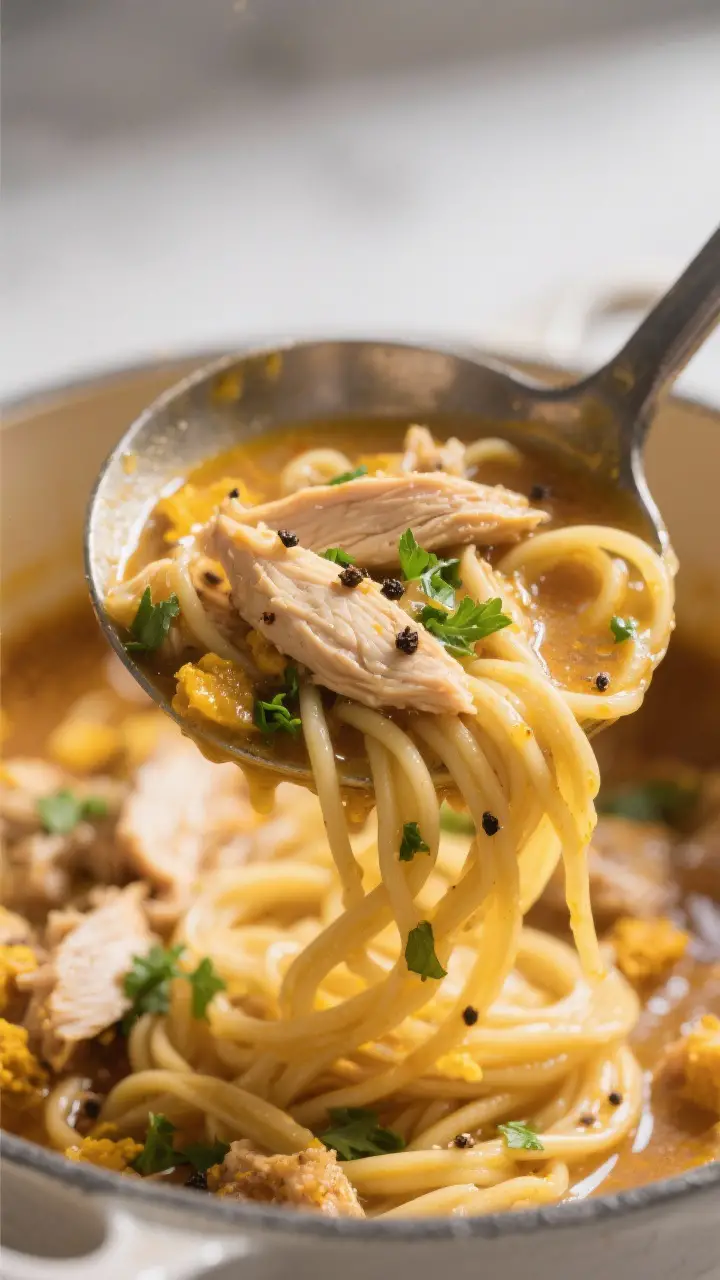
- Cook the noodles: Bring the broth to a steady simmer and add the noodles. Cook according to package directions (usually 8–12 minutes) until just tender.
- Add the chicken back: Stir in the shredded chicken. Let everything simmer together for 3–5 more minutes so the flavors meld.
- Finish and rest: Add chopped parsley.
Adjust salt and pepper. Let the pot sit off heat for 5 minutes to thicken slightly as the noodles absorb broth.
- Serve: Ladle into bowls as is, or spoon generously over mashed potatoes for a classic Midwestern-style plate.
Storage Instructions
- Refrigerator: Cool completely, then store in an airtight container for up to 4 days.
- Freezer: For best texture, freeze the chicken and broth without noodles for up to 3 months. Add fresh noodles when reheating.
- Reheating: Warm gently on the stovetop over medium-low heat.
Add a splash of stock or water if it thickened too much in the fridge.
- Leftover tip: If the noodles keep soaking up broth, stir in extra stock when reheating to bring it back to a soupier consistency.
Why This is Good for You
This bowl is balanced and nourishing. Chicken brings lean protein to keep you full and help with muscle repair. The homemade broth offers minerals and a soothing, hydrating base, especially when you simmer bones or use a whole bird.
Carrots, onions, and celery add fiber and vitamins. You control the salt, the fats, and the add-ins, so it’s easy to keep it wholesome while still feeling indulgent and satisfying.
Pitfalls to Watch Out For
- Boiling too hard: A rolling boil can make the chicken tough and the broth cloudy.
Keep it at a gentle simmer.
- Undersalting the broth: Taste and season in layers. A bland broth means bland noodles.
- Overcooking noodles: Thick egg noodles can go mushy fast. Cook just until tender, then let them finish in the hot broth.
- Skipping the skim: Skim off foam and excess fat early for a cleaner flavor and clearer broth.
- Adding all the veggies too early: If you like firmer carrots and celery, add half at the start for flavor and half when you add the noodles.
Recipe Variations
- Creamy chicken and noodles: Stir in 1/2 cup heavy cream or evaporated milk at the end for a velvety finish.
- Herb-forward: Add dill and extra parsley, or finish with lemon zest for brightness.
- Rotisserie shortcut: Use a store-bought rotisserie chicken and boxed stock.
Simmer the carcass in the stock for 20 minutes to boost flavor.
- Vegetable boost: Add peas, corn, or chopped mushrooms in the last 5 minutes of cooking.
- Homemade noodles: Mix 2 cups flour, 3 large eggs, 1/2 teaspoon salt, and 1 tablespoon water as needed. Knead, rest, roll thin, and cut into thick strips. Dry briefly and cook directly in the broth.
- Gluten-free: Use gluten-free egg noodles and thicken with cornstarch slurry instead of flour.
- Slow cooker method: Add chicken, aromatics, and stock to a slow cooker on Low for 6–7 hours.
Shred chicken, add noodles on High for 20–30 minutes, then finish seasoning.
FAQ
Can I use boneless, skinless chicken?
Yes, but you’ll lose some richness. If you use boneless pieces, add a teaspoon of bouillon or a splash of concentrated stock to deepen the flavor.
How can I prevent the noodles from getting soggy?
Cook them just to al dente and let them sit a few minutes off heat. For leftovers, store noodles separately when possible and combine when reheating.
What’s the best noodle type for this?
Thick, homestyle egg noodles hold up best.
If you can find frozen “grandma-style” noodles, they’re excellent for that classic chewy texture.
Can I make this ahead?
Absolutely. The flavor improves overnight. Reheat gently and add a splash of stock if it has thickened too much in the fridge.
Is there a way to make the broth extra golden?
A pinch of turmeric or simmering the chicken with onion skins (well rinsed) adds a warm color.
Browning the chicken lightly before simmering also deepens both color and flavor.
What should I serve with it?
Mashed potatoes are a traditional pairing. Buttered peas, a crisp green salad, or warm crusty bread also round out the meal nicely.
Can I use turkey instead of chicken?
Yes. Turkey drumsticks or leftover roast turkey work well.
Simmer the bones to build a full-flavored broth, then add shredded meat and noodles.
How do I make it dairy-free?
Skip the butter and flour. If you want a thicker broth, use a cornstarch slurry whisked into simmering broth instead. Finish with olive oil and fresh herbs.
Final Thoughts
Old fashioned chicken and noodles is simple food done right.
It’s the kind of recipe you make once and keep making, because it always comes through—on busy weeknights, on cold Sundays, or whenever you need a steady, comforting bowl. Keep the method gentle, season with care, and let time do the work. You’ll end up with something warm, generous, and unforgettable.
Printable Recipe Card
Want just the essential recipe details without scrolling through the article? Get our printable recipe card with just the ingredients and instructions.