
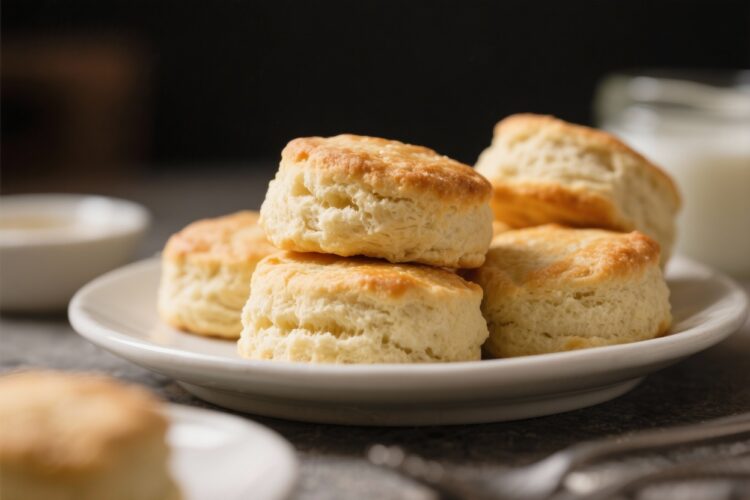
There’s something special about a warm biscuit fresh from the oven. The steam lifts off as you split it open, and the crumb is soft but sturdy enough to hold butter and jam. These old fashioned buttermilk biscuits are simple, familiar, and deeply satisfying.
They’re the kind of recipe you’ll make once and then keep in your back pocket for weekends and holidays. No fancy equipment, no tricky steps—just a few smart techniques that get you towering, flaky layers every time.
What Makes This Special
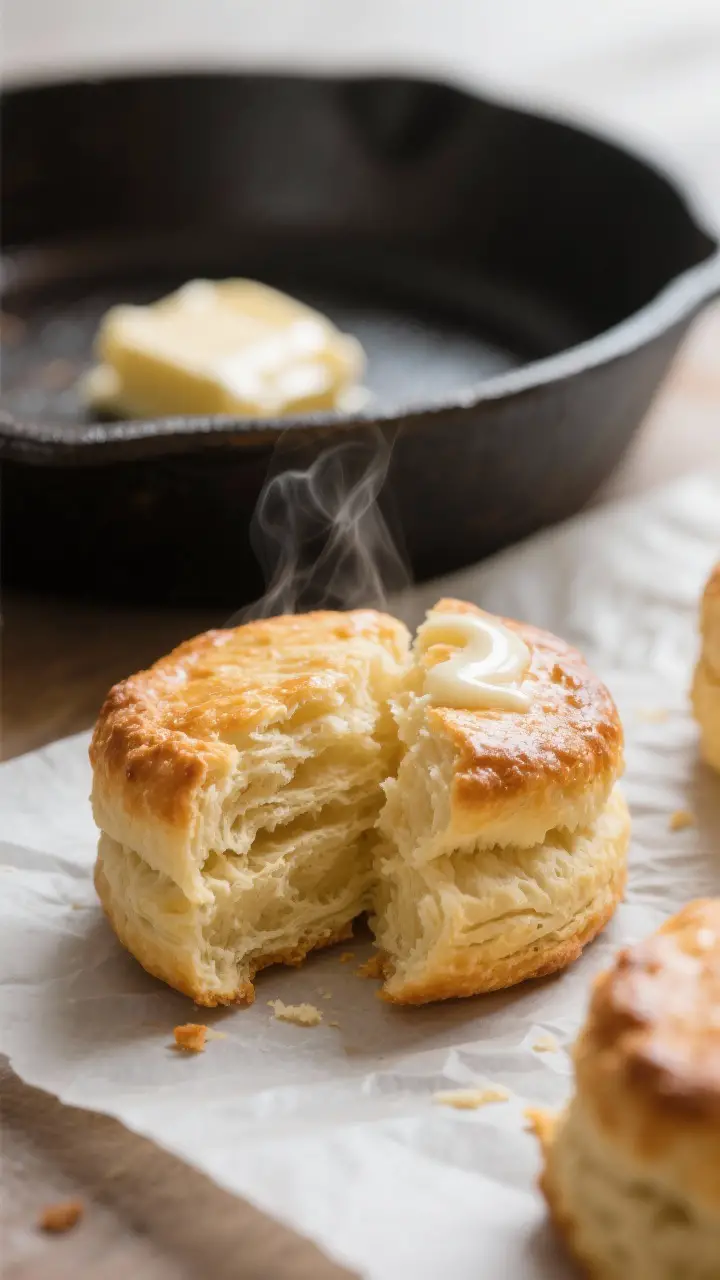
These biscuits deliver that classic bakery-style rise with a soft, buttery interior and crisp golden tops. They’re made with cold butter and tangy buttermilk for great flavor and texture.
The dough is handled gently to keep it tender—not tough—and a quick fold technique helps create those signature layers. Best of all, they bake in under 20 minutes, so you can have fresh biscuits on the table fast.
Shopping List
- All-purpose flour – 2 1/2 cups (plus a bit for dusting)
- Baking powder – 1 tablespoon
- Baking soda – 1/2 teaspoon
- Kosher salt – 1 teaspoon (or 3/4 teaspoon fine salt)
- Granulated sugar – 1 tablespoon (optional, for a hint of sweetness)
- Unsalted butter – 1/2 cup (1 stick), very cold
- Buttermilk – 1 cup, cold (plus 1–2 tablespoons more if needed)
- Heavy cream or buttermilk for brushing – 2 tablespoons (optional)
How to Make It
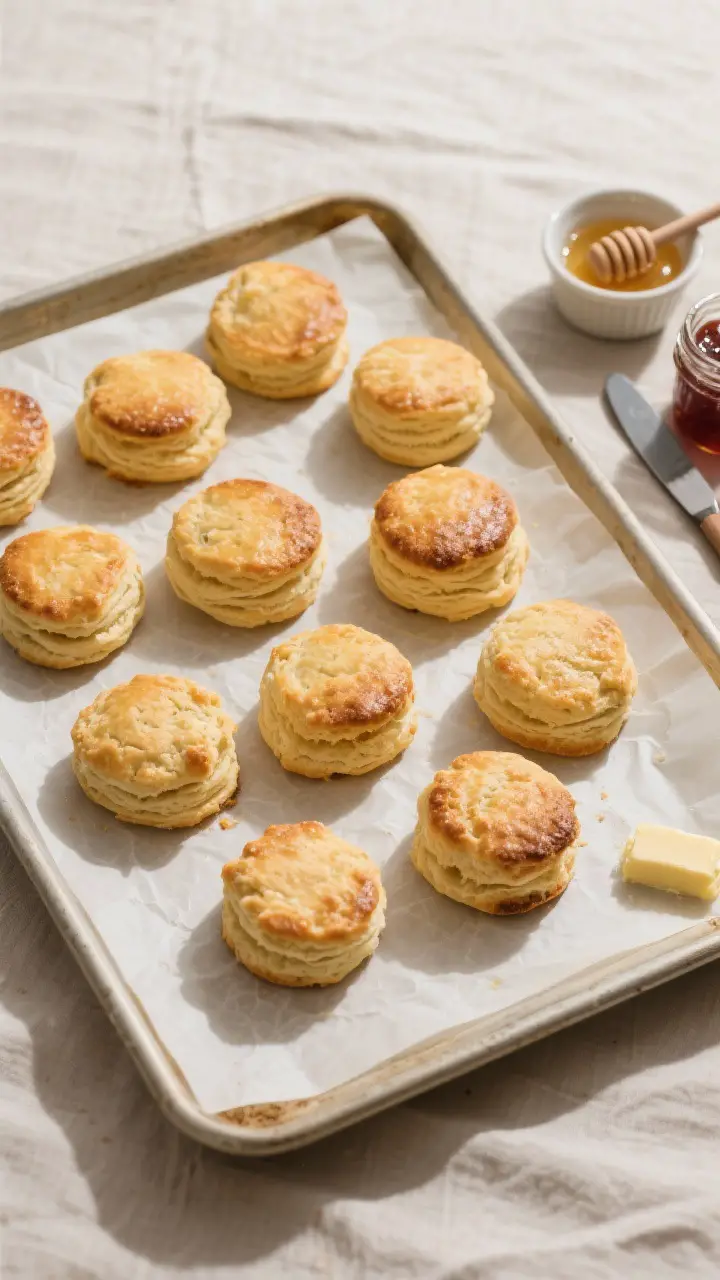
- Preheat and prep the pan. Heat your oven to 450°F (232°C). Line a baking sheet with parchment paper or lightly grease a cast-iron skillet.
- Whisk the dry ingredients. In a large bowl, whisk flour, baking powder, baking soda, salt, and sugar (if using) until well combined.
- Cut in the butter. Grate the cold butter on a box grater or cut it into small cubes.
Toss it into the flour and use your fingertips or a pastry cutter to work it in until you see pea-sized bits. Keep it cold; visible butter means better layers.
- Add the buttermilk. Make a well and pour in 1 cup cold buttermilk. Stir with a fork just until the dough clumps.
If there are dry pockets, sprinkle in another tablespoon or two of buttermilk. The dough should be shaggy, not sticky.
- Turn out and bring together. Tip the dough onto a lightly floured surface. Use your hands to gently gather it into a rough rectangle.
Don’t knead hard—press and fold lightly to help it hold together.
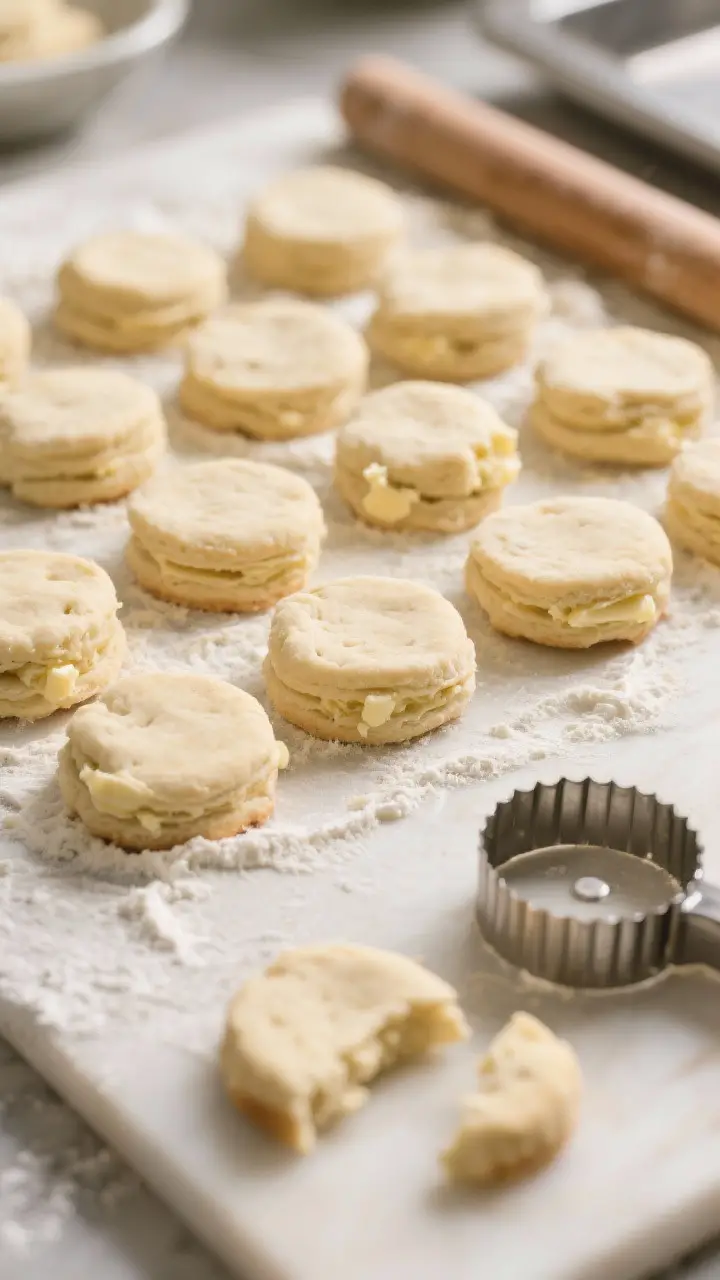
- Fold for layers. Pat the dough into a 3/4-inch thick rectangle. Fold it in thirds like a letter. Turn it 90 degrees, pat it out again, and repeat the fold 2 more times. This quick lamination builds those flaky layers.
- Final pat and cut. Pat to about 1-inch thickness.
Use a 2 1/2-inch round cutter. Press straight down—don’t twist—to help them rise tall. Gather scraps gently, pat, and cut again. You should get 8–10 biscuits.
- Arrange and brush. Place biscuits close together (just touching) on the pan or skillet for softer sides, or spaced apart for crisper edges.
Brush tops with cream or buttermilk for a golden finish.
- Bake hot and fast. Bake 12–16 minutes, until tall and deeply golden on top with crisp edges. If your oven runs cool, give them another minute or two.
- Serve warm. Let cool 5 minutes. Split and serve with butter, honey, jam, or sausage gravy.
They’re best the day they’re baked.
Keeping It Fresh
Biscuits are at their best within a few hours, but you can keep them for up to 2 days in an airtight container at room temperature. Reheat in a 350°F (177°C) oven for 5–8 minutes to bring back the crisp exterior.
For longer storage, freeze baked biscuits once cooled. Reheat from frozen at 350°F for 10–12 minutes.
You can also freeze unbaked biscuits: place cut dough on a sheet pan until solid, then bag and freeze up to 2 months. Bake from frozen at 450°F, adding 2–3 minutes to the bake time.
Benefits of This Recipe
- Reliable rise: The baking powder and soda combo gives lift and a tender crumb.
- Great flavor: Buttermilk adds gentle tang that balances the butter richness.
- Quick to make: From mixing bowl to table in about 30 minutes.
- Flexible: Easy to scale up and forgiving with simple substitutions.
- Versatile: Works for breakfast, brunch, or to soak up stews and gravies.
What Not to Do
- Don’t let the butter soften. Warm butter melts into the flour, and you lose layers.
- Don’t overmix the dough. Overworking develops gluten and makes biscuits tough.
- Don’t twist the cutter. Twisting seals the edges and blocks the rise.
- Don’t skip the high heat. A hot oven sets the structure quickly and encourages lift.
- Don’t measure loosely. Use proper measurements; too much flour leads to dry biscuits.
Alternatives
- No buttermilk? Use 1 cup milk minus 1 tablespoon, plus 1 tablespoon lemon juice or white vinegar. Let sit 5 minutes to thicken.
- Self-rising flour version: Use 2 1/2 cups self-rising flour and omit baking powder, baking soda, and salt. Proceed as usual.
- Cheddar and chive: Fold in 1 cup shredded sharp cheddar and 2 tablespoons chopped chives before adding buttermilk.
- Whole wheat boost: Swap 1 cup of the all-purpose flour for white whole wheat.
Add an extra tablespoon of buttermilk if needed.
- Butter and shortening combo: Use half butter and half cold shortening for extra tenderness and height.
- Dairy-free option: Use plant butter and a thick, unsweetened non-dairy milk soured with lemon juice. Results will be slightly different but still tasty.
FAQ
Why didn’t my biscuits rise?
Likely culprits are warm butter, overworked dough, or twisting the cutter. Also check that your baking powder is fresh; it should bubble when stirred into hot water.
Can I make the dough ahead?
Yes.
Cut biscuits can be refrigerated for a few hours, covered, or frozen for longer. Bake straight from the fridge or freezer and add a minute or two to the timing.
How do I get taller layers?
Keep ingredients cold, use the fold technique, and cut straight down. Placing biscuits close together also helps them push upward rather than outward.
Can I use salted butter?
Yes, but reduce the added salt slightly.
Start with 1/2 teaspoon and adjust to taste next time.
What if my dough is too sticky?
Sprinkle on a bit more flour while patting it out, just enough to handle. Avoid adding too much or the biscuits will turn dense.
How thick should I cut the dough?
About 1 inch thick gives a good rise with a tender center. Thinner dough makes flatter biscuits that cook faster.
Do I need a biscuit cutter?
No.
A sharp knife or bench scraper works for square biscuits. Just make clean, straight cuts for the best lift.
Can I bake these in a cast-iron skillet?
Absolutely. A hot, lightly greased skillet gives great browning and soft sides if biscuits are touching.
In Conclusion
Old fashioned buttermilk biscuits are all about simple ingredients and careful, unfussy technique.
Keep everything cold, handle the dough gently, and bake hot. You’ll get tall, flaky biscuits with a soft, buttery crumb every time. Serve them warm and watch them disappear—no special occasion required.