
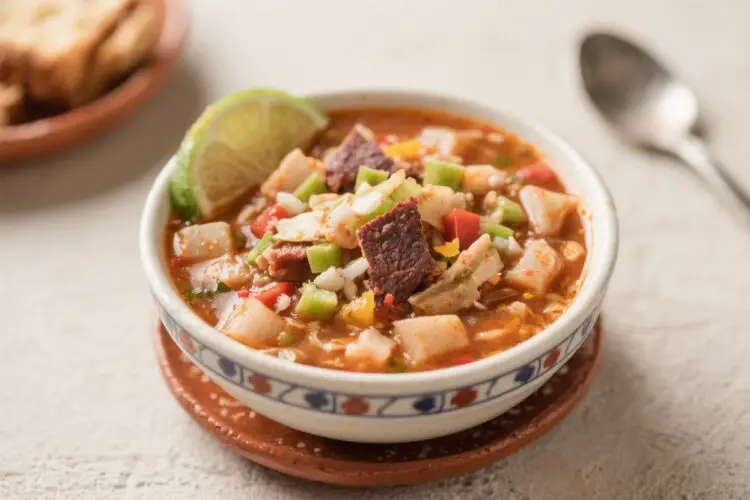
Posole is New Mexico’s winter comfort in a bowl: tender pork, toothsome hominy, and a bold red chile broth that warms you from the inside out. It’s simple, hearty, and layered with the earthy flavor that only real New Mexico dried red chiles can bring. If you’ve never made posole, this version keeps it straightforward without losing tradition.
Set aside a lazy afternoon, let the pot do the work, and you’ll have a pot of stew that tastes even better the next day.
What Makes This Recipe So Good
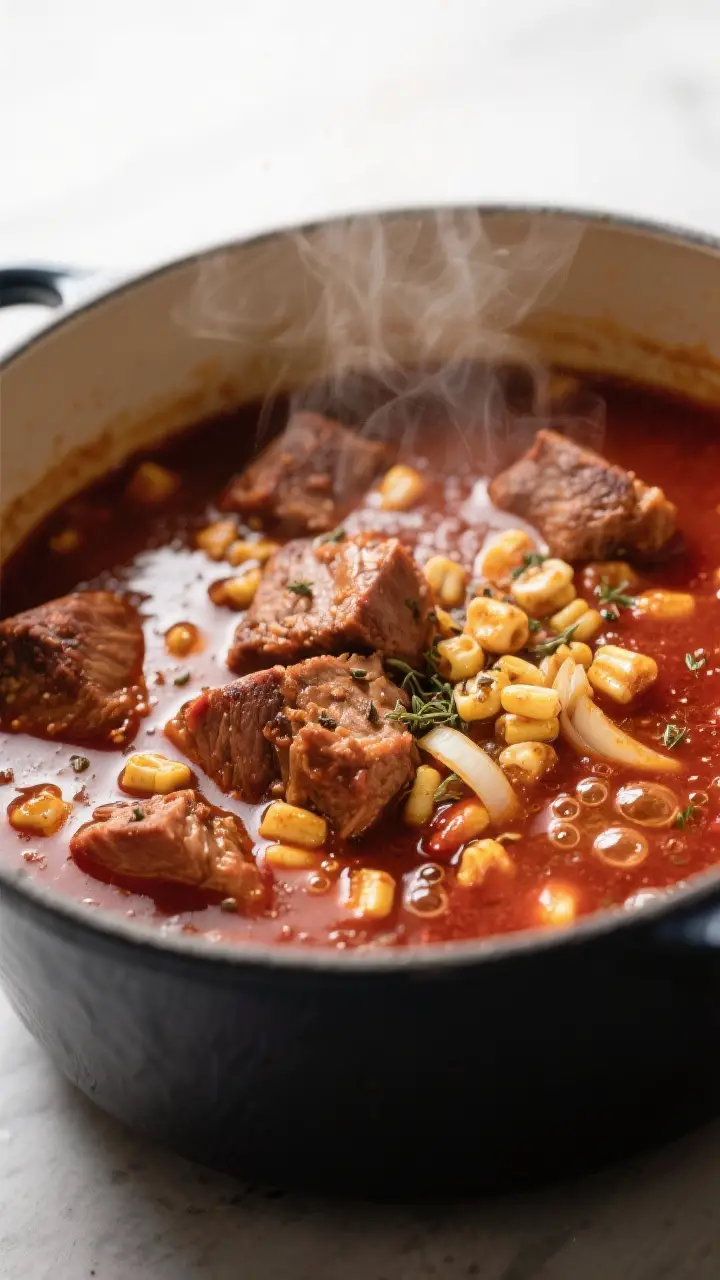
- Classic New Mexico flavor: The stew relies on dried red chiles for a clean, deep heat that’s more about flavor than burn.
- Comforting texture: Hominy adds a satisfying chew and soaks up the chile broth beautifully.
- One-pot friendly: Everything simmers together, and the aroma alone makes the wait worthwhile.
- Flexible heat level: You can control the chile intensity by choosing milder chiles or thinning the puree.
- Meal prep gold: Posole tastes even better the next day, and it freezes well for easy dinners later.
Shopping List
- Pork shoulder (pork butt), 2–2.5 pounds, trimmed and cut into 1-inch cubes
- Dried New Mexico red chiles, 8–10 pods (or a mix of New Mexico and guajillo)
- Hominy: 2 cans (25 oz each) white hominy, drained and rinsed; or 3 cups cooked hominy
- Yellow onion, 1 large, diced
- Garlic, 5–6 cloves, minced
- Chicken or pork stock, 6–7 cups (low sodium preferred)
- Oregano (Mexican if possible), 1–2 teaspoons
- Cumin, 1 teaspoon
- Bay leaves, 2
- Salt and freshly ground black pepper
- Neutral oil, 1–2 tablespoons
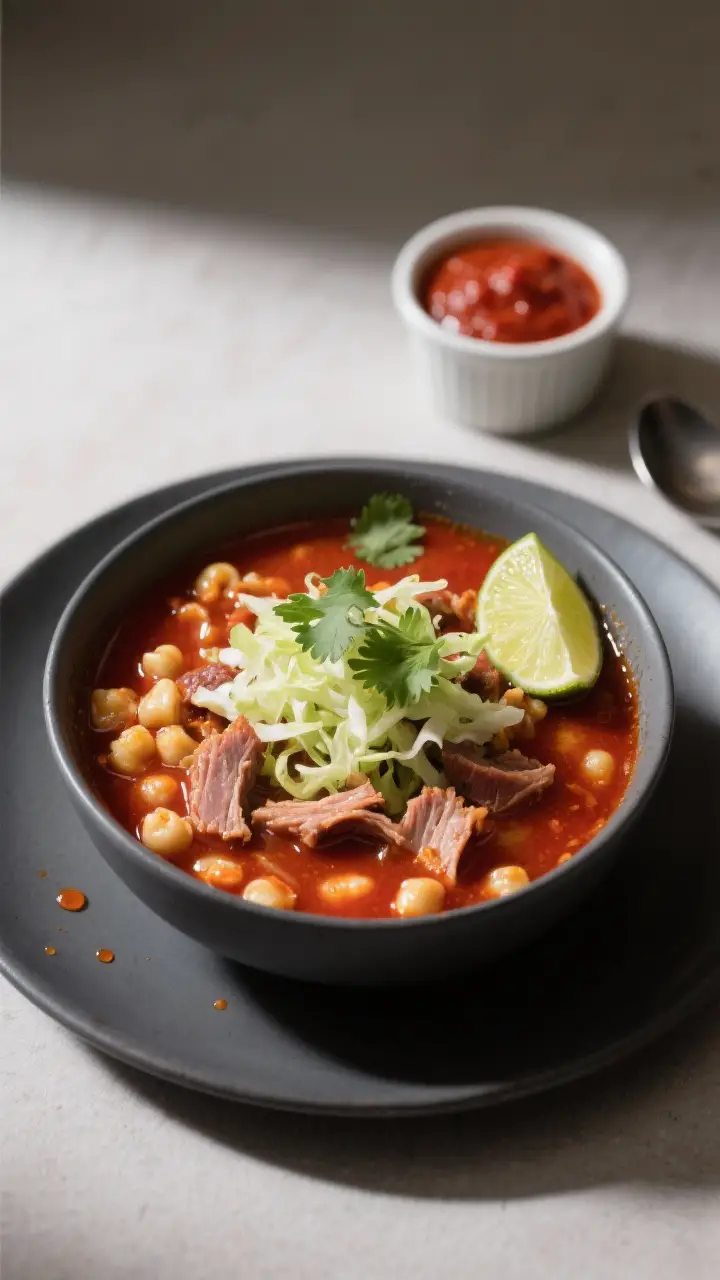
- Optional garnishes: chopped white onion, sliced radishes, lime wedges, chopped cilantro, shredded cabbage, and warm tortillas
Instructions
- Prep the chiles: Remove stems and most seeds from the dried chiles. Tear into flat pieces. Rinse briefly to remove dust.
- Toast and soften: In a dry skillet over medium heat, toast chile pieces 20–30 seconds per side until fragrant, not blackened.
Transfer to a bowl and cover with hot water. Soak 20 minutes until pliable.
- Blend the chile sauce: Drain the chiles, reserving some soaking liquid. Blend chiles with 1 cup stock (or soaking liquid), 2 cloves garlic, and a pinch of salt until very smooth.
Add more liquid if needed to get a pourable puree. Set aside.
- Brown the pork: Pat pork dry and season with salt and pepper. Warm oil in a large heavy pot over medium-high heat.
Brown pork in batches, 3–4 minutes per side, then transfer to a plate.
- Build the base: Lower heat to medium. Add diced onion with a pinch of salt and cook 5–6 minutes until translucent. Stir in remaining garlic and cook 30 seconds.
- Season and deglaze: Add cumin and oregano; toast 30 seconds.
Pour in a splash of stock and scrape up browned bits from the bottom.
- Add liquids and simmer: Return pork to the pot with any juices. Stir in the chile puree, remaining stock, and bay leaves. Bring to a gentle boil, then reduce to a low simmer.
Cover partially and cook 60–75 minutes, stirring occasionally, until pork is tender.
- Add hominy: Stir in drained hominy. Simmer another 20–30 minutes so the flavors meld and the broth thickens slightly. Add a bit more stock if it gets too thick.
- Taste and adjust: Remove bay leaves.
Season with salt and pepper. If it’s too intense, add a splash of stock; if you want more kick, whisk in a little extra chile puree or a pinch of red chile powder.
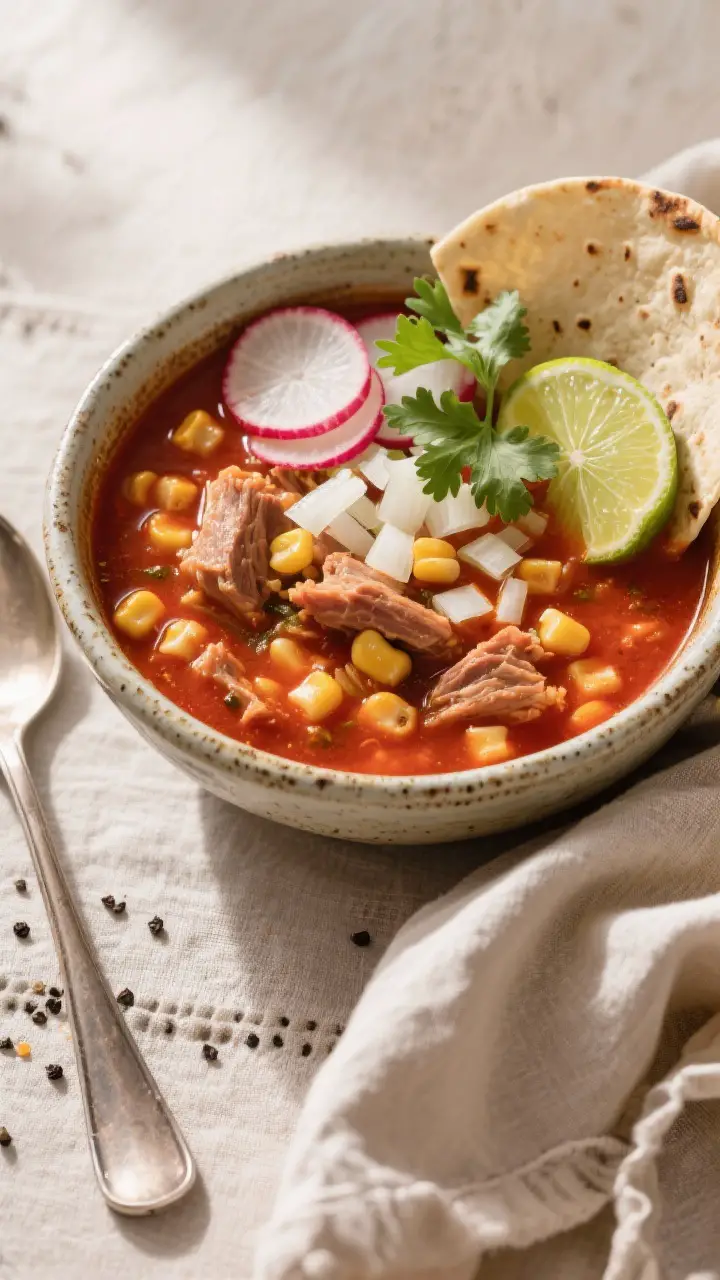
- Garnish and serve: Ladle into bowls and top with chopped onion, radishes, cilantro, and a squeeze of lime. Serve with warm tortillas or crusty bread.
Storage Instructions
- Refrigerator: Cool completely, then store in airtight containers up to 4 days.
The flavors deepen by day two.
- Freezer: Portion into freezer-safe containers and freeze up to 3 months. Thaw overnight in the fridge.
- Reheating: Warm gently on the stove over medium-low heat. Add a splash of stock or water to loosen the broth as needed.
Health Benefits
- Protein-rich: Pork shoulder provides steady, satisfying protein that helps keep you full.
- Fiber from hominy: Hominy offers fiber and complex carbohydrates for long-lasting energy.
- Micronutrients from chiles: Dried red chiles bring antioxidants like vitamin A and compounds linked to heart health.
- Customizable sodium and fat: Using low-sodium stock and trimming the pork lets you control salt and saturated fat.
- Gluten-free by nature: Posole is naturally gluten-free when made with simple, whole ingredients.
Pitfalls to Watch Out For
- Burning the chiles: Over-toasted chiles turn bitter.
Keep them moving and pull them as soon as they’re fragrant.
- Skipping the puree step: A smooth chile puree gives body and even heat. Strain if your blender isn’t powerful.
- Under-seasoning: Posole needs salt at the end to make the chile and pork pop. Taste right before serving.
- Rushing the simmer: Pork shoulder rewards patience.
Keep the heat low and give it time to get tender.
- Overcrowding while browning: Sear in batches to develop flavor; steamed pork won’t deliver the same depth.
Variations You Can Try
- Chicken posole: Swap pork for 2 pounds boneless, skinless chicken thighs. Simmer until just cooked, then shred and return to the pot.
- Posole rojo vs. verde: This is rojo (red) with dried red chiles. For verde, blend roasted tomatillos, green chiles, cilantro, and broth instead of red chile puree.
- Spice blends: Add a pinch of smoked paprika or a small piece of cinnamon stick for a subtle background note.
- Vegetarian version: Use vegetable stock and add meaty mushrooms, pinto beans, or jackfruit.
A splash of soy sauce or miso can boost umami.
- Different chiles: Mix New Mexico with guajillo for sweetness or add a little ancho for a richer, chocolatey undertone.
FAQ
Can I use canned red enchilada sauce instead of dried chiles?
Yes, in a pinch. Choose a high-quality, low-sodium sauce and use about 2 cups. The flavor won’t be as clean or robust as freshly blended dried chiles, but it will still be tasty.
What’s the difference between hominy and regular corn?
Hominy is corn that’s been nixtamalized—soaked in an alkaline solution—which changes its texture and flavor.
It becomes plumper, chewier, and more absorbent, which makes it perfect for stews like posole.
Do I need to soak dried hominy if I use it instead of canned?
Yes. Soak dried hominy overnight, then simmer in salted water 1.5–2 hours until tender before adding to the stew. Cook it separately so you can control texture and salt.
How spicy is New Mexico posole?
It has more warmth than heat.
New Mexico red chiles are generally mild to medium. You can reduce seeds and pith for less heat or blend in an extra pod or two for more kick.
Can I make this in a slow cooker?
Absolutely. Brown the pork and sauté the aromatics on the stove first.
Transfer everything to the slow cooker with the chile puree and stock, and cook on low 6–8 hours. Stir in hominy for the last hour.
What should I serve with posole?
Chopped onions, radishes, cilantro, and lime are classic. Warm flour or corn tortillas, or even a simple cabbage slaw, complement the stew’s richness.
My broth tastes bitter.
What happened?
Most likely the chiles burned during toasting or the seeds were left in. Next time, toast lightly and remove most seeds. You can soften bitterness with a pinch of sugar or a little more stock.
Final Thoughts
New Mexico posole is unfussy, deeply satisfying, and perfect for sharing.
With a short list of ingredients and a little patience, you get a pot full of tender pork, hearty hominy, and a red chile broth that feels both rustic and special. Make it on a weekend, stash leftovers for busy nights, and let the garnishes bring brightness to every bowl. It’s the kind of recipe that earns a permanent spot in your cold-weather rotation.
Printable Recipe Card
Want just the essential recipe details without scrolling through the article? Get our printable recipe card with just the ingredients and instructions.
Pingback: Stop Tossing Money: 10 Genius Ways to Turn Last Night’s Dinner Into 2026’s Best Quick Lunches - Whaley Cooks