
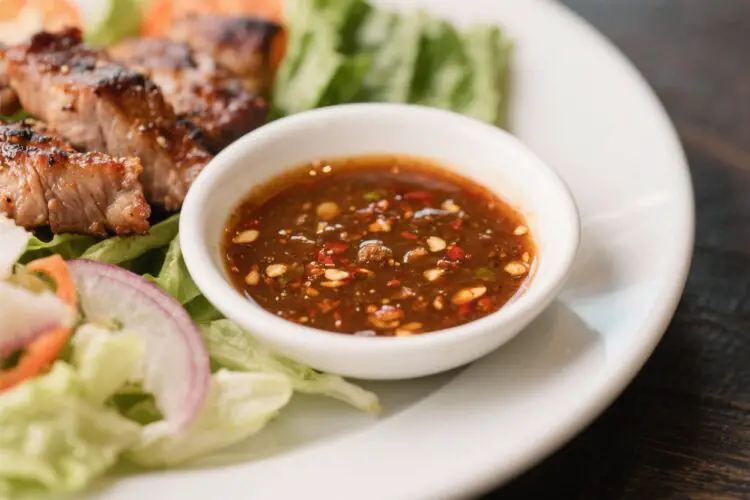
Nam Jim Jaew is the tangy, smoky, and spicy sauce that makes grilled meats taste undeniably Thai. It’s the signature dip for grilled beef or pork salads like “nam tok” and “larb with grilled meat.” The flavor hits all the right notes—sour tamarind, chili heat, savory fish sauce, and a toasty aroma from roasted rice powder. It comes together in minutes and instantly elevates simple grilled dishes.
Once you make it at home, you’ll start serving it with everything from steak to roast vegetables.
What Makes This Special
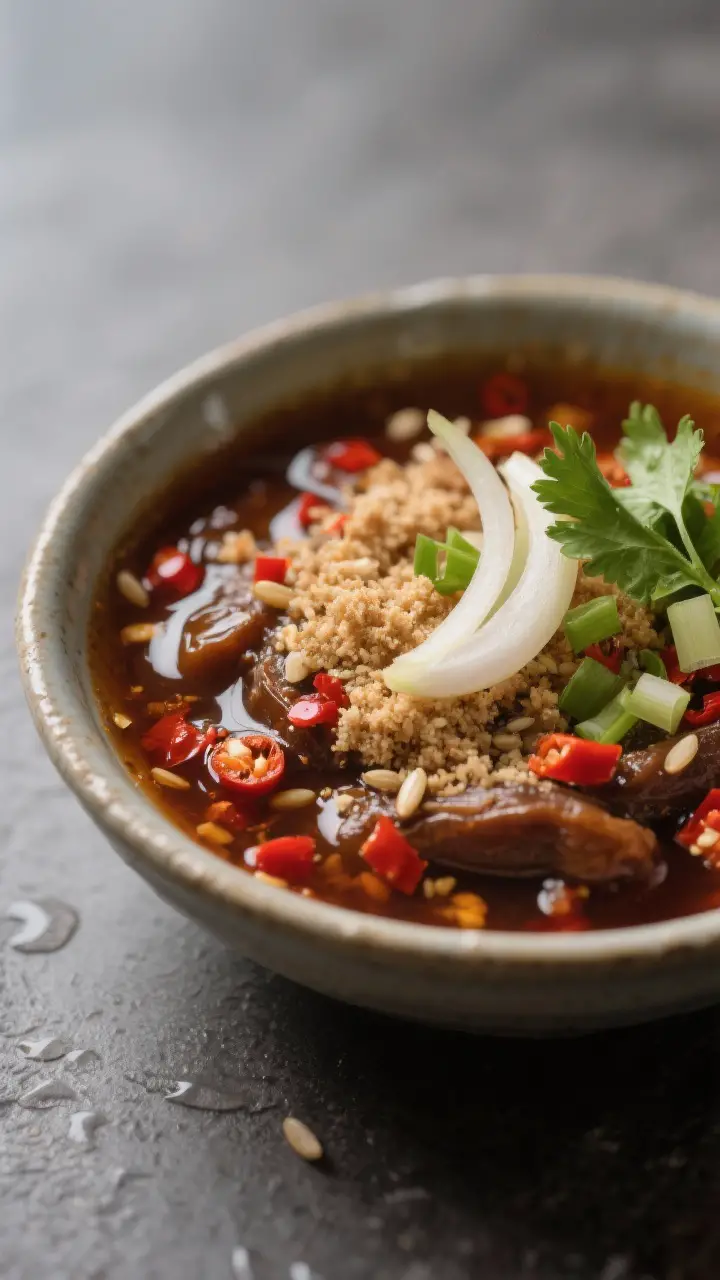
This sauce nails the Thai balance of flavors: sour, salty, spicy, and a whisper of sweet. The secret is roasted rice powder (khao khua), which adds nutty depth and a slightly thick, rustic texture. Tamarind brings a rounded sourness that’s softer and richer than lime juice alone. The result is a versatile dipping sauce that doubles as a dressing for grilled meat salads and a drizzle for BBQ platters.
It’s bold, bright, and addictive—yet incredibly simple.
Shopping List
- Tamarind pulp or concentrate (preferably seedless pulp to mix with water, or a good-quality concentrate)
- Fish sauce (for salty umami)
- Palm sugar (or light brown sugar)
- Lime juice (optional but great for extra brightness)
- Chili flakes (Thai chili flakes preferred; adjust to taste)
- Roasted rice powder (khao khua) (store-bought or homemade)
- Shallot, finely sliced
- Fresh cilantro, chopped
- Green onion, thinly sliced
- Warm water (to adjust consistency)
Optional add-ins: toasted ground chili, a pinch of MSG, or a splash of warm water mixed with tamarind for a lighter sauce.
Instructions
- Make the tamarind base: If using tamarind pulp, soak 2 tablespoons in 3–4 tablespoons warm water for 5 minutes, then mash and strain to get a smooth, thick juice. If using concentrate, start with 1.5 tablespoons and adjust to taste.
- Build the sauce: In a bowl, combine tamarind juice, 2 tablespoons fish sauce, and 1–1.5 teaspoons palm sugar. Stir until the sugar dissolves.
- Add heat: Sprinkle in 1–2 teaspoons Thai chili flakes.
Start small, then taste and add more if needed.
- Layer the aromatics: Stir in 1–2 tablespoons roasted rice powder. Add 1 small shallot (thinly sliced), a handful of chopped cilantro, and 1 green onion (sliced).
- Adjust the balance: Taste for sour-salty-sweet. Add more tamarind for sourness, fish sauce for salt, or sugar if it’s too sharp.
If you like extra brightness, squeeze in 1–2 teaspoons lime juice.
- Set the texture: If the sauce is too thick, loosen with 1–2 teaspoons warm water. If it’s too thin, whisk in a bit more rice powder.
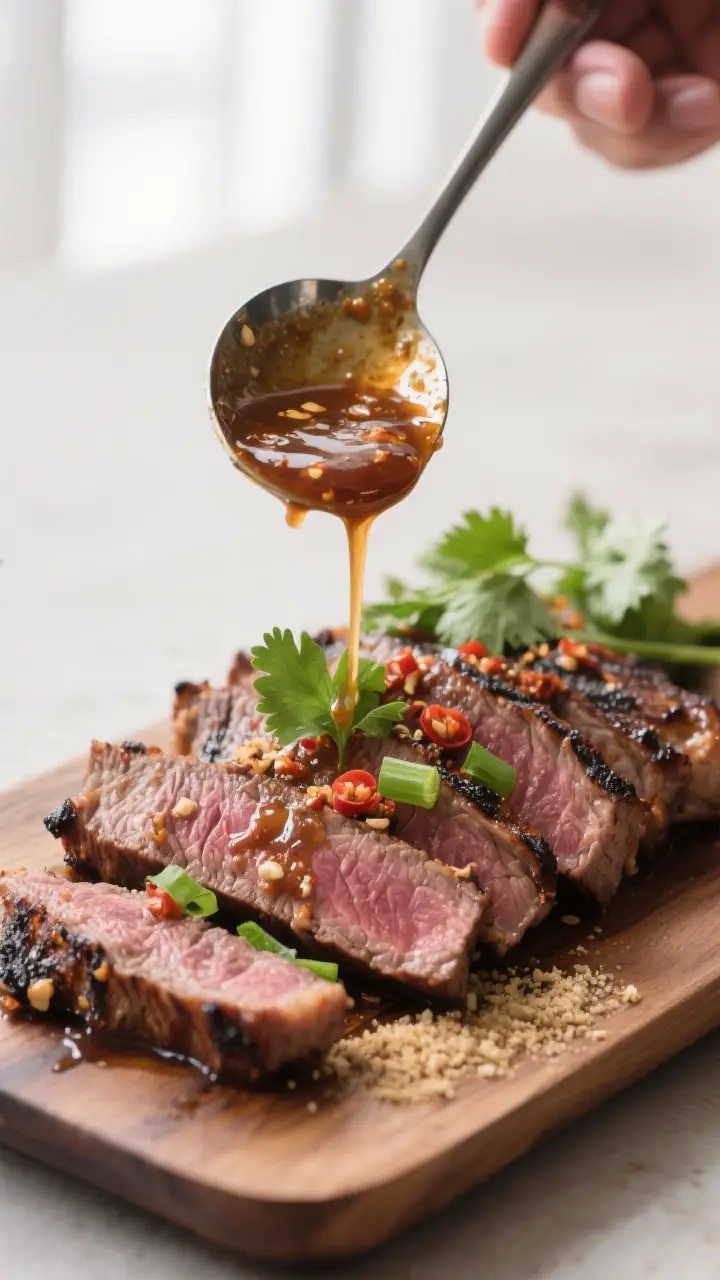
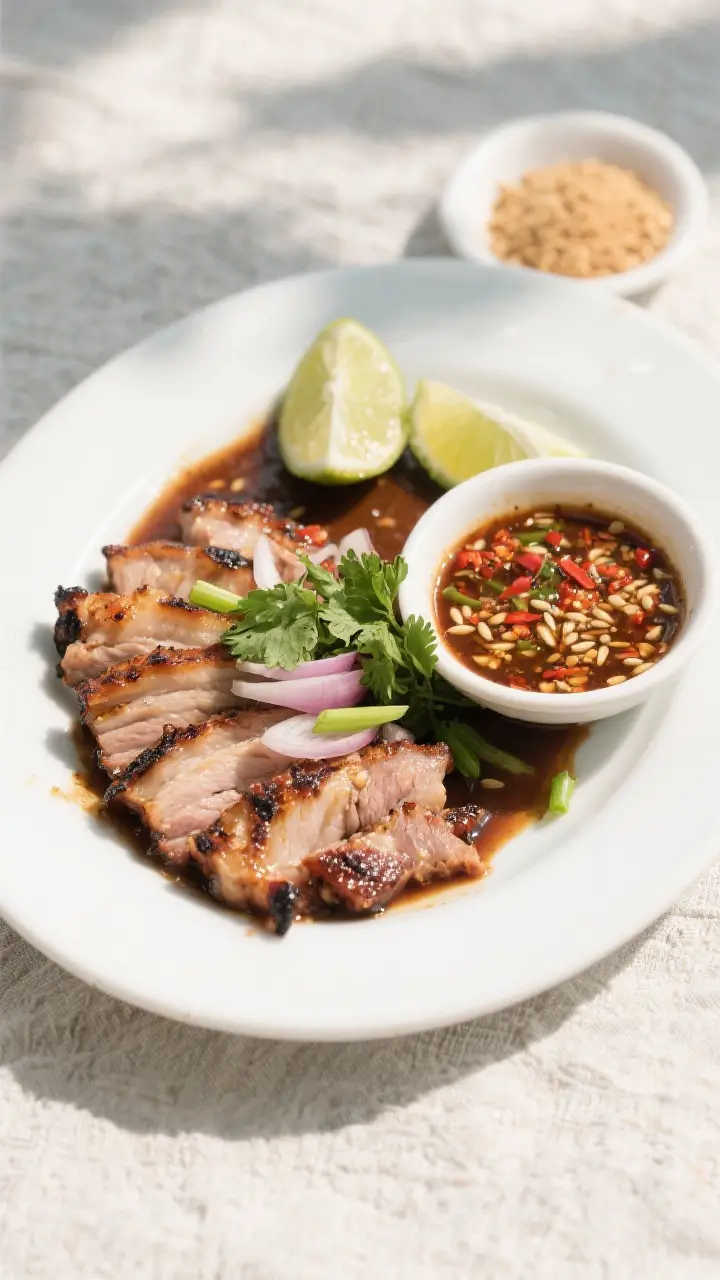
- Serve: Spoon over grilled beef or pork, or serve as a dipping sauce on the side. It should taste bold on its own but perfectly balanced with smoky meat.
How to Store
Keep Nam Jim Jaew in an airtight container in the fridge for up to 3–4 days.
The shallots and herbs will soften, but the flavor remains great. For the best texture, store the sauce base (tamarind, fish sauce, sugar, chili) separately and add herbs and rice powder just before serving. If it thickens in the fridge, whisk in a teaspoon of warm water to loosen.
Benefits of This Recipe
- Fast and flexible: Ready in under 10 minutes and easy to tweak to your taste.
- Authentic flavor: Roasted rice powder and tamarind give classic Northeastern Thai character.
- Versatile: Works as a dip, dressing, or drizzle for grilled meats, seafood, and veggies.
- Make-ahead friendly: Base can be prepped in advance for quick meals.
- Balanced nutrition: Low in fat and adds tons of flavor without heavy sauces.
Common Mistakes to Avoid
- Skipping roasted rice powder: This isn’t just garnish—it adds body, aroma, and authenticity.
- Over-sweetening: Palm sugar should round the edges, not dominate.
Keep sweetness subtle.
- Using only lime: Lime alone makes it sharp. Tamarind adds richer, deeper sourness.
- Not tasting with the meat: The sauce should be punchy by itself but perfect once it hits smoky meat juices.
- Adding herbs too early: They wilt and dull in the fridge. Mix them in right before serving.
Alternatives
- Vegetarian/vegan: Replace fish sauce with soy sauce plus a splash of mushroom seasoning or vegan fish sauce.
Add a pinch of salt if needed.
- No tamarind: Use a mix of lime juice and a small splash of rice vinegar with a bit more sugar. It won’t be the same, but it’s tasty.
- No roasted rice powder: Lightly toast raw sticky rice or jasmine rice in a dry pan until deep golden, then grind to a coarse powder. In a pinch, use finely ground toasted oats for body (flavor will differ).
- Mild version: Reduce chili flakes and add a little extra sugar.
You can also bloom chili in warm water to soften the heat.
- Extra smoky: Add a pinch of smoked chili powder or char your shallots slightly before slicing.
FAQ
What is roasted rice powder and how do I make it?
It’s ground toasted rice that adds nuttiness and texture. Toast 3–4 tablespoons of uncooked sticky rice or jasmine rice in a dry pan over medium heat until deep golden and fragrant, 8–12 minutes. Cool, then grind to a coarse powder using a mortar and pestle or spice grinder.
Can I make it ahead?
Yes.
Mix the base (tamarind, fish sauce, sugar, chili) up to 3 days ahead. Stir in herbs and roasted rice powder just before serving for the best texture and aroma.
How spicy should it be?
It should have a noticeable kick, but you control the heat. Start with 1 teaspoon chili flakes and add more after tasting with the meat.
Thai chili flakes are hotter than generic red pepper flakes.
What meats does it pair with?
Grilled flank steak, ribeye, pork shoulder, pork neck, chicken thighs, and even grilled mushrooms or eggplant. It’s the classic partner for Thai grilled beef salad (nam tok) and pork variations.
Why is my sauce too thick or grainy?
Too much roasted rice powder will thicken quickly. Whisk in warm water a teaspoon at a time.
Grind your rice powder finely but not to dust—aim for a coarse sand texture for the best mouthfeel.
Can I reduce the sodium?
Use a low-sodium fish sauce or dilute with a bit of warm water, then rebalance with tamarind and a touch more sugar. Taste as you go so the flavor stays lively.
Is palm sugar necessary?
No, but it gives a gentle caramel note. Light brown sugar or even white sugar works—use slightly less and adjust to taste.
What if I can’t find tamarind?
Use lime juice plus a splash of rice vinegar and a pinch more sugar.
It won’t be as deep, but it still makes a bright, balanced sauce.
Wrapping Up
Nam Jim Jaew is the kind of sauce that transforms a simple plate of grilled meat into something memorable. With tamarind’s rich tang, the nutty crunch of roasted rice powder, and a clean chili heat, it’s both bold and balanced. Keep a jar of the base in your fridge and add fresh herbs when it’s time to eat.
You’ll reach for it any time the grill is hot—or when leftovers need a lift.