

This is the kind of roast chicken that makes the whole kitchen smell like Sunday. Bright lemon, earthy rosemary, and a touch of garlic work together to create tender meat and crispy skin. It’s simple enough for a weeknight and special enough for guests.
With a handful of fresh ingredients and a hot oven, you’ll have a reliable, crowd-pleasing centerpiece that tastes like you fussed, even if you didn’t.
What Makes This Special
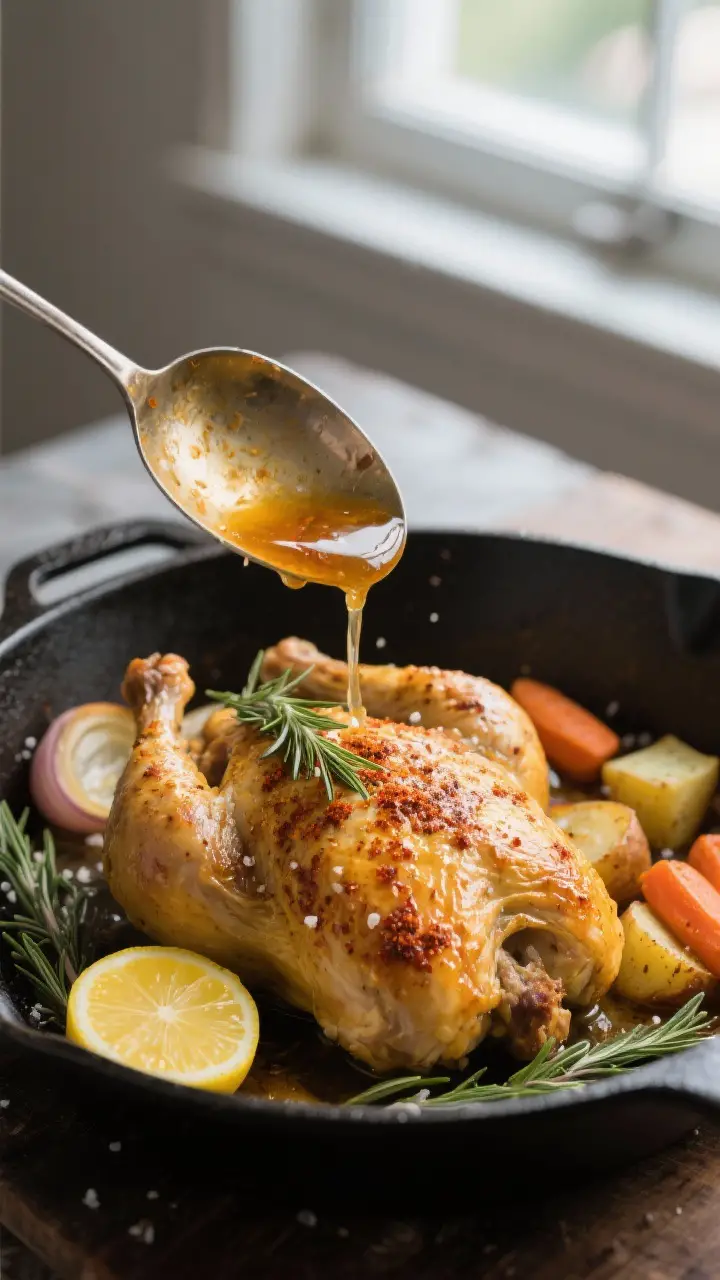
This roasted chicken leans on a classic pairing: lemon and rosemary. The citrus keeps the meat juicy and cuts through the richness, while rosemary adds piney warmth. Garlic and butter take the flavor up a notch, giving you crisp, golden skin and savory pan juices.
Another reason it stands out is how forgiving it is.
You don’t need a fancy pan or advanced technique. A few simple steps and a hot oven do the heavy lifting, making this a great go-to recipe any time you want something dependable and delicious.
Ingredients
- 1 whole chicken (about 4 to 4.5 pounds), patted dry
- 2 lemons (one zested and juiced, one halved)
- 4 to 5 sprigs fresh rosemary
- 6 cloves garlic, smashed
- 3 tablespoons unsalted butter, softened
- 2 tablespoons olive oil
- 1 teaspoon kosher salt, plus more to taste
- 1/2 teaspoon freshly ground black pepper
- 1 teaspoon smoked paprika (optional, for color and depth)
- 1 small onion, quartered
- 1 cup low-sodium chicken broth or water
- Optional: 1 pound small potatoes or carrots, cut into chunks
Instructions
- Preheat and prepare: Preheat the oven to 425°F (220°C). Set a rack in the middle.
Pat the chicken dry thoroughly with paper towels. Dry skin means crisp skin.
- Mix the seasoning: In a small bowl, combine softened butter, olive oil, lemon zest, 1 tablespoon lemon juice, chopped leaves from 2 sprigs of rosemary, garlic (reserve 2 cloves for the cavity), salt, pepper, and smoked paprika if using. Stir into a fragrant paste.
- Season under and over the skin: Gently loosen the skin over the breasts with your fingers.
Rub some of the butter mixture under the skin directly onto the meat. Spread the rest all over the outside of the chicken, including legs and thighs.
- Stuff for aroma: Place the remaining rosemary sprigs, two smashed garlic cloves, and the halved lemon inside the cavity. Add a pinch of salt inside the cavity.
- Truss (optional): Tie the legs together with kitchen twine and tuck the wing tips under.
This helps the chicken cook evenly and look neat.
- Build the roasting base: Scatter onion quarters (and potatoes or carrots if using) in a roasting pan or oven-safe skillet. Pour in the broth or water. Set the chicken on top, breast-side up.
- Roast hot to start: Roast at 425°F for 20 minutes.
This jump-starts browning and helps crisp the skin.
- Finish roasting: Reduce the oven temperature to 375°F (190°C). Continue roasting for 35 to 50 minutes, depending on the size of your chicken. Baste once or twice with the pan juices.
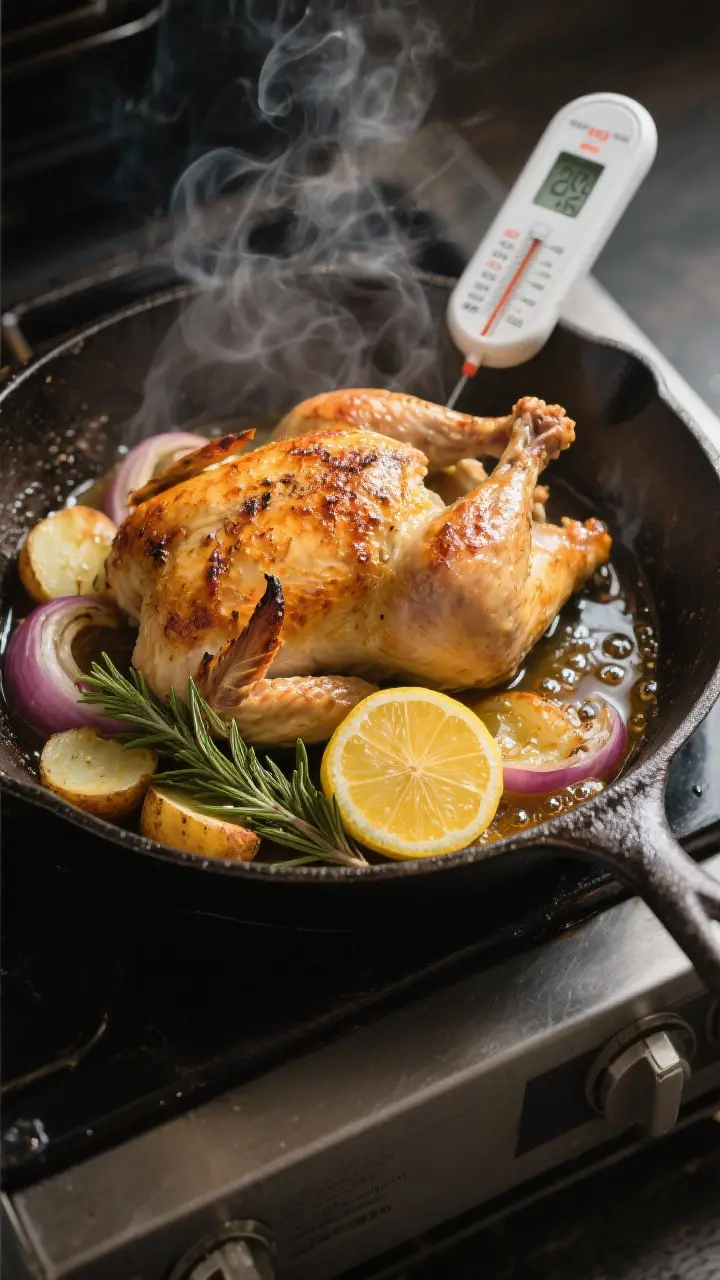
The chicken is done when a thermometer inserted into the thickest part of the thigh reads 165°F (74°C) and the juices run clear.
- Rest and make a quick pan sauce: Transfer the chicken to a cutting board and rest for 10 to 15 minutes. Meanwhile, tilt the pan and spoon off excess fat. Set the pan on the stove over medium heat and simmer the juices for 2 to 3 minutes.
Add a splash of lemon juice if you like it brighter. Taste and adjust salt.
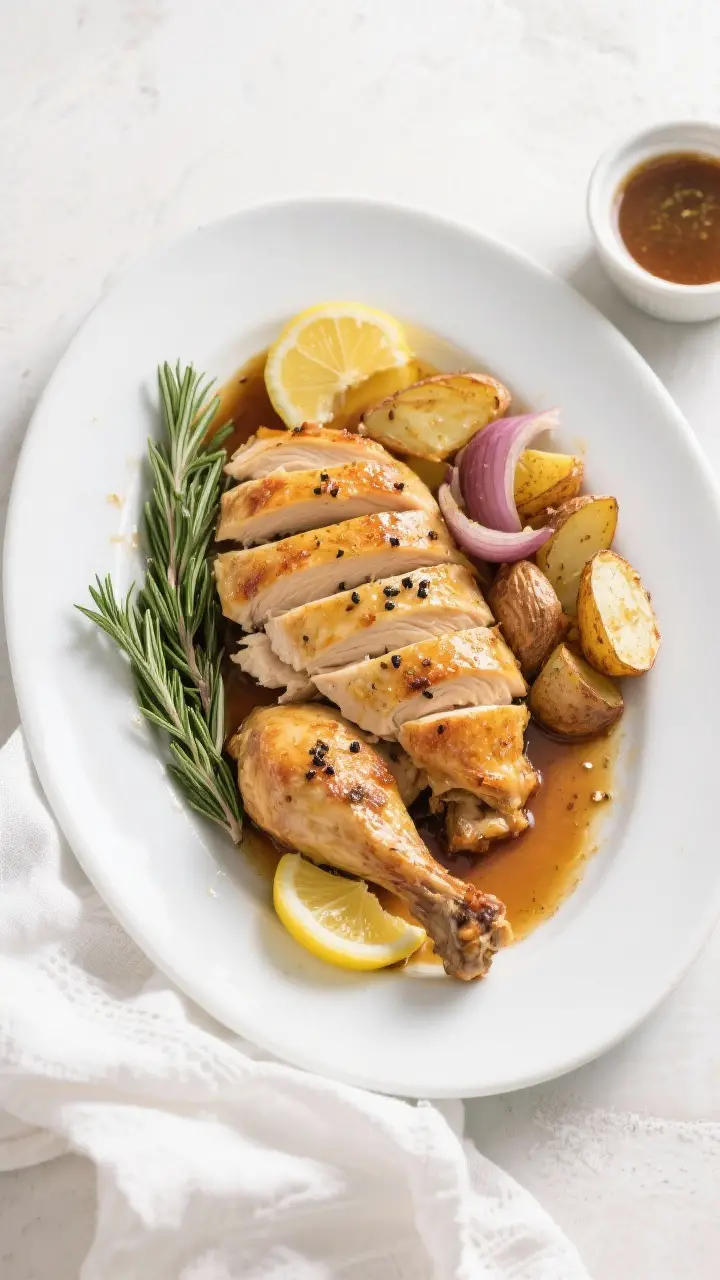
- Carve and serve: Carve the chicken and spoon the pan juices over the top. Serve with the roasted vegetables and lemon wedges.
Storage Instructions
- Refrigerate: Store leftover chicken in an airtight container for up to 4 days.
Keep the pan juices in a separate container if possible.
- Freeze: Shredded or sliced chicken can be frozen for 2 to 3 months. Freeze in small portions for easy meals.
- Reheat: Warm gently in a covered skillet with a splash of broth over low heat, or in a 300°F oven until heated through. Avoid high heat to keep it from drying out.
- Broth bonus: Save the bones to make stock.
Simmer with onion, carrot, celery, and herbs for a flavorful base.
Why This is Good for You
Roast chicken is a solid source of lean protein, especially if you choose white meat or remove the skin when eating leftovers. The rosemary and garlic bring antioxidants and aroma without heavy sauces. Lemon adds brightness and helps you lean on less salt.
If you include the potatoes and carrots, you’ll get fiber and vitamins alongside your protein.
Plus, making a meal at home lets you control the oil, salt, and portion sizes. It’s a balanced, satisfying dinner that fits a wide range of diets.
Common Mistakes to Avoid
- Skipping the pat-dry step: Moisture on the skin prevents browning. Dry the chicken well before seasoning.
- Under-seasoning: A whole chicken needs a generous amount of salt and flavor.
Make sure the seasoning goes under the skin and all over the outside.
- Overcooking: Use a thermometer. Pull the chicken when the thigh hits 165°F. Resting will carry the heat a bit further.
- Skipping the rest: Cutting too soon releases juices onto the board instead of into the meat.
Rest for at least 10 minutes.
- Dry roasting pan: A little liquid in the pan prevents burning and gives you a head start on sauce.
Alternatives
- Herb swap: Try thyme or oregano in place of rosemary, or use a mix of fresh herbs if that’s what you have.
- Citrus twist: Swap lemon for orange or Meyer lemon for a softer, sweeter citrus note.
- Dairy-free: Replace butter with more olive oil for a dairy-free version. Add a pinch of nutritional yeast for savory depth.
- Spice it up: Add red pepper flakes to the seasoning paste or a pinch of cumin for warmth.
- Spatchcock method: For faster, more even cooking, remove the backbone and flatten the chicken. Roast at 425°F for 35 to 45 minutes.
- Bone-in pieces: Use thighs or leg quarters instead of a whole bird.
Roast at 425°F for 35 to 45 minutes, depending on size.
FAQ
Can I use dried rosemary instead of fresh?
Yes. Use about 1 to 1.5 teaspoons of dried rosemary in place of the fresh sprigs. Crush it slightly between your fingers to release more flavor.
How do I keep the breast meat from drying out?
Rub seasoning under the skin, start with high heat for crisping, then reduce the temperature.
Don’t overcook, and let the bird rest. If you want an extra safeguard, tent the breast loosely with foil during the last 15 minutes.
Do I need to baste the chicken?
It helps, but it’s not required. Basting once or twice adds shine and flavor, but opening the oven too often can drop the temperature.
Keep it quick.
What if I don’t have a roasting pan?
An oven-safe skillet or a sturdy baking dish works. If you can, set the chicken on a bed of vegetables or a small rack so air can circulate.
Can I make this ahead?
You can season the chicken up to a day in advance. Keep it uncovered in the fridge to help dry the skin for extra crispiness.
Roast just before serving.
Is it safe to eat if the juices are slightly pink?
Go by temperature, not color. When the thickest part of the thigh reads 165°F, it’s safe to eat, even if the juices have a faint tint near the bone.
How do I use the leftovers?
Shred into salads, grain bowls, or sandwiches. Toss with pasta, fold into tacos with lemony slaw, or add to soup with the pan juices as a base.
Wrapping Up
Lemon Rosemary Roasted Chicken is simple, reliable, and full of fresh flavor.
With basic ingredients and a few small techniques, you get juicy meat, crisp skin, and pan juices you’ll want to pour over everything. Keep this recipe in your regular rotation, and you’ll always have a satisfying dinner that feels both comforting and a little bit special.
Printable Recipe Card
Want just the essential recipe details without scrolling through the article? Get our printable recipe card with just the ingredients and instructions.