
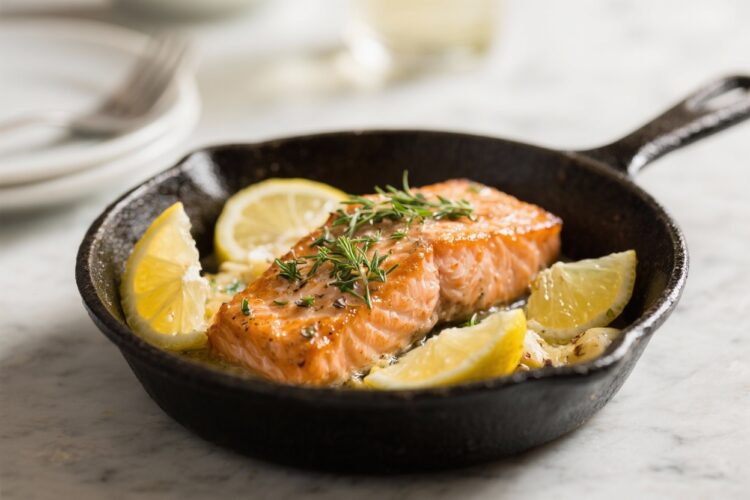
If you love a meal that tastes restaurant-quality without a pile of dishes, this Lemon Herb Salmon Skillet is your new go-to. It’s bright, buttery, and full of fresh herb flavor, but still simple enough for a weeknight. A quick sear gives the salmon crisp edges while a lemony pan sauce ties everything together.
You’ll get tender fish, fragrant herbs, and a sauce that begs for crusty bread or a side of rice. It’s fast, unfussy, and always satisfying.
What Makes This Recipe So Good
- Fast and fuss-free: From prep to plate in about 25 minutes.
- Balanced flavors: Zesty lemon, fresh herbs, and a buttery finish make the salmon pop without overpowering it.
- One-pan cooking: Everything happens in the skillet, so cleanup stays easy.
- Flexible: Works with skin-on or skinless salmon and adapts to different herbs.
- Great texture: A quick sear delivers crispy edges and a moist, flaky center.
Ingredients
- 4 salmon fillets (about 6 ounces each), skin-on or skinless
- 1 tablespoon olive oil
- 2 tablespoons unsalted butter
- 3 garlic cloves, minced
- 1 lemon, zested and juiced (about 2–3 tablespoons juice)
- 1/3 cup low-sodium chicken broth or vegetable broth (or dry white wine)
- 2 tablespoons fresh parsley, chopped
- 1 tablespoon fresh dill, chopped (optional but recommended)
- 1 teaspoon fresh thyme leaves (or 1/2 teaspoon dried)
- 1/4 teaspoon red pepper flakes (optional)
- Salt and freshly ground black pepper, to taste
- Lemon wedges, for serving
Step-by-Step Instructions
- Prep the salmon: Pat the fillets dry with paper towels. Season both sides with salt and pepper.
Dry fish sears better and helps prevent sticking.
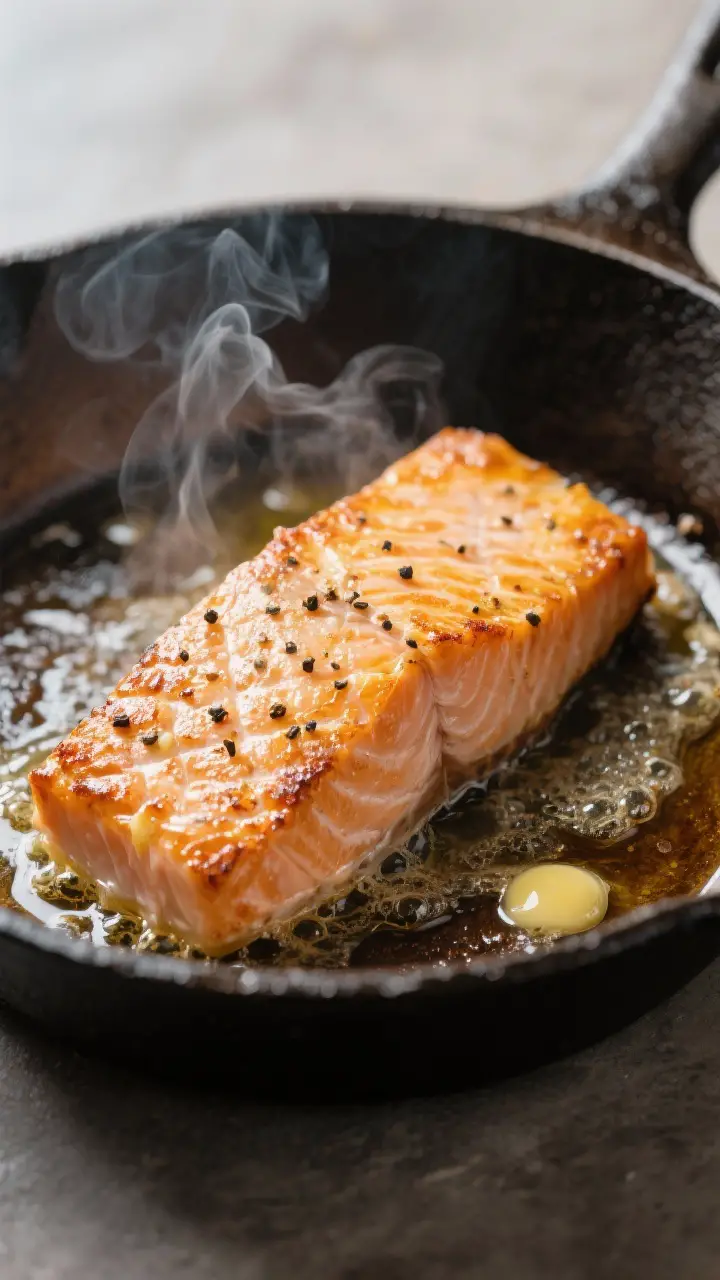
- Heat the skillet: Set a large skillet (stainless steel or cast iron works well) over medium-high heat. Add the olive oil and heat until it shimmers.
- Sear the salmon: Place the salmon in the skillet, presentation side down (skin-side up if using skin-on). Sear without moving until golden, about 3–4 minutes.
Flip and cook another 2–4 minutes, depending on thickness, until just shy of your preferred doneness. Transfer to a plate and tent loosely with foil.
- Build the sauce base: Reduce heat to medium. Add the butter to the skillet.
When melted, stir in the garlic and cook for 30 seconds until fragrant, scraping up browned bits.
- Deglaze: Pour in the broth (or wine) and stir, letting it simmer for 1–2 minutes to reduce slightly.
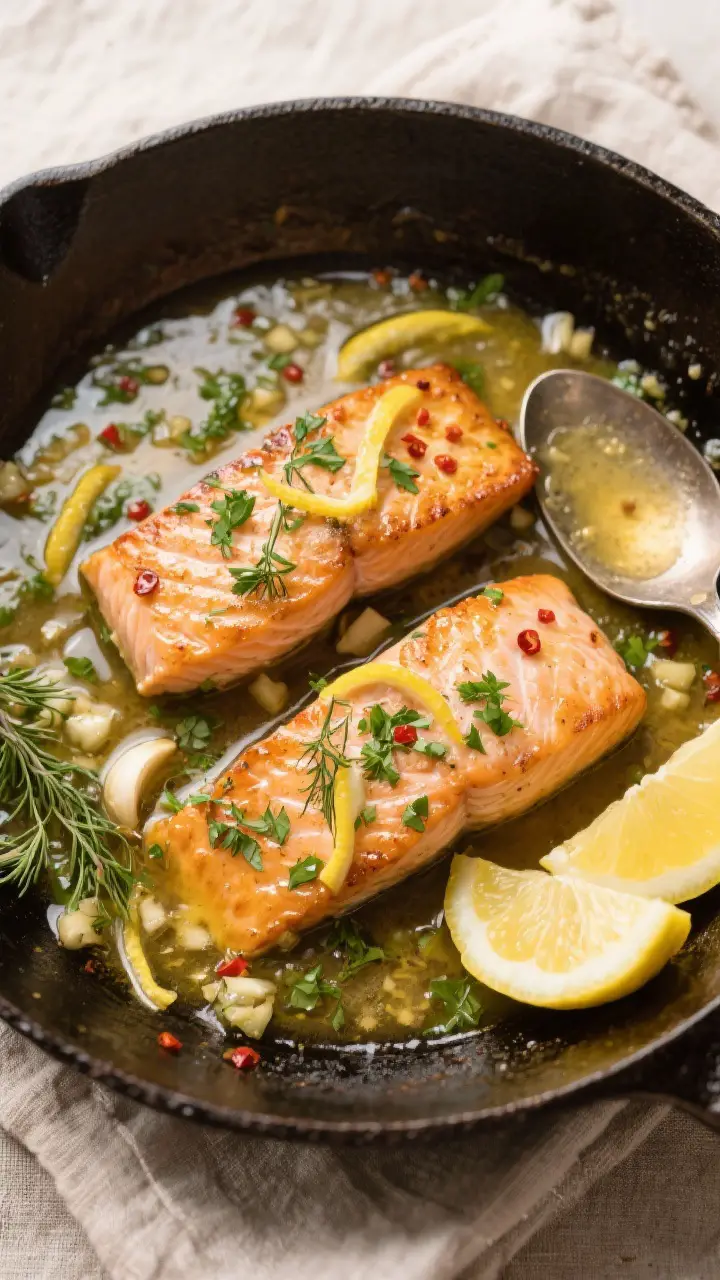
- Add lemon and herbs: Stir in the lemon zest, lemon juice, parsley, dill, thyme, and red pepper flakes if using. Taste and season with a pinch of salt and pepper. The sauce should be bright and lightly buttery.
- Return the salmon: Nestle the fillets back into the skillet, spooning sauce over the top.
Let them warm through for 1–2 minutes. If using skin-on fillets, keep the skin side facing down to stay crisp.
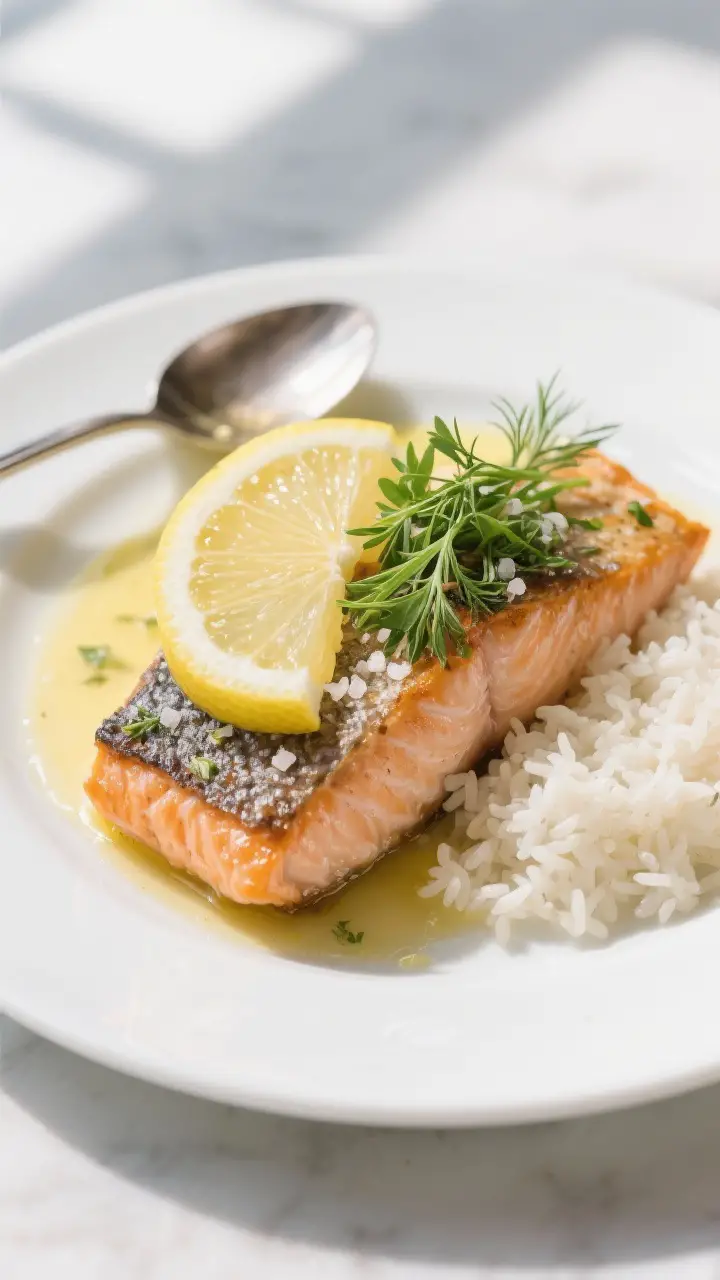
- Finish and serve: Remove from heat. Spoon more sauce over the salmon and serve with lemon wedges.
Pair with steamed rice, roasted potatoes, or a simple salad.
Keeping It Fresh
- Storage: Store leftover salmon in an airtight container in the fridge for up to 2 days. Keep the sauce with it to maintain moisture.
- Reheating: Reheat gently on low in a covered skillet with a splash of broth or water until warmed through. Avoid microwaving on high; it can dry out the fish.
- Freezing: Cooked salmon can be frozen for up to 2 months, but the texture is best fresh.
If freezing, cool completely, wrap tightly, and thaw overnight in the fridge.
- Make-ahead tip: Chop herbs and mince garlic in advance. You can also portion and season the salmon earlier in the day.
Benefits of This Recipe
- Nutrient-dense: Salmon is rich in omega-3s, protein, and B vitamins.
- Quick cooking: Ideal on busy nights when you still want something wholesome.
- Light but satisfying: The lemon-herb sauce adds brightness without heaviness.
- Family-friendly: Mild flavors with simple ingredients, easy to adjust for picky eaters.
- Versatile sides: Pairs with grains, greens, or veggies you already have on hand.
Pitfalls to Watch Out For
- Overcooking: Salmon goes from juicy to dry quickly. Pull it when it flakes easily and is still slightly translucent in the center (about 125–130°F for medium).
- Skipping the pat-dry step: Moisture prevents browning and can cause sticking.
Dry fillets sear best.
- Too much lemon too soon: Adding lemon juice before reducing the broth can taste harsh. Reduce first, then add lemon.
- Cold pan: A properly heated skillet is key to a good sear. Wait for the oil to shimmer.
- Old herbs: Wilted or dull herbs fade in flavor.
Fresh herbs make the sauce shine.
Alternatives
- Different herbs: Swap parsley and dill for basil and chives in summer, or use cilantro and a squeeze of lime for a different twist.
- Dairy-free: Use more olive oil instead of butter, or a vegan butter substitute.
- Wine-forward: Use dry white wine instead of broth for a more aromatic sauce.
- Vegetable add-ins: Toss in halved cherry tomatoes, asparagus tips, or baby spinach during the sauce step for more color and nutrients.
- Different fish: Try trout, cod, or halibut. Adjust cooking time based on thickness.
- Sheet pan version: If you prefer hands-off, roast at 400°F with olive oil, salt, pepper, and lemon slices for 10–12 minutes, then drizzle with herb butter at the end.
FAQ
How do I know when the salmon is done?
The fillet should flake easily with a fork and look slightly translucent in the center. If you use a thermometer, aim for 125–130°F for medium.
It will rise a few degrees as it rests.
Can I use dried herbs instead of fresh?
Yes. Use about one-third the amount of dried herbs compared to fresh. Add dried herbs earlier (with the broth) so they hydrate and mellow.
What if my salmon has the skin on?
Cook it skin-side down after the initial sear.
The skin protects the flesh and can get nicely crisp. You can eat it or slide it off before serving if you prefer.
Is farmed salmon okay for this recipe?
Both farmed and wild work. Wild salmon can be leaner, so watch the cook time closely to avoid dryness.
Farmed tends to be thicker and more forgiving.
Can I make this without garlic?
You can. Replace the garlic with a shallot, finely minced, or skip it and lean on lemon zest and herbs for flavor.
What should I serve with it?
Steamed rice, couscous, orro, roasted potatoes, or crusty bread are great for soaking up the sauce. Add a bright side like arugula salad or sautéed green beans.
How do I prevent the fish from sticking?
Use a hot pan, a bit of oil, and dry fillets.
Once the sear forms, the salmon will release more easily. Avoid moving it too soon.
In Conclusion
This Lemon Herb Salmon Skillet proves that simple ingredients can deliver big flavor. With a quick sear and a fresh, lemony sauce, you get a meal that feels special without extra work.
It’s flexible, reliable, and easy to pair with whatever sides you have. Keep this one in your weeknight rotation, and you’ll have a bright, crowd-pleasing dinner whenever you need it.
Printable Recipe Card
Want just the essential recipe details without scrolling through the article? Get our printable recipe card with just the ingredients and instructions.