
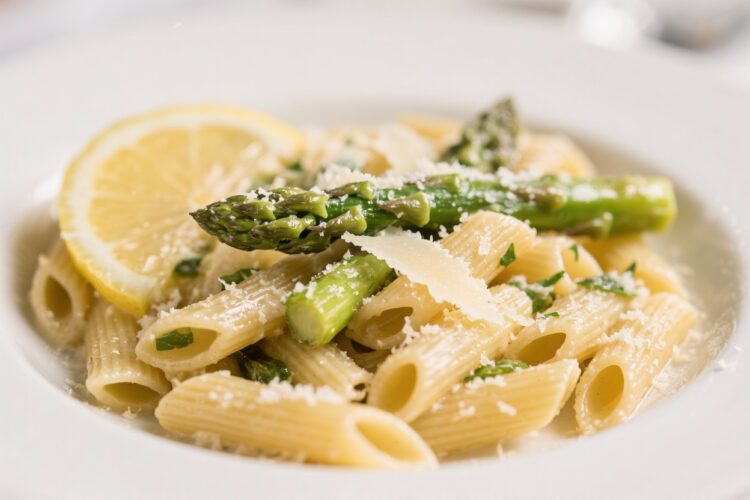
This is the kind of pasta you make when you want something comforting but not heavy. Lemon Asparagus Penne with Parmesan brings springy flavors to your plate with a creamy, silky finish—no cream required. It tastes like sunshine and feels weeknight-easy.
The lemon lifts the dish, the asparagus stays crisp-tender, and the Parmesan ties it all together. If you’re craving simple, fresh, and fast, this one hits the mark.
Why This Recipe Works
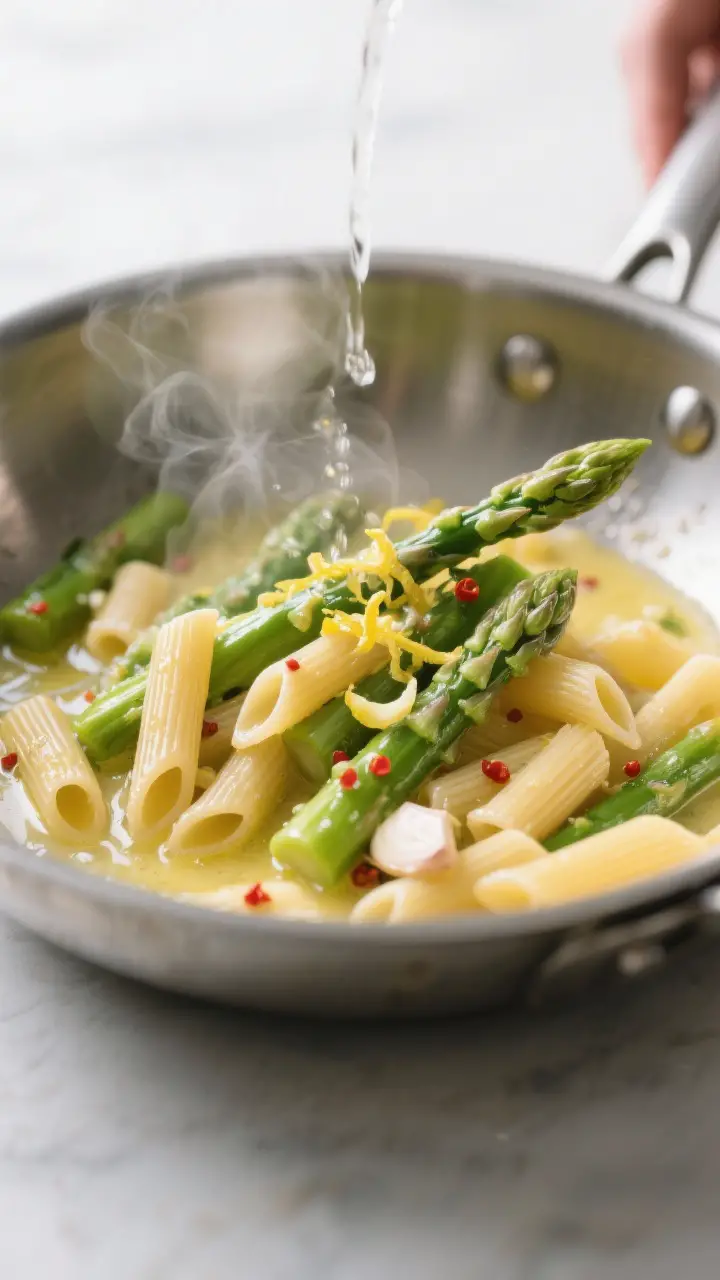
This dish balances richness and brightness. The olive oil, butter, and Parmesan lightly coat the pasta, while the lemon juice and zest bring fresh acidity that keeps it from feeling heavy.
Asparagus cooks quickly, staying crisp-tender for texture and color. A splash of starchy pasta water turns the sauce glossy and helps everything cling to the penne. The result is a satisfying bowl that feels light and flavorful, with just a handful of pantry ingredients.
Ingredients
- 12 ounces penne (or another short pasta like rigatoni or rotini)
- 1 pound asparagus, woody ends trimmed, cut into 1-inch pieces
- 3 tablespoons olive oil
- 2 tablespoons unsalted butter (optional but recommended)
- 3 cloves garlic, thinly sliced or minced
- 1 lemon, zested and juiced (about 1 tablespoon zest and 2–3 tablespoons juice)
- 1/2 cup grated Parmesan (plus more for serving)
- 1/2 teaspoon red pepper flakes (optional)
- Kosher salt and freshly ground black pepper, to taste
- 1/2 cup reserved pasta water (save more just in case)
- Fresh parsley or basil, chopped, for garnish (optional)
How to Make It
- Boil the pasta. Bring a large pot of salted water to a rolling boil.
Add the penne and cook until al dente according to package directions. Reserve at least 1 cup of pasta water before draining.
- Blanch the asparagus. In the last 2 minutes of the pasta’s cook time, add the asparagus pieces to the pot. This saves time and dishes while keeping the asparagus bright and crisp-tender.
Drain both together and set aside.
- Sauté the aromatics. In a large skillet over medium heat, warm the olive oil. Add the butter, then the garlic. Cook for 30–60 seconds until fragrant, not browned.
If using red pepper flakes, add them now.
- Add lemon zest. Sprinkle in the lemon zest and stir for 10–15 seconds to release its oils. This step adds a deeper lemon aroma.
- Build the sauce. Add the cooked penne and asparagus to the skillet. Pour in 1/3 to 1/2 cup of reserved pasta water and toss.
Reduce the heat to medium-low.
- Finish with Parmesan and lemon juice. Off the heat or on very low, add the Parmesan and toss until glossy. Squeeze in lemon juice to taste. Season with salt and plenty of black pepper.
Adjust with more pasta water if it looks dry.
- Taste and tweak. Add more lemon for brightness or Parmesan for richness. If you like a touch of heat, add a pinch more red pepper flakes.
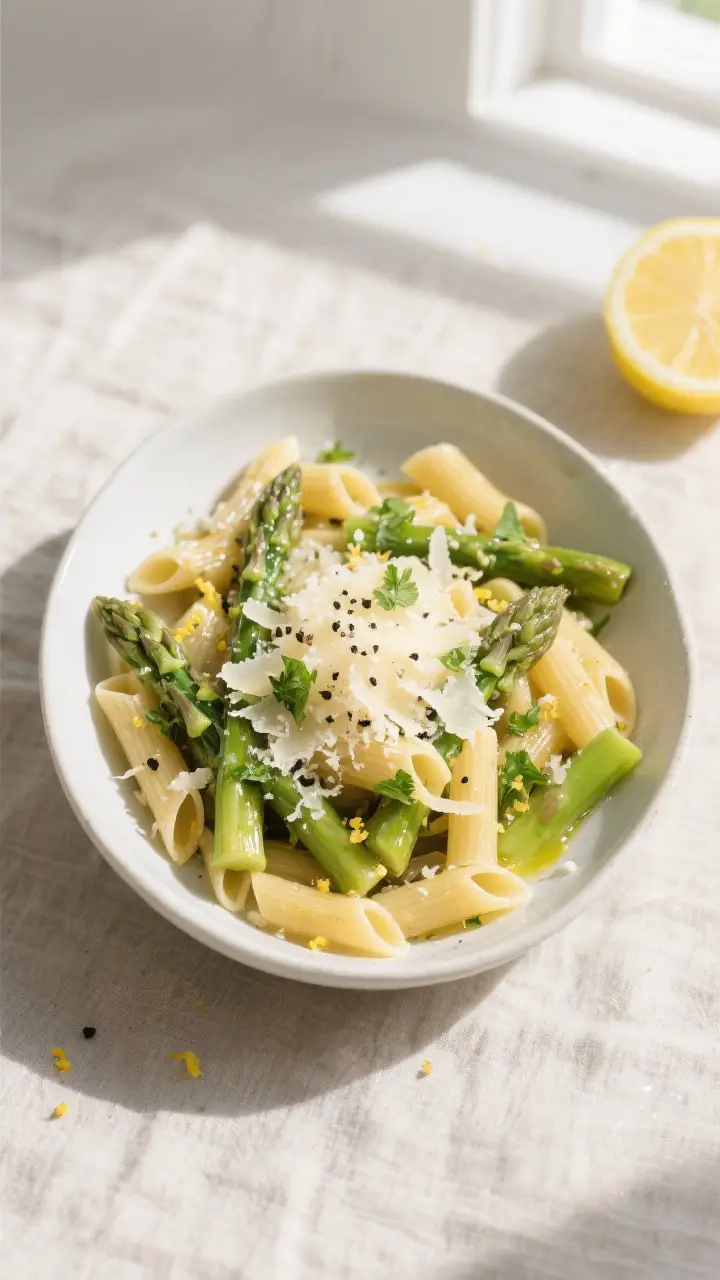
- Serve. Top with extra Parmesan and chopped herbs. Serve immediately while it’s creamy and hot.
Storage Instructions
- Refrigerate: Store leftovers in an airtight container for up to 3 days.
- Reheat: Warm gently in a skillet over low heat with a splash of water or broth to loosen the sauce.
Add a squeeze of lemon to refresh the flavors.
- Freezing: Not ideal. Asparagus can turn mushy and the sauce may separate. If you must freeze, undercook the asparagus slightly and thaw gently before reheating.
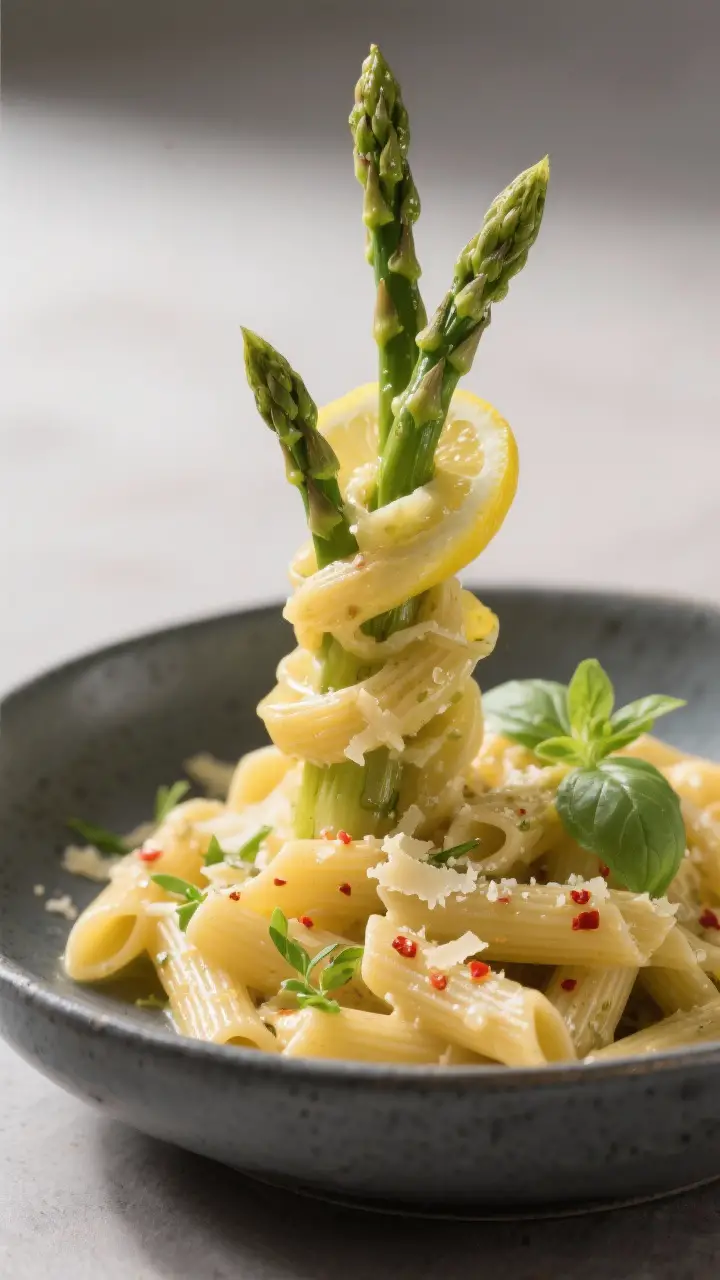
Benefits of This Recipe
- Fast and easy: Ready in about 25 minutes with minimal prep.
- Light yet satisfying: The sauce is silky without cream, thanks to starchy pasta water and Parmesan.
- Balanced flavors: Bright lemon, savory Parmesan, and sweet asparagus work beautifully together.
- Flexible: Easy to add protein or swap vegetables based on what you have.
- Great for spring: Asparagus shines when it’s in season, but works year-round with good quality spears.
What Not to Do
- Don’t overcook the asparagus. It should be crisp-tender, not limp.
Two minutes in boiling water is usually enough.
- Don’t skip the pasta water. It’s the key to a silky, cohesive sauce. Plain water won’t emulsify the same way.
- Don’t add Parmesan over high heat. It can clump or turn grainy. Lower the heat or remove the pan from the burner before adding.
- Don’t skimp on lemon zest. The zest carries bright, floral flavor without adding extra acidity.
- Don’t forget to season. Salt the pasta water generously and taste the sauce at the end to balance salt, acid, and heat.
Variations You Can Try
- Add protein: Toss in rotisserie chicken, seared shrimp, or pan-crisped pancetta for extra heartiness.
- Make it creamier: Stir in a splash of heavy cream or a dollop of mascarpone at the end for a richer finish.
- Go green: Add peas, spinach, or broccolini.
Fold in tender greens at the end so they just wilt.
- Lemon-herb punch: Finish with fresh basil, parsley, or dill. A touch of mint gives a bright, garden flavor.
- Gluten-free: Use your favorite gluten-free pasta and reserve some of its cooking water to keep the sauce glossy.
- Nutty twist: Toasted pine nuts or slivered almonds add crunch and a subtle nutty depth.
- Citrus swap: Mix lemon with a little Meyer lemon or a hint of orange zest for a rounder citrus profile.
FAQ
Can I use frozen asparagus?
Yes, but fresh is best for texture. If using frozen, don’t thaw first.
Add it directly to the boiling pasta for 2–3 minutes, and drain well so extra moisture doesn’t dilute the sauce.
What can I use instead of Parmesan?
Pecorino Romano works great and gives a saltier, sharper bite. Grana Padano is a milder alternative. Avoid pre-shredded cheeses with anti-caking agents if you can, as they don’t melt as smoothly.
How do I keep the sauce from getting clumpy?
Lower the heat before adding the cheese, and add it gradually while tossing.
Use reserved pasta water to loosen, and keep the sauce moving so it emulsifies smoothly.
Is this good served cold?
It’s best warm, but it can work as a pasta salad. If serving chilled, add a bit more olive oil and lemon juice after cooling to keep it lively, and season again to taste.
Can I make it vegan?
Yes. Use olive oil only (skip the butter), and replace Parmesan with a vegan hard cheese or a few tablespoons of nutritional yeast.
Adjust salt and lemon to balance the flavor.
What pasta shapes work best?
Short shapes that catch the sauce and asparagus pieces are ideal. Penne, rigatoni, fusilli, or gemelli all work. Long noodles are fine but won’t hold the sauce and veg as neatly.
How do I know when the asparagus is done?
It should turn bright green and be just tender when pierced with a fork.
Taste a piece; it should have a slight snap. Overcooked asparagus will look dull and feel mushy.
Can I add lemon earlier for more flavor?
Add the zest early to bloom in the oil, but wait to add the juice until the end. Cooking lemon juice too long can dull its brightness and add bitterness.
Wrapping Up
Lemon Asparagus Penne with Parmesan is simple, bright, and satisfying.
It uses a few fresh ingredients and smart technique to make a silky, restaurant-quality pasta at home. Keep the asparagus crisp, use pasta water for gloss, and finish with plenty of lemon and Parmesan. It’s quick enough for a weeknight and special enough for company.
Make it once, and it’ll become a regular in your rotation.
Printable Recipe Card
Want just the essential recipe details without scrolling through the article? Get our printable recipe card with just the ingredients and instructions.