
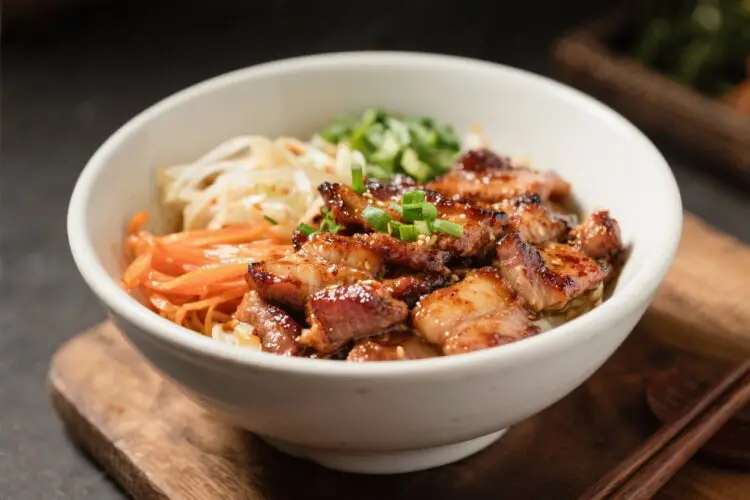
This Korean BBQ Pork Bowl brings big flavor with minimal effort. It’s a comforting, colorful meal you can whip up on a weeknight and still feel like you treated yourself. Tender slices of marinated pork, fluffy rice, crisp veggies, and a drizzle of spicy-sweet sauce come together in one bowl.
You’ll get the bold, smoky notes of Korean BBQ without firing up a grill. It’s flexible, fast, and seriously tasty.
What Makes This Special
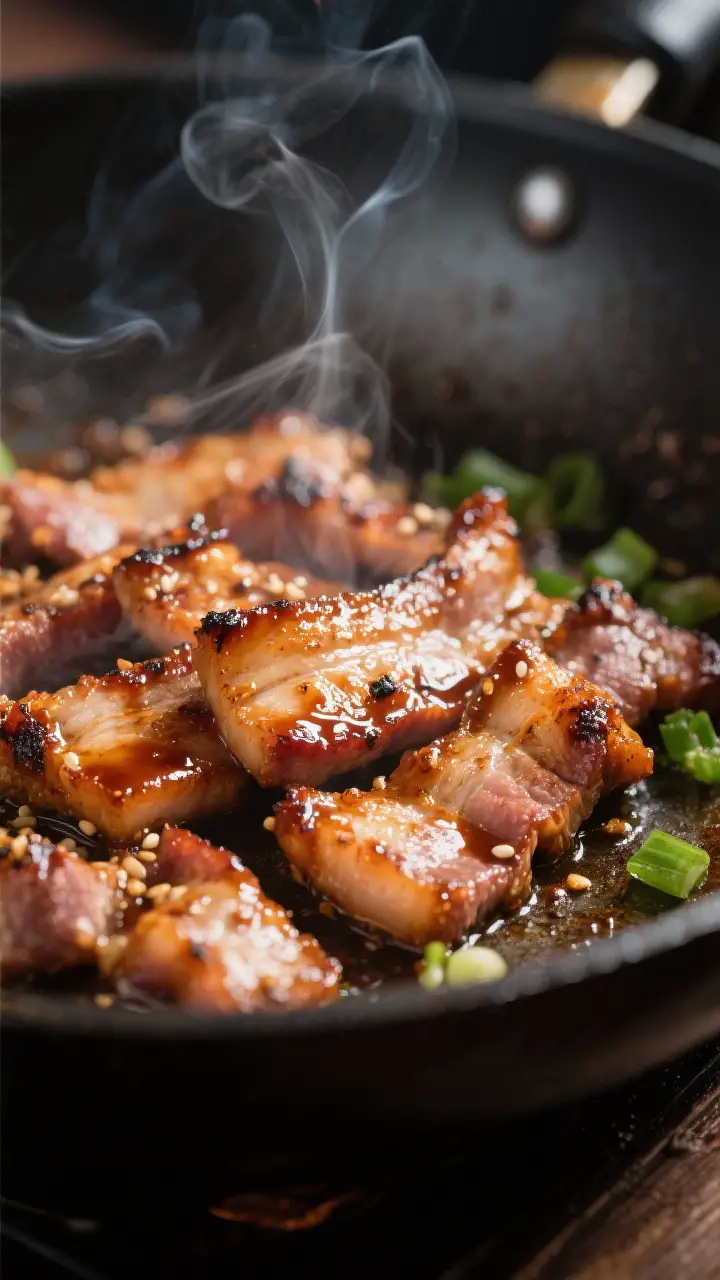
This bowl takes the flavors of Korean BBQ—sweet, savory, garlicky, and a little smoky—and puts them into an easy, everyday format. You don’t need special equipment or a long marinade time to get great results.
The sauce uses pantry staples like soy sauce, brown sugar, and garlic, with a kick from gochujang. It’s also a balanced meal in one: protein, carbs, and plenty of fresh, crunchy veggies. Plus, it’s easy to customize for spice level, dietary needs, and whatever you have in the fridge.
What You’ll Need
- Pork: 1 lb (450 g) thinly sliced pork shoulder or pork loin
- Rice: 3–4 cups cooked jasmine or short-grain rice (warm)
- Vegetables:
- 1 cup shredded cabbage or coleslaw mix
- 1 medium carrot, julienned or shredded
- 1 small cucumber, thinly sliced
- 2 green onions, thinly sliced
- 1 cup kimchi (optional but recommended)
- Marinade/Sauce:
- 3 tbsp soy sauce (low-sodium if preferred)
- 1.5 tbsp brown sugar or honey
- 1 tbsp gochujang (Korean chili paste), plus more to taste
- 1 tbsp rice vinegar
- 1 tbsp sesame oil
- 3 cloves garlic, minced
- 1 tsp grated fresh ginger
- 1 tbsp neutral oil (for cooking)
- Toppings (optional but great):
- Sesame seeds
- Fried or soft-boiled egg
- Sriracha or extra gochujang
- Fresh cilantro or perilla leaves
- Lime or lemon wedges
- Equipment: Large skillet or wok, mixing bowl, knife, cutting board
Step-by-Step Instructions
- Prep the rice. Cook rice according to package instructions so it’s ready when the pork is done.
Keep it warm. Day-old rice reheated in the microwave also works well.
- Make the marinade. In a bowl, whisk soy sauce, brown sugar, gochujang, rice vinegar, sesame oil, garlic, and ginger until smooth. Taste and adjust sweetness or heat.
It should be slightly sweet, savory, and a little spicy.
- Slice the pork thin. If your pork isn’t pre-sliced, freeze it for 20–30 minutes to firm it up, then cut into thin strips. Thin slices cook fast and soak up flavor.
- Marinate briefly. Toss the pork in the sauce and let it rest for 10–20 minutes while you prep veggies. Longer is fine, but not necessary.
- Prep the veggies. Shred cabbage, slice cucumber, julienne carrot, and chop green onions.
Set aside. If using kimchi, have it ready.
- Heat the pan hot. Add neutral oil to a large skillet or wok over medium-high to high heat. You want the pan very hot to sear the pork.
- Cook the pork. Add the pork in a single layer (work in batches if needed).
Let it sear for 1–2 minutes before stirring. Cook until browned and slightly caramelized, 4–6 minutes total. If there’s extra marinade, add a spoonful near the end to glaze.
- Optional eggs. If you like, fry eggs sunny-side up or soft-boil them for jammy yolks.
The yolk acts like a sauce in the bowl.
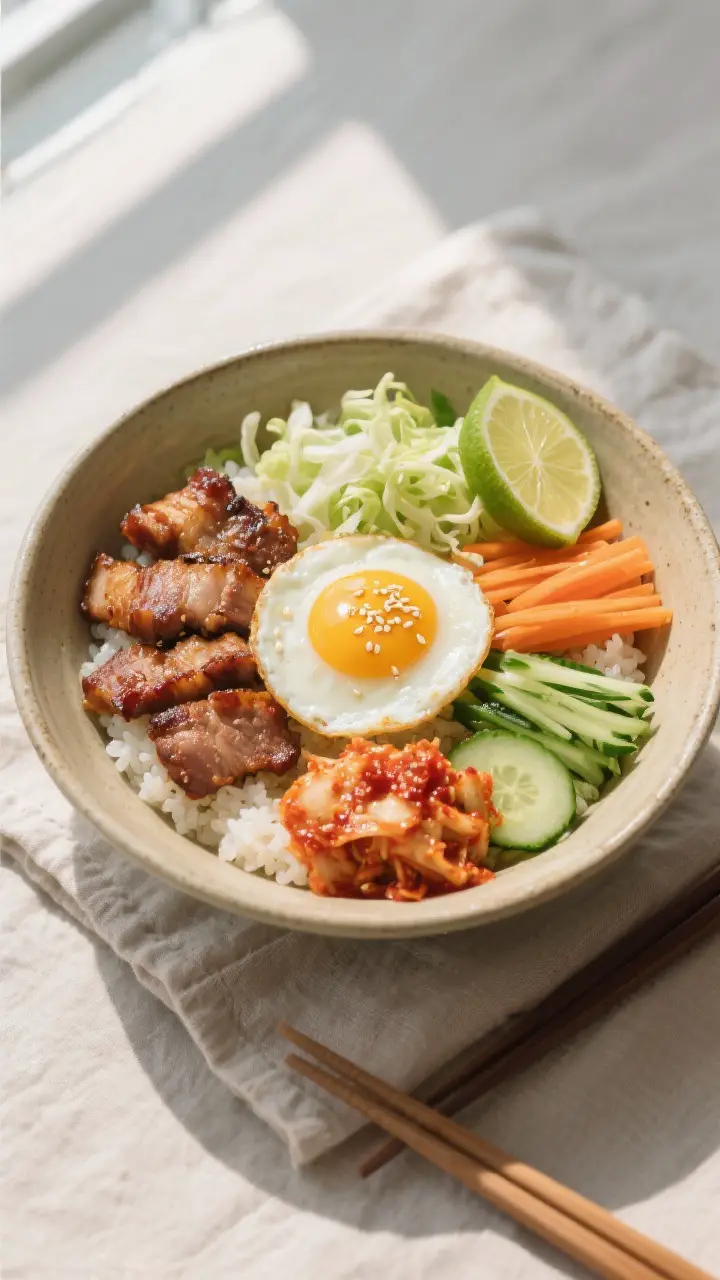
- Assemble. In bowls, add a bed of warm rice. Top with pork, cabbage, carrot, cucumber, kimchi, and green onions. Sprinkle sesame seeds and add your egg if using.
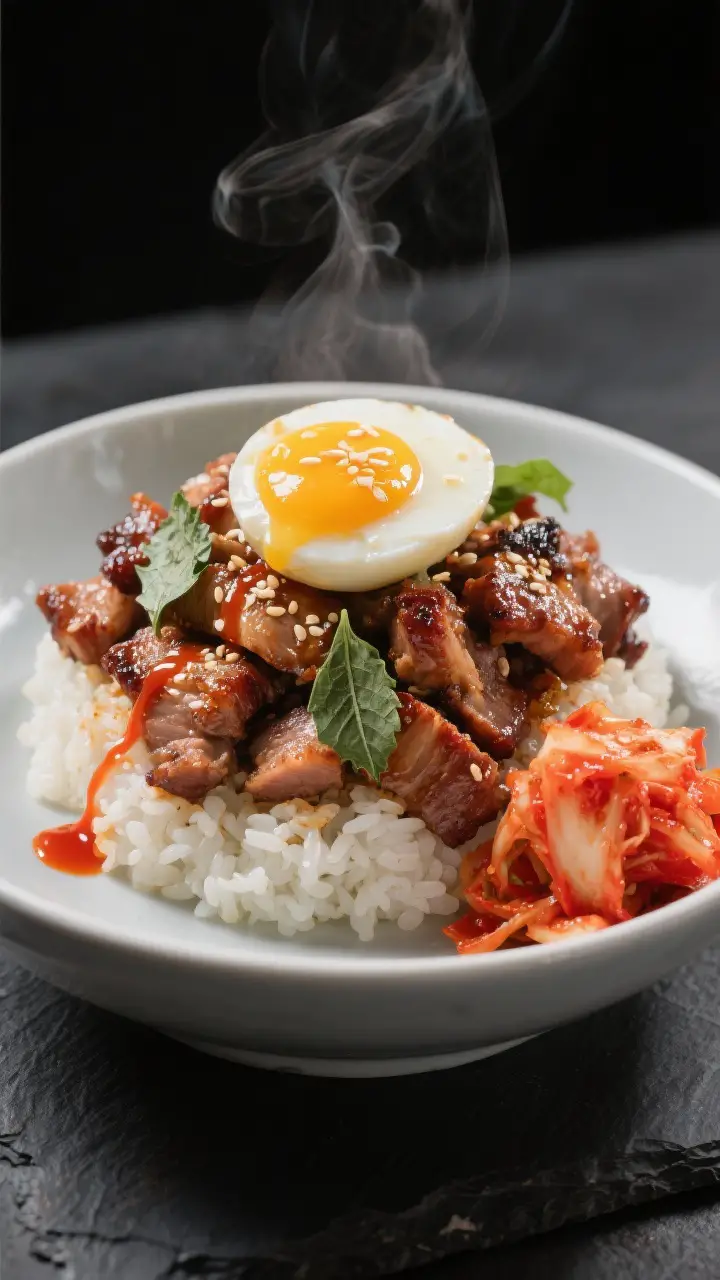
- Finish with sauce. Drizzle a little extra gochujang, sriracha, or a splash of soy sauce.
A squeeze of lime or lemon brightens everything.
Keeping It Fresh
Store cooked pork and rice separately from raw veggies to keep textures crisp. Use airtight containers and refrigerate for up to 3 days. Reheat pork and rice gently in the microwave with a splash of water to prevent drying.
Add fresh cucumbers and greens just before serving so they stay crunchy. If you plan for meal prep, pack sauce on the side to avoid soggy bowls.
Health Benefits
- Balanced macronutrients: You get protein from pork, carbs from rice, and fiber from vegetables for steady energy.
- Fermented goodness: Kimchi adds probiotics that support gut health, plus vitamins A and C.
- Healthy fats: Sesame oil provides flavor and unsaturated fats in small amounts.
- Veggie variety: Cabbage, carrot, and cucumber bring antioxidants, hydration, and crunch with minimal calories.
- Customizable: Swap in brown rice, cauliflower rice, or more greens to adjust calories and fiber.
Common Mistakes to Avoid
- Overcrowding the pan: This steams the pork instead of searing it. Cook in batches for caramelization.
- Too thick slices: Thick pieces won’t absorb flavor or cook quickly.
Keep them thin for best texture.
- Skipping the taste test: Adjust the marinade before adding the pork. Balance sweet, salty, and spicy.
- Adding all the marinade at once: Excess liquid will pool in the pan. Use most to coat, then finish with a small splash at the end to glaze.
- Letting veggies sit on hot rice too long: Add delicate veggies right before eating to keep them crisp.
Alternatives
- Protein swaps: Chicken thighs, thinly sliced beef (like sirloin or ribeye), or firm tofu work well.
For tofu, press it first and pan-sear until golden before adding sauce.
- Rice options: Brown rice, quinoa, or cauliflower rice are great substitutes. Short-grain rice gives that classic sticky texture.
- No gochujang: Mix sriracha with a little miso or tomato paste to mimic depth. Add a pinch of smoked paprika for warmth.
- Veggie mix-ins: Add sautéed mushrooms, blanched spinach, bean sprouts, or roasted broccoli.
Pickled radish adds a bright bite.
- Gluten-free: Use tamari or coconut aminos instead of soy sauce, and confirm your gochujang is gluten-free.
- Lower sugar: Use a touch of honey or monk fruit sweetener. Reduce sweetness slightly and rely on the caramelization for depth.
FAQ
Can I make this ahead for meal prep?
Yes. Cook the pork and rice, and store them separately from the fresh veggies and sauce.
Reheat protein and rice just before eating, then add fresh toppings. It stays good for up to 3 days in the fridge.
What cut of pork works best?
Thinly sliced pork shoulder has more fat and stays juicy. Pork loin is leaner and works too, but watch the cook time to avoid drying.
For fastest prep, buy pre-sliced “shabu-shabu” style pork if available.
How spicy is this?
It’s mildly spicy with 1 tablespoon of gochujang. Add more for heat or reduce it and use extra soy sauce and a little honey for a gentler sauce. You can also serve extra gochujang on the side so each person can adjust.
Can I grill the pork instead of pan-cooking?
Absolutely.
Thread the marinated pork onto skewers or use a grill basket. Cook over high heat for a few minutes per side until caramelized. Brush with a little marinade at the end for a glossy finish.
What if I don’t have rice vinegar?
Use apple cider vinegar or lime juice for acidity.
Start with a little less, then adjust to taste to keep the sauce balanced.
Is kimchi necessary?
Not required, but it adds tang, heat, and crunch that complement the pork. If you skip it, consider a quick pickle of cucumbers with vinegar, sugar, and salt for brightness.
How do I keep the pork tender?
Slice it thin, don’t overcook, and keep the pan hot for a quick sear. A short marinade helps.
Pork shoulder is more forgiving than loin thanks to its marbling.
Final Thoughts
This Korean BBQ Pork Bowl is the kind of recipe you can make on a busy night and still feel proud to serve. It’s bold, colorful, and endlessly adaptable to your taste and pantry. Keep the essentials—thinly sliced pork, a punchy sauce, warm rice, and crisp veggies—and you’ll nail it every time.
Once you’ve tried the base version, make it your own with different proteins, grains, and toppings. Simple technique, big flavor, happy bowl.