

Kielbasa Kapusta is the kind of dish that makes a kitchen feel warm and welcoming. It’s smoky, tangy, and hearty, with just a few ingredients that turn into something greater than the sum of their parts. If you’re craving comfort food with old-world charm, this delivers every time.
It’s quick to pull together, easy to customize, and budget-friendly. Whether you use sauerkraut, fresh cabbage, or a mix, you’ll end up with a deeply satisfying meal that tastes like it’s been simmering all day.
Why This Recipe Works
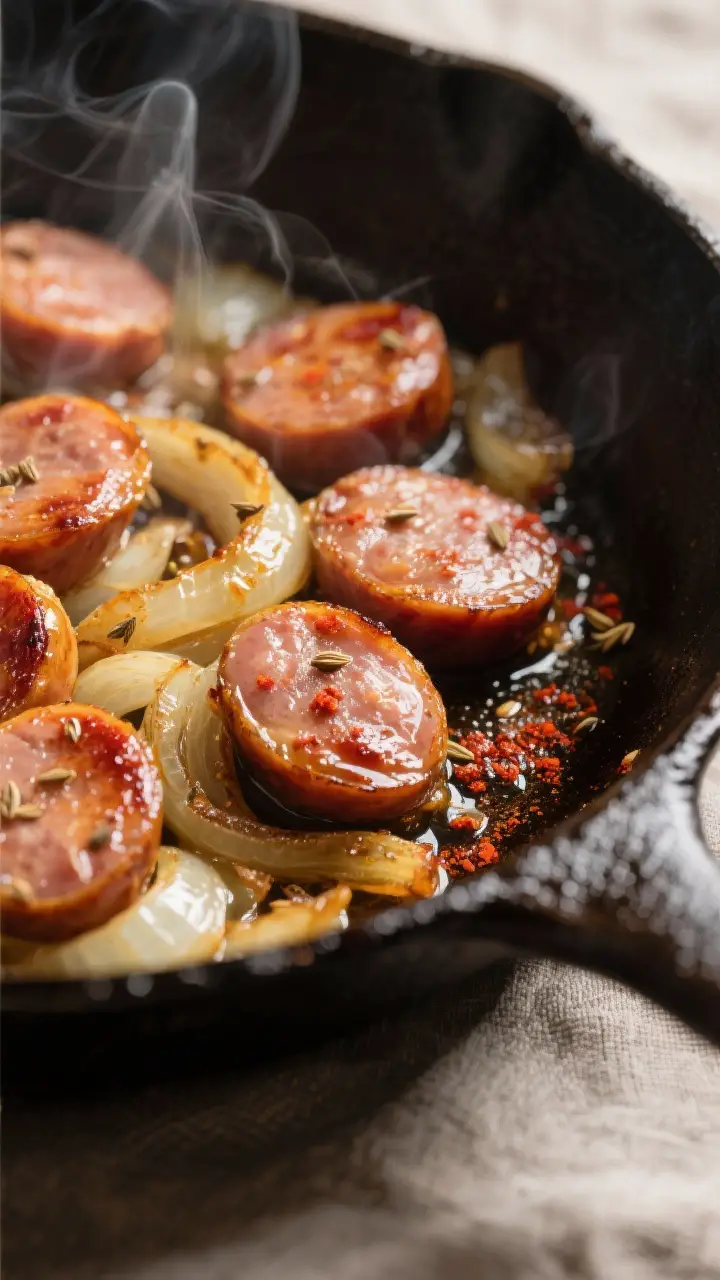
This dish balances smoky kielbasa with the bright, sour flavors of kapusta (cabbage or sauerkraut). A little onion and garlic round out the base, while a touch of fat helps everything caramelize.
Low, steady heat lets the flavors meld instead of competing.
Using both fresh cabbage and sauerkraut adds layered texture: tender and juicy from the cabbage, pleasantly tangy from the kraut. A small amount of brown sugar and apple cider vinegar creates a balanced sweet-sour profile that tastes authentic without being sharp.
Finally, slicing and browning the kielbasa first builds fond in the pan. That flavorful browning is the secret to a deeper, more savory sauce.
Shopping List
- Kielbasa (Polish smoked sausage) – about 1 to 1.5 pounds, sliced into coins
- Onion – 1 large, thinly sliced
- Garlic – 3 cloves, minced
- Fresh green cabbage – 1 small head, cored and thinly shredded (optional but recommended)
- Sauerkraut – 24 to 32 ounces, drained (rinse briefly if you prefer milder tang)
- Butter or neutral oil – 2 to 3 tablespoons
- Apple cider vinegar – 1 to 2 tablespoons
- Brown sugar – 1 to 2 teaspoons (to taste)
- Bay leaf – 1
- Caraway seeds – 1 teaspoon (optional but classic)
- Black pepper – to taste
- Smoked paprika – 1/2 teaspoon (optional for extra smokiness)
- Chicken or vegetable broth – 1/2 to 1 cup, as needed
- Fresh dill or parsley – for garnish (optional)
Step-by-Step Instructions
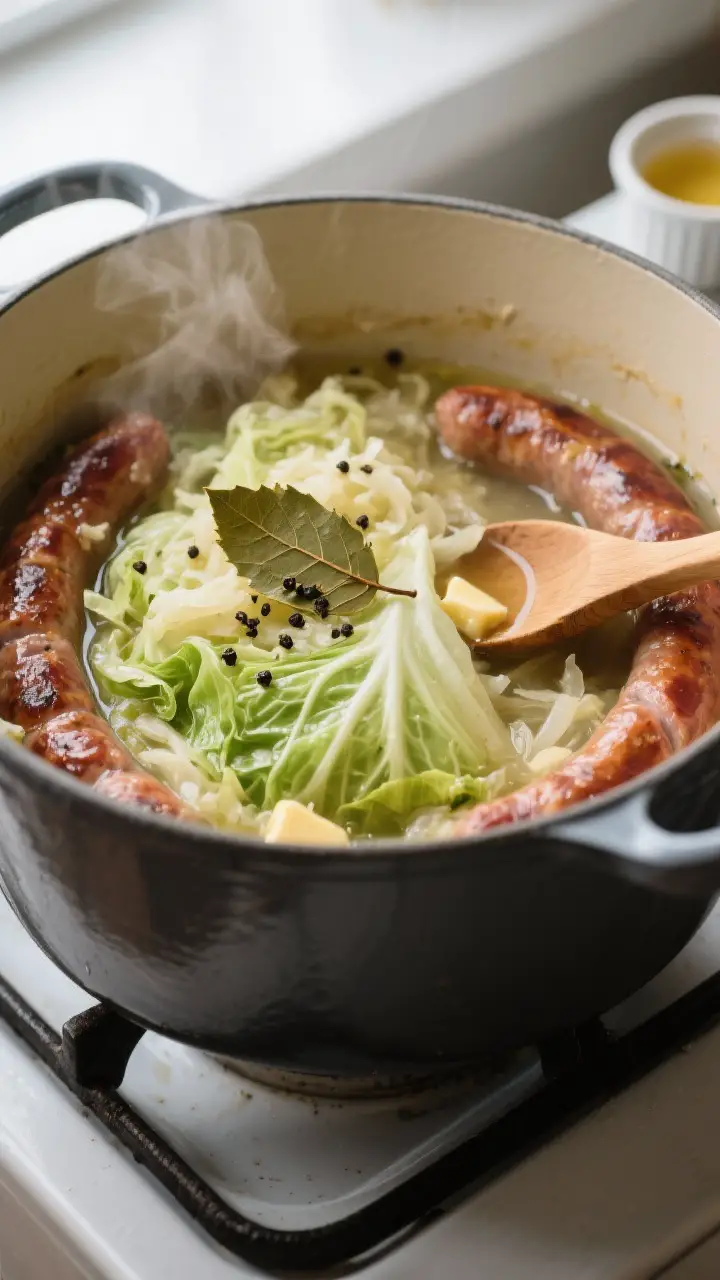
- Prep the vegetables and sausage. Slice the kielbasa into coins.
Thinly slice the onion, mince the garlic, and shred the cabbage. Drain the sauerkraut and squeeze out excess liquid.
- Brown the kielbasa. Heat a large, heavy skillet or Dutch oven over medium-high. Add 1 tablespoon oil or butter.
Sear the sausage for 3–5 minutes, stirring once or twice, until nicely browned. Transfer to a plate, leaving the fat in the pan.
- Soften the onions. Add another tablespoon of butter if the pan seems dry. Cook the onions with a pinch of salt over medium heat for 5–7 minutes until soft and lightly golden.
Scrape up browned bits as they loosen.
- Add garlic and spices. Stir in the garlic, caraway seeds, and smoked paprika (if using). Cook 30–60 seconds, just until fragrant.
- Cook the cabbage. Add the shredded cabbage and a pinch of salt. Toss well and cook for 5–8 minutes until it wilts and starts to soften.
If the pan is dry, add a splash of broth.
- Fold in sauerkraut. Add the drained sauerkraut and the bay leaf. Stir to combine everything evenly.
- Balance the flavors. Add apple cider vinegar and brown sugar. Start small, taste, and adjust.
You’re aiming for a bright, rounded tang, not sharpness.
- Simmer with broth. Return the kielbasa to the pot. Add 1/2 cup broth. Reduce heat to low, cover, and simmer 15–20 minutes.
Stir once or twice. Add more broth if it looks dry; it should be moist, not soupy.
- Final seasoning. Remove the bay leaf. Taste and adjust salt, pepper, vinegar, or sugar.
Finish with chopped dill or parsley for freshness.
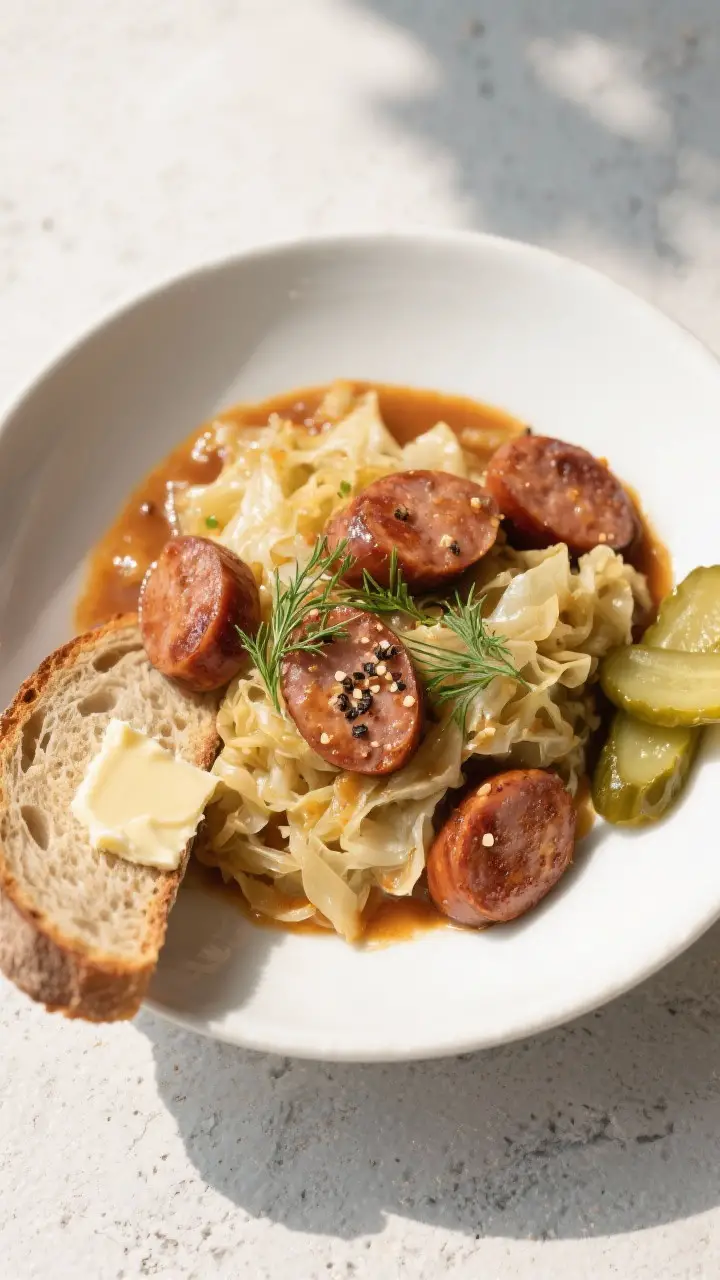
- Serve warm. Spoon into bowls. This pairs beautifully with rye bread, boiled or mashed potatoes, or buttered noodles.
How to Store
Let the dish cool to room temperature, then refrigerate in an airtight container for up to 4 days. The flavors deepen overnight, so it can taste even better the next day.
For longer storage, freeze in portioned containers for up to 2 months.
Thaw in the refrigerator and reheat gently on the stovetop with a splash of broth or water to loosen the sauce. Avoid boiling hard, which can make the cabbage mushy.
Health Benefits
- Cabbage is nutrient-dense: It’s rich in vitamin C, vitamin K, and fiber, supporting immunity, bone health, and digestion.
- Fermented sauerkraut: Provides probiotics that can support gut health. Heating reduces live cultures, but many beneficial compounds remain.
- Balanced macros: Kielbasa adds protein and iron.
Pair with a whole grain side, like barley or rye, for a more complete, satisfying meal.
- Customizable sodium: Rinsing sauerkraut and choosing lower-sodium kielbasa can help manage salt intake without losing flavor.
Pitfalls to Watch Out For
- Skipping the browning step: Without browning the sausage, you’ll miss out on that deep, savory base.
- Overcooking: Too much heat for too long can turn cabbage mushy. Keep the simmer gentle.
- Not balancing acidity: Sauerkraut varies. Taste and adjust vinegar and sugar so the dish is tangy, not harsh.
- Too dry or too wet: A little broth helps merge flavors, but avoid soupiness.
Add liquid gradually.
- Heavy-handed salt: Between sausage and kraut, salt levels can run high. Season cautiously at the end.
Alternatives
- All-kraut or all-cabbage: Use only sauerkraut for bolder tang or only fresh cabbage for a sweeter, milder version.
- Different sausages: Try turkey kielbasa for lighter fare, or smoked chicken sausage. For a different vibe, use bratwurst or andouille.
- Vegetarian version: Swap sausage for smoked tempeh or seared mushrooms.
Add a touch of smoked paprika and a splash of soy sauce for umami.
- Add-ins: Diced apple, shredded carrot, or a handful of potatoes can add sweetness and body. A spoonful of mustard stirred in at the end adds zip.
- Spice variations: Caraway is classic, but fennel seed, juniper berries, or a pinch of red pepper flakes work nicely.
FAQ
Do I need to rinse the sauerkraut?
Rinsing softens the tang and reduces salt. If you love bold flavor, just drain it well and skip the rinse.
If you’re unsure, rinse briefly and taste as you season.
Can I make this in a slow cooker?
Yes. Brown the kielbasa and onions first on the stove, then transfer everything to the slow cooker with a splash of broth. Cook on Low for 4–5 hours.
Finish with vinegar, sugar, and fresh herbs to brighten the flavor.
What’s the best kielbasa to use?
Look for a good-quality smoked Polish kielbasa with a short ingredient list. Pork or pork-beef blends are traditional. Turkey works well if you want something leaner.
How do I keep the cabbage from getting soggy?
Don’t overcook.
Wilt it until tender but still has some bite, and keep the simmer gentle. Avoid adding too much liquid; you can always add more if needed.
Is this dish gluten-free?
It generally is, but check your sausage and any broth for hidden gluten. Serve with gluten-free sides like potatoes or rice if needed.
Can I add potatoes directly to the pot?
Yes.
Cut them into small chunks and add with the cabbage so they cook through. You may need a bit more broth and a few extra minutes of simmering.
How spicy is this?
It’s not spicy by default. If you like heat, add red pepper flakes or use a spicy sausage.
Smoked paprika adds warmth without heat.
What should I serve with Kielbasa Kapusta?
Rye bread, boiled or mashed potatoes, buttered egg noodles, or barley are all great. A crisp salad or sliced pickles make a fresh contrast.
In Conclusion
Kielbasa Kapusta is simple, cozy, and full of character. With a few pantry staples and a little time on the stove, you get a satisfying meal that tastes like a family recipe.
Keep the method the same, tweak the tang and sweetness to your liking, and make it your own. It’s the kind of dish you’ll come back to on busy weeknights and slow Sundays alike.
Printable Recipe Card
Want just the essential recipe details without scrolling through the article? Get our printable recipe card with just the ingredients and instructions.