
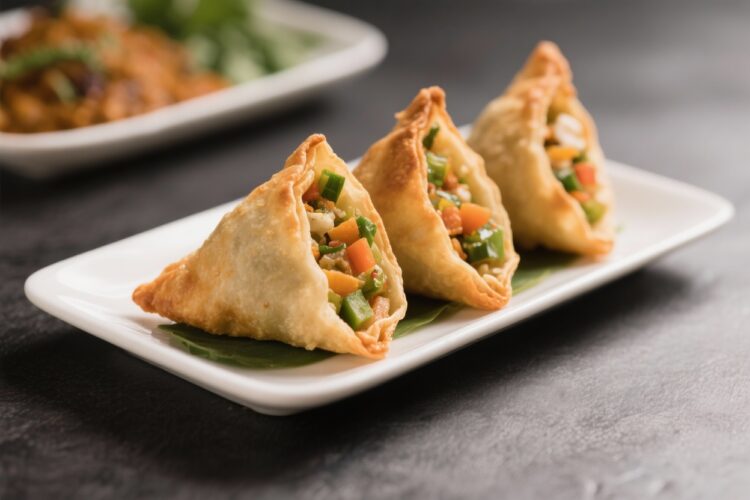
Samosas are the kind of snack that makes everyone pause and smile. Golden, crisp pastry on the outside and a warm, spiced vegetable filling on the inside—what’s not to love? This version sticks to the classic North Indian style with potatoes, peas, and fragrant spices.
It’s perfect for tea-time, parties, or a simple weekend treat. If you’ve never made samosas at home, don’t worry. With a little patience and the right technique, you’ll get that signature crunch and flavor.
What Makes This Special
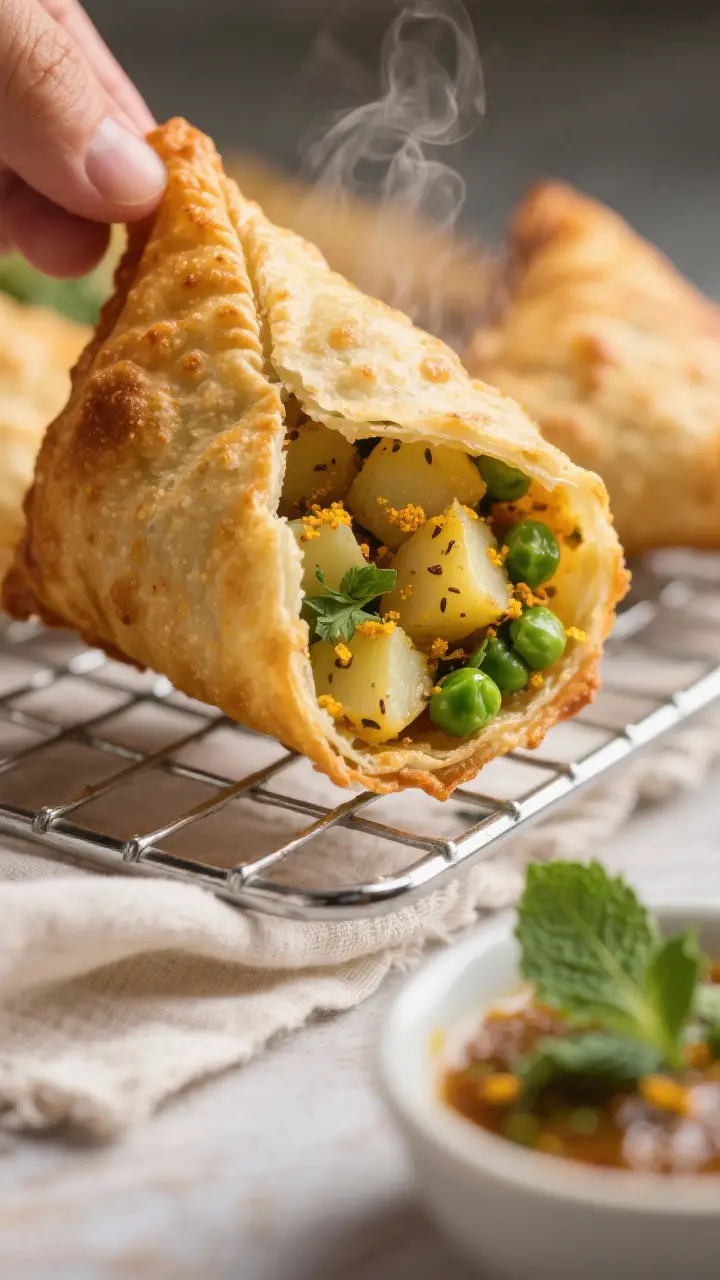
The charm of a great vegetable samosa is all about texture and balance.
The pastry should be crisp and flaky, not puffy or soft. The filling should be savory, slightly tangy, and gently spicy, with small bits of potato and peas—not a mashed paste. This recipe uses carom seeds (ajwain) in the dough to add aroma and aid digestion.
A dash of amchur (dry mango powder) or lemon juice brightens the filling and makes it lively. And yes, you can bake or air-fry them, but the classic deep-fried version delivers the most authentic bite.
What You’ll Need
- For the dough:
- 2 cups all-purpose flour
- 5 tablespoons neutral oil or ghee (for shortening)
- 1/2 teaspoon salt
- 1/2 teaspoon carom seeds (ajwain), lightly crushed
- 1/2 cup to 3/4 cup water (as needed)
- For the filling:
- 3 medium potatoes, boiled, peeled, and roughly chopped
- 1/2 cup green peas (fresh or frozen)
- 1 small onion, finely chopped (optional, traditional versions vary)
- 1–2 green chilies, finely chopped (adjust to taste)
- 1 tablespoon ginger, finely grated
- 2 tablespoons oil
- 1 teaspoon cumin seeds
- 1 teaspoon coriander powder
- 1/2 teaspoon garam masala
- 1/2 teaspoon turmeric
- 1 teaspoon red chili powder or paprika (adjust to taste)
- 1 teaspoon amchur (dry mango powder) or 2 teaspoons lemon juice
- 1/2 teaspoon fennel seeds (optional, for a subtle sweetness)
- Salt to taste
- 2 tablespoons chopped cilantro
- For frying and serving:
- Neutral oil for deep frying
- Tamarind chutney and/or green mint-coriander chutney
Step-by-Step Instructions
- Make the dough: In a bowl, mix flour, salt, and ajwain. Add the oil/ghee and rub it into the flour with your fingers until it resembles coarse breadcrumbs.
This step is key to a flaky crust.
- Add water gradually: Sprinkle in water, a little at a time, and knead into a firm, smooth dough. It should not be soft or sticky. Cover with a damp cloth and rest for 30 minutes.
- Prepare the filling: Heat oil in a pan.
Add cumin seeds (and fennel if using). When they sizzle, add onion (if using), green chilies, and ginger. Sauté until fragrant and the onions soften slightly.
- Spice it up: Add turmeric, coriander powder, red chili powder, and salt.
Stir for 30 seconds to bloom the spices without burning.
- Add potatoes and peas: Stir in chopped potatoes and peas. Lightly mash some of the potatoes while keeping small chunks for texture. Cook for 3–4 minutes.
- Finish the filling: Add garam masala, amchur or lemon juice, and cilantro.
Adjust salt and heat. Let the filling cool completely before shaping.
- Divide the dough: Knead briefly, then divide into 6–8 equal balls. Keep them covered to prevent drying.
- Roll the sheets: Take one ball and roll into an oval, about 6–7 inches long and 1/8 inch thick.
Cut the oval in half to form two semi-ovals.
- Shape the cone: Brush a little water along the straight edge. Overlap the straight edges to form a cone, pressing firmly to seal. Ensure there are no gaps.
- Fill and seal: Spoon in 2–3 tablespoons of filling.
Don’t overfill. Brush water along the open edge and pinch to seal tightly, creating a slight pleat for strength.
- Rest before frying: Place shaped samosas on a tray, cover with a cloth, and let them sit 10–15 minutes. This helps prevent bubbles and leaks.
- Fry low and slow: Heat oil on medium-low.
Test with a small dough piece—it should rise slowly with gentle bubbles. Slide in samosas and fry 10–14 minutes, turning occasionally, until evenly golden and crisp. Avoid high heat.
- Drain and serve: Remove to a rack or paper towels.
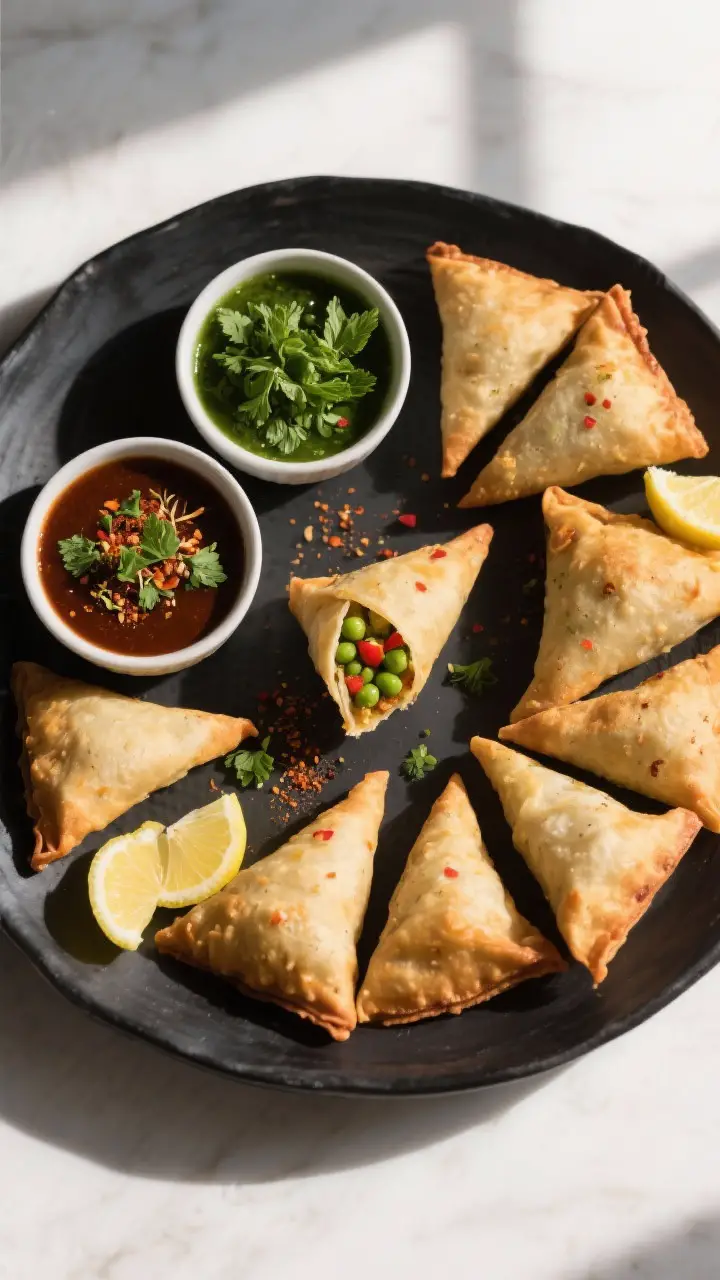
Serve hot with tamarind and mint chutneys, or even ketchup in a pinch.
How to Store
- Short-term: Keep fried samosas in an airtight container at room temperature for up to 6 hours.
- Refrigerate: Store in the fridge for 2–3 days. Reheat in an oven or air fryer at 350°F (175°C) for 8–10 minutes to crisp up.
- Freeze un-fried: Shape and freeze on a tray until firm, then store in freezer bags for up to 2 months. Fry from frozen on low-medium heat.
- Freeze cooked: Cool completely, then freeze.
Reheat at 350°F (175°C) for 12–15 minutes.

Why This is Good for You
This is comfort food, but you can make it smarter. The filling is rich in potatoes, peas, and spices, offering fiber and plant-based energy. Using peas adds a modest protein boost.
Spices like cumin, ginger, and ajwain support digestion and bring antioxidant benefits. If you bake or air-fry, you’ll reduce overall oil while keeping most of the flavor.
Common Mistakes to Avoid
- Soft dough: A soft dough creates bubbles and soggy shells. Keep the dough firm and well-rested.
- Skipping the shortening step: Rubbing oil into the flour is essential for a flaky crust.
- Overfilling: Too much filling causes leaks and breaks.
Leave a little space at the rim.
- High heat frying: Hot oil browns the outside quickly but leaves the inside doughy. Fry on medium-low for even cooking.
- Weak seals: Always seal with water and pinch firmly at edges and seams.
- Wet filling: Excess moisture leads to sogginess and splatter. Let the filling cool and stay on the dry side.
Alternatives
- Baked or air-fried: Brush shaped samosas lightly with oil.
Bake at 375°F (190°C) for 22–28 minutes, flipping once. Air-fry at 360°F (182°C) for 14–18 minutes.
- Whole-wheat dough: Swap half the flour with whole-wheat flour. Add a touch more oil and water for tenderness.
- No-onion version: Skip onions and add a pinch of asafoetida (hing) when tempering for a traditional flavor.
- Veg swaps: Add finely diced carrots, corn, or cauliflower.
Keep the filling dry and not mushy.
- Spice tweaks: Try crushed black pepper, chaat masala, or a pinch of kasuri methi for a different profile.
- Gluten-free: Use a mix of rice flour and chickpea flour with a tablespoon of oil, but handle gently—gluten-free dough is fragile. Baking is easier than deep-frying here.
FAQ
Can I make the dough in advance?
Yes. Make the dough up to 24 hours ahead, wrap tightly, and refrigerate.
Let it sit at room temperature for 20–30 minutes before rolling.
Why did my samosas get bubbles on the crust?
Usually the oil was too hot or the dough was too soft. Fry at a steady medium-low heat, and keep the dough firm with enough fat rubbed in.
What oil is best for frying?
Use a neutral, high smoke-point oil like canola, sunflower, or peanut oil. Avoid strong flavors that can overpower the filling.
How do I stop the samosas from opening while frying?
Seal with water, press firmly along the seams, and let them rest before frying.
Don’t overfill, and keep the filling cool and not wet.
Can I use store-bought wrappers?
Spring roll wrappers can work in a pinch, but the texture is different—thinner and crisp rather than flaky. Seal well and fry quickly.
How spicy should the filling be?
That’s up to you. Use fewer green chilies and mild chili powder for a gentle heat, or add more chilies and a bit of black pepper for a kick.
Is there a vegan version?
Yes.
Use oil instead of ghee in the dough and filling. Everything else in this recipe is naturally plant-based.
In Conclusion
Indian Vegetable Samosa is a simple pleasure that feels special every time. With a flaky crust, a lively spiced filling, and a careful fry, you’ll get that classic street-style bite at home.
Serve them hot with chutneys, share with friends, and enjoy the crunch. Once you master the technique, you’ll find endless ways to make them your own.