
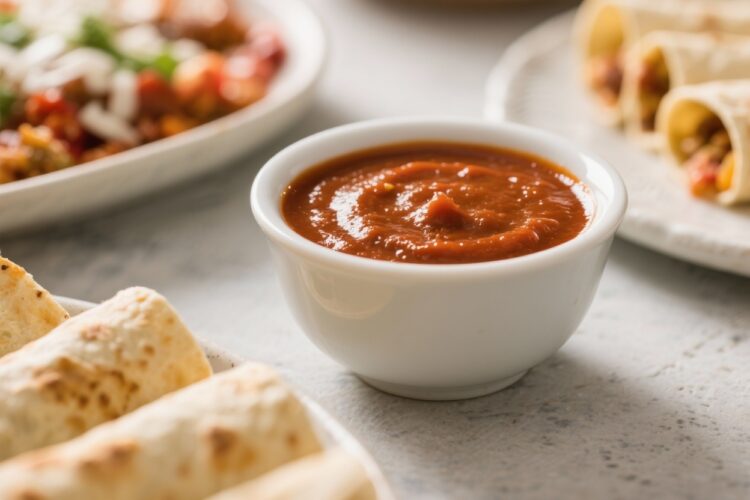
Skip the jar and make this simple, bold enchilada sauce at home. It’s smoky, slightly spicy, and layered with warm spices that bring your favorite Mexican dishes to life. You’ll get better flavor, more control, and no mystery ingredients.
This recipe comes together in about 15 minutes with pantry staples. Use it for enchiladas, burritos, chilaquiles, soups, or as a dipping sauce for quesadillas.
Why This Recipe Works
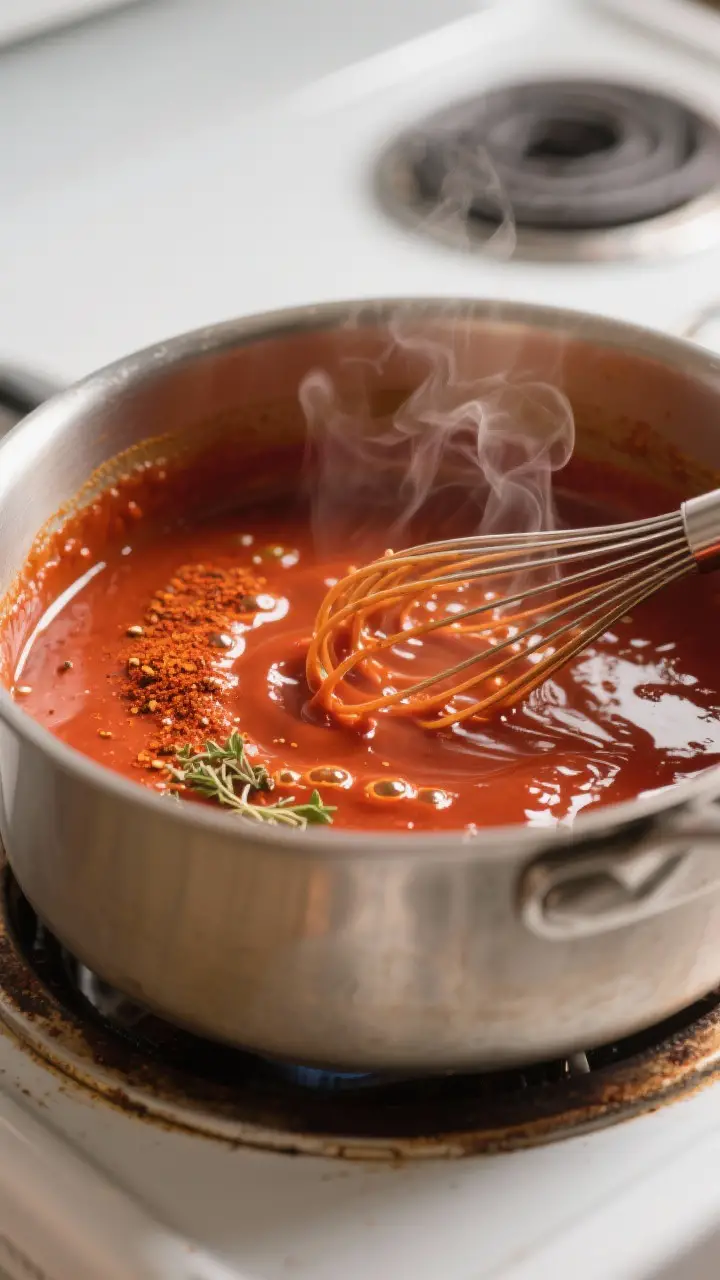
This sauce uses a classic oil-and-flour roux to create a silky base that clings beautifully to tortillas and fillings. Chili powder, cumin, and garlic powder provide deep, earthy flavor, while tomato paste and broth add body and balance.
A touch of apple cider vinegar wakes everything up with bright acidity. You control the heat by adjusting the chili powder and optional cayenne. The result is a sauce that’s bold but balanced, with a clean finish and no artificial aftertaste.
Ingredients
- 3 tablespoons neutral oil (avocado, canola, or light olive oil)
- 3 tablespoons all-purpose flour
- 3 tablespoons chili powder (American-style chili powder blend)
- 1 teaspoon ground cumin
- 1 teaspoon garlic powder
- 1 teaspoon dried oregano (Mexican oregano if possible)
- 1/2 teaspoon smoked paprika (optional for extra smokiness)
- 1/4–1/2 teaspoon cayenne pepper (optional for heat)
- 2 tablespoons tomato paste
- 2 cups low-sodium chicken or vegetable broth
- 1 teaspoon apple cider vinegar (or white vinegar)
- 1/2 teaspoon sugar or maple syrup (optional, to round the acidity)
- 1/2–1 teaspoon kosher salt, to taste
- Freshly ground black pepper, to taste
How to Make It
- Warm the oil. Set a medium saucepan over medium heat and add the oil.
Let it heat until it shimmers but isn’t smoking. This helps the flour toast evenly.
- Make the roux. Sprinkle in the flour and whisk constantly for 60–90 seconds. The mixture will bubble and turn golden.
Don’t let it brown too much or the sauce will taste bitter.
- Bloom the spices. Add chili powder, cumin, garlic powder, oregano, smoked paprika, and cayenne. Whisk for 30 seconds. Blooming spices in fat releases their oils and deepens flavor.
- Stir in tomato paste. Whisk in the tomato paste until it’s fully incorporated and slightly darkened, about 30 seconds. This step builds body and sweetness.
- Add the broth gradually. Slowly pour in the broth while whisking to prevent lumps.
Start with a splash to loosen the paste, then add the rest in a steady stream.
- Simmer until thick. Bring to a gentle simmer and cook 5–7 minutes, whisking occasionally, until the sauce coats a spoon. If it gets too thick, whisk in a splash more broth or water.
- Finish and season. Stir in vinegar and the optional sugar. Season with salt and black pepper to taste.
Adjust heat and acidity until it tastes bright and balanced.
- Cool slightly. Let the sauce rest for a few minutes off heat. It will thicken a bit more as it cools. Use right away or store for later.
How to Store
- Refrigerator: Cool completely, then transfer to an airtight jar.
Store up to 1 week. The flavors often deepen overnight.
- Freezer: Portion into freezer-safe containers or silicone trays and freeze up to 3 months. Thaw in the fridge overnight.
- Reheat: Warm gently on the stove over low heat, adding a splash of water or broth to loosen.
Whisk to restore smoothness.
- Make-ahead tip: Double the batch. Freeze in 1-cup portions so you can pull exactly what you need for a pan of enchiladas.
Health Benefits
This sauce is lower in sodium and free of preservatives compared to many store-bought versions. You control the salt, oil, and spice levels.
Chili powder and paprika contain antioxidants, including carotenoids and capsaicin, which may support metabolic health and reduce inflammation. Using low-sodium broth keeps the flavor bold without pushing daily sodium limits.
It’s also naturally dairy-free and can be made vegan by using vegetable broth. If you need to reduce fat, you can cut the oil slightly and cook the roux a bit longer to maintain body.
For gluten-free diets, use a gluten-free flour blend or cornstarch (instructions in Alternatives).
Common Mistakes to Avoid
- Burning the roux: High heat scorches flour quickly. Keep the heat medium and whisk constantly until golden, not brown.
- Skipping the spice bloom: Adding spices only after liquid dulls their flavor. Briefly toasting them in oil makes a big difference.
- Adding all the broth at once: This can cause lumps.
Start small, whisk smooth, then add the rest gradually.
- Under-seasoning: Taste at the end and adjust salt, acid, and heat. A small splash of vinegar can transform a flat sauce.
- Over-thickening: Remember the sauce thickens as it cools. Aim for slightly looser than final texture while still hot.
Alternatives
- Gluten-free: Skip the flour.
Mix 1 tablespoon cornstarch with 2 tablespoons cold water to make a slurry. Make the sauce without flour, then whisk in the slurry at the end and simmer 1–2 minutes until thick.
- No tomato paste: Use 1/2 cup tomato sauce and reduce the broth by 1/2 cup, or add 1 finely chopped Roma tomato and simmer longer to reduce.
- Chili options: Swap American chili powder for a blend of 1 tablespoon mild New Mexico chili powder and 2 teaspoons ancho powder for deeper, fruity notes.
- Oil swap: Use 2 tablespoons butter for a richer flavor, or 2 tablespoons olive oil for a more robust profile. Keep heat moderate to avoid scorching.
- Smoky and spicy: Add 1–2 teaspoons adobo sauce from canned chipotles for heat and smoke.
Reduce cayenne accordingly.
- Low-sodium: Use unsalted broth and adjust salt at the end. The vinegar will help brighten without extra salt.
FAQ
Is this a red enchilada sauce or an enchilada gravy?
This recipe makes a classic red enchilada sauce thickened with a light roux. It has deep chili flavor like traditional red sauces, with just enough body to cling to tortillas without becoming heavy.
Can I use fresh chilies instead of chili powder?
Yes.
Toast and rehydrate dried chilies like guajillo, ancho, or pasilla, then blend with broth and strain. Use that chili puree in place of some or all of the broth. The flavor will be more complex and slightly sweeter.
How can I make it milder for kids?
Use a mild chili powder blend and skip the cayenne and smoked paprika.
Add a touch more tomato paste and a pinch of sugar to soften the edges without losing flavor.
What can I do if my sauce turns out bitter?
Bitterness usually comes from burnt flour or over-toasted chili powder. Whisk in a small knob of butter, a pinch of sugar, and a splash more broth. Adjust with vinegar to balance.
How much sauce do I need for a pan of enchiladas?
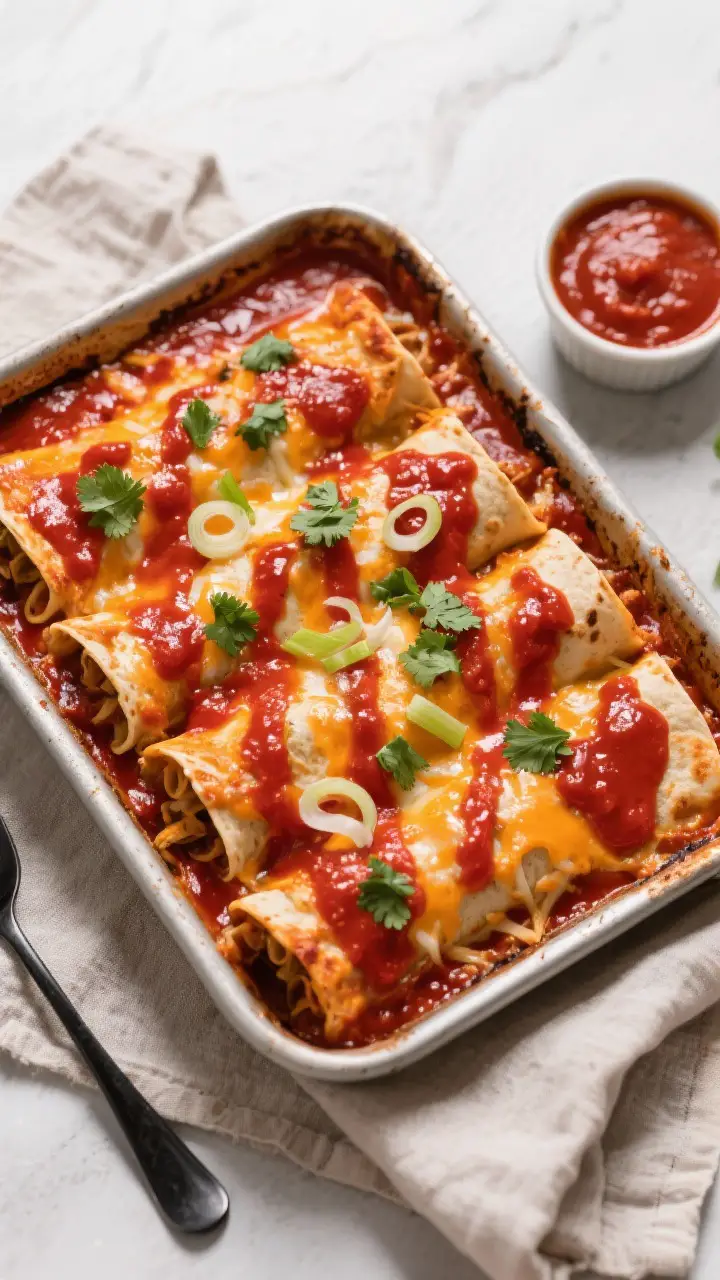
For a 9×13-inch pan, plan on about 2 to 2 1/2 cups of sauce.
This recipe yields roughly that amount. If you like extra saucy enchiladas, make 1.5 times the recipe.
Can I pressure-can or water-bath can this sauce?
This recipe is not tested for canning. For safety, store in the fridge or freeze.
If you want shelf-stable sauce, use a canning-tested recipe with verified acidity and processing times.
Why add vinegar at the end?
Acid brightens the spices and balances the natural bitterness of chili. Adding it at the end keeps that brightness intact. Start with 1 teaspoon and adjust to taste.
Can I make it without oil?
You can simmer spices, tomato paste, and broth without a roux, then thicken with a cornstarch slurry.
The flavor is lighter, but it still works well for enchiladas.
In Conclusion
Homemade enchilada sauce is quick, economical, and far more flavorful than store-bought jars. With a few pantry spices, a simple roux, and a hit of vinegar, you get a sauce that’s rich, smooth, and endlessly useful. Keep a batch in the fridge or freezer and you’re halfway to weeknight enchiladas any night.
Adjust the heat, tweak the acidity, and make it your own—once you try it, you won’t go back.
Printable Recipe Card
Want just the essential recipe details without scrolling through the article? Get our printable recipe card with just the ingredients and instructions.