
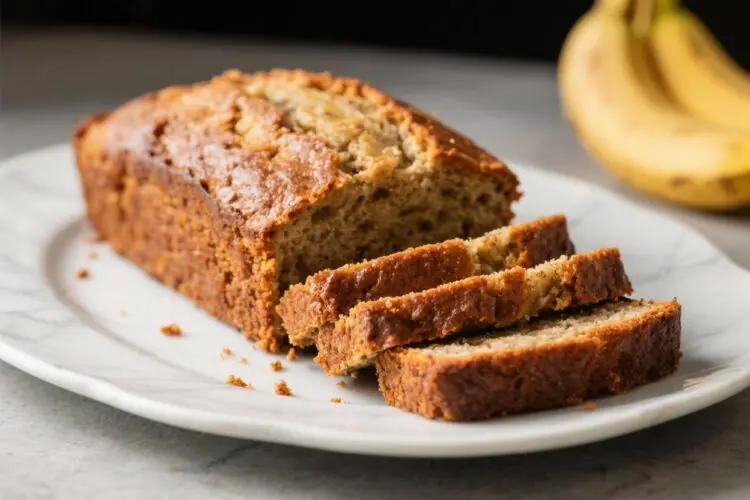
Banana bread is one of those comfort bakes that always hits the spot, but at high altitude it can be tricky. Loaves can sink, dry out, or turn out gummy in the middle. This recipe takes the guesswork out and gives you a moist, tender banana bread with a golden top and even crumb.
You don’t need special equipment or fancy ingredients. Just a few smart adjustments, a couple of ripe bananas, and about an hour in the oven.
Why This Recipe Works
At higher elevations, air pressure drops. That means batter rises faster, moisture evaporates quickly, and structure sets later.
This recipe counters all of that with small tweaks that make a big difference.
- Less leavening: A reduced amount of baking soda prevents over-expansion and collapse.
- A touch more flour: Extra structure helps the loaf hold its shape and bake through.
- More moisture and richness: Oil and brown sugar keep the crumb soft without sinking the center.
- Higher baking temperature at the start: A brief high-heat burst sets the top, then a lower bake ensures the inside cooks evenly.
What You’ll Need
- 3 very ripe bananas (about 1 1/4 to 1 1/2 cups mashed)
- 2 large eggs, room temperature
- 1/2 cup granulated sugar
- 1/3 cup packed brown sugar
- 1/3 cup neutral oil (canola or light olive oil)
- 1 teaspoon vanilla extract
- 1 3/4 cups all-purpose flour (spooned and leveled)
- 3/4 teaspoon baking soda
- 1/2 teaspoon fine salt
- 1 teaspoon ground cinnamon (optional, but recommended)
- 1/2 cup chopped nuts or chocolate chips (optional)
- 1–2 tablespoons milk (optional, only if batter seems too thick)
- Butter or baking spray for the pan
Altitude note: This formula is designed for about 3,500–7,500 feet. If you’re closer to 8,000 feet, see the FAQ for small adjustments.
How to Make It
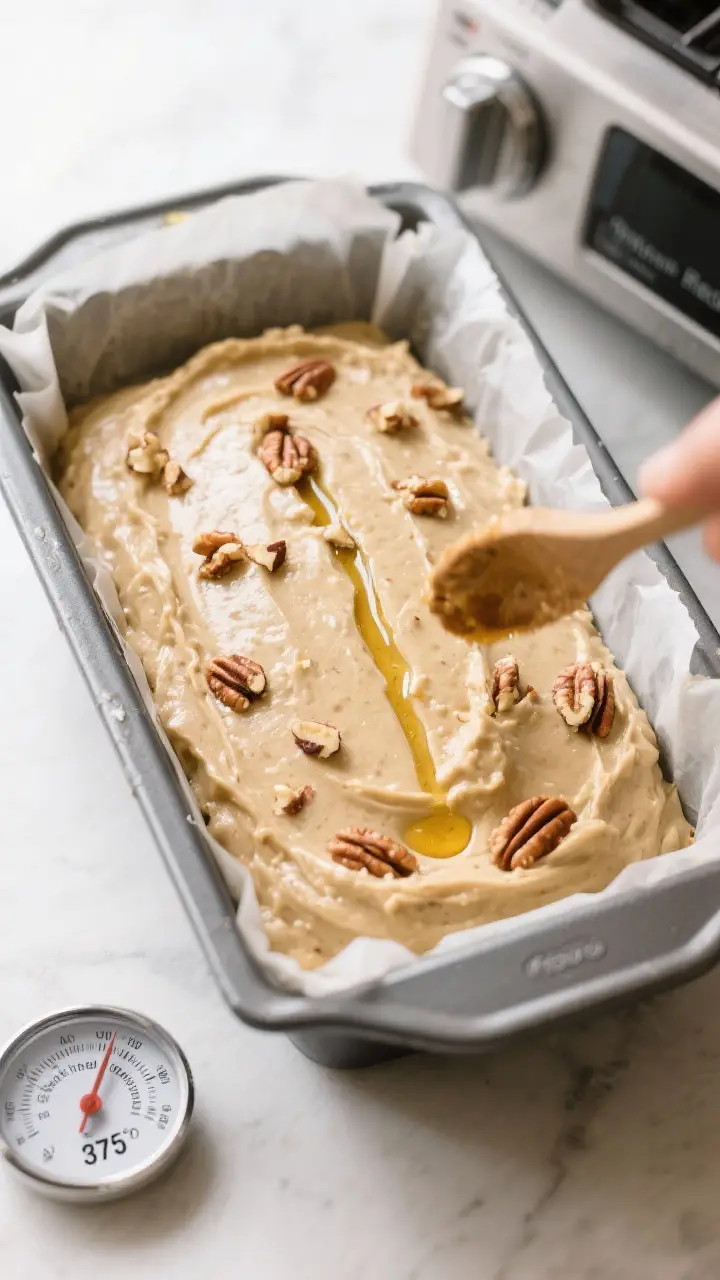
- Prep your pan and oven: Heat oven to 375°F. Grease a 9×5-inch loaf pan and line it with a parchment sling for easy removal.
The higher initial temp helps set the loaf’s structure.
- Mash the bananas: In a large bowl, mash the bananas until mostly smooth with a few small lumps. You should have about 1 1/4 to 1 1/2 cups. More banana means more moisture and sweetness.
- Whisk wet ingredients: Add eggs, granulated sugar, brown sugar, oil, and vanilla.
Whisk until the mixture looks glossy and fully combined, about 30–45 seconds.
- Combine dry ingredients: In a separate bowl, whisk flour, baking soda, salt, and cinnamon. This disperses the leavening evenly so you don’t get tunnels or uneven rise.
- Bring it together: Add the dry ingredients to the wet. Stir with a spatula just until you no longer see dry streaks.
If using nuts or chocolate chips, fold them in now. The batter should be thick but scoopable. If it’s paste-like, add 1 tablespoon of milk and fold again.
- Fill the pan: Scrape the batter into the pan and smooth the top.
For a pretty split, run a thin line of oil or a buttered knife down the center.
- Start hot, then reduce: Bake at 375°F for 12 minutes. Without opening the oven, reduce temperature to 335°F and continue baking 38–48 minutes, until a toothpick comes out with a few moist crumbs. Total time is about 50–60 minutes depending on altitude and oven.
- Cool properly: Let the bread cool in the pan for 10 minutes, then lift it out and cool on a rack for at least 1 hour before slicing.
This prevents a gummy center.
Keeping It Fresh
- Room temperature: Wrap the cooled loaf tightly in plastic or store in an airtight container for up to 3 days.
- Refrigerator: Not necessary, and it can dry the bread out. If your kitchen is very warm, wrap well and chill up to 5 days. Warm slices briefly before serving.
- Freezer: Slice, wrap each piece, and freeze up to 3 months.
Thaw at room temperature or toast straight from frozen.
Why This is Good for You
- Bananas add potassium and fiber, which support heart health and digestion.
- Oil instead of butter keeps the crumb tender and lowers saturated fat.
- Reasonable sugar levels let the banana shine without a sugar bomb. You still get a satisfying treat.
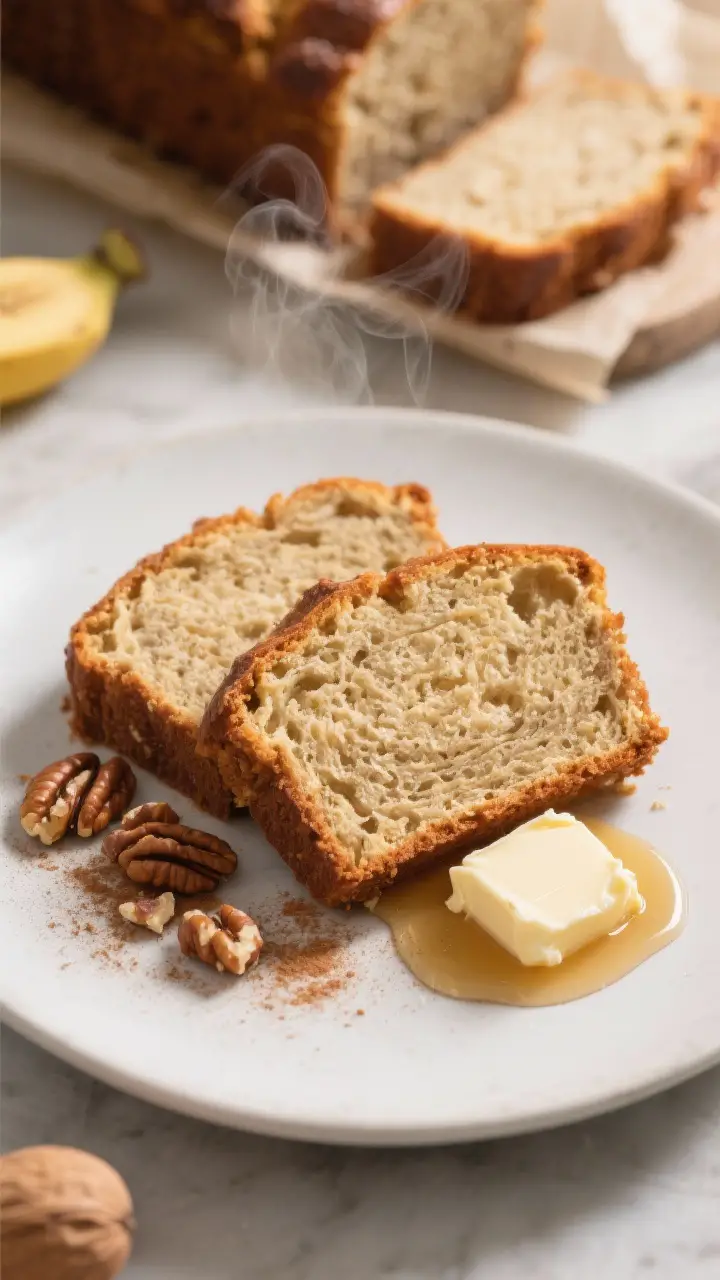
- Customizable add-ins like walnuts or pecans add healthy fats and a bit of protein.
Common Mistakes to Avoid
- Too much leavening: More baking soda doesn’t mean more rise. At altitude, it can cause the loaf to balloon and collapse.
- Overmixing: Stir just until combined.
Overmixing develops gluten and makes the bread tough.
- Underbaking: A high-altitude loaf can look done before it is. Aim for a few moist crumbs on the tester, not wet batter.
- Cutting too soon: Let it cool. Slicing early compresses the crumb and turns the center gummy.
- Wrong pan size: A 9×5 pan works best for this volume.
An 8 1/2×4 1/2 pan may overflow at higher elevations.
Recipe Variations
- Walnut Maple: Fold in 1/2 cup chopped walnuts and 2 tablespoons maple syrup. Reduce granulated sugar by 1 tablespoon to balance sweetness.
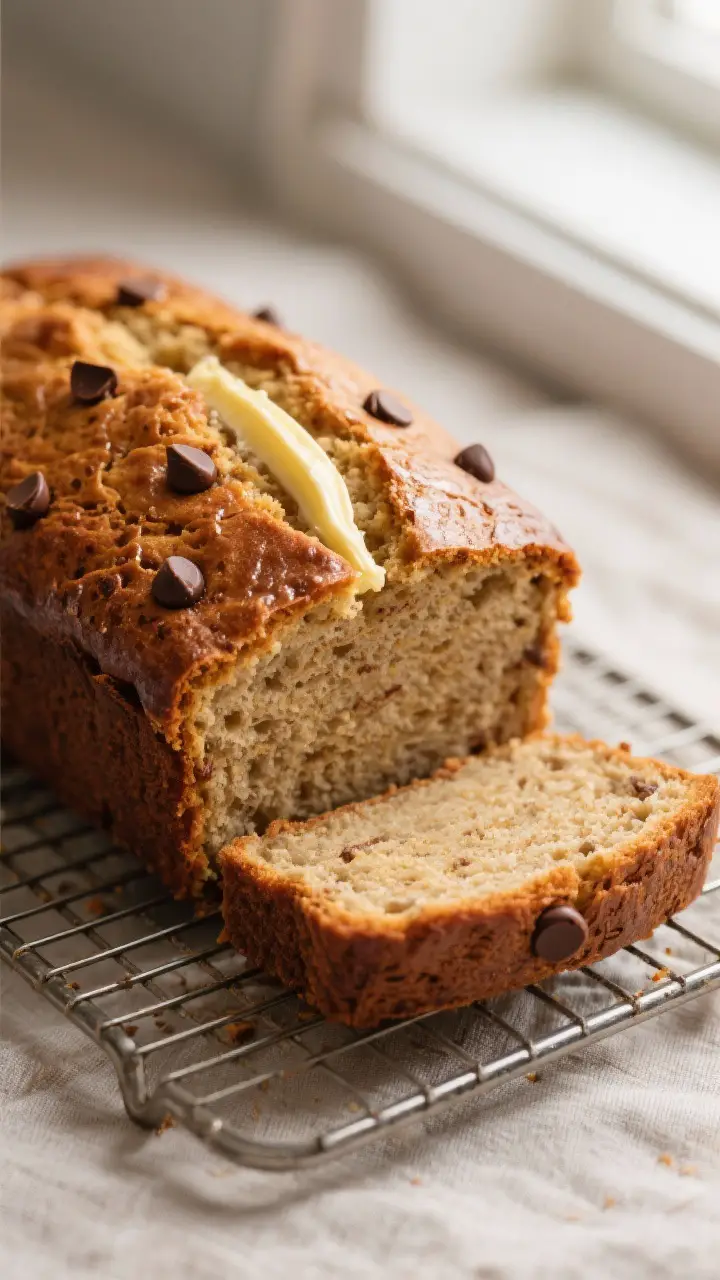
- Chocolate Chip: Add 1/2 cup semisweet chips. Sprinkle a few on top before baking for a bakery-style look.
- Blueberry Banana: Gently fold in 3/4 cup fresh blueberries tossed with 1 teaspoon flour.
Bake on the longer end of the time range.
- Whole Wheat Boost: Swap 1/2 cup of the all-purpose flour for white whole wheat. Add 1 tablespoon milk if the batter seems too thick.
- Brown Butter Banana: Replace the oil with 6 tablespoons browned butter, cooled. The flavor is deep and nutty; keep an eye on doneness as it may bake a touch faster.
FAQ
Can I make this at sea level?
Yes.
Increase baking soda to 1 teaspoon and bake at 350°F the whole time for 55–65 minutes. Keep everything else the same.
What if I’m at 8,000 feet or higher?
Use 1 7/8 cups flour (slightly heaping 1 3/4 cups), reduce baking soda to 1/2 teaspoon, and keep the two-stage bake. Check 5 minutes earlier, but don’t pull it until the tester shows a few moist crumbs.
Can I use frozen bananas?
Absolutely.
Thaw completely, then drain excess liquid to prevent a soggy loaf. Mash as usual and proceed with the recipe.
Do I need a stand mixer?
No. A whisk and a spatula are perfect.
Overmixing is a risk with mixers, and this batter comes together easily by hand.
How do I know it’s done without a toothpick?
Use a thin knife or check with an instant-read thermometer. The center should read around 200–205°F. The top should feel set and spring back lightly.
Can I cut the sugar?
You can reduce the granulated sugar by 2–3 tablespoons without issue.
Keep the brown sugar for moisture and flavor.
What oil works best?
Neutral oils like canola, sunflower, or light olive oil work well. If using coconut oil, melt and cool it first, and make sure your ingredients aren’t cold so it doesn’t seize.
Why start hot and then lower the temperature?
The initial heat helps the loaf rise and set quickly so it doesn’t over-expand and collapse. Lower heat after that ensures an even bake and a moist crumb.
Can I make muffins instead?
Yes.
Fill a lined muffin tin about 3/4 full. Bake at 400°F for 5 minutes, then reduce to 350°F and bake 10–12 more minutes, until set.
Why is my banana bread dry?
It likely baked too long or the batter was too dry. Next time, check early, and if the batter seems very thick, add a tablespoon of milk.
Also confirm your oven temperature with an oven thermometer.
In Conclusion
High altitude baking doesn’t have to be frustrating. With the right balance of leavening, structure, and moisture, banana bread turns out soft, fragrant, and beautifully domed. Follow these steps, give it proper cooling time, and you’ll have a loaf that slices cleanly and tastes even better the next day.
Keep the base recipe handy, then tweak it with your favorite add-ins to make it your own.