
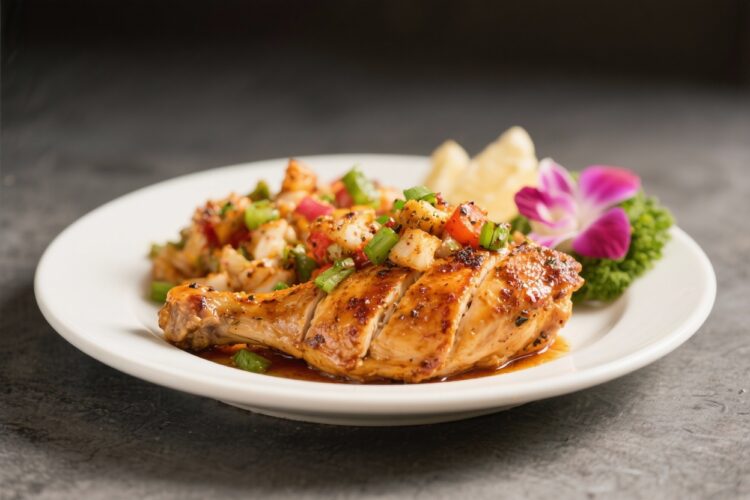
Hawaiian Chicken brings together juicy chicken, tangy pineapple, and a glossy, flavorful sauce that tastes like sunshine in a skillet. It’s simple enough for a Tuesday night but special enough to serve company. The flavors are balanced—sweet, salty, a little garlicky, and lightly smoky if you choose to grill.
You can make it on the stovetop, in the oven, or on the grill, and it pairs beautifully with rice or a crisp salad. If you like big flavor without a lot of fuss, this one’s for you.
Why This Recipe Works
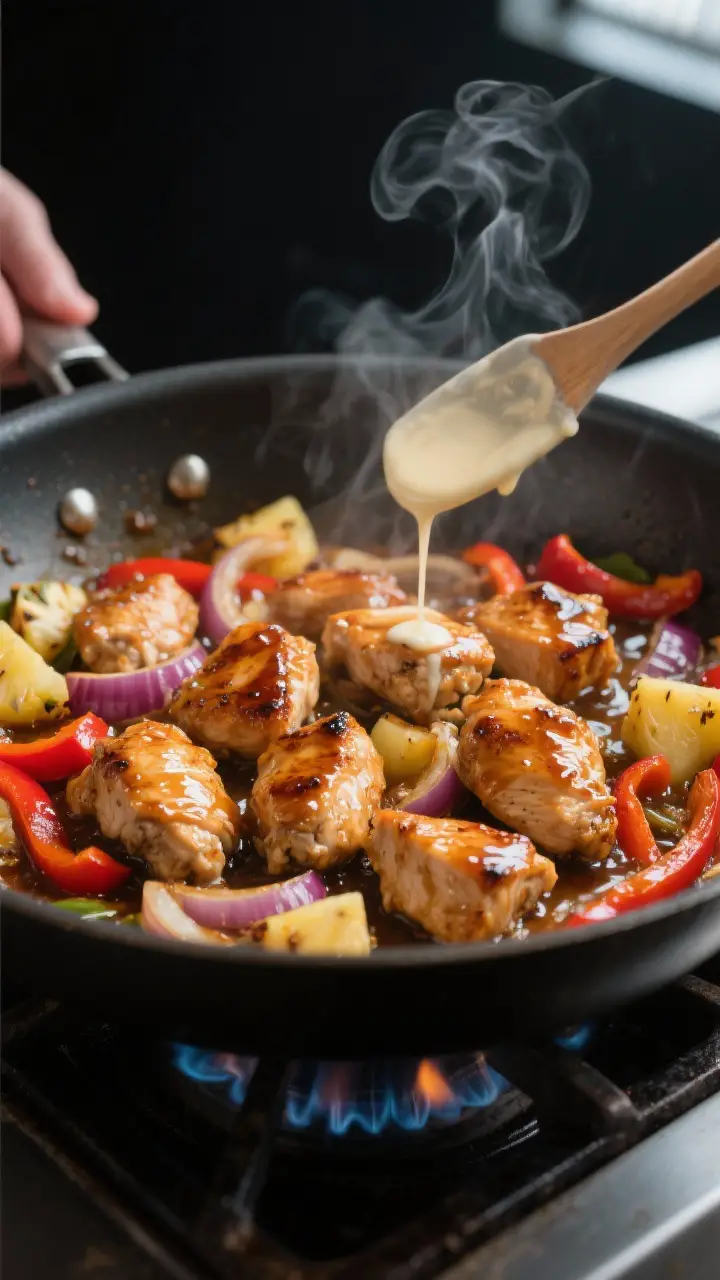
This recipe leans on a short ingredient list that does a lot of heavy lifting. Pineapple juice tenderizes the chicken and gives natural sweetness, while soy sauce adds depth and saltiness.
A quick cornstarch slurry creates a glossy, clingy sauce that coats every bite. You’ll get reliable results whether you use breasts or thighs, fresh or canned pineapple, and the steps are straightforward, even for beginners.
Shopping List
- Chicken: 1.5 to 2 pounds boneless, skinless chicken thighs or breasts
- Pineapple: 1 can (20 oz) pineapple chunks in juice, not syrup; or 2 cups fresh pineapple
- Soy sauce: Low-sodium preferred
- Brown sugar: Light or dark
- Rice vinegar: Or apple cider vinegar
- Garlic: 3–4 cloves, minced
- Ginger: 1 tablespoon fresh grated (or 1 teaspoon ground)
- Ketchup: Adds body and color
- Sesame oil: For aroma and roundness (optional)
- Cornstarch: For thickening
- Bell peppers: 1–2, any color, sliced
- Red onion: 1 small, sliced (optional)
- Neutral oil: Canola, avocado, or grapeseed for cooking
- Salt and pepper: To season
- Red pepper flakes: Optional, for mild heat
- Green onions and sesame seeds: For garnish (optional)
- Cooked rice: For serving
Step-by-Step Instructions
- Prep the chicken: Pat the chicken dry and cut into bite-size pieces. Season lightly with salt and pepper.
Drying helps sear and prevents steaming.
- Make the sauce: In a bowl, whisk 1/2 cup pineapple juice (from the can), 1/4 cup soy sauce, 2–3 tablespoons brown sugar, 1 tablespoon rice vinegar, 2 tablespoons ketchup, 1 teaspoon sesame oil (optional), 2 minced garlic cloves, and the grated ginger. Taste and adjust sweetness or salt.
- Thicken the slurry: Mix 1 tablespoon cornstarch with 1 tablespoon cold water. Set aside.
This will tighten the sauce at the end.
- Sear the chicken: Heat 1–2 tablespoons oil in a large skillet over medium-high. Add chicken in an even layer. Cook 3–4 minutes per side until browned and nearly cooked through.
Remove to a plate.
- Cook the vegetables: In the same skillet, add a touch more oil if needed. Sauté bell peppers and red onion for 3–4 minutes until crisp-tender. Add a pinch of salt.
- Add pineapple: Stir in pineapple chunks and cook 1–2 minutes to warm and lightly caramelize the edges.
If you like a little heat, sprinkle in red pepper flakes now.
- Build the sauce: Pour the sauce mixture into the skillet. Bring to a gentle simmer, stirring. Once it bubbles, whisk the cornstarch slurry and drizzle it in while stirring.
The sauce will turn glossy and thicken in 30–60 seconds.
- Finish the chicken: Return the chicken and any juices to the skillet. Toss to coat and simmer 1–2 minutes until the chicken is cooked through and the sauce clings. Adjust with a splash of pineapple juice or water if too thick.
- Taste and season: Add more soy sauce for salt, a pinch of sugar if you want sweeter, or vinegar for brightness.
You’re aiming for a balanced sweet-sour-salty finish.
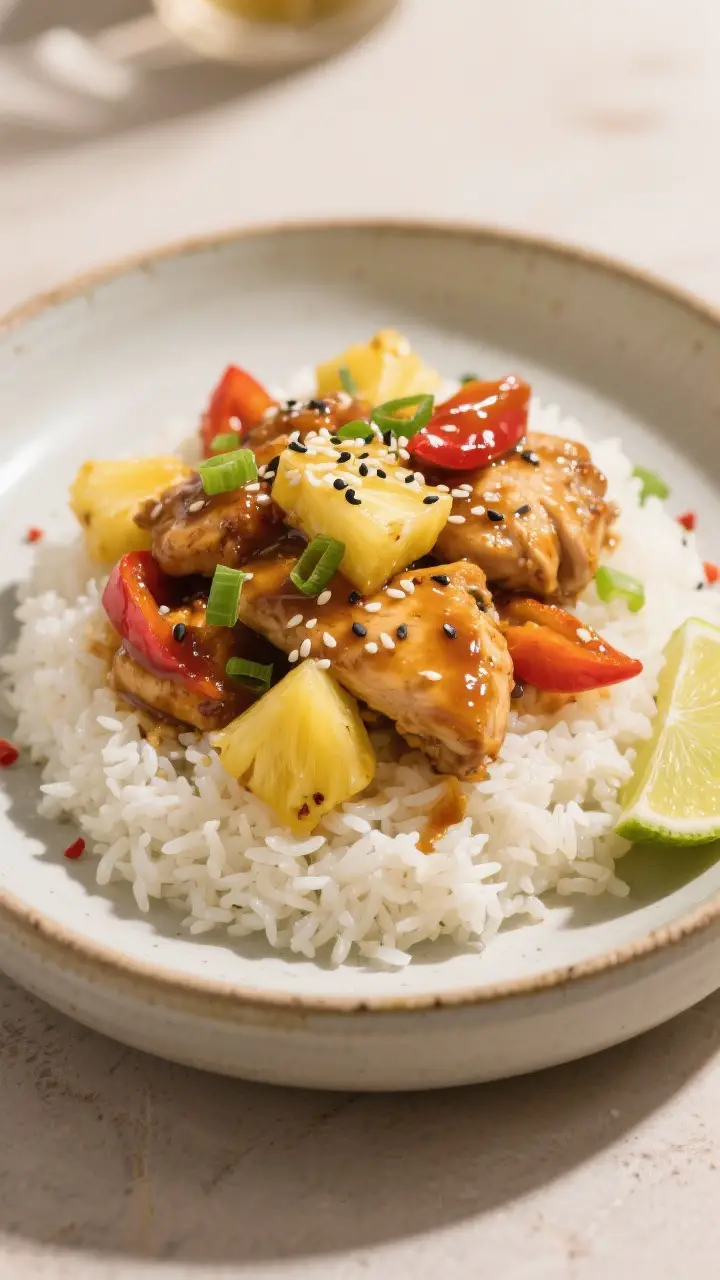
- Serve: Spoon over steamed rice. Garnish with sliced green onions and sesame seeds. Serve hot.
Storage Instructions
Let leftovers cool to room temperature, then store in an airtight container in the fridge for up to 4 days.
Reheat gently on the stovetop over low heat, adding a splash of water to loosen the sauce. You can also microwave in short bursts, stirring between intervals. For longer storage, freeze in portions for up to 2 months.
Thaw overnight in the fridge and reheat as above.
Health Benefits
- Lean protein: Chicken provides high-quality protein for muscle repair and steady energy. Choose breasts for leaner calories or thighs for iron and richer flavor.
- Vitamin C and manganese: Pineapple brings vitamin C for immune support and manganese for metabolism and bone health.
- Vegetables count: Bell peppers add fiber, vitamin A, and antioxidants without many calories.
- Lower sodium options: Using low-sodium soy sauce and controlling added salt keeps this dish heart-friendlier without losing flavor.
- Balanced plate: Pair with brown rice or cauliflower rice to boost fiber and keep you full longer.
What Not to Do
- Don’t overcrowd the pan: Crowding steams the chicken and vegetables. Work in batches for good browning.
- Don’t skip drying the chicken: Excess surface moisture blocks searing and dilutes flavor.
- Don’t add cornstarch to hot liquid directly: It will clump.
Always mix with cold water first.
- Don’t overcook the chicken: It turns tough and dry. Pull it as soon as it reaches 165°F and finishes in the sauce.
- Don’t use pineapple in heavy syrup: The sauce will become overly sweet and sticky. Choose juice-packed pineapple.
Variations You Can Try
- Grilled Hawaiian Chicken: Marinate whole thighs or breasts in the sauce (without cornstarch) for 2–4 hours.
Grill over medium-high heat, basting with reserved marinade boiled for 5 minutes. Serve with grilled pineapple rings.
- Sheet Pan Version: Toss chicken, peppers, and pineapple with 2 tablespoons oil, salt, and pepper. Roast at 425°F for 18–22 minutes.
Meanwhile, simmer the sauce on the stove and thicken with slurry. Toss everything together on the tray.
- Spicy Kick: Add 1–2 teaspoons sriracha or sambal to the sauce. Finish with a squeeze of lime for contrast.
- Tropical Twist: Stir in a splash of coconut milk at the end for a creamy finish, and top with toasted coconut flakes.
- Low-Carb: Swap rice for cauliflower rice and reduce the brown sugar to 1 tablespoon.
Use extra vegetables like snap peas or zucchini.
- Vegetarian Option: Replace chicken with extra-firm tofu or tempeh. Press tofu, cube it, sear until golden, then proceed with the recipe.
FAQ
Can I use fresh pineapple instead of canned?
Yes. Fresh pineapple works great.
If you do, replace the canned pineapple juice with bottled pineapple juice or orange juice to make the sauce.
What cut of chicken is best?
Thighs are more forgiving and stay juicy, especially if you plan to reheat. Chicken breasts work too—just avoid overcooking and keep the pieces uniform for even doneness.
How do I prevent the sauce from getting too thick?
Add the cornstarch slurry gradually and stop when it coats a spoon. If it thickens too much, stir in a splash of water or pineapple juice to loosen it.
Can I make this ahead?
Yes.
Cook it fully, cool, and refrigerate. Reheat gently and add a little water to bring the sauce back to a silky texture. The flavors actually meld nicely by day two.
Is there a gluten-free option?
Use certified gluten-free tamari or coconut aminos instead of soy sauce, and confirm your ketchup and vinegar are gluten-free.
The rest of the ingredients are typically safe.
Final Thoughts
Hawaiian Chicken hits that sweet spot of easy, colorful, and crowd-pleasing. The sauce is balanced, the steps are simple, and the ingredients are pantry-friendly. Make it your own with heat, smoke, or a creamy twist, and serve it with fluffy rice for a complete meal.
Once you try it, it’ll become one of those recipes you can make from memory on a busy night.
Printable Recipe Card
Want just the essential recipe details without scrolling through the article? Get our printable recipe card with just the ingredients and instructions.