
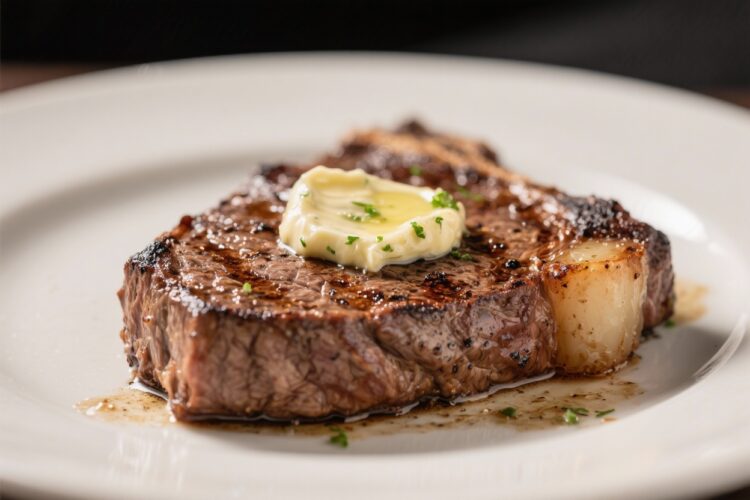
Nothing beats the smell of a steak hitting a hot grill. This recipe makes it easy to get a juicy, flavorful steak with a rich garlic butter that melts right over the top. You don’t need fancy techniques—just good meat, a hot grill, and a few pantry staples.
The result is restaurant-level flavor in your own backyard. Whether it’s a weeknight treat or a weekend splurge, this is the kind of steak you’ll make again and again.
Why This Recipe Works
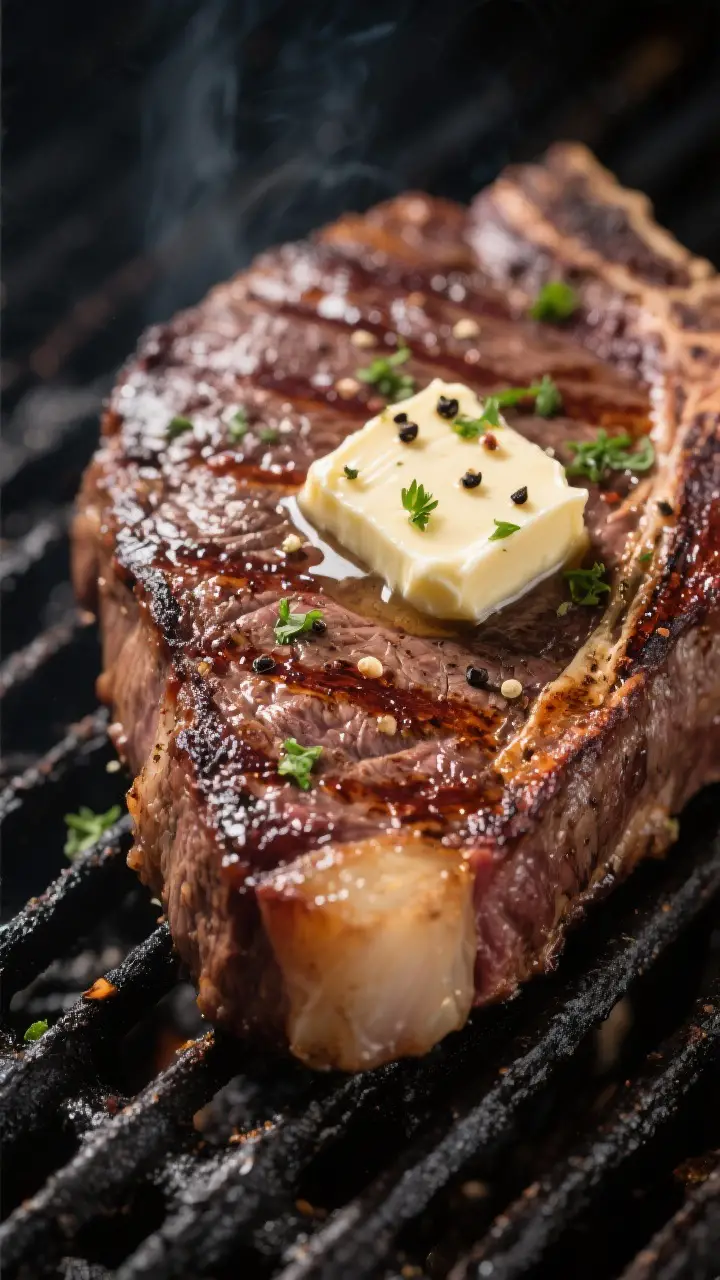
This method focuses on three things: seasoning, heat, and rest. A simple salt-and-pepper base lets the steak’s natural flavor shine while the garlic butter adds richness and aroma.
High heat builds a deep crust without overcooking the center. Resting the steak for a few minutes helps the juices settle, so every bite is tender and juicy.
We’re also using butter that’s mixed with fresh garlic and herbs. It melts over the steak right after grilling, coating the surface with flavor.
The warm steak absorbs some of that butter, giving you the best of both worlds: a crisp sear and a silky finish.
Ingredients
- 2 ribeye or New York strip steaks (about 1 to 1.5 inches thick, 10–14 oz each)
- Kosher salt (about 1 to 1.5 teaspoons per pound of meat)
- Freshly ground black pepper (to taste)
- 1 tablespoon neutral oil (canola, avocado, or grapeseed)
- 1 tablespoon butter per steak (for basting, optional)
For the Garlic Butter:
- 4 tablespoons unsalted butter (softened)
- 2–3 garlic cloves (finely minced or grated)
- 1 tablespoon fresh parsley (chopped)
- 1 teaspoon fresh lemon juice (optional, for brightness)
- Pinch of salt and a few grinds of black pepper
Optional add-ins: pinch of red pepper flakes, chopped chives, or a splash of Worcestershire sauce.
Step-by-Step Instructions
- Make the garlic butter. In a small bowl, mix softened butter, garlic, parsley, lemon juice, salt, and pepper until smooth. Taste and adjust seasoning. Scrape onto parchment, roll into a small log, and chill while you prep the steaks.
- Prep the steaks. Pat the steaks very dry with paper towels.
Moisture prevents a good sear. Rub lightly with oil, then season generously with salt and pepper on all sides, including the edges.
- Let them sit. If you have time, leave the seasoned steaks at room temperature for 20–30 minutes. This helps them cook more evenly and develop a better crust.
- Preheat the grill. Heat a gas or charcoal grill to high.
You want the grates hot enough that the steak sizzles right away. Clean and oil the grates to prevent sticking.
- Grill the steaks. Place the steaks over direct heat. Cook 3–5 minutes on the first side without moving them to build a deep crust.
Flip and cook another 3–5 minutes for medium-rare, depending on thickness and grill heat.
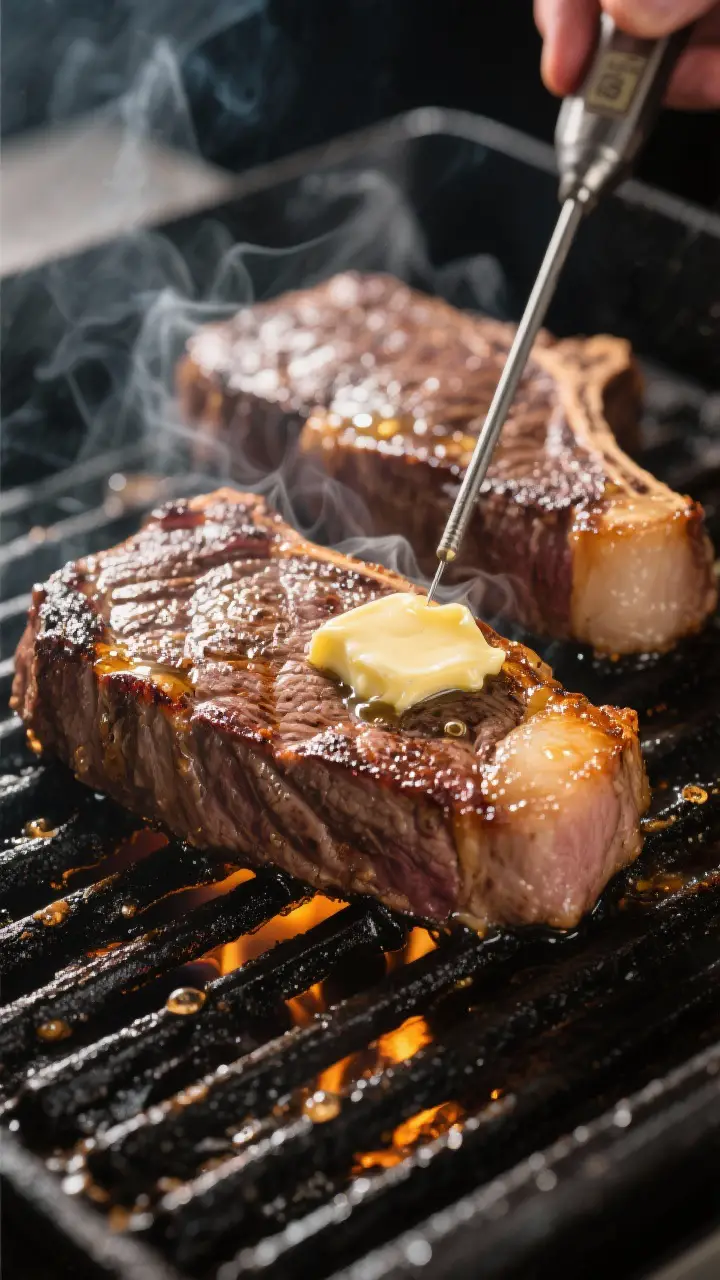
- Check doneness. Use an instant-read thermometer for accuracy:
- 125°F for rare
- 130–135°F for medium-rare
- 140–145°F for medium
- 150–155°F for medium-well
Remember, the temperature will rise a few degrees as the steak rests.
- Optional butter baste. In the last minute of grilling, add a small pat of butter to each steak and let it melt and sizzle. This boosts browning and adds flavor.
- Rest the steaks. Transfer to a warm plate or cutting board. Top with a slice of the chilled garlic butter.
Tent loosely with foil and rest 5–8 minutes so the juices redistribute.
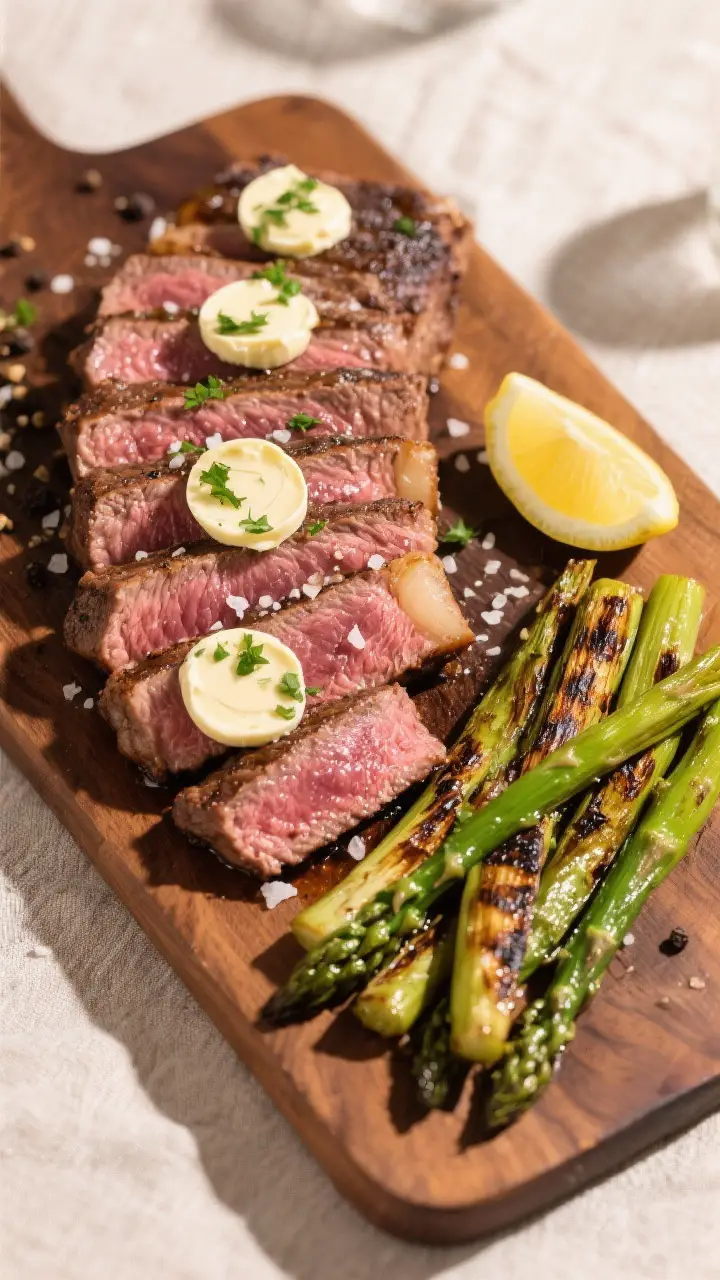
- Slice and serve. Slice against the grain for tenderness, or serve whole. Spoon any melted butter and juices from the board over the top. Finish with a pinch of flaky salt if you like.
Keeping It Fresh
Leftover steak keeps well when treated right.
Let it cool, then store in an airtight container in the fridge for up to 3 days. Keep the garlic butter separate if you have extra; it will last a week in the fridge or a month in the freezer.
To reheat without drying out, warm slices gently in a skillet over low heat with a dab of butter, or bring to room temp and give them a quick sear. Avoid the microwave if possible—it can turn steak tough and gray.
Cold leftover steak also makes excellent sandwiches or salads.
Why This is Good for You
Steak provides high-quality protein, iron, zinc, and B vitamins, which support energy, muscle repair, and immune function. When paired with a simple salad or grilled vegetables, it can be part of a balanced meal. Using a moderate amount of butter adds flavor, which often helps you feel satisfied with a reasonable portion.
Grilling also means you don’t need heavy sauces.
A little seasoned butter goes a long way. If you’re mindful of portion size and sides, this meal can fit nicely into many eating plans.
What Not to Do
- Don’t start with wet steaks. Water blocks browning. Always pat dry.
- Don’t skip the rest. Cutting too soon sends the juices running out onto the board.
- Don’t overflip. Let the steak sit to build a proper crust before turning.
- Don’t crowd the grill. Overcrowding drops the heat and leads to steaming instead of searing.
- Don’t rely on guesswork. Use a thermometer for consistent results.
Alternatives
- Pan-Seared Version: Use a heavy skillet (cast iron is best).
Sear in a thin layer of oil over high heat, then add butter and a smashed garlic clove to baste. Finish in a 400°F oven if the steak is very thick.
- Herb Swaps: Try chives, thyme, or rosemary instead of parsley. Tarragon adds a nice anise note.