
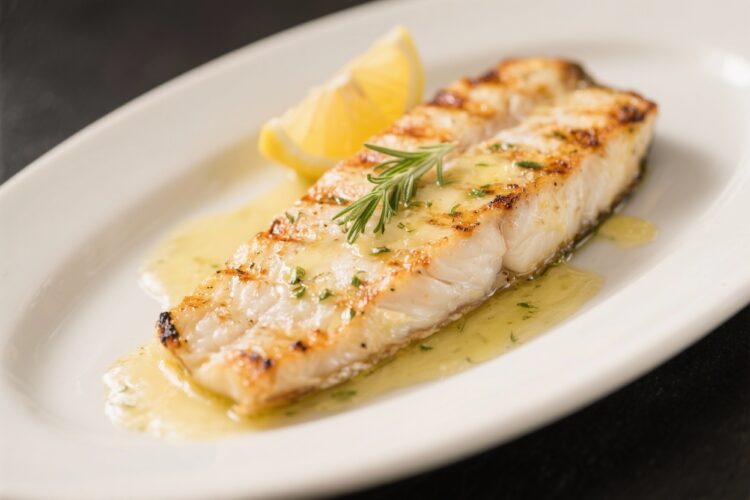
Grilled halibut with lemon butter is one of those meals that feels effortless yet special. The fish is tender and flaky, the sauce is silky and bright, and it all comes together fast. This is an easy weeknight dinner that still looks restaurant-worthy on a weekend.
You don’t need fancy techniques or a long ingredient list—just fresh fish, a hot grill, and a few pantry staples. If you’ve been nervous about grilling fish, this is a great place to start.
Why This Recipe Works
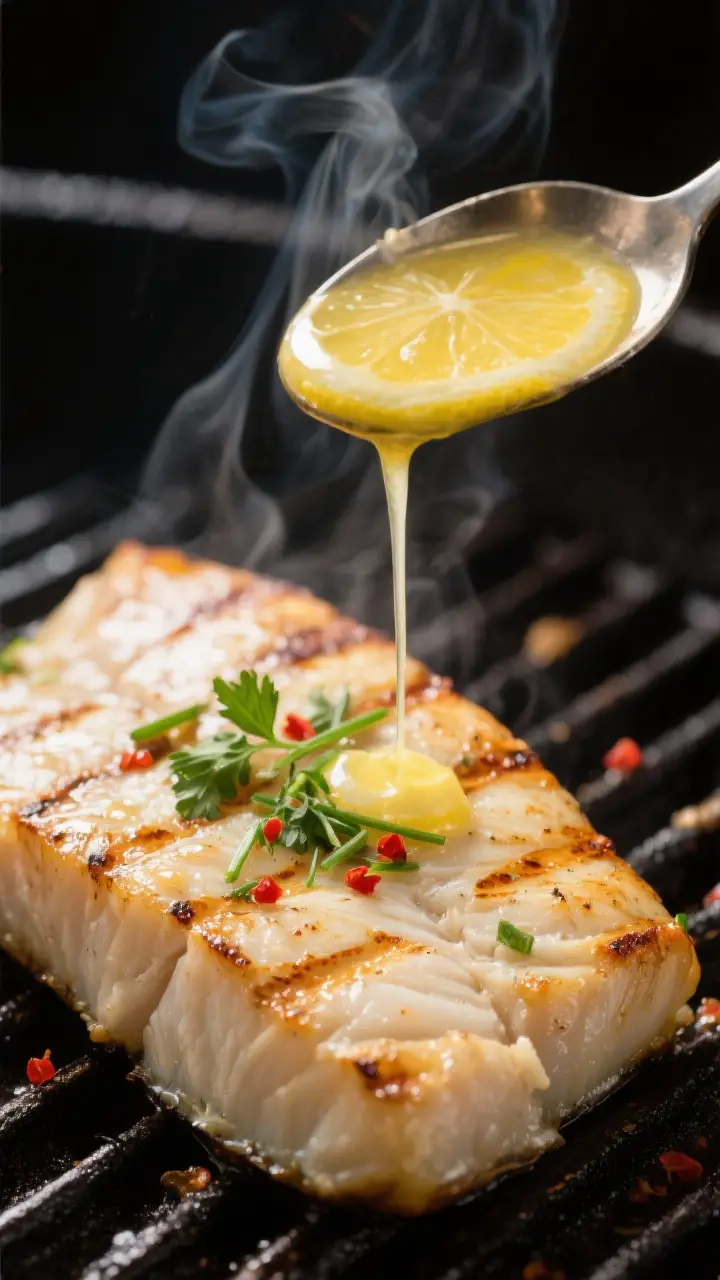
The key is halibut’s firm texture. It stands up well to the grill and doesn’t fall apart if you treat it gently.
A quick rub of oil, salt, and pepper keeps the fish moist and seasoned without masking its clean flavor. The lemon butter sauce adds richness and brightness at the same time, so the fish tastes luxurious without feeling heavy. Finishing with fresh herbs layers in a fresh, aromatic note that ties everything together.
What You’ll Need
- Halibut fillets (1 to 1.5 inches thick, skin-on or skinless) – about 4 fillets, 6 ounces each
- Olive oil – for brushing the fish and grill grates
- Kosher salt and freshly ground black pepper – to season
- Unsalted butter – 4 tablespoons
- Fresh lemon – zest and juice (about 1 lemon)
- Garlic – 1 small clove, finely minced (optional)
- Fresh parsley – 2 tablespoons, finely chopped
- Fresh chives or dill – 1 tablespoon, finely chopped (optional but great)
- Red pepper flakes – a pinch, for gentle heat (optional)
- Lemon wedges – for serving
Step-by-Step Instructions
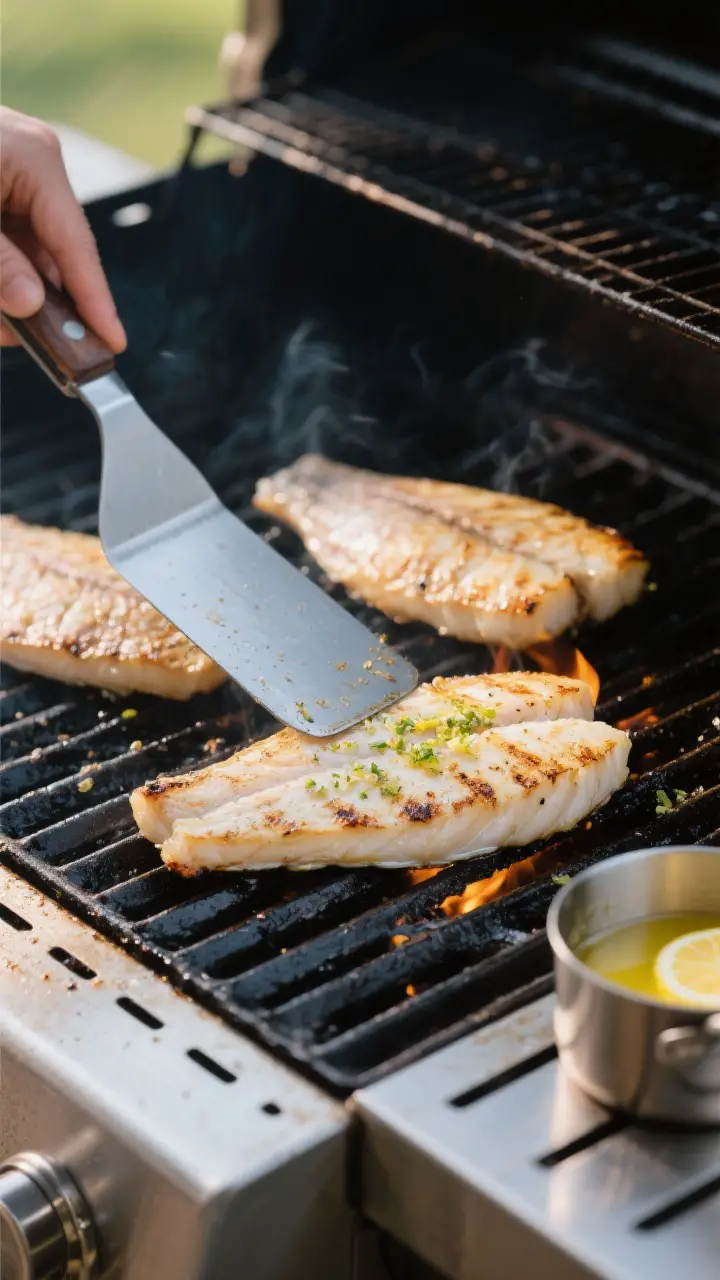
- Preheat the grill. Heat your gas grill to medium-high (about 425–450°F).
For charcoal, build a medium-hot, even bed of coals. Clean and oil the grates well to prevent sticking.
- Pat the fish dry. Moisture on the surface leads to sticking. Use paper towels to dry the halibut thoroughly.
- Season simply. Brush both sides with olive oil.
Season generously with kosher salt and black pepper. Keep it basic; halibut’s flavor shines with minimal seasoning.
- Make the lemon butter. In a small saucepan over low heat, melt the butter. Stir in lemon zest, 1–2 tablespoons lemon juice, garlic (if using), and a pinch of red pepper flakes.
Keep warm off the heat. Taste and adjust with more lemon if you like it brighter.
- Oil the grill grates again. Just before cooking, use tongs and an oiled paper towel to wipe the grates. This is your insurance against sticking.
- Grill the halibut. Place the fillets on the grill.
If the fish has skin, start skin-side down. Close the lid. Cook without moving for 3–4 minutes, until the bottom side releases easily and has light grill marks.
- Flip carefully. Use a thin, wide spatula to turn the fish.
Cook another 3–4 minutes, depending on thickness. You’re aiming for an internal temperature of 130–135°F for moist, flaky fish. The flesh should turn opaque and flake with gentle pressure.
- Rest and sauce. Transfer to a platter and let rest 2 minutes.
Spoon the warm lemon butter over the fillets. Sprinkle with parsley and chives or dill.
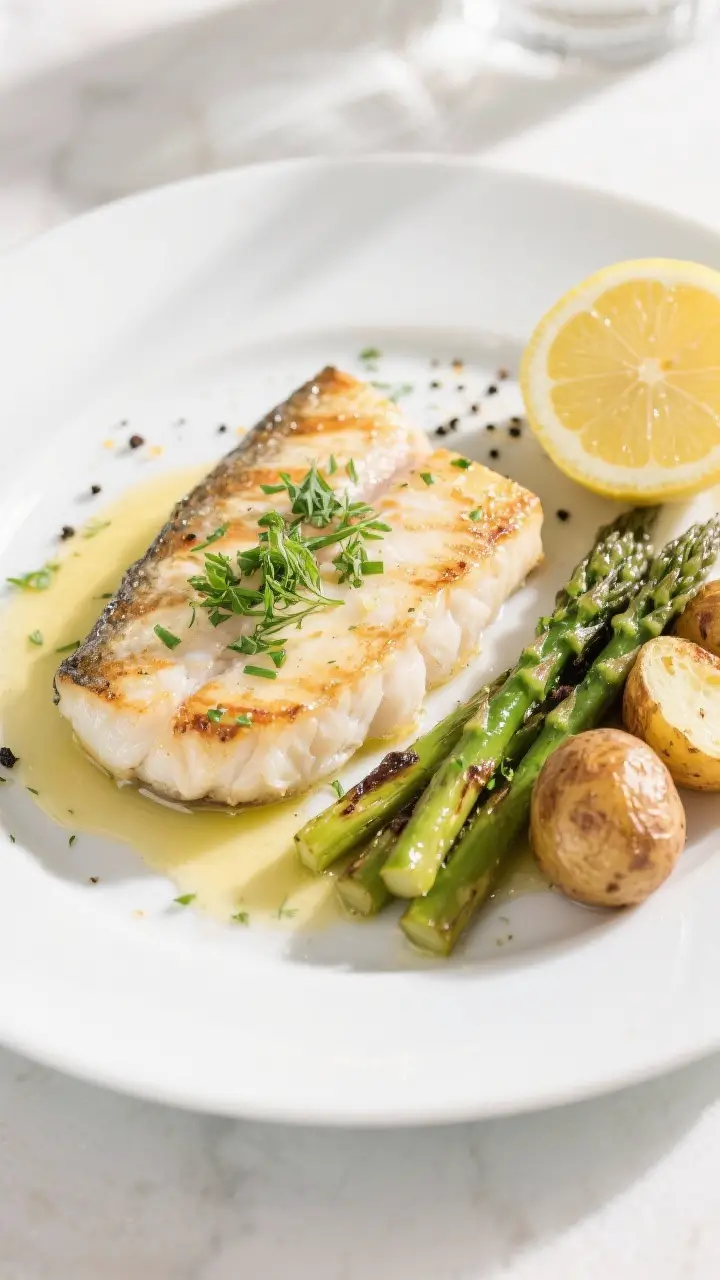
- Serve. Add lemon wedges on the side for extra brightness. Serve with simple sides like grilled asparagus, a green salad, or garlicky potatoes.
Storage Instructions
- Refrigerate: Cool completely, then store in an airtight container for up to 2 days.
- Reheat gently: Warm in a 275°F oven for 8–10 minutes or in a covered skillet over low heat with a splash of water.
Avoid microwaving on high; it can dry the fish out.
- Leftover ideas: Flake cold halibut into a salad, tuck into tacos with cabbage and crema, or fold into warm rice with extra lemon butter.
- Do not freeze: Cooked halibut can turn mealy after freezing, and the sauce may separate.
Why This Is Good for You
Halibut is a lean source of high-quality protein, which helps keep you full and supports muscle health. It offers selenium and vitamin B12, both important for immune function and energy metabolism. Compared with heavier sauces, a small amount of real butter delivers flavor and satiety without needing a lot of it.
The lemon and herbs add antioxidants and freshness, making the dish feel light and balanced.
Common Mistakes to Avoid
- Skipping the dry rub-down: If the fish is wet, it sticks. Always pat it dry.
- Underheating the grill: A too-cool grill causes sticking and pale, overcooked fish. Aim for medium-high heat.
- Overcooking: Halibut dries quickly.
Pull it at 130–135°F or when just opaque and flaky.
- Moving the fish too soon: Let it release naturally before flipping. If it resists, give it another 30–60 seconds.
- Drowning it in sauce: The lemon butter should complement, not cover, the fish. Start with a spoonful, add more at the table.
- Using old lemons: Fresh zest and juice make a big flavor difference.
Skip bottled juice if you can.
Variations You Can Try
- Browned Butter Lemon: Cook the butter until lightly golden and nutty before adding lemon. It adds a toasty depth.
- Capers and White Wine: Stir a tablespoon of capers and a splash of dry white wine into the butter. Reduce briefly for a briny, bright sauce.
- Herb Bomb: Swap parsley for basil and tarragon, and add a touch of Dijon to the butter for a bistro-style finish.
- Citrus Twist: Use a mix of lemon and orange zest for a softer, fragrant citrus profile.
- Spice Rub: Dust the fish lightly with smoked paprika, coriander, and a pinch of cumin before grilling, then finish with plain lemon butter.
- Grill Pan Method: No outdoor grill?
Use a cast-iron grill pan or skillet on medium-high. Add a little extra oil to prevent sticking.
FAQ
How do I know when halibut is done?
It should turn opaque and flake easily with a fork. An instant-read thermometer should read 130–135°F at the thickest part.
Pull it slightly early and let carryover heat finish the job.
Can I use frozen halibut?
Yes. Thaw it overnight in the fridge, then pat very dry before seasoning. Avoid quick thawing in warm water, which can affect texture and increase sticking.
What if I can’t find halibut?
Try cod loin, grouper, sea bass, or swordfish.
Choose firm, thick fillets so they hold up on the grill.
Should I leave the skin on?
Skin-on fillets are easier to grill because the skin protects the flesh and helps prevent sticking. You can remove the skin after grilling if you prefer.
Can I make the lemon butter ahead of time?
Yes. Make it up to a day in advance and store covered in the fridge.
Warm gently before serving and add herbs at the end to keep them fresh-tasting.
How do I prevent sticking on the grill?
Start with clean, hot grates. Oil the grates and the fish. Don’t move the fish until it naturally releases, and use a thin, wide spatula to flip.
What sides go well with this?
Grilled asparagus, blistered green beans, a simple arugula salad, roasted potatoes, or a lemony couscous all pair nicely.
Is this recipe kid-friendly?
Usually yes.
Halibut has a mild flavor and a firm, meaty texture. You can skip the garlic and red pepper flakes for a gentler taste.
Wrapping Up
Grilled halibut with lemon butter is simple, fast, and reliably delicious. With a hot grill, a light hand on seasoning, and a bright sauce, you’ll get tender, flaky fish every time.
Keep the steps straightforward, don’t overcook, and finish with fresh herbs and lemon. It’s the kind of recipe you’ll come back to whenever you want something fresh, light, and satisfying.