
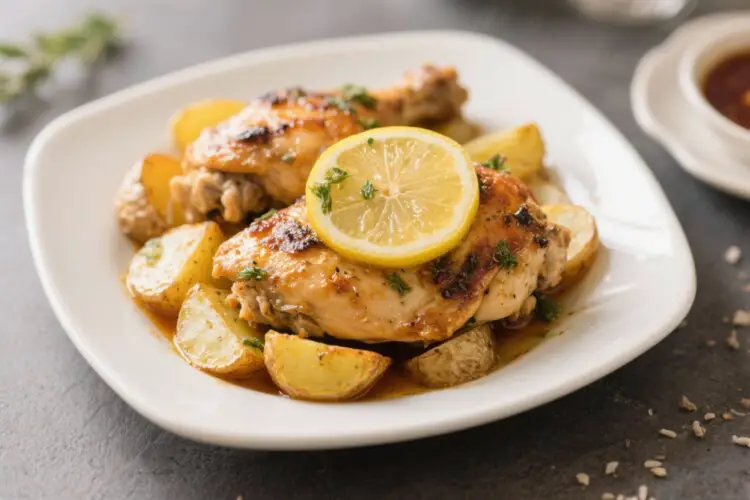
Greek lemon chicken with potatoes is one of those meals that makes the whole kitchen smell warm and inviting. It’s simple, honest food: juicy chicken, tender potatoes, and a tangy lemon-garlic sauce that roasts into something golden and irresistible. You don’t need special equipment or tricky techniques—just a baking sheet, a good lemon, and a handful of pantry staples.
This is the kind of dinner you can make on a weeknight and still feel like you treated yourself. It’s also perfect for company because it tastes like more effort than it is.
What Makes This Special
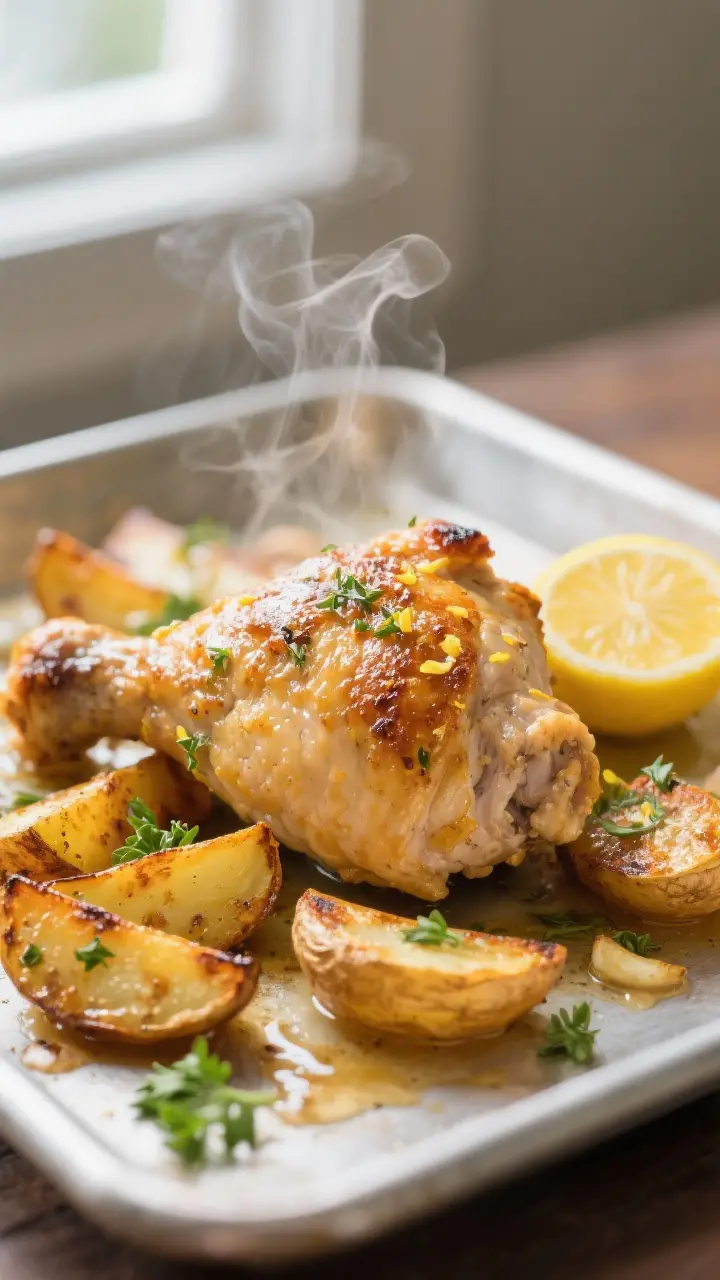
This dish balances bright citrus with savory depth. The lemon juice and zest cut through the richness of the chicken, while garlic, oregano, and olive oil add classic Mediterranean flavor.
As everything roasts, the potatoes soak up the chicken juices and become almost creamy inside, with crisp edges. You also get a built-in sauce—those pan juices are liquid gold, perfect for spooning over the chicken and mopping up with bread. Best of all, it’s a one-pan meal with minimal cleanup.
Shopping List
- Chicken: Bone-in, skin-on thighs or drumsticks (about 2 to 2.5 pounds)
- Potatoes: Yukon Gold or russet potatoes (2 to 2.5 pounds), peeled if you like
- Lemons: 2 large, for juice and zest
- Garlic: 5–6 cloves, minced or grated
- Olive oil: Good-quality extra-virgin (about 1/3 cup total)
- Chicken broth: 1/2 cup (optional but helpful for extra pan sauce)
- Dried oregano: Greek oregano if possible (2 teaspoons)
- Fresh herbs (optional): Fresh oregano, parsley, or dill for garnish
- Salt and pepper: Kosher salt and freshly ground black pepper
- Optional extras: Red pepper flakes, a splash of white wine, or a few sprigs of fresh rosemary
How to Make It
- Heat the oven. Preheat to 425°F (220°C).
A hot oven ensures crisp skin and caramelized edges.
- Prep the potatoes. Cut potatoes into wedges or thick chunks so they cook at the same rate as the chicken. Aim for about 1.5-inch pieces.
- Mix the marinade. In a bowl, combine the zest and juice of 2 lemons, minced garlic, 1/4 cup olive oil, 2 teaspoons dried oregano, 1 to 1.5 teaspoons kosher salt, and 1/2 teaspoon black pepper. Whisk until emulsified.
- Season the chicken. Pat the chicken dry with paper towels for better browning.
Toss with a few spoonfuls of the marinade, making sure some gets under the skin. Let it sit while you season the potatoes.
- Toss the potatoes. Add the potato pieces to the remaining marinade. If the bowl looks dry, drizzle in another tablespoon of olive oil.
Toss to coat well.
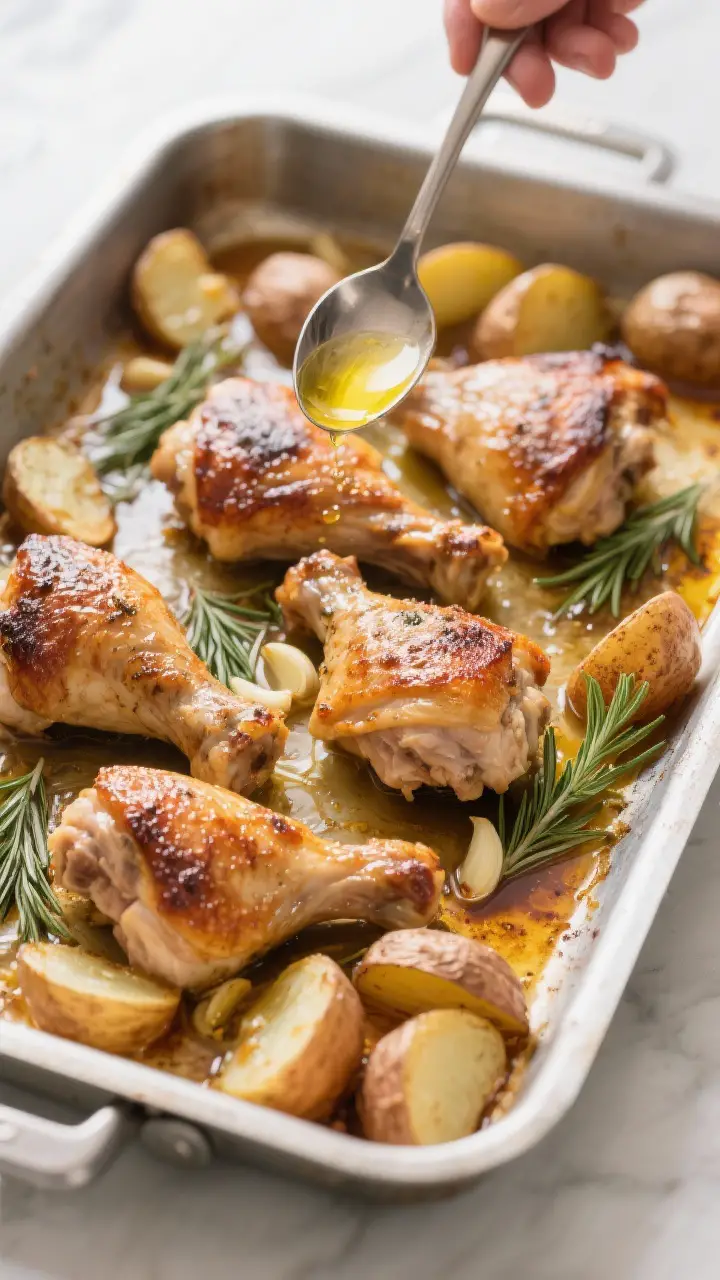
- Arrange the pan. Spread the potatoes in a single layer on a large rimmed sheet pan or roasting pan. Nestle the chicken on top, skin side up. Pour any extra marinade over everything.
If using, add 1/2 cup chicken broth to the pan around the edges, not over the chicken skin.
- Roast without fuss. Place the pan on the middle rack and roast for 35 minutes. Avoid opening the oven early—steam and heat are your friends here.
- Check and finish. After 35 minutes, rotate the pan if needed. Roast another 10–20 minutes, until the chicken skin is deeply golden and the internal temperature reaches 175–185°F for thighs or drumsticks.
The potatoes should be tender and browned.
- Crisp and glaze. If the skin needs extra color, broil for 2–3 minutes, watching closely. Spoon those lemony pan juices over the chicken and potatoes.
- Rest and serve. Let the chicken rest 5–10 minutes. Sprinkle with fresh herbs and a final squeeze of lemon if you like.
Serve with a simple salad or bread.
Keeping It Fresh
Stored properly, this dish holds up well. Cool leftovers and transfer to an airtight container within two hours. Refrigerate for up to 4 days.
Reheat, covered, in a 350°F oven until hot, then uncover for a few minutes to re-crisp the skin. You can freeze the chicken and potatoes for up to 2 months, though potatoes may soften slightly when thawed. For best texture, freeze the cooked chicken separately and roast fresh potatoes when reheating.
Why This is Good for You
This meal is naturally balanced and satisfying.
Chicken thighs offer protein and iron, while olive oil adds heart-healthy monounsaturated fats. Potatoes provide potassium and fiber, especially if you keep the skins on. Lemon juice brings vitamin C and bright flavor without extra calories.
Compared to heavy cream-based dishes, this stays light while still feeling indulgent thanks to the savory pan juices.
Pitfalls to Watch Out For
- Soggy skin: If the chicken is wet or buried under potatoes, it won’t crisp. Pat it dry and keep it skin side up.
- Watery pan: Too much liquid can steam the chicken. Stick to a modest splash of broth or wine, and avoid crowding the pan.
- Undercooked potatoes: Oversized chunks take longer.
Cut them evenly and give them space for better browning.
- Flat flavor: Use both lemon zest and juice, and don’t skimp on salt. A final squeeze of lemon before serving wakes everything up.
- Dry white meat: If using breasts, cook them on the potatoes and pull them earlier, at 160–165°F, to avoid drying out.
Recipe Variations
- Herb-forward: Add fresh rosemary or thyme sprigs to the pan. Their aroma pairs beautifully with lemon.
- Briny boost: Scatter olives or capers in the last 15 minutes of roasting for a salty bite.
- Vegetable mix: Add wedges of red onion or chunks of zucchini for extra color and flavor.
Keep pieces large so they don’t overcook.
- Whole chicken: Use a spatchcocked chicken and surround it with potatoes. Roast at 425°F until the breast hits 160°F and the thigh 175°F.
- Light and lean: Swap in bone-in chicken breasts. Marinate well, roast until 160–165°F, and rest before slicing.
- Creamy twist: Whisk a spoonful of Dijon into the marinade for extra body and tang.
- Gluten-free and dairy-free: This recipe already is; just confirm broth labels if using store-bought.
FAQ
Can I use boneless, skinless chicken?
Yes, but reduce the cooking time.
Boneless thighs take about 25–35 minutes at 425°F. Add them to the pan after the potatoes have had a 15-minute head start. You’ll miss some of the crispy-skin magic, but the flavors still shine.
What potatoes work best?
Yukon Golds hold their shape and get creamy inside, making them a top choice.
Russets crisp nicely but can break apart if overcooked. Baby potatoes are convenient—just halve them and keep an eye on timing.
Do I need to marinate the chicken ahead of time?
It helps but isn’t required. Even 20–30 minutes with lemon, garlic, and oregano improves flavor.
If you have time, marinate up to 12 hours in the fridge. Don’t add extra lemon for long marinades—too much acid can make the texture mealy.
How do I make more sauce?
Add an extra 1/2 cup broth to the pan at the start, then deglaze the pan with a splash of white wine after roasting. Scrape up the browned bits and simmer for a minute.
Adjust salt and add a knob of butter if you want a silkier finish.
Can I cook this in a Dutch oven?
You can, but the high sides trap steam and may soften the skin. If you use a Dutch oven, leave the lid off and consider finishing under the broiler to crisp the top.
What should I serve with it?
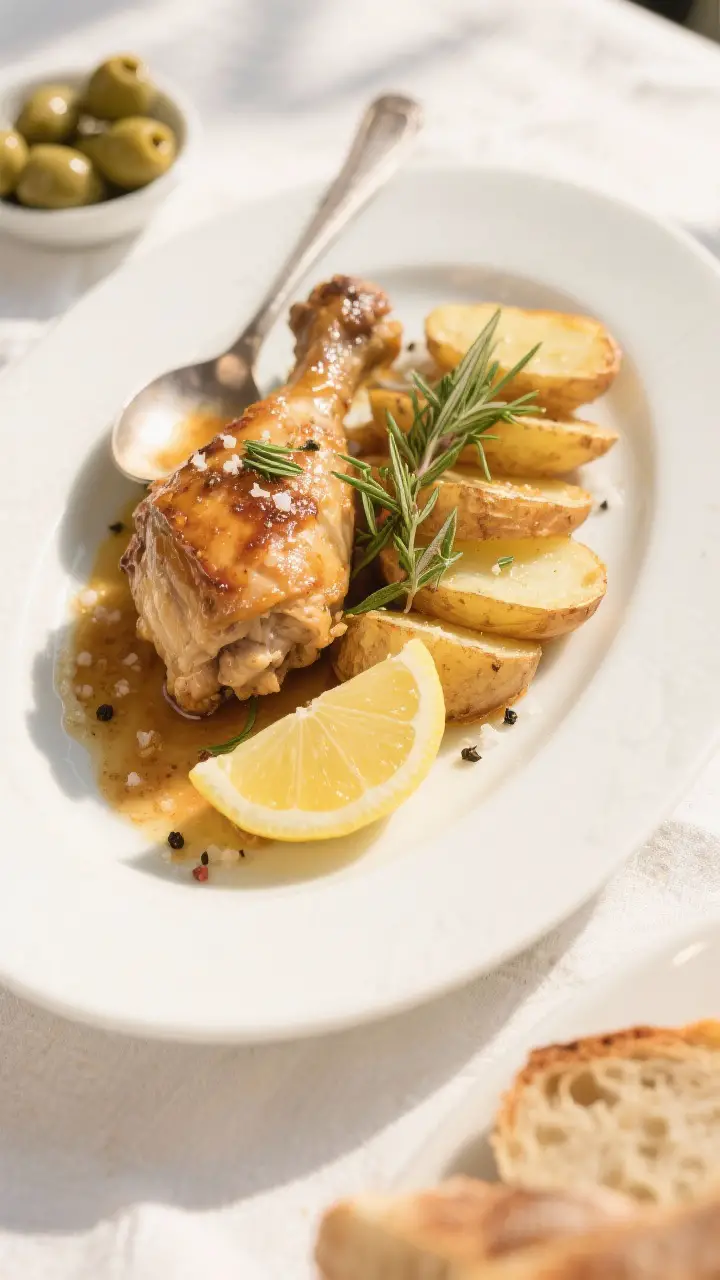
A simple green salad with cucumber, tomatoes, and feta works well. Warm pita or crusty bread is great for the pan juices.
For a veggie side, roast green beans or asparagus during the last 15 minutes.
How can I make it spicier?
Add 1/2 teaspoon red pepper flakes to the marinade or serve with a side of harissa. A pinch of Aleppo pepper adds gentle heat and a hint of fruitiness.
In Conclusion
Greek lemon chicken with potatoes is bright, comforting, and surprisingly easy to pull off. With a handful of ingredients and one pan, you get a full meal that feels both rustic and special.
Keep the flavors bold, don’t crowd the pan, and let the oven do the work. It’s a reliable go-to for busy nights and relaxed weekends alike—simple food done right.