
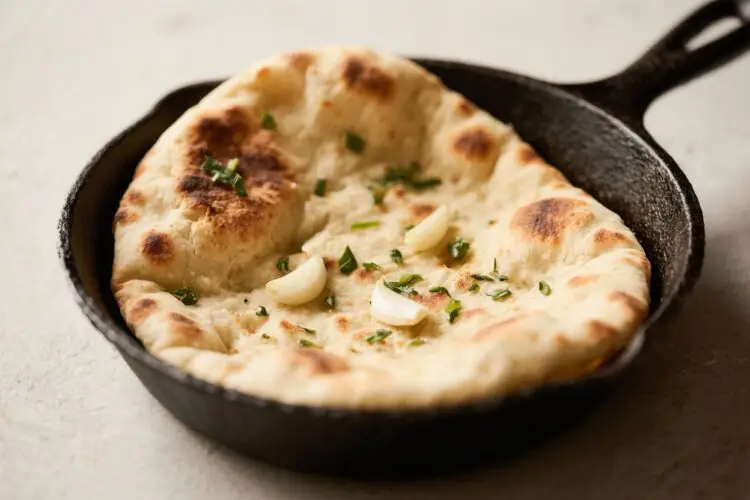
Warm, pillowy garlic naan is one of those simple pleasures that turns any meal into something special. You don’t need a tandoor oven to get that signature char and chew—just a cast iron skillet and a little patience. This version is soft inside, lightly blistered outside, and brushed with garlicky butter you’ll want to put on everything.
It’s great with curries, grilled meats, soups, or just on its own. If you’ve never made flatbread at home, this is a forgiving, fun place to start.
What Makes This Recipe So Good
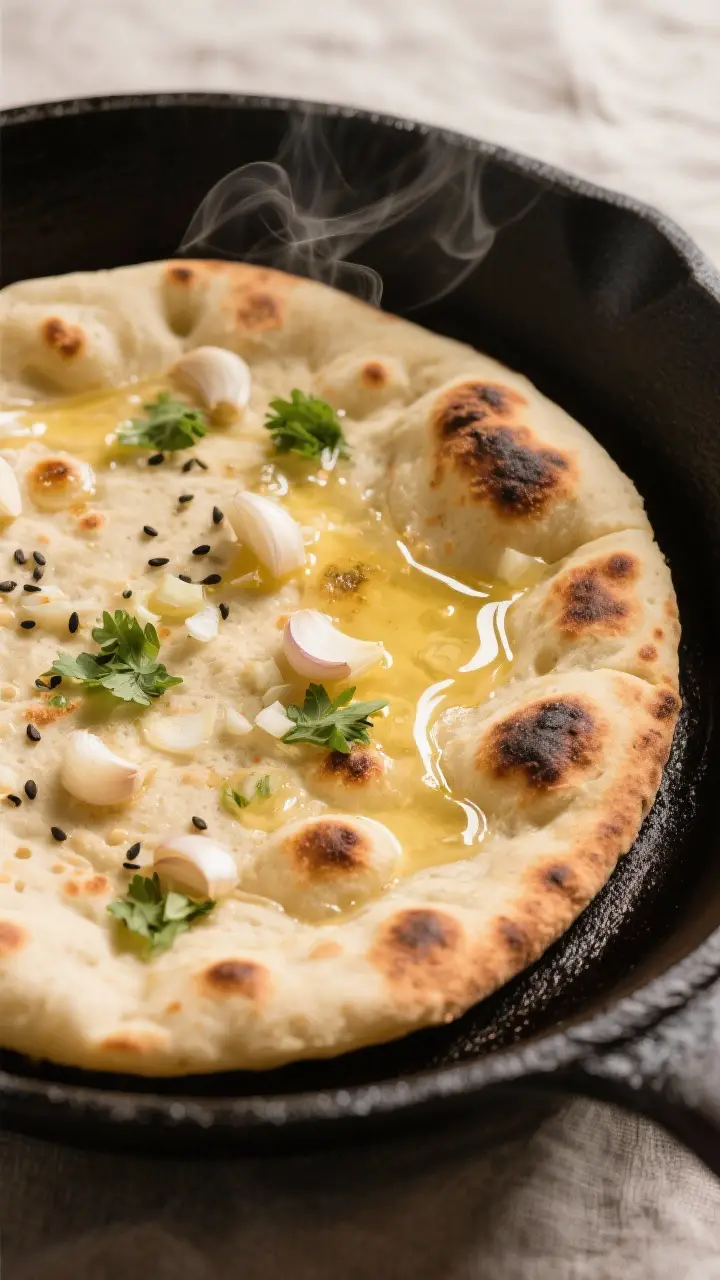
- Cast iron equals flavor. A heavy skillet gets ripping hot, creating beautiful char spots and that classic naan texture without a tandoor.
- Garlic butter that actually sticks. Brushing the naan right after cooking lets the butter melt into the bread. The result is bold, aromatic flavor in every bite.
- Soft and chewy dough. A touch of yogurt and milk keeps the naan tender while helping it puff on the skillet.
- Weeknight-friendly. The dough is simple, rises once, and cooks in minutes.
You can make it ahead or freeze it for later.
- Customizable. Add herbs, nigella seeds, or cheese if you want to switch it up.
Ingredients
- 2 cups (250 g) all-purpose flour, plus more for dusting
- 1 teaspoon sugar
- 1 teaspoon fine sea salt
- 1 teaspoon instant yeast (or 1 1/4 teaspoons active dry yeast)
- 1/2 cup plain whole-milk yogurt (Greek or regular)
- 1/2 cup warm milk (about 105–110°F)
- 1 tablespoon neutral oil or melted ghee (plus more for bowl)
- 2 tablespoons unsalted butter, melted
- 3–4 cloves garlic, very finely minced or grated
- 2 tablespoons fresh cilantro, finely chopped (optional)
- Nigella seeds or sesame seeds for topping (optional)
- Flaky salt for finishing (optional)
Instructions
- Mix the dough. In a large bowl, whisk flour, sugar, salt, and yeast. Add yogurt, warm milk, and oil. Stir with a spoon until a shaggy dough forms.
If it’s dry, add 1 tablespoon of milk at a time; if sticky, dust with a bit more flour.
- Knead until smooth. Turn the dough onto a lightly floured surface and knead for 3–4 minutes, until soft and elastic. It should be slightly tacky but not sticky.
- First rise. Lightly oil a clean bowl. Place the dough inside, cover with a damp towel or plastic wrap, and let it rise in a warm spot until doubled, about 60–90 minutes (longer if your kitchen is cool).
- Make garlic butter. Combine melted butter and minced garlic in a small bowl.
Let it sit to mellow the raw bite. Stir in chopped cilantro if using.
- Divide and shape. Punch down the dough and divide into 6 equal pieces. Shape each into a ball, cover, and rest for 10 minutes to relax the gluten.
- Preheat the skillet. Place a cast iron skillet over medium-high heat for at least 5 minutes.
You want it very hot. Do not oil the pan.
- Roll out the naan. On a lightly floured surface, roll a dough ball into an oval or teardrop about 1/8–1/4 inch thick. Sprinkle one side with a few drops of water and, if using, a pinch of nigella or sesame seeds (water helps seeds stick).
- Cook the first side. Lay the naan water-side down in the hot skillet.
Bubbles should appear within 30 seconds. Cook 45–60 seconds until the bottom has dark spots and the top puffs.
- Flip and finish. Flip and cook another 30–45 seconds. For extra char, briefly press edges into the pan with tongs, or hold the naan over an open flame for a few seconds (optional).
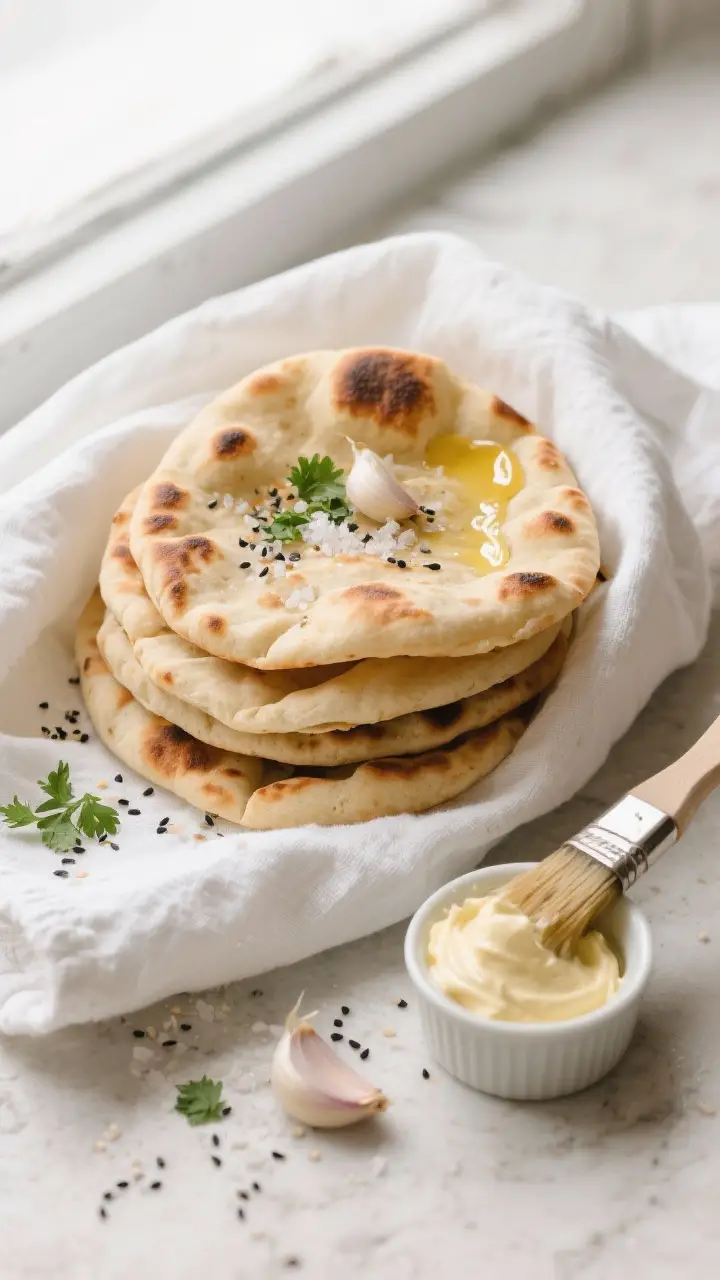
- Brush and stack. Immediately brush with the garlic butter.
Sprinkle with flaky salt and cilantro if you like. Keep cooked naan wrapped in a clean towel while you repeat with the rest.
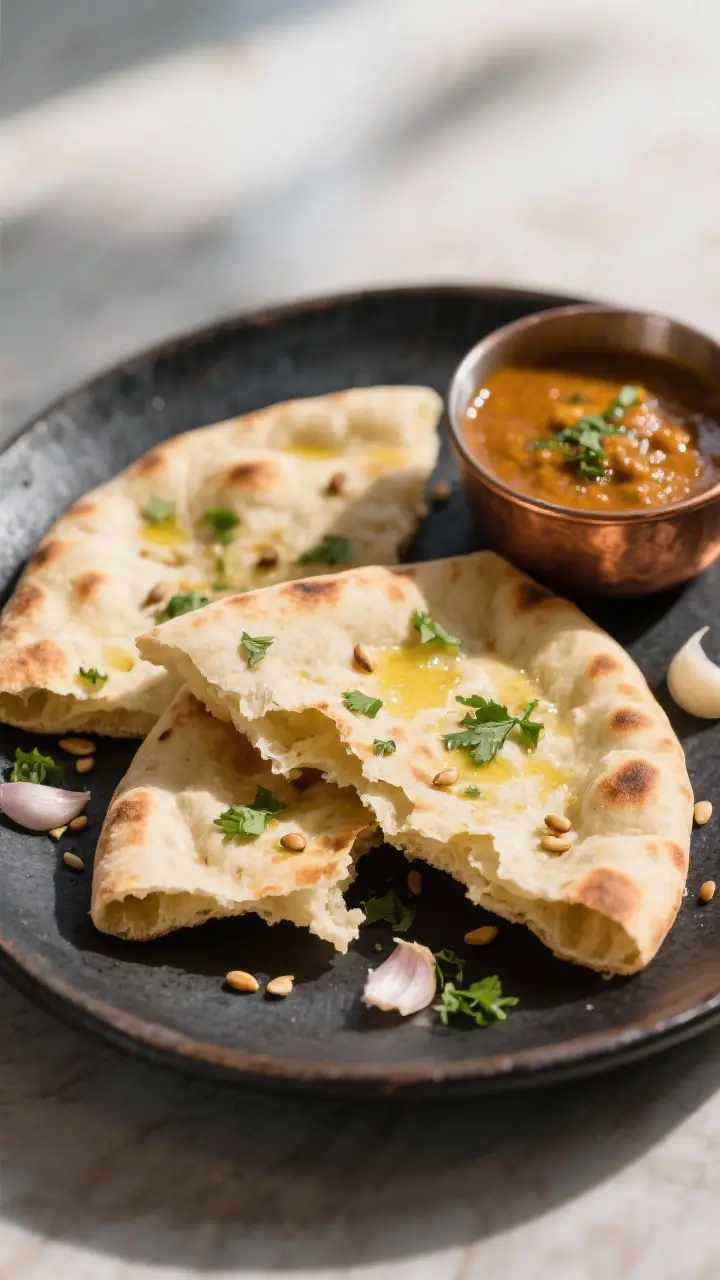
- Serve warm. Naan is best hot from the skillet, but it reheats well. See storage tips below.
Keeping It Fresh
- Short term: Wrap warm naan in a clean kitchen towel, then store in an airtight container at room temperature for up to 24 hours.
- Refrigerate: Up to 3 days, wrapped and sealed.
Reheat in a hot dry skillet for 30–60 seconds per side or in a 350°F oven for 5–7 minutes wrapped in foil.
- Freeze: Cool completely. Stack with parchment between pieces, seal in a freezer bag, and freeze up to 2 months. Reheat from frozen in a hot skillet or a 375°F oven for 8–10 minutes.
- Make-ahead dough: After kneading, refrigerate up to 24 hours.
Let it sit at room temp for 30–45 minutes before shaping and cooking.
Health Benefits
- Garlic offers more than flavor. It contains allicin, which has been linked to heart health and immune support. Finely minced garlic in warm butter keeps its aroma without overwhelming bitterness.
- Yogurt adds protein and tenderness. Using whole-milk yogurt improves texture and provides some beneficial nutrients, including calcium.
- Portion control is easy. Since naan is made individually, you can keep servings modest and pair with protein- and veggie-rich dishes for a balanced meal.
- Smarter fats. Swapping some butter for olive oil or ghee can improve the fat profile while keeping great flavor.
What Not to Do
- Don’t use a cold skillet. Without high heat, naan won’t puff or char properly and can turn dense and dry.
- Don’t overload with flour when rolling. Too much dusting flour makes the surface tough. Use just enough to prevent sticking.
- Don’t skip the rest after dividing. Resting 10 minutes makes rolling easier and prevents spring-back.
- Don’t brush with butter too early. Brush right after cooking, not before.
Butter in the pan can scorch, and the naan won’t blister.
- Don’t crowd the pan. Cook one at a time for even heat and better puffing.
Alternatives
- Dairy-free: Use a thick dairy-free yogurt (coconut or almond-based) and unsweetened plant milk. Brush with olive oil or vegan butter mixed with garlic.
- Whole wheat: Replace up to 50% of the all-purpose flour with whole wheat flour. Add an extra tablespoon or two of milk if needed for softness.
- Gluten-free: Use a 1:1 gluten-free baking flour with xanthan gum.
Texture will be a bit less chewy, but a hot skillet and thinner roll-out help.
- No yeast: Use 1 teaspoon baking powder plus 1/4 teaspoon baking soda, and increase yogurt by 2 tablespoons. The flavor differs, but it’s quick and fluffy.
- Herb and cheese: Add chopped cilantro, scallions, or parsley to the dough. For cheese naan, sprinkle shredded mozzarella or paneer on one half, fold, seal edges, and roll gently before cooking.
FAQ
Can I use a nonstick pan instead of cast iron?
Yes, but results will be softer and less charred.
Nonstick pans don’t get as hot, so cook a little longer and accept fewer dark spots. If possible, use stainless steel or carbon steel as a middle ground.
Do I have to proof active dry yeast first?
If using active dry yeast, it’s safest to proof it in the warm milk with sugar for 5–10 minutes until foamy. Instant yeast can be mixed directly into the flour.
Why isn’t my naan puffing?
Common reasons are a cool skillet, dough rolled too thick, or dough that’s too dry.
Make sure the pan is fully preheated, roll to 1/8–1/4 inch, and add a teaspoon of milk to the next batch if the dough felt stiff.
Can I bake naan in the oven?
You can. Heat a baking steel or inverted sheet at 500°F for 30 minutes. Bake each naan 2–3 minutes per side.
Still, a stovetop skillet usually gives better blistering at home.
How do I keep naan soft after cooking?
Stack cooked naan and wrap in a clean towel. The steam keeps them supple. Brush with garlic butter right away, and avoid leaving them exposed to air.
Is ghee better than butter here?
Ghee has a higher smoke point and deep, nutty flavor, making it great for brushing.
Butter is classic and tasty, but may brown faster. Either works well.
Can I double the recipe?
Absolutely. Double all ingredients and cook naan one at a time.
Keep finished pieces wrapped and warm in a low oven (200°F) while you cook the rest.
Final Thoughts
This cast iron skillet method brings restaurant-style garlic naan into easy, everyday reach. A simple dough, a hot pan, and a quick brush of garlic butter are all you need for soft, fragrant bread that complements almost any meal. Once you make it a couple of times, the process becomes second nature, and you’ll always have a crowd-pleasing side on hand.
Warm, charred, and garlicky—this naan is the kind of staple you’ll keep coming back to.
Printable Recipe Card
Want just the essential recipe details without scrolling through the article? Get our printable recipe card with just the ingredients and instructions.