
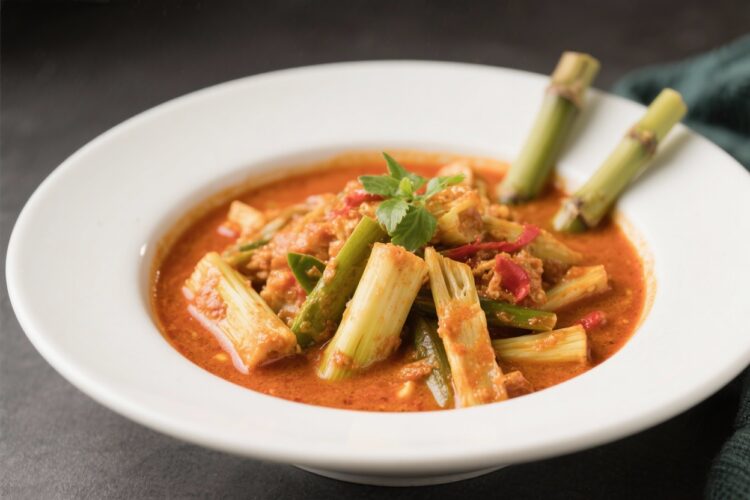
Gaeng Phed is one of those dishes that feels like a warm welcome at the table. It’s fragrant, rich, and full of bright Thai flavors—spice, sweetness, and a gentle coconut creaminess. The bamboo shoots add a crisp bite that keeps each spoonful interesting.
Whether you’re cooking for a busy weeknight or a special dinner, this red curry comes together quickly and tastes like it took all day. Best of all, it’s easy to tailor to your heat tolerance and pantry staples.
Why This Recipe Works
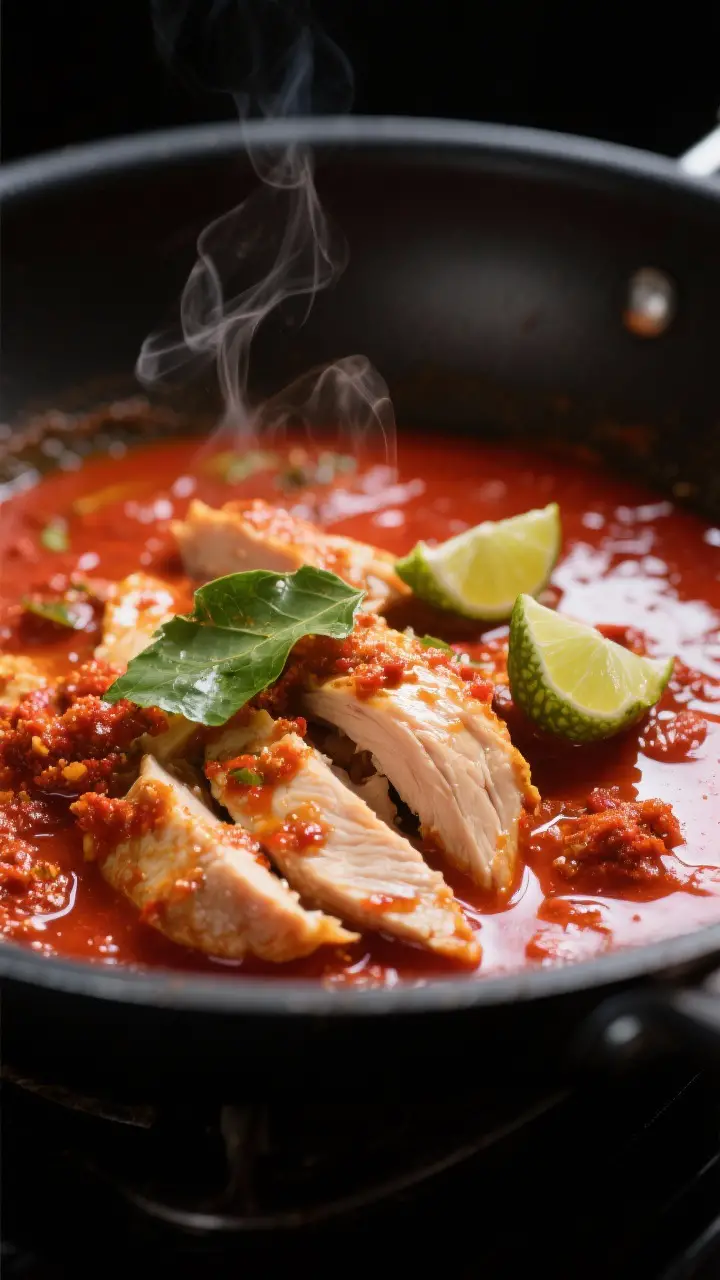
This curry leans on quality red curry paste and full-fat coconut milk to deliver deep flavor with minimal effort. Simmering the paste in coconut cream blooms the aromatics and builds a richer base than simply mixing everything at once.
Bamboo shoots add texture and freshness, balancing the creamy sauce. A final seasoning of fish sauce and palm sugar gives that classic Thai sweet-salty-spicy harmony, while Thai basil and kaffir lime leaves lift the finish.
What You’ll Need
- Coconut cream (or the thick top of full-fat coconut milk) – 1 cup
- Full-fat coconut milk – 1 can (13.5–14 oz)
- Red curry paste – 2–3 tablespoons (adjust to heat preference)
- Chicken thighs, thinly sliced – 1 lb (or tofu, pork, or shrimp)
- Bamboo shoots, sliced – 1 can (drained and rinsed) or 1–2 cups fresh parboiled
- Bell pepper, sliced – 1 large (red is classic)
- Thai eggplants (optional) – 1 cup, halved or quartered
- Kaffir lime leaves – 3–4, torn (or zest of 1 lime as a fallback)
- Fish sauce – 2–3 tablespoons
- Palm sugar (or brown sugar) – 1–2 teaspoons
- Chicken or vegetable stock – 1/2 cup, as needed
- Thai basil leaves – 1 cup, loosely packed
- Neutral oil (if needed) – 1 tablespoon
- Jasmine rice, cooked – for serving
- Chilies (optional) – sliced, for extra heat
Step-by-Step Instructions

- Prep your ingredients. Slice the chicken, rinse and drain the bamboo shoots, and cut the vegetables. Tear the kaffir lime leaves to release their oils.Keep Thai basil leaves whole.
- Bloom the curry paste. In a wide pan or wok over medium heat, add the coconut cream. When it begins to separate and look oily, stir in the red curry paste. Cook 2–3 minutes until fragrant and deepened in color.If your cream doesn’t split, add a teaspoon of oil to help the paste fry.
- Add the chicken. Stir in the sliced chicken and coat with the paste. Cook until the surface turns opaque, about 2–3 minutes. This helps seal in flavor.
- Add liquids and aromatics. Pour in the remaining coconut milk and a splash of stock if you want a thinner curry.Add kaffir lime leaves. Bring to a gentle simmer.
- Season the base. Add fish sauce and palm sugar. Start with 2 tablespoons fish sauce and 1 teaspoon sugar; you can adjust later.Taste for a balanced, savory-sweet heat.
- Simmer the vegetables. Add bamboo shoots, bell pepper, and Thai eggplants if using. Simmer 5–7 minutes until the vegetables are just tender but still bright.
- Tune the flavor. Taste and adjust. Add more fish sauce for salt, sugar for roundness, or a splash of stock if it’s too intense.For more heat, stir in sliced chilies.
- Finish with herbs. Turn off the heat and fold in Thai basil. Let the curry rest for 2 minutes so the herbs perfume the sauce.
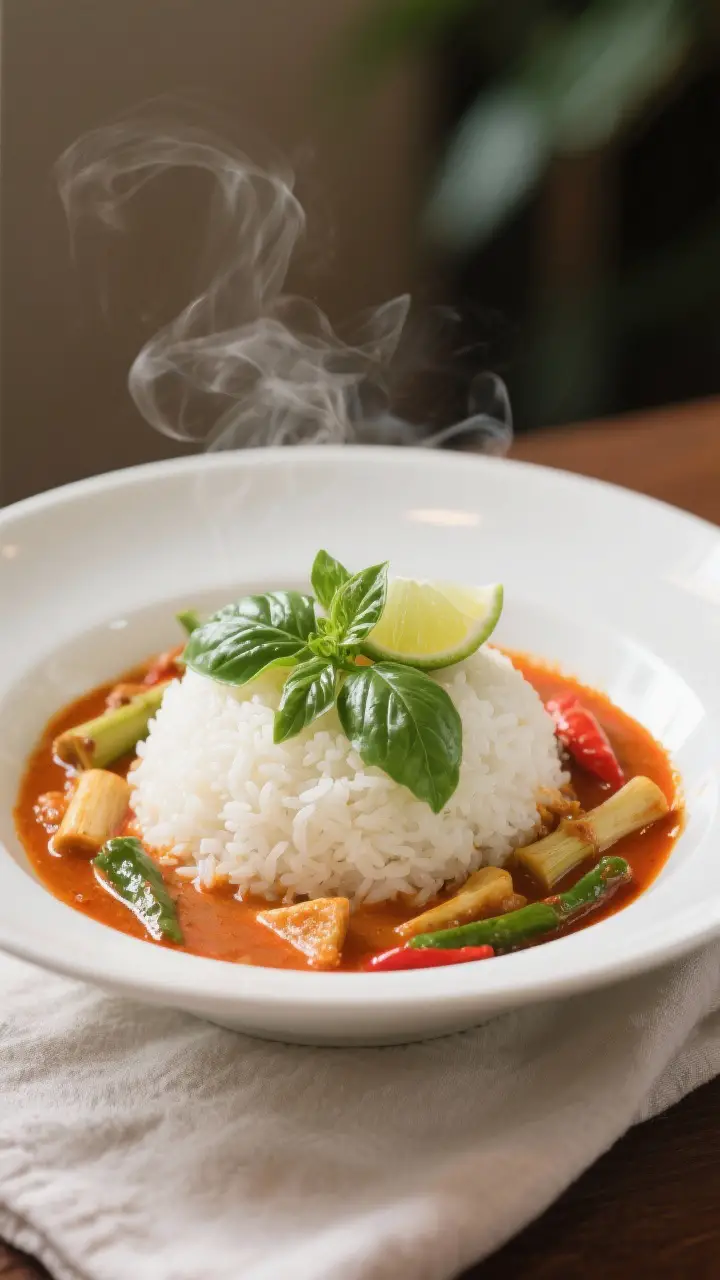
- Serve. Ladle over hot jasmine rice. Garnish with extra basil or a squeeze of lime if you like a fresher edge.
How to Store
- Refrigerate: Cool completely, then store in an airtight container for up to 3 days.
- Freeze: Curry freezes well for up to 2 months.Thaw overnight in the fridge for best texture.
- Reheat: Warm gently on the stovetop over low heat. Add a splash of water or coconut milk if it’s too thick. Avoid boiling to keep the coconut from separating.
- Rice: Store rice separately.Reheat covered with a damp paper towel in the microwave for fluffy grains.
Benefits of This Recipe
- Fast and flexible: With store-bought curry paste, dinner is ready in around 30 minutes. Easy to swap proteins and vegetables.
- Balanced flavor: The trio of fish sauce, palm sugar, and coconut milk creates a reliable sweet-salty-creamy base.
- Great meal prep: The flavors deepen after a day, making leftovers even better.
- Naturally gluten-free: As long as your fish sauce and curry paste are gluten-free, it works for many dietary needs.
- Textural contrast: Bamboo shoots give crunch that keeps the curry from feeling heavy.
Common Mistakes to Avoid
- Skipping the paste bloom: Frying the curry paste in coconut cream is key. It unlocks aromatic depth you can’t get by boiling alone.
- Overcooking vegetables: Simmer just until tender. Soft, mushy bell peppers and eggplants dull the dish.
- Boiling hard after adding basil: High heat will mute the herb’s fragrance. Fold in off heat.
- Under-seasoning: Taste and adjust. A little more fish sauce or sugar can bring the curry together.
- Watery curry: Don’t overdo stock. If it turns thin, simmer a few extra minutes uncovered to reduce.
Alternatives
- Protein swaps: Try pork shoulder, thin-sliced beef, shrimp, firm tofu, or a mix of mushrooms for a vegetarian version. If using shrimp, add near the end to avoid overcooking.
- Vegetable variations: Green beans, zucchini, baby corn, snap peas, or pumpkin work well. Keep cooking times in mind so nothing turns mushy.
- Dairy-free richness: Stick with full-fat coconut milk for body. Light coconut milk will be thinner and less silky.
- Vegan version: Use tofu or mushrooms, sub soy sauce or tamari for fish sauce, and check your curry paste for shrimp content.
- Heat control: Adjust paste quantity, or add fresh chilies for extra kick. For milder curry, use less paste and sweeten slightly to soften the edges.
FAQ
Can I use fresh bamboo shoots instead of canned?
Yes. If you have fresh bamboo shoots, parboil them first to remove bitterness, then add as directed.
Canned shoots should be rinsed well to keep the broth clean and aromatic.
What if my coconut milk separates or looks grainy?
Gentle heat is your friend. Keep the curry at a simmer, not a rolling boil. If it separates, lower the heat and whisk in a splash more coconut milk or water to bring it back together.
How spicy is Gaeng Phed?
It depends on the curry paste brand and amount.
Start with 2 tablespoons and add more to taste. You can also temper heat by adding a bit more coconut milk or sugar at the end.
Can I make this ahead?
Absolutely. The flavors meld beautifully after a night in the fridge.
Reheat gently and add fresh basil right before serving to revive the fragrance.
What’s the best rice to serve with this?
Steamed jasmine rice is classic. Its floral aroma pairs perfectly with the curry’s coconut and basil notes. If you prefer, brown jasmine rice adds a nutty bite and holds up well to the sauce.
Do I need kaffir lime leaves?
They’re traditional and add a bright citrus perfume.
If you can’t find them, use a strip of lime zest or a small squeeze of lime at the end. It won’t be exactly the same, but it keeps the flavor lively.
Can I use light coconut milk?
You can, but the curry will be thinner and less lush. If using light coconut milk, simmer a few extra minutes to reduce slightly and thicken the sauce.
How do I keep chicken tender in the curry?
Slice it thinly against the grain and avoid overcooking.
Once the chicken turns opaque and is just cooked through, lower the heat and finish the curry with herbs.
Final Thoughts
Gaeng Phed with bamboo shoots is simple, satisfying, and flexible enough for any kitchen. With a good curry paste and coconut milk, you’re already most of the way there. Keep the vegetables crisp, balance the seasoning, and finish with plenty of Thai basil.
It’s the kind of weeknight-friendly dish that tastes like a treat, and it never disappoints over a bowl of steaming jasmine rice.
Printable Recipe Card
Want just the essential recipe details without scrolling through the article? Get our printable recipe card with just the ingredients and instructions.