
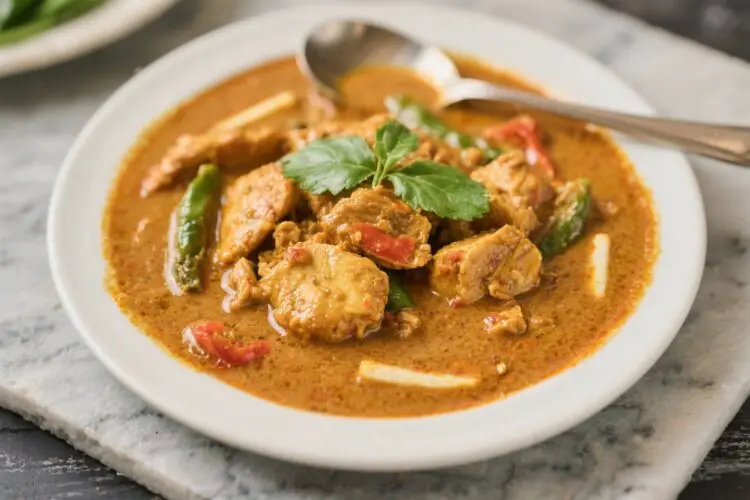
Panang curry is the comfort dish many Thai cooks keep in their back pocket—a little richer, a little drier, and deeply aromatic. Unlike soupy curries, Gaeng Panang hugs the meat with a glossy, clingy sauce. It’s spicy, nutty, and slightly sweet, with a perfume of makrut lime leaves that feels unmistakably Thai.
You don’t need a long list of exotic ingredients to make it shine. With a good curry paste and a steady simmer, this dish delivers big flavor with minimal fuss.
What Makes This Special
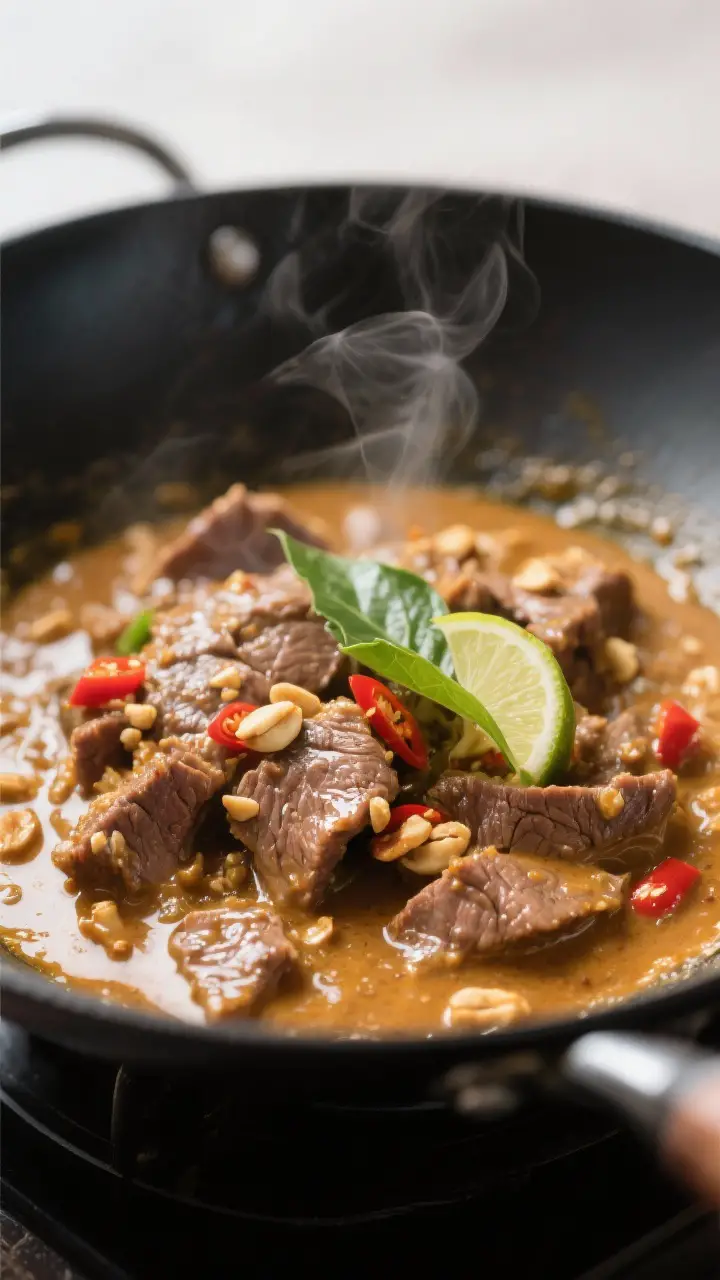
Panang curry is all about concentration. The sauce is reduced until it coats the meat rather than pooling in the bowl. The rich, creamy texture enhances the flavors of the meat, creating a harmonious balance on the palate. For those looking to explore similar flavors, a thai peanut sauce recipe can be a great addition to various dishes, offering a delightful twist. The key is to find the right blend of spices and ingredients that elevate the overall experience. Another fantastic way to enjoy these flavors is by trying a thai peanut noodles recipe, which combines the same rich elements in a comforting dish. The noodles serve as a perfect vessel for the sauce, absorbing its essence while providing a satisfying texture. Experimenting with vegetables and proteins can further enhance the dish, making it a versatile option for any meal.
That’s what gives it that signature rich, almost caramelized flavor.
It’s also defined by peanut richness and makrut lime fragrance. Those two details set it apart from red curry. And while it’s traditionally made with beef or pork, the technique works with chicken, tofu, or even hearty vegetables. The bold flavors in this dish can easily be enhanced by a homemade thai red curry paste recipe, allowing for a more personalized touch. Additionally, the vibrant colors and aromatic spices create an inviting visual and olfactory experience. Whether served with rice or noodles, it promises to be a comforting and satisfying meal. For those looking to explore other variations, a thai coconut curry shrimp recipe offers a delightful seafood twist, blending perfectly with the dish’s rich flavors. The creaminess of the coconut milk complements the spices, while the shrimp adds a subtle sweetness that elevates the overall taste. Serving this dish with a squeeze of fresh lime can brighten the palate and enhance the dining experience. For those ready to experiment further, a homemade thai-green-curry-paste-recipe/”>thai green curry paste recipe can introduce a fresh and spicy dimension to the dish. This vibrant paste not only enhances the flavors but also adds a beautiful green hue that makes for an eye-catching presentation. By incorporating different proteins or vegetables, you can customize each serving to suit your taste preferences and create a unique culinary experience.
Best of all, Panang is weeknight-friendly.
Once your ingredients are prepped, the actual cooking is quick. Serve it with jasmine rice, and you’ve got a satisfying meal with a restaurant-quality finish.
Shopping List
- Panang curry paste (store-bought or homemade; about 3–4 tablespoons)
- Coconut milk (full-fat; 1 can, about 13.5 oz/400 ml)
- Protein (12–16 oz/350–450 g): beef sirloin or chuck, pork shoulder or loin, chicken thigh, or firm tofu
- Makrut (kaffir) lime leaves (6–8 leaves), finely slivered; or zest of 1 lime if you can’t find the leaves
- Palm sugar (or light brown sugar; 1–2 teaspoons)
- Fish sauce (1–2 tablespoons; or soy sauce for a vegetarian version)
- Roasted unsalted peanuts (2 tablespoons), finely crushed; optional if your paste already contains peanuts
- Vegetable oil or coconut oil (1–2 tablespoons)
- Red chilies (fresh, for garnish), thinly sliced
- Thai basil (optional), a small handful
- Jasmine rice, for serving
Instructions
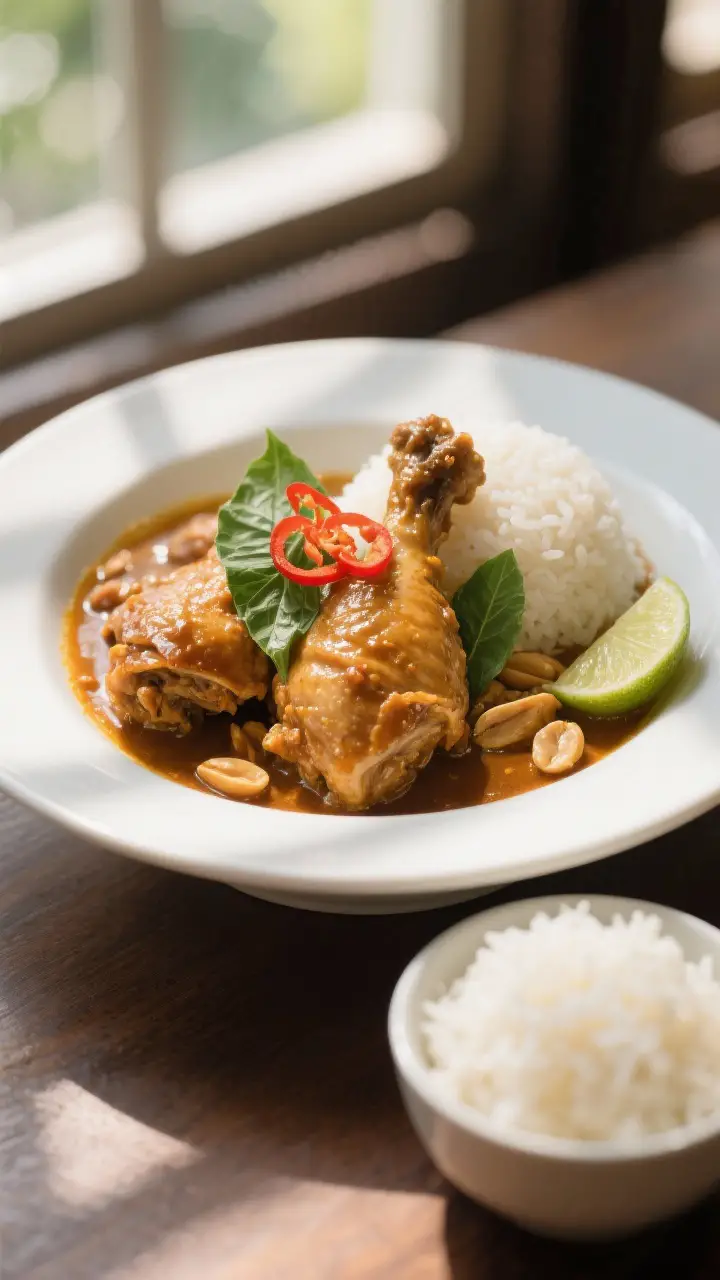
- Prep the protein. Slice beef, pork, or chicken thinly against the grain, about bite-size pieces. If using tofu, press and cut into cubes.Pat dry to help the sauce cling.
- Separate the coconut milk. Open the can without shaking. Spoon off 1/3 cup of the thick cream from the top. This will help “crack” the oil for frying the paste.
- Bloom the curry paste. Heat a wok or wide skillet over medium.Add the coconut cream and cook until it looks slightly oily and bubbly. Stir in the Panang curry paste and cook 2–3 minutes until fragrant. This step builds depth.
- Add the remaining coconut milk. Pour it in and stir to smooth out the paste.You should have a thick sauce base.
- Add the protein. Slide in the meat or tofu and stir to coat. Keep heat at medium to avoid splitting the sauce. Simmer gently until just cooked through, 5–8 minutes depending on the protein.
- Season. Add fish sauce and palm sugar.Start with 1 tablespoon fish sauce and 1 teaspoon sugar, then adjust to taste. You’re aiming for a balanced salty-sweet base with a warm chili kick.
- Reduce to “dry.” Let the sauce bubble and reduce, stirring often, until it clings to the protein with minimal pooling. This can take 5–8 more minutes.If it dries too fast, add a splash of water.
- Aromatics. Stir in the slivered makrut lime leaves and crushed peanuts (if using). Cook 1 minute more to release the aroma. The dish should smell citrusy and nutty.
- Taste and adjust. Add more fish sauce, sugar, or curry paste as needed.For more heat, stir in fresh sliced chilies.
- Finish and serve. Turn off heat and fold in Thai basil if using. Plate with jasmine rice and garnish with extra lime leaf slivers and chilies.
How to Store
- Refrigerate: Cool completely, then store in an airtight container for up to 3 days.
- Freeze: Panang freezes well. Portion and freeze up to 2 months.Thaw overnight in the fridge.
- Reheat: Warm gently in a skillet over low heat with a splash of water or coconut milk to loosen. Avoid high heat, which can split the sauce.

Why This is Good for You
This curry brings protein from meat or tofu and healthy fats from coconut milk that help you feel satisfied. The spices and chilies can support circulation and add antioxidants. This dish is not only delicious but also nourishing, making it a perfect choice for a comforting meal any day of the week. For those looking to recreate this delightful experience at home, a thai coconut curry soup recipe is an excellent guide that showcases how easy it is to combine these vibrant ingredients. Whether you prefer it spicy or mild, you can customize the flavors to suit your palate while still enjoying the health benefits it offers.
Makrut lime leaves offer a burst of citrus oils that brighten flavor without extra salt. If you add vegetables on the side, you’ve got a well-rounded plate that’s both comforting and nourishing.
Common Mistakes to Avoid
- Skipping the paste bloom: Cooking the paste in coconut cream releases its oils and aroma. If you skip it, the curry tastes flat.
- Overcrowding the pan: Too much meat at once cools the pan and dilutes the sauce.Use a wide skillet so reduction happens quickly.
- Boiling hard: A rolling boil can split coconut milk. Keep it to a steady simmer.
- Not reducing enough: Panang should be rich and clingy, not soupy. Give it time to thicken.
- Heavy hand with sugar: Aim for balance.Sweetness should round out the heat, not dominate.
- Skipping the lime leaves: They’re key to the signature aroma. If you can’t find them, use a little lime zest—sparingly.
Recipe Variations
- Beef Panang: Use thin-sliced sirloin or chuck. Add a splash of water and simmer a bit longer for tenderness.
- Chicken Panang: Chicken thighs hold moisture well.Cook just until done to keep it juicy.
- Pork Panang: Pork shoulder adds richness; pork loin cooks quickly and stays lean.
- Tofu Panang: Use firm tofu, pressed and pan-seared before adding. It soaks up the sauce beautifully.
- Vegetable Add-Ins: While traditional Panang is meat-forward, you can add green beans, red bell pepper, or baby corn during the simmer.
- Peanut-Forward: If your paste doesn’t include peanuts, add 1–2 tablespoons of fine peanut butter along with the coconut milk for extra body.
- Lightened Version: Use half full-fat coconut milk and half water or unsweetened coconut beverage. Reduce a bit longer to keep the rich texture.
- Extra Fragrant: Finish with a squeeze of lime and a few drops of fish sauce right before serving for a bright, savory pop.
FAQ
What’s the difference between Panang and red curry?
Panang is thicker, richer, and slightly sweeter, with peanut notes and a strong makrut lime aroma.
Red curry is looser and more broth-like, with a broader chili-forward profile.
Can I make it vegetarian?
Yes. Use tofu for protein and swap fish sauce with soy sauce or a vegan fish sauce. Check your curry paste label to ensure it’s vegetarian, as some include shrimp paste.
How spicy is Panang curry?
It’s medium by default.
You can dial heat up or down by adjusting the amount of curry paste or adding fresh chilies at the end.
Do I need palm sugar?
Palm sugar gives a round, caramel-like sweetness. Light brown sugar works in a pinch. Start small, taste, and adjust.
What if I can’t find makrut lime leaves?
Use a little lime zest—about 1/2 teaspoon to start.
It won’t be identical, but it adds a similar citrus lift.
Why did my sauce split?
High heat or rapid boiling can separate coconut fat. Keep the simmer gentle and stir often. If it splits, add a splash of water and whisk gently to bring it back together.
Can I use light coconut milk?
You can, but the sauce will be thinner and less silky.
Reduce a bit longer or add a teaspoon of peanut butter to help body and gloss.
What should I serve with Panang?
Steamed jasmine rice is classic. Cucumber slices, a simple herb salad, or blanched green beans make fresh, crunchy sides.
In Conclusion
Gaeng Panang is a masterclass in bold, concentrated flavor. With a handful of ingredients and a careful simmer, you get a curry that clings, shines, and tastes like home cooking at its best. The allure of Gaeng Panang lies not only in its depth of flavor but also in its versatility. For those seeking a heartier dish, a massaman curry recipe with potatoes elevates this already captivating curry to new heights, offering a delightful contrast in texture and taste. It’s the perfect option for a cozy night in, inviting you to savor each rich, aromatic bite. For those interested in exploring other variations, a massaman curry paste recipe allows you to craft this dish from scratch, enhancing the authentic flavors even further. Coupled with the right ingredients, your home-cooked Massaman can evoke the warmth of street-side stalls in Thailand. Whether enjoyed solo or shared with loved ones, this dish captivates the senses and nourishes the soul.
Keep the heat gentle, reduce to a glossy finish, and don’t skip those lime leaves. Serve it with warm rice, and enjoy a deeply satisfying Thai favorite any night of the week. For an extra layer of flavor, consider drizzling a homemade Thai sweet chili sauce recipe over the dish just before serving. This sweet and spicy sauce complements the lime leaves beautifully, enhancing the overall taste experience. Pair it with a refreshing cucumber salad to balance the richness of the meal.
Printable Recipe Card
Want just the essential recipe details without scrolling through the article? Get our printable recipe card with just the ingredients and instructions.