
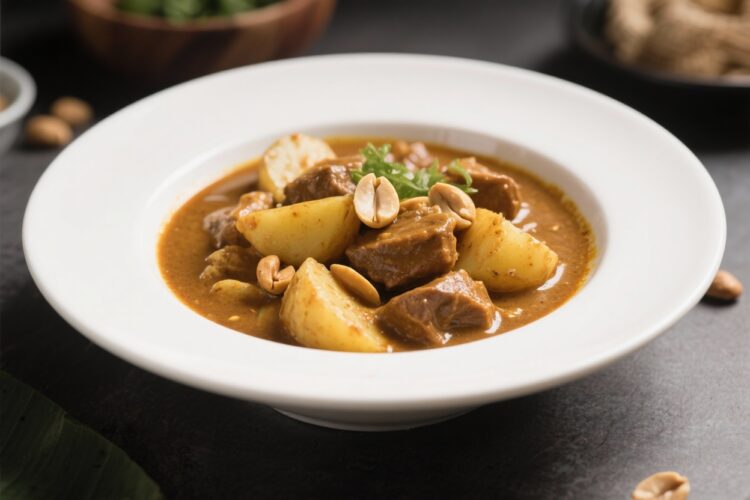
Massaman curry is the kind of dish that makes a table go quiet with the first spoonful. It’s rich, gently spiced, and deeply comforting without being heavy. Tender chunks of beef or chicken simmer with potatoes, onions, and roasted peanuts in a velvety coconut curry.
The flavors feel familiar—warm spices, a touch of sweetness—yet distinctly Thai thanks to tamarind and fish sauce. If you’ve never made it at home, this recipe will walk you through an easy, cozy version that still tastes special.
What Makes This Recipe So Good
- Balanced flavors: Massaman is all about harmony—sweet, salty, sour, and warm spices rounded by coconut milk.
- Comforting texture: Creamy curry clings to soft potatoes and tender meat, with a satisfying crunch from peanuts.
- Make-ahead friendly: It tastes even better the next day as the flavors meld.
- Flexible proteins: Works beautifully with beef, chicken, lamb, or tofu.
- Approachable spice level: It’s milder than many Thai curries, perfect for family meals and curry newcomers.
Ingredients
- 2 tablespoons neutral oil (vegetable or coconut oil)
- 3–4 tablespoons Massaman curry paste (store-bought or homemade)
- 1 can (13.5–14 oz) full-fat coconut milk, divided
- 1–1.25 pounds beef chuck, stewing beef, or boneless chicken thighs, cut into 1.5-inch pieces
- 2 medium potatoes (waxy or Yukon Gold), peeled and cut into 1.5-inch chunks
- 1 large yellow onion, sliced into thick wedges
- 1/3 cup unsalted roasted peanuts (or cashews), plus extra for garnish
- 1–2 tablespoons palm sugar or brown sugar, to taste
- 2–3 tablespoons fish sauce, to taste (or soy sauce for a pescatarian/vegetarian option)
- 1–2 tablespoons tamarind paste (or 2 teaspoons lime juice as a backup)
- 1–1.5 cups low-sodium chicken or beef stock (or water), as needed
- 1 cinnamon stick
- 2–3 green cardamom pods (optional but traditional)
- 2 bay leaves or 1 Thai bay leaf
- 1 small red bell pepper, sliced (optional for color)
- Fresh cilantro or Thai basil, for garnish
- Steamed jasmine rice, for serving
Instructions
- Separate the coconut cream: Open the coconut milk without shaking. Spoon off the thick cream at the top into a skillet or Dutch oven.Heat over medium until it starts to split and look oily around the edges. This helps “fry” the curry paste and deepen flavor.
- Fry the curry paste: Add the Massaman curry paste to the coconut cream. Stir and cook for 2–3 minutes until fragrant and slightly darkened.If it sticks, add a splash of oil.
- Sear the protein: Add the beef or chicken to the pot. Toss to coat in the paste and cook for 2–3 minutes until lightly browned on the outside.
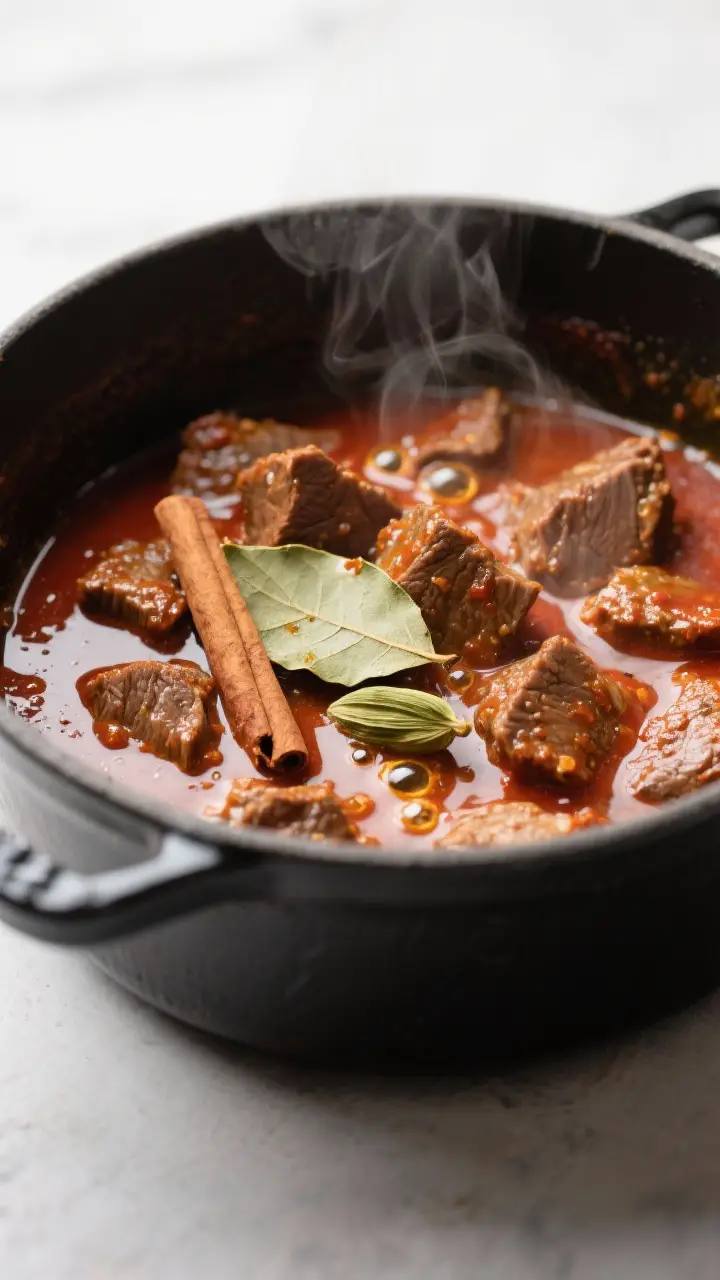
- Add aromatics and spices: Stir in the cinnamon stick, cardamom pods, and bay leaves. Cook 1 minute to release their aroma.
- Build the sauce: Pour in the remaining coconut milk and 1 cup of stock.Bring to a gentle simmer. If using beef, keep the heat low so it tenderizes slowly; for chicken, a steady simmer is fine.
- Simmer until tender: For beef, simmer covered for 30–40 minutes before adding the potatoes. For chicken, add the potatoes after about 10 minutes.You want the meat to be on its way to tender before the potatoes go in.
- Add potatoes and onions: Drop in the potato chunks and onion wedges. Continue simmering 15–25 minutes, stirring occasionally, until the potatoes are just tender and the sauce has thickened slightly. Add more stock if it gets too thick.
- Season the curry: Stir in palm sugar, fish sauce, and tamarind paste.Start with the lower amounts, taste, and adjust. You’re aiming for a gentle sweetness, a savory backbone, and a soft tang. Add the bell pepper now if using, and cook 3–5 minutes more.
- Finish with peanuts: Stir in the roasted peanuts.Let them warm through for 1–2 minutes so they soften slightly while staying crunchy.
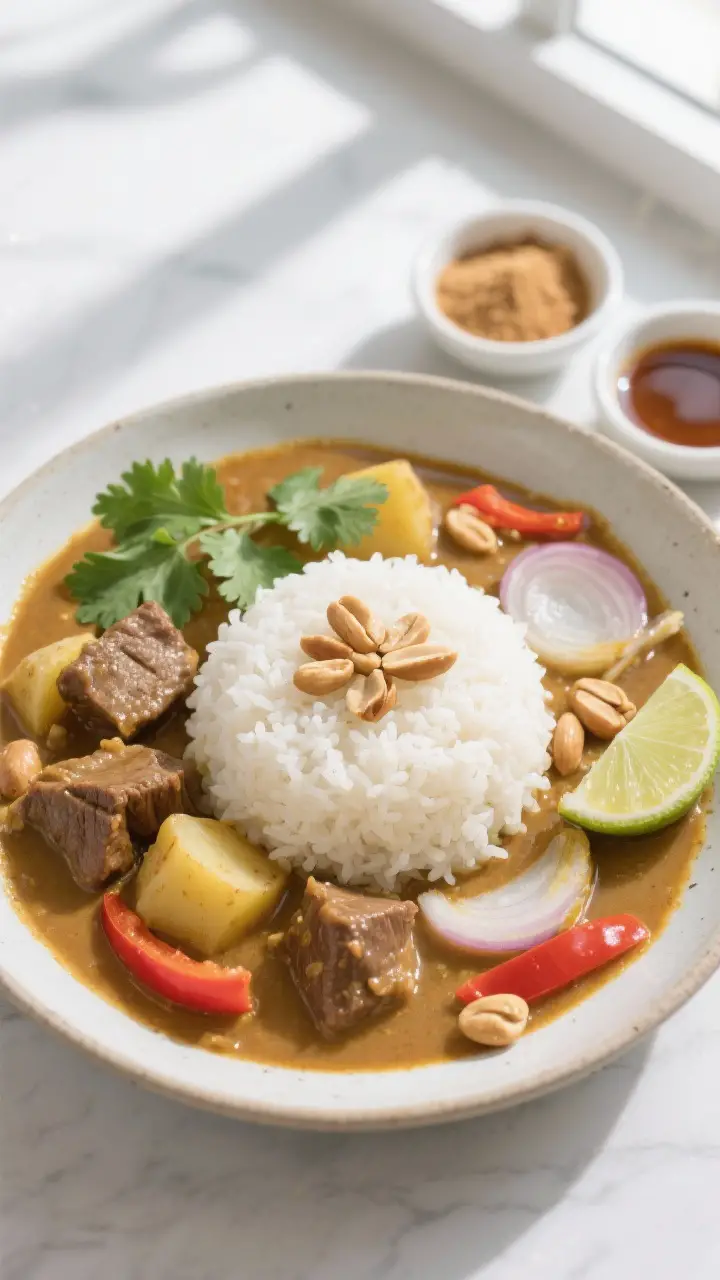
- Serve: Remove the cinnamon stick, cardamom, and bay leaves. Ladle over jasmine rice. Garnish with fresh herbs and a few extra peanuts.Taste once more at the table—add a splash of fish sauce or a squeeze of lime if you want a brighter finish.
Storage Instructions
- Fridge: Store cooled curry in an airtight container for up to 4 days. It often tastes better on day two.
- Freezer: Freeze up to 3 months. Potatoes can soften a bit after freezing, but the flavor stays great.Thaw overnight in the fridge.
- Reheat: Warm gently on the stove over low heat with a splash of water or stock to loosen the sauce. Avoid boiling hard to keep the coconut milk from splitting.
Health Benefits
- Protein-rich: Beef or chicken provides lasting fullness and supports muscle maintenance.
- Healthy fats: Coconut milk contains medium-chain fats that add satiety. Use full-fat for the best texture, or light coconut milk for a leaner option.
- Micronutrients: Potatoes offer potassium and vitamin C, while onions and spices deliver antioxidants.
- Customizable sodium: You control the fish sauce and stock, making it easy to moderate salt.
- Gluten-free friendly: Naturally gluten-free when paired with rice and gluten-free fish or soy sauce.
What Not to Do
- Don’t skip frying the curry paste: That step wakes up the spices and gives the dish its deep flavor.
- Don’t boil aggressively: A hard boil can toughen meat and split the coconut milk.Keep it at a gentle simmer.
- Don’t overcook the potatoes: Stop when they’re just tender. Overcooked potatoes break apart and thicken the curry too much.
- Don’t forget to balance: Taste at the end and adjust sugar, fish sauce, and tamarind. Massaman shines when sweet, salty, and sour are in harmony.
- Don’t use raw, unroasted peanuts: They’ll taste flat.Use roasted peanuts for the best flavor and texture.
Variations You Can Try
- Vegetarian/Vegan: Swap chicken or beef for firm tofu or chickpeas. Use vegetable stock and soy sauce instead of fish sauce.
- Lamb Massaman: Lamb shoulder gives a luxurious, slightly gamey depth that pairs beautifully with the spices.
- Sweet potato twist: Replace some or all potatoes with sweet potato for a richer sweetness and vibrant color.
- Nut-free: Skip peanuts and add a handful of roasted pumpkin seeds or simply leave them out.
- Low-heat or extra heat: Massaman is mild by default. For more spice, add sliced fresh chilies or a pinch of cayenne when frying the curry paste.
- Lighter version: Use light coconut milk and add an extra half cup of stock.Simmer a bit longer to thicken.
FAQ
Can I use store-bought Massaman curry paste?
Yes. Good brands deliver excellent results and save time. If using a mild paste, you can add a little more paste or a pinch of extra warm spices like cinnamon and clove to boost flavor.
What cut of beef works best?
Beef chuck or stewing beef is ideal.
It becomes tender with gentle simmering and holds up well to the rich sauce.
Is Massaman curry very spicy?
Not usually. It’s one of the milder Thai curries, with warmth from spices rather than a strong chili heat. You can adjust heat to taste. The balance of flavors makes it an excellent introduction to Thai curries for those who prefer less spice. In this gaeng panang recipe overview, you’ll discover how to create a rich and creamy sauce using coconut milk, along with a medley of fresh ingredients that enhance its deliciousness. Experimenting with the levels of heat will help you find the perfect version suited to your palate. By starting with a basic panang curry paste recipe, you can customize the flavor profile to your liking, whether you prefer it milder or spicier. The paste serves as the backbone of the dish, providing a rich and aromatic foundation that can be tailored to suit different tastes. Once mastered, you’ll find yourself experimenting with different proteins and vegetables, making each batch uniquely your own. For an even broader range of flavors, you might consider trying a Thai red curry paste recipe, which offers a different yet equally delightful experience. This alternative can introduce new layers of complexity and a touch of heat, allowing for even more customization in your culinary creations. By incorporating various pastes and experimenting with ingredient combinations, the possibilities for your Thai curry adventures are virtually endless.
How do I make it gluten-free?
Use a gluten-free fish sauce or tamari and check your curry paste label.
Serve with jasmine rice, and you’re set.
Can I make this in a slow cooker?
Yes. Fry the curry paste in coconut cream on the stove first, then transfer everything to the slow cooker. Cook on low for 6–8 hours (beef) or 4–5 hours (chicken), adding potatoes for the last 2–3 hours.
What if I can’t find tamarind paste?
Use lime juice as a backup.
Start with 2 teaspoons and add more to taste. It won’t be identical, but it keeps the bright, tangy note.
Why did my coconut milk split?
The heat was likely too high or the sauce boiled vigorously. Keep it at a gentle simmer and stir occasionally.
A splash of stock can help stabilize it.
Can I add vegetables?
Absolutely. Carrots, green beans, or cauliflower work well. Add firmer veggies earlier and delicate ones near the end so they don’t turn mushy. For a delightful twist, consider pairing your sautéed vegetables with a thai peanut noodles recipe. The rich, creamy peanut sauce complements the crunch of the veggies beautifully, creating a satisfying and healthy dish. Feel free to customize the vegetables based on your personal preferences or what you have on hand. For an even bolder flavor, try incorporating a thai coconut curry shrimp recipe alongside your sautéed vegetables. The creamy coconut curry pairs wonderfully with both the crunch of the veggies and the richness of the peanut sauce, allowing you to explore a fusion of tastes. Don’t hesitate to experiment by adding herbs or spices that resonate with your palate for an extra layer of flavor. For an even more aromatic experience, consider incorporating a thai green curry paste recipe into your sauté. This addition not only enhances the flavor profile but also marries well with both your sautéed veggies and the creamy sauces. With the right balance of heat and zest, you can elevate your dish to new heights, making every bite a delightful adventure.
Wrapping Up
Massaman curry brings big comfort with simple steps and familiar, warming flavors.
With a little patience and careful seasoning, you’ll get a silky sauce, tender meat, and perfectly cooked potatoes every time. Make it your own with the variations above, and don’t forget the steamed jasmine rice. This is a recipe you’ll return to whenever you want something cozy, generous, and deeply satisfying. For an extra layer of flavor, consider incorporating a homemade thai sweet chili sauce recipe that can elevate your dish to new heights. Whether you prefer it spicy or mild, this versatile sauce can be tailored to suit your taste, making each meal feel unique. Pair it with fresh herbs and a squeeze of lime for a bright finish that will keep you coming back for seconds. If you’re in the mood for something different, try using this dish as a base for a delightful thai coconut curry soup recipe. The creamy coconut milk combined with the bold flavors will create a comforting bowl that’s perfect for any occasion. Enjoy it with crusty bread or over rice noodles for a satisfying meal that warms both the body and soul. For an additional twist, consider drizzling on a homemade thai peanut sauce recipe that complements the dish beautifully while adding a rich, nutty flavor. This sauce pairs wonderfully with both the meat and potatoes, turning the meal into a vibrant feast that appeals to all the senses. Whether you’re serving it for a weeknight dinner or a special gathering, this combination is sure to impress your guests and leave them asking for your secret.
Printable Recipe Card
Want just the essential recipe details without scrolling through the article? Get our printable recipe card with just the ingredients and instructions.