
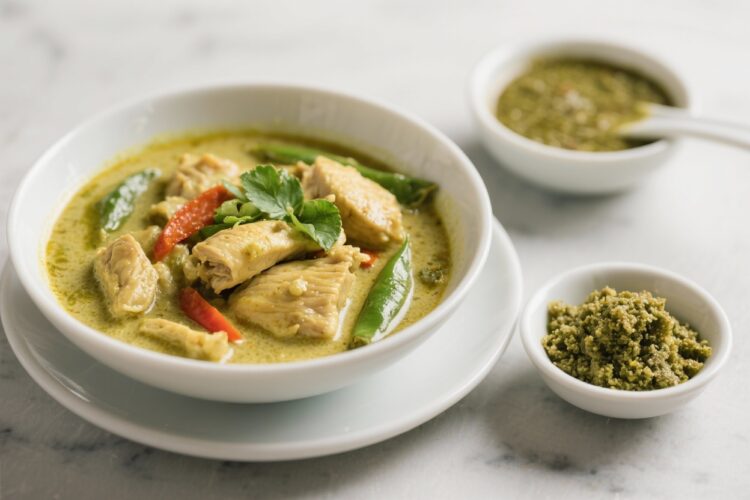
Green curry is the kind of dish that wakes up your senses. It’s bright, aromatic, and layered with fresh herbs, gentle heat, and creamy coconut. This version stays close to Thai roots, with a homemade paste that makes all the difference.
If you’ve only had jarred curry paste, you’re in for a big upgrade. The process is simple, the flavor is bold, and the result is a comforting bowl that tastes like your favorite Thai spot—only fresher.
What Makes This Special
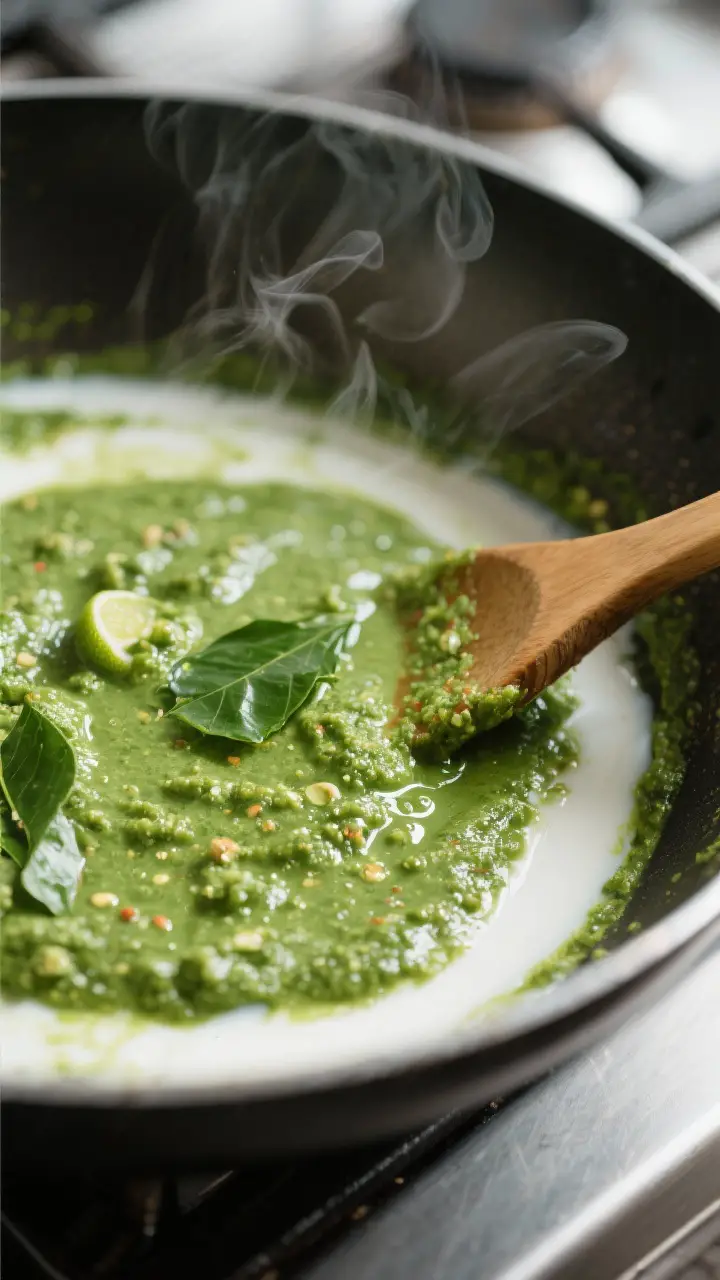
- Homemade green curry paste: Fresh herbs, lime leaf, and galangal create a clean, vivid flavor you can’t get from a jar.
- Balanced heat and sweetness: Thai green curry is spicy, but it’s rounded out by coconut milk and a touch of palm sugar.
- Classic technique: Frying the paste in coconut cream blooms the aromatics and deepens the color.
- Flexible but authentic: Start with chicken and Thai eggplant, then swap veggies based on what’s in season.
Shopping List
- For the green curry paste:
- 10–12 green Thai bird’s eye chilies (adjust for heat)
- 4 mild green chilies (like serrano), deseeded
- 1 cup packed cilantro stems and roots (cleaned well)
- 1/2 cup Thai basil leaves and tender stems
- 1/3 cup makrut lime leaves, finely sliced (plus extra for curry)
- 2 stalks lemongrass (tender inner parts), thinly sliced
- 2-inch piece galangal, peeled and sliced
- 2-inch piece fresh ginger (backup if galangal is scarce)
- 8 cloves garlic
- 6 small shallots
- 1 teaspoon white peppercorns
- 1 tablespoon coriander seeds
- 1 teaspoon cumin seeds
- 1 tablespoon shrimp paste (kapi; optional but traditional)
- 1–2 tablespoons neutral oil or water (to help blend)
- 1 teaspoon coarse salt
- For the chicken green curry:
- 1.5 pounds boneless, skinless chicken thighs, thinly sliced
- 2 cups full-fat coconut milk
- 1/2 cup coconut cream (or the thick part from a can)
- 2–3 tablespoons green curry paste (to taste)
- 2 cups Thai eggplant, quartered (or small zucchini/green beans as a sub)
- 1 cup bamboo shoots (optional, drained and rinsed)
- 1–2 tablespoons fish sauce, plus more to taste
- 1–2 teaspoons palm sugar (or light brown sugar)
- 6–8 Thai basil sprigs (leaves picked)
- 6–8 makrut lime leaf halves, lightly bruised
- 1–2 red chilies, sliced, for garnish (optional)
- Steamed jasmine rice, to serve
- Lime wedges, for finishing
Instructions
- Toast the spices. In a dry pan over medium heat, toast coriander seeds, cumin seeds, and white peppercorns for 1–2 minutes until fragrant. Cool, then grind to a fine powder.
- Make the paste. In a mortar and pestle (traditional) or blender, pound/blend chilies, lemongrass, galangal, ginger, garlic, shallots, cilantro stems/roots, basil, and sliced makrut leaves. Add the ground spices, shrimp paste, salt, and a splash of oil or water. Work to a smooth, thick paste. Taste—it should be punchy and slightly salty.
- Bloom the paste in coconut cream. In a wide pan over medium heat, add coconut cream. When it breaks and looks oily, stir in 2–3 tablespoons curry paste. Fry 2–3 minutes until the paste deepens in color and smells aromatic.
- Add the chicken. Slip in the sliced chicken and stir to coat in the paste. Cook until the surface turns opaque, about 2–3 minutes.
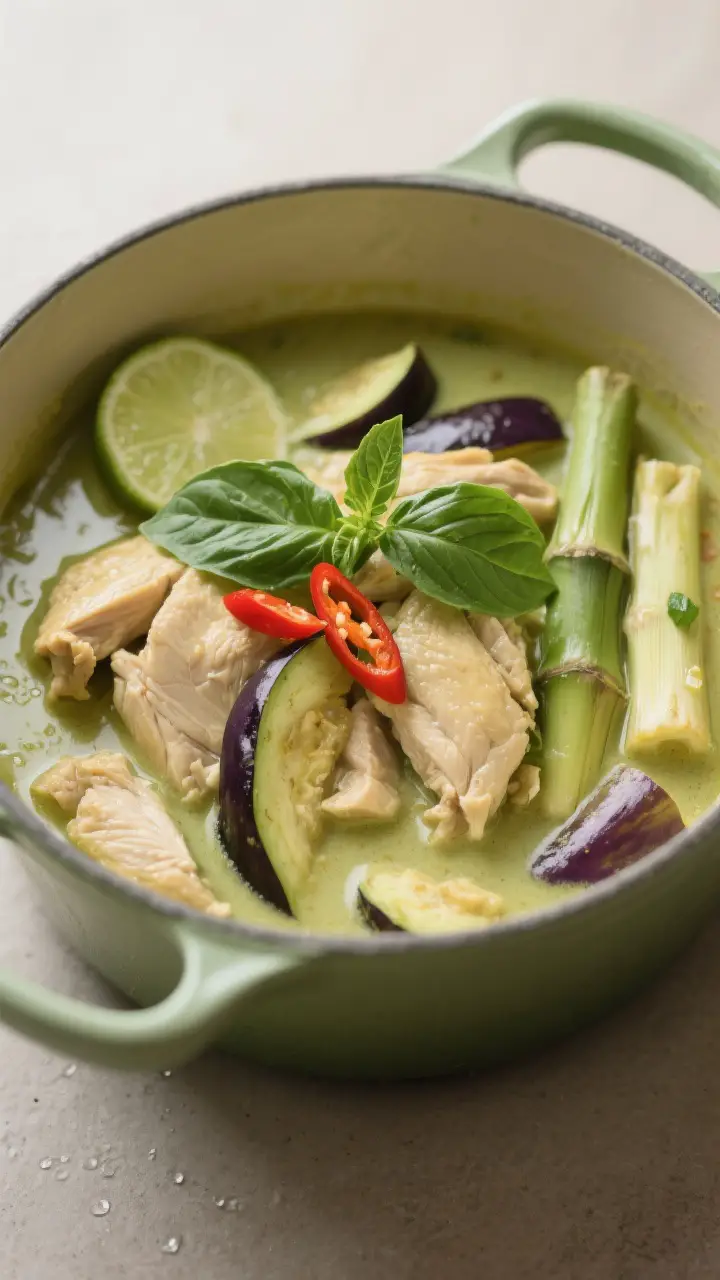
- Build the curry. Pour in coconut milk. Add makrut lime leaves and bamboo shoots (if using). Simmer gently for 8–10 minutes, not a rolling boil, to keep the coconut from splitting.
- Vegetables go in. Add Thai eggplant (or your chosen veg). Simmer 5–7 minutes until just tender but still bright.
- Season to balance. Stir in fish sauce and palm sugar. Taste and adjust: more fish sauce for salt, sugar to round heat, or a splash of water if too intense.
- Finish with herbs. Turn off the heat and fold in Thai basil. Garnish with red chili slices if you like a pop of color.
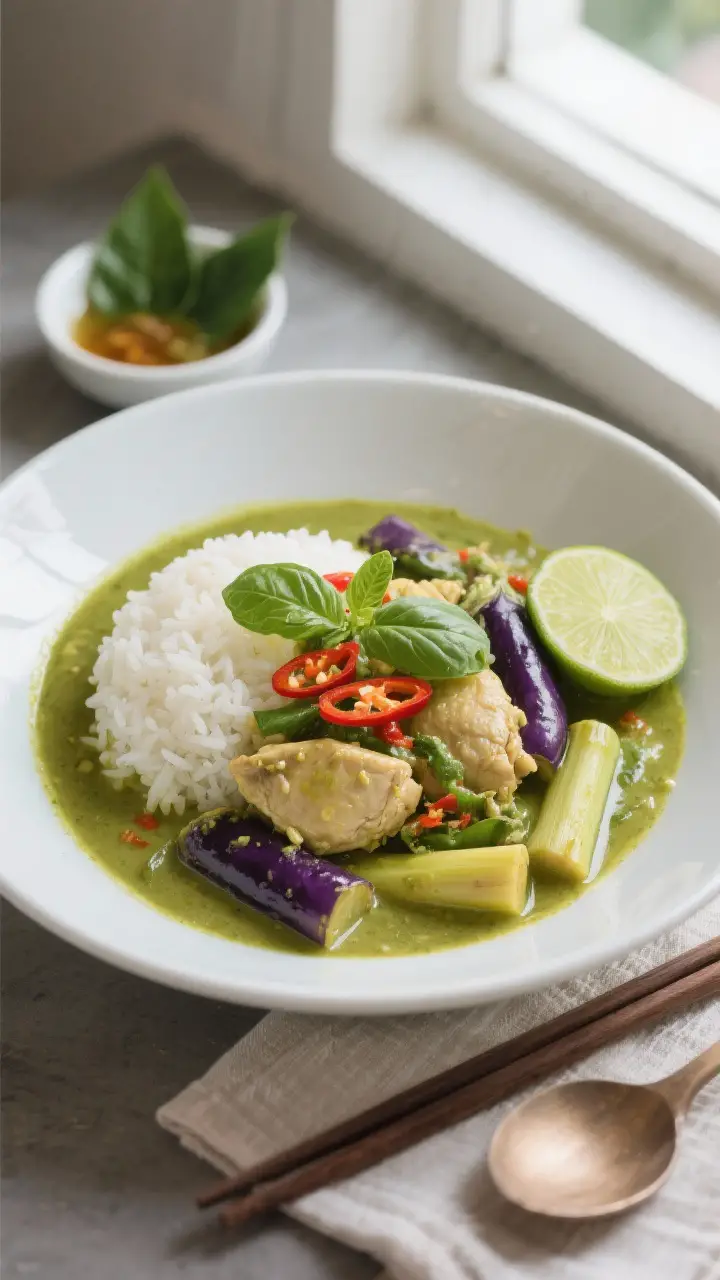
- Serve. Ladle over hot jasmine rice. Offer lime wedges for a fresh squeeze at the table.
Keeping It Fresh
- Paste storage: Refrigerate homemade paste in a small jar topped with a thin layer of oil for up to 1 week, or freeze in ice cube trays for 2–3 months.
- Leftover curry: Keeps 3–4 days in the fridge.Reheat gently over low heat to avoid breaking the coconut.
- Revive flavors: On reheating, brighten with a squeeze of lime and a few fresh basil leaves.
- Veg texture: If making ahead, cook the curry base and chicken, then add vegetables fresh when reheating so they don’t go mushy.
Why This is Good for You
- Herb-forward and aromatic: Cilantro, basil, lemongrass, and lime leaf add antioxidants and fresh, clean flavors.
- Healthy fats: Coconut milk provides satisfying richness. Use full-fat for mouthfeel, or mix with light coconut milk if you prefer.
- Protein-packed: Chicken thighs stay juicy and provide steady energy. Tofu or shrimp also work well.
- Customizable heat: You control the spice level, making it accessible for everyone at the table.
Common Mistakes to Avoid
- Skipping the blooming step: Frying the paste in coconut cream unlocks aroma and color.Don’t rush it.
- Boiling too hard: Vigorous boiling can split the coconut milk and toughen the chicken. Keep it to a gentle simmer.
- Under-seasoning: Balance is key. Keep tasting and adjusting fish sauce, sugar, and lime.
- Using only jarred paste: Store-bought is fine in a pinch, but even adding a handful of fresh herbs and a couple extra chilies makes a huge difference.
- Overcooking vegetables: Add them late so they stay tender-crisp and vibrant.
Recipe Variations
- Seafood green curry: Use shrimp or a firm white fish.Add seafood in the last 3–4 minutes so it doesn’t overcook.
- Vegetarian/vegan: Swap chicken for tofu and mixed vegetables. Use soy sauce or a vegan fish sauce alternative.
- Extra-green boost: Blend in a handful of spinach or fresh green herbs to the paste for deeper color without extra heat.
- Low-heat version: Reduce bird’s eye chilies and rely on mild green chilies for flavor with gentle warmth.
- Rice noodle bowl: Serve the curry over rice noodles with bean sprouts and more basil for a soothing soup-bowl version.
FAQ
Can I use store-bought green curry paste?
Yes. Use 2–3 tablespoons, then brighten it with fresh basil, a few sliced makrut leaves, and a squeeze of lime.
Adjust fish sauce and sugar to taste.
What if I can’t find Thai eggplant?
Zucchini, green beans, or snow peas work well. Keep the texture crisp-tender so the curry feels lively.
How spicy is this?
It’s moderately hot with the full amount of bird’s eye chilies. For milder heat, seed the chilies or use more serrano and fewer bird’s eyes.
Can I make the paste without shrimp paste?
Yes.
The curry will be slightly less funky and deep, but still delicious. Add a dash more fish sauce to compensate.
How do I stop coconut milk from splitting?
Simmer gently, not vigorously. Use full-fat coconut milk and avoid sudden temperature changes.
Stir now and then, and don’t cook it to a heavy boil.
Is it okay to use chicken breast?
It works, but watch the timing. Breast cooks faster and can dry out—add it later and simmer just until done.
Can I freeze the finished curry?
Yes, though vegetables may soften on thawing. For best results, freeze the curry base with chicken and add fresh vegetables when reheating.
In Conclusion
Gaeng Keow Wan shines when the paste is fresh, the simmer is gentle, and the seasoning is balanced.
With a few simple steps, you’ll get a vibrant, fragrant curry that tastes both comforting and exciting. Keep the heat where you like it, finish with plenty of basil, and serve with fluffy jasmine rice. It’s a weeknight-friendly classic that still feels special every time.