

If you’re looking for a cheerful bake that tastes as playful as it looks, Funny Face Orange Bread is your new go-to. It’s soft, citrusy, and just sweet enough to feel like a treat without being heavy. The best part?
You decorate the top with simple icing and fruit bits to make goofy little faces, which kids and grown-ups both love. It’s great for breakfast, brunch, or a pick-me-up snack. And despite the name, this bread is no joke—it’s tender, fragrant, and packed with real orange flavor.
Why This Recipe Works

This recipe pairs fresh orange juice and zest with a buttery, soft crumb, giving you brightness in every bite.
A touch of yogurt keeps the loaf moist without weighing it down. Baking powder and a little baking soda help the bread rise and stay fluffy. The orange glaze locks in moisture and adds a glossy finish.
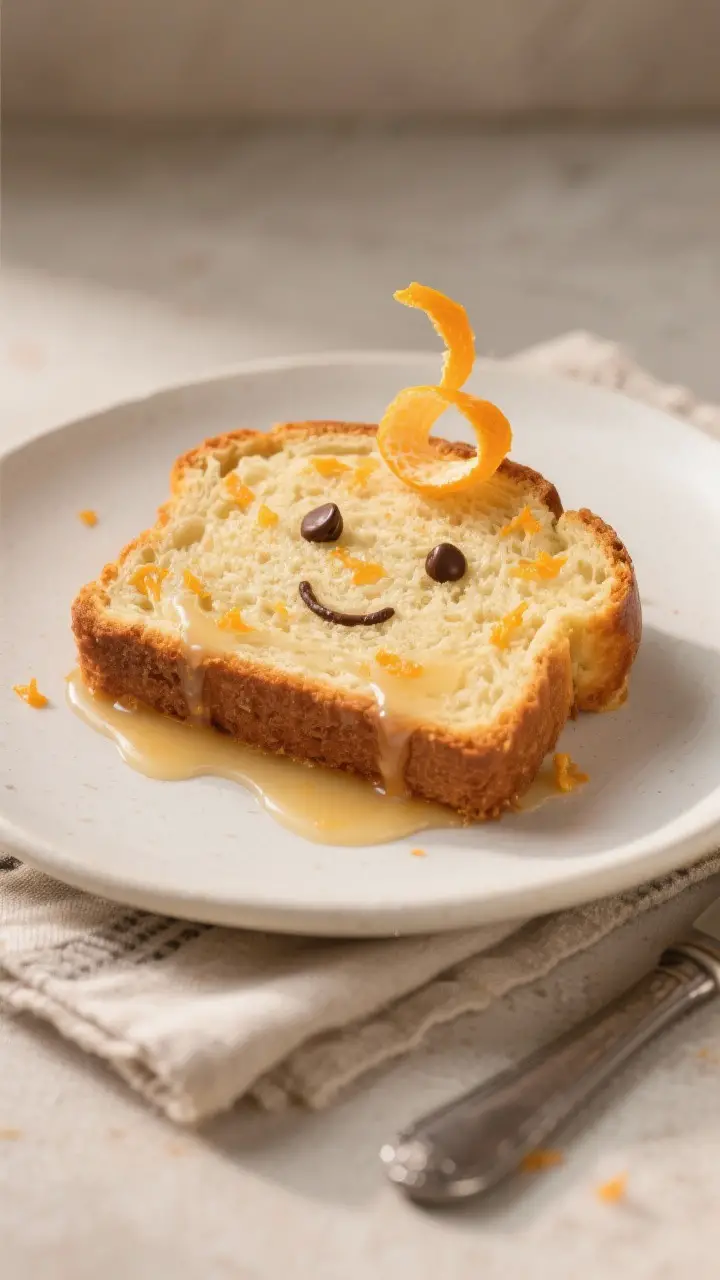
The “funny face” toppings are simple: a little icing and fruit or chocolate chips for eyes, and maybe a candied peel smile.
What You’ll Need
- All-purpose flour – 2 cups (240 g)
- Granulated sugar – 3/4 cup (150 g)
- Baking powder – 2 tsp
- Baking soda – 1/4 tsp
- Salt – 1/2 tsp
- Unsalted butter, melted and cooled – 1/2 cup (115 g)
- Plain Greek yogurt – 1/2 cup (120 g), or sour cream
- Eggs – 2 large, room temperature
- Fresh orange juice – 1/2 cup (120 ml)
- Orange zest – from 2 oranges (about 2 tbsp)
- Vanilla extract – 1 tsp
- Optional add-ins – mini chocolate chips (1/2 cup) or chopped dried cranberries (1/2 cup)
For the glaze and faces:
- Powdered sugar – 1 cup (120 g)
- Fresh orange juice – 2–3 tbsp
- Mixed toppings – chocolate chips, raisins, thin orange peel strips, mini marshmallows, strawberry slices, blueberries
How to Make It

- Prep your pan. Heat the oven to 350°F (175°C). Grease a 9×5-inch loaf pan and line it with a parchment sling so the bread lifts out easily.
- Combine dry ingredients. In a large bowl, whisk flour, sugar, baking powder, baking soda, and salt until evenly mixed.
- Mix the wet ingredients. In another bowl, whisk melted butter, yogurt, eggs, orange juice, orange zest, and vanilla until smooth. It should smell bright and citrusy.
- Bring it together. Pour the wet mixture into the dry ingredients.
Stir gently with a spatula until just combined. If using chocolate chips or cranberries, fold them in now. Do not overmix.
- Fill and smooth. Scrape the batter into the prepared pan and smooth the top.
The batter will be thick but spreadable.
- Bake. Bake for 45–55 minutes, until the top is golden and a toothpick comes out mostly clean with a few moist crumbs. If the top browns too quickly, tent loosely with foil for the last 10 minutes.
- Cool. Let the bread cool in the pan for 10 minutes, then lift it out and cool completely on a rack. This helps keep the crumb from getting gummy.
- Make the glaze. In a small bowl, whisk powdered sugar with 2–3 tablespoons orange juice until smooth and pourable.
You want a thick drizzle that sets, not a runny syrup.
- Glaze and decorate. Spoon or drizzle the glaze over the cooled loaf. While it’s tacky, press on toppings to make funny faces—two chocolate chips for eyes, a blueberry nose, a curved strip of candied peel for a smile. Have fun with it.
- Let it set. Allow the glaze to firm up for 20–30 minutes before slicing with a sharp serrated knife.
Keeping It Fresh
Store the loaf at room temperature in an airtight container for up to 3 days.
If your kitchen is warm or humid, refrigerate it to keep the glaze from getting sticky. For longer storage, wrap slices individually and freeze for up to 2 months. Thaw at room temperature or warm in a low oven for 8–10 minutes. Glaze after thawing if you plan to freeze the whole loaf, so it looks fresh and shiny when served.
Why This is Good for You
Orange zest and juice add natural vitamin C and vibrant flavor, which means you can use less sugar and still get a satisfying taste.
Greek yogurt brings protein and helps create a moist, tender crumb without extra oil. Compared to frosted cakes, this loaf is lighter and more balanced, especially if you keep the glaze thin. You’re also getting real citrus oils from the zest, which boosts aroma and satisfaction so smaller slices still feel special.
Common Mistakes to Avoid
- Overmixing the batter. Stir only until the flour disappears.
Overmixing makes the bread tough and dense.
- Using cold ingredients. Cold eggs or yogurt can seize the butter and create lumps. Let them come to room temperature.
- Skipping the zest. The zest holds most of the orange flavor. Don’t rely on juice alone.
- Cutting too soon. Slicing while warm can make the loaf crumble.
Cool completely before glazing and cutting.
- Overbaking. Check at 45 minutes. Pull it once a tester has a few moist crumbs; a dry tester means a dry loaf.
Variations You Can Try
- Orange Almond. Replace 1/4 cup flour with almond flour and add 1/2 tsp almond extract. Top with slivered almonds.
- Chocolate Swirl. Mix 2 tbsp cocoa with 2 tbsp orange juice.
Swirl it into half the batter for a marbled effect.
- Cranberry Orange. Fold in 1/2 cup chopped dried cranberries or 1 cup fresh cranberries tossed in a little flour.
- Whole-Wheat Boost. Use half whole-wheat pastry flour for more fiber while keeping the crumb soft.
- Mini Loaves or Muffins. Bake in mini loaf pans (25–30 minutes) or muffin tins (18–22 minutes). Great for lunchboxes and decorating individual faces.
- Spiced Orange. Add 1 tsp ground cinnamon and a pinch of cardamom for warmth.
FAQ
Can I use bottled orange juice?
You can, but fresh juice and zest give the best flavor. If using bottled, choose not-from-concentrate and don’t skip the zest.
What if I don’t have Greek yogurt?
Sour cream works 1:1.
You can also use plain regular yogurt, but reduce the orange juice by 1–2 tablespoons to keep the batter from getting too thin.
How do I prevent the glaze from soaking in?
Let the loaf cool completely, then glaze. A slightly thicker glaze sets on top instead of disappearing into the crust.
Can I make it dairy-free?
Yes. Use a neutral oil (1/2 cup) instead of butter and a thick dairy-free yogurt.
Check the loaf a few minutes early, as oil-based batters can bake a touch faster.
Why did my loaf sink in the middle?
This usually means it was underbaked or the batter was overmixed. Make sure your leaveners are fresh and avoid opening the oven in the first 30 minutes.
How do I get neat slices?
Use a sharp serrated knife and a gentle sawing motion. Wipe the blade between cuts, especially if the glaze is still slightly tacky.
Can I reduce the sugar?
Yes.
You can drop the granulated sugar to 1/2 cup without hurting texture, especially if your oranges are sweet. Keep the glaze light too.
In Conclusion
Funny Face Orange Bread brings a little sunshine to the table, whether you’re baking with kids or just want a bright, simple loaf. It’s easy to make, hard to mess up, and fun to decorate.
With real citrus and a soft, tender crumb, it tastes as happy as it looks. Keep a few slices in the freezer for quick snacks, and don’t be surprised when this cheerful loaf becomes a new favorite.