
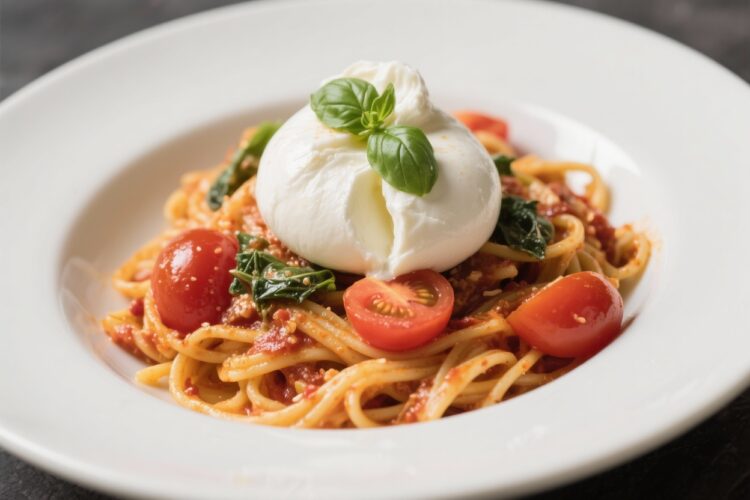
This is the kind of pasta that makes you feel like summer landed right in your kitchen. Juicy tomatoes, fragrant basil, and silky burrata come together in a dish that’s bright, creamy, and unbelievably easy. You don’t need fancy techniques or a long ingredient list—just good produce and 20 minutes.
It’s light yet satisfying, ideal for a weeknight dinner or a relaxed weekend meal. If you love fresh flavors and minimal fuss, this recipe might become your new go-to.
Why This Recipe Works
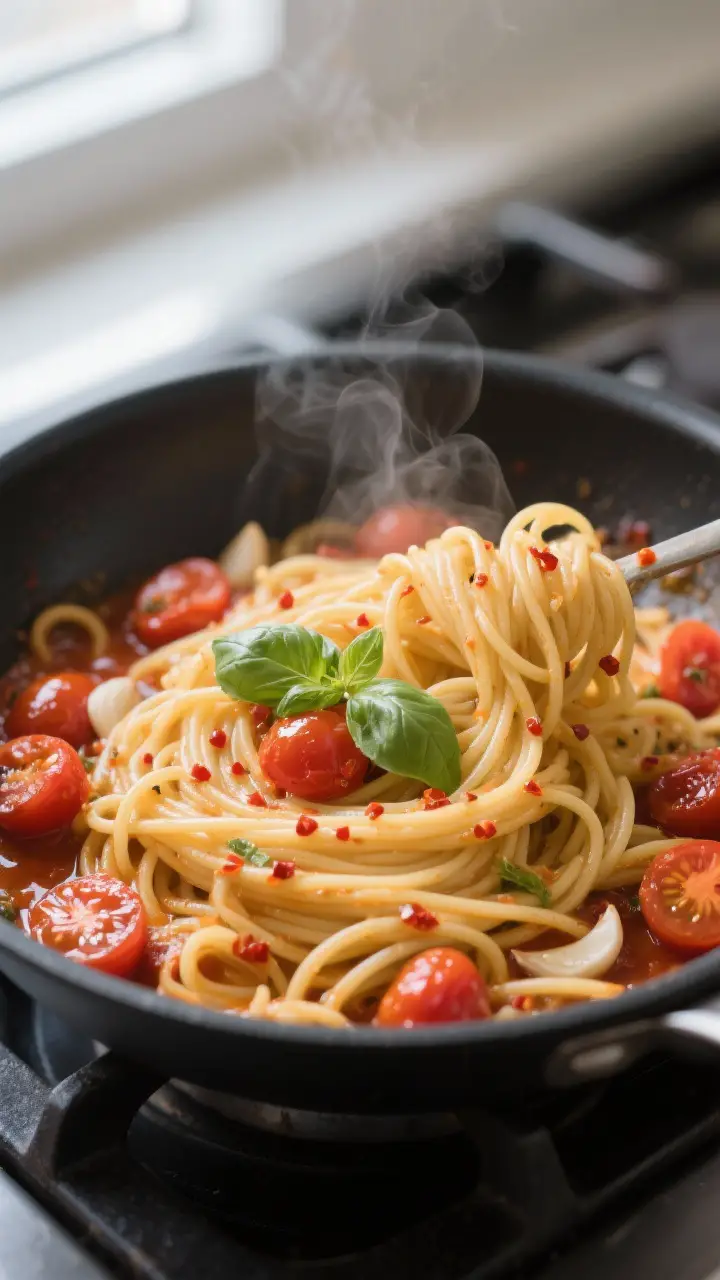
Simple ingredients shine when they’re used at their best. Fresh, ripe tomatoes release their juices with a quick sauté, creating a light, sweet-tart sauce without simmering for hours.
Basil brings herbal brightness, while garlic and chili flakes add gentle warmth. Tossing the pasta in starchy cooking water helps the sauce cling to every strand. Finally, burrata adds a luxurious, creamy finish that ties everything together without heavy cream.
What You’ll Need
- Pasta: 12 ounces spaghetti, linguine, or bucatini
- Olive oil: 3 tablespoons, extra-virgin
- Garlic: 3–4 cloves, thinly sliced
- Cherry or grape tomatoes: 1.5–2 pints, halved
- Fresh basil: 1 packed cup, torn or sliced
- Red pepper flakes: 1/4–1/2 teaspoon, to taste
- Kosher salt and black pepper: to taste
- Burrata: 8 ounces (usually two 4-ounce balls)
- Lemon zest: from 1/2 lemon (optional, but brightens the dish)
- Grated Parmesan: 1/4 cup, plus more for serving (optional)
Instructions
- Salt your water well. Bring a large pot of water to a rolling boil and add enough salt so it tastes like the sea.
This is your first chance to season the pasta itself.
- Prep the tomatoes and aromatics. Halve the cherry tomatoes, slice the garlic, and tear the basil. Keep everything nearby so you can move quickly once the pasta is cooking.
- Start the pasta. Add the pasta to the boiling water and cook according to package directions until al dente. Before draining, reserve 1 cup of starchy pasta water.
- Build the sauce base. While the pasta cooks, heat olive oil in a large skillet over medium heat.
Add the sliced garlic and cook for 30–60 seconds until fragrant, not browned. Sprinkle in red pepper flakes.
- Soften the tomatoes. Add the halved tomatoes and a pinch of salt. Cook for 4–6 minutes, stirring occasionally, until they burst slightly and release their juices.
You want a saucy, chunky mixture.
- Toss with pasta water. Add a splash (about 1/3 cup) of the reserved pasta water to the tomato skillet. It will help the sauce cling to the pasta and add a glossy finish.
- Combine pasta and sauce. Drain the pasta and immediately transfer it to the skillet. Toss to coat, adding more pasta water as needed to loosen and emulsify the sauce.
Season with salt and black pepper to taste.
- Finish with basil and cheese. Stir in most of the basil and the lemon zest. If using Parmesan, add it now and toss until it melts into the sauce.
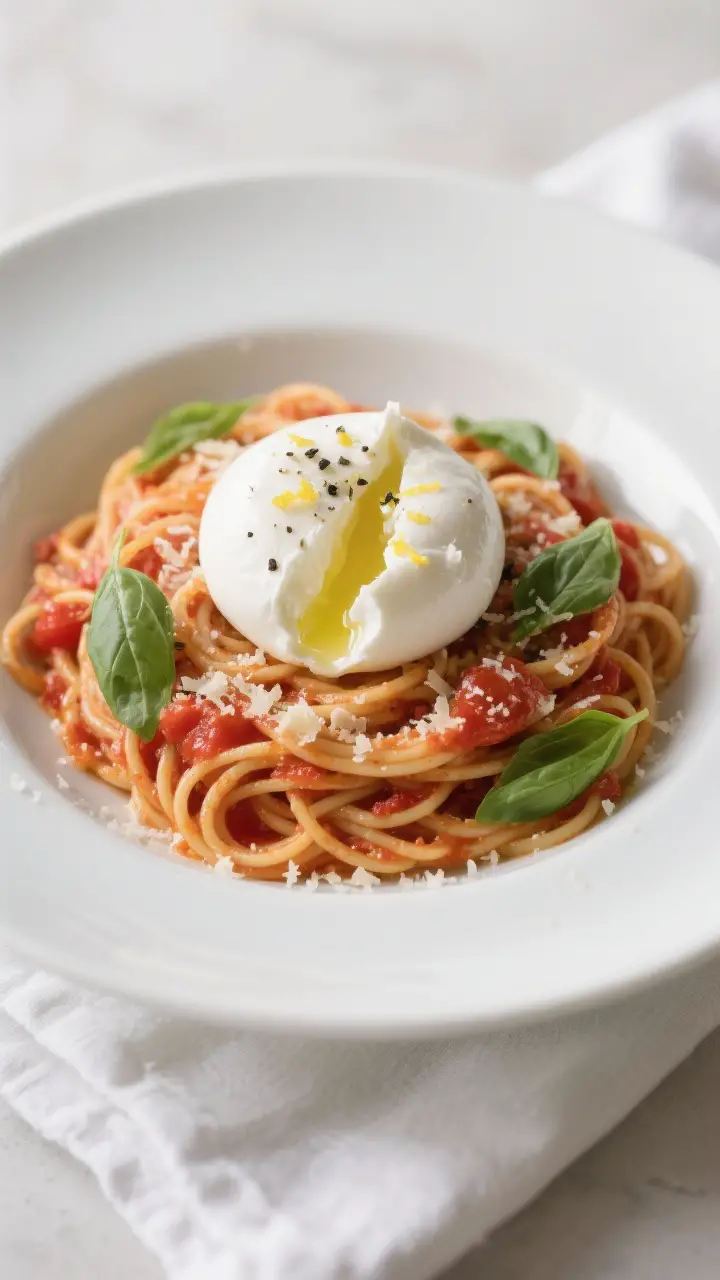
- Plate and add burrata. Divide the pasta among plates or serve family-style. Tear the burrata and place it on top of the hot pasta so it softens and melts slightly.
Drizzle with a little olive oil, sprinkle with the remaining basil, and add a pinch of salt and pepper.
- Serve immediately. This dish is best enjoyed right away while the burrata is creamy and the tomatoes taste bright.
How to Store
Without burrata: Store leftover pasta (without burrata on top) in an airtight container in the fridge for up to 3 days. Reheat gently with a splash of water or olive oil to loosen the sauce. Add fresh burrata just before serving.
With burrata: If the burrata is already mixed in, it will still taste good the next day but won’t be as creamy.
Reheat on low and stir lightly; add a little fresh basil or a squeeze of lemon to revive the flavors.
Freezing: Not recommended. The tomatoes and burrata don’t freeze well and will lose their texture upon thawing.
Health Benefits
- Tomatoes: Rich in vitamin C and lycopene, an antioxidant linked to heart health and reduced inflammation.
- Basil: Contains antioxidants and essential oils that may support immune function and reduce oxidative stress.
- Olive oil: A source of heart-healthy monounsaturated fats that can support cholesterol balance.
- Balanced energy: Pasta offers steady carbs for energy, while burrata provides protein and fat for fullness and satisfaction.
- Light, fresh preparation: Minimal cooking preserves the nutrients and clean flavors of the ingredients.
Common Mistakes to Avoid
- Under-salting the water: Bland pasta will never recover fully, even with a great sauce. Salt the water generously.
- Overcooking garlic: Burnt garlic tastes bitter and overwhelms the dish.
Cook it just until fragrant.
- Skipping pasta water: The starchy water is key to making a cohesive sauce that clings to the pasta.
- Using out-of-season tomatoes: Mealy or flavorless tomatoes won’t deliver. Choose ripe cherry or grape tomatoes or use high-quality canned cherry tomatoes if needed.
- Adding burrata too early: Don’t cook it into the sauce. Tear and add it on top right before serving for the best texture.
Recipe Variations
- Roasted tomato twist: Roast cherry tomatoes with olive oil, salt, and pepper at 400°F (200°C) for 15–20 minutes for deeper, sweeter flavor.
- Add protein: Fold in grilled chicken, sautéed shrimp, or crispy prosciutto.
Keep it simple so the tomatoes and basil still shine.
- Spicy Calabrian kick: Swap red pepper flakes for Calabrian chili paste for a fruitier heat.
- Herb swap: Add a handful of baby arugula or fresh parsley at the end for a peppery green note.
- Gluten-free: Use your favorite gluten-free pasta and watch the cook time closely to maintain a good bite.
- Vegan-friendly: Skip the burrata and Parmesan. Add toasted pine nuts and a dollop of almond ricotta or a drizzle of good olive oil for richness.
- Lemon-forward: Add extra zest and a squeeze of lemon juice right before serving for a brighter, tangier finish.
FAQ
Can I use canned tomatoes instead of fresh?
Yes. Choose high-quality canned cherry tomatoes or whole peeled tomatoes that you crush by hand.
Cook them just until saucy, then continue with the recipe. The flavor will be slightly deeper and less bright than with fresh, but still delicious.
What’s the best pasta shape for this recipe?
Long shapes like spaghetti, linguine, or bucatini are great because they twirl and catch the light sauce. Short shapes like orecchiette or penne also work—just be generous with the basil and burrata so each bite feels saucy and creamy.
How do I choose good burrata?
Look for burrata that feels soft but not collapsing, with a short ingredient list and a fresh, milky scent.
If possible, buy it the day you plan to cook. Let it sit at room temperature for 15–20 minutes before serving for maximum creaminess.
Can I make this ahead?
You can prep the tomatoes, garlic, and basil in advance. Cook the pasta and sauce just before serving, and add the burrata at the very end.
This dish really shines when it’s fresh.
How do I make it less spicy?
Simply skip the red pepper flakes. You’ll still get plenty of flavor from the garlic, olive oil, and basil. If you want a touch of warmth without heat, add a pinch of black pepper instead.
What if my sauce seems dry?
Add more reserved pasta water a little at a time and toss vigorously.
The starch in the water helps the oil and tomato juices emulsify into a silky coating. A small drizzle of olive oil at the end can also help.
Final Thoughts
Fresh Tomato Basil Pasta with Burrata is proof that simple ingredients can deliver big flavor. It’s quick, colorful, and comforting, with a creamy finish that feels special without extra effort.
Keep good olive oil, ripe tomatoes, and a ball of burrata on hand, and you’re never far from a great meal. Whether it’s a weeknight dinner or an easy dish for guests, this pasta always satisfies.
Printable Recipe Card
Want just the essential recipe details without scrolling through the article? Get our printable recipe card with just the ingredients and instructions.